

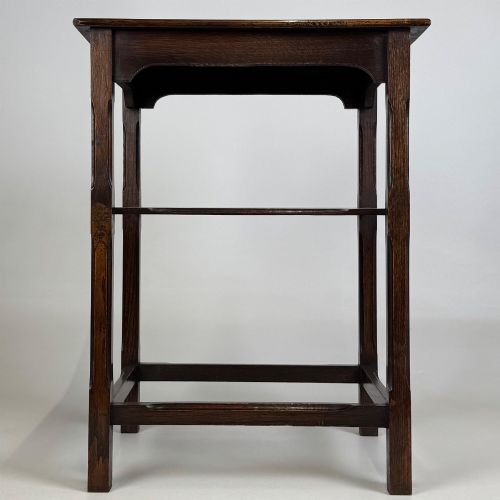

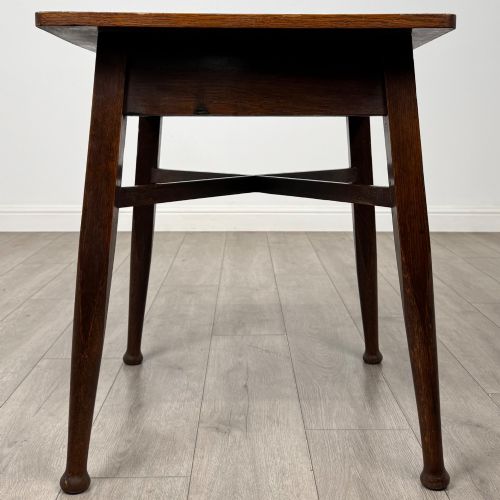
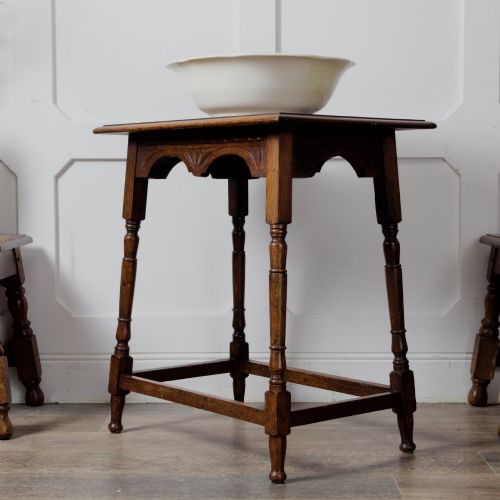
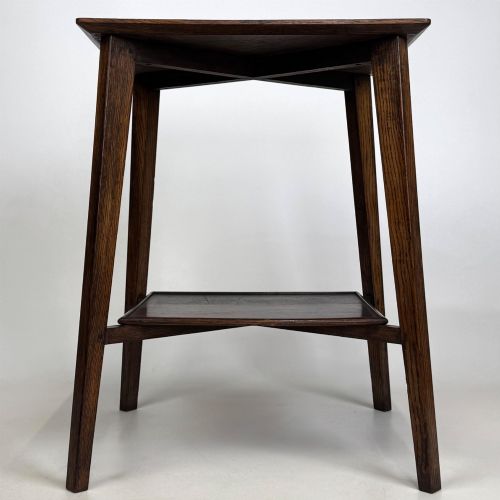


Solid Wood Accent Table
A solid wood accent table brings practical timber character to a room, offering sturdy surfaces shaped across centuries from oak, yew, and rosewood.
Solid Wood Accent Table
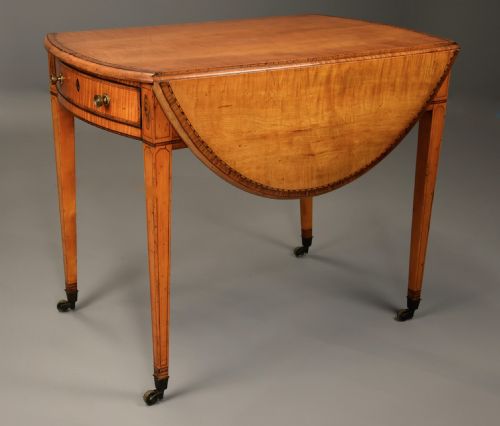
A solid wood accent table encompasses practical side tables, occasional tables, stools, and Pembroke forms designed for everyday placement beside seating. The selection relies heavily on oak pieces from the Edwardian period, alongside examples spanning the eighteenth and nineteenth centuries.
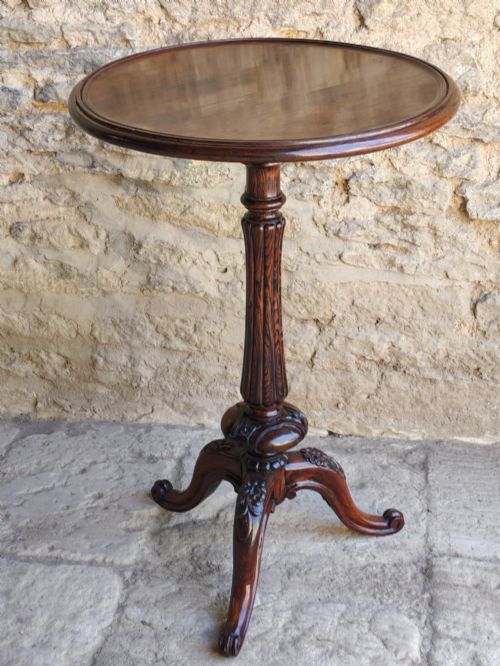
The assortment includes low joint stools and carved side surfaces reflecting Jacobean Revival, Arts and Crafts, and Victorian influences. Buyers encounter woods such as yew, rosewood, sycamore, and ebony, showcasing the functional longevity of heavy timber construction.
Construction materials and techniques
Makers utilised dense native and exotic hardwoods, predominantly solid oak, yew, sycamore, and rosewood, ensuring structural integrity without relying on fragile veneers. Brass hardware occasionally provides functional accents on pivoting surfaces or pull drawers.
Joinery techniques focus on sturdy assembly, seen in joint stools and heavily carved side tables designed to withstand daily weight. Natural grain patterns and patination develop through traditional finishing methods applied to solid timber.
Solid Wood Accent Table Retail Price Guide 2026
Typical asking prices for solid wood accent table among the pieces listed under this phrase on Sellingantiques today, from the lower quarter to the upper quarter. They describe what is for sale here now, not the wider market.
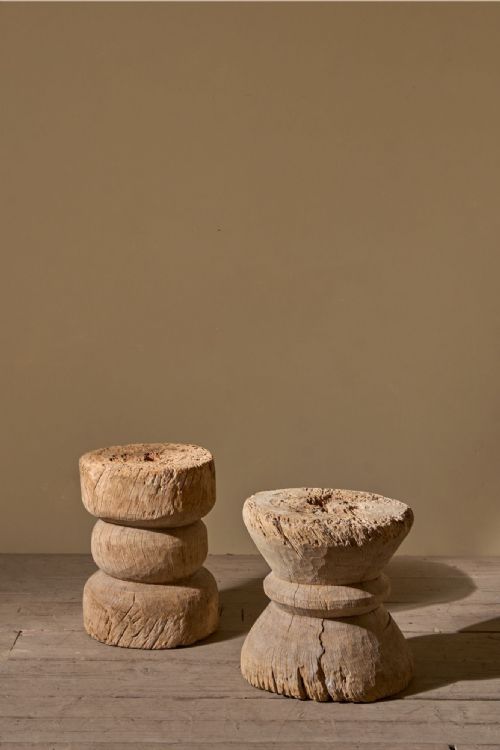
Several pieces feature solid African tribal carvings, bringing unexpected global texture into traditional British timber lineups.
Factors determining quality
Quality rests in the choice of timber figure, such as fiddleback sycamore or burr walnut, which elevates the visual interest of a compact surface. The depth of hand-carved detailing and the crispness of edge mouldings further distinguish utilitarian pieces from finer parlour furniture.
Integrity of construction defines the upper tier, where joint stability and the retention of original surface patination remain undisturbed by unsympathetic restoration. The weight and selection of solid timber throughout the frame dictate durability.
The Solid Wood Accent Table Glossary
- Pembroke table
- A drop-leaf occasional table featuring hinged flaps on opposing sides. It often includes a single drawer and slender legs.
- Joint stool
- A sturdy wooden stool constructed with mortise and tenon joints, commonly utilised for seating or small display surfaces.
- Fiddleback
- A decorative figuring in timber, particularly sycamore, exhibiting a rippled grain resembling the back of a violin.
- Patina
- The surface sheen and mellowing developed on wood over decades of handling, polish, and natural ageing.
- Jacobean Revival
- A nineteenth-century style imitating seventeenth-century British furniture design, characterised by heavy proportions and geometric carvings.
Solid Wood Accent Table: Frequently Asked Questions
What is a solid wood accent table used for?
These pieces serve as convenient surfaces for lamps, books, or drinks next to armchairs and sofas in living spaces.
Their compact proportions allow them to fit into hallways or corners where larger furniture would obstruct movement.
How do I identify an Edwardian accent table?
Edwardian examples often feature light oak construction, sometimes influenced by Arts and Crafts simplicity or heavier revival styles.
Construction methods from this era typically show machine-sawn components combined with traditional hand-finishing.
Are these tables suitable for daily use?
Solid timber construction makes these tables remarkably resilient for everyday placement and weight-bearing tasks.
Care should be taken to use coasters and avoid placing them near direct heat sources to protect the historic wood.
How do I distinguish eighteenth-century timber work?
Earlier eighteenth-century tables display deeper patination, hand-cut joinery marks, and heavier native woods like oak.
Tool marks left by hand planes are frequently visible on the undersides and secondary surfaces of these older pieces.