

Solid Silver Vessel
A solid silver vessel brings enduring weight and honest metalwork to a room, ranging from Georgian tankards to Edwardian christening mugs.
Solid Silver Vessel
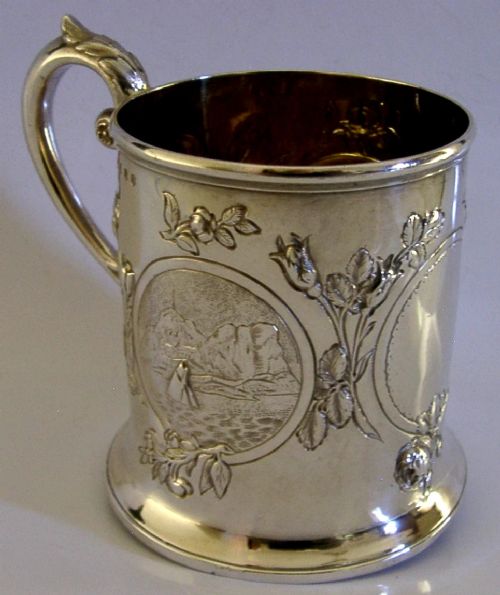
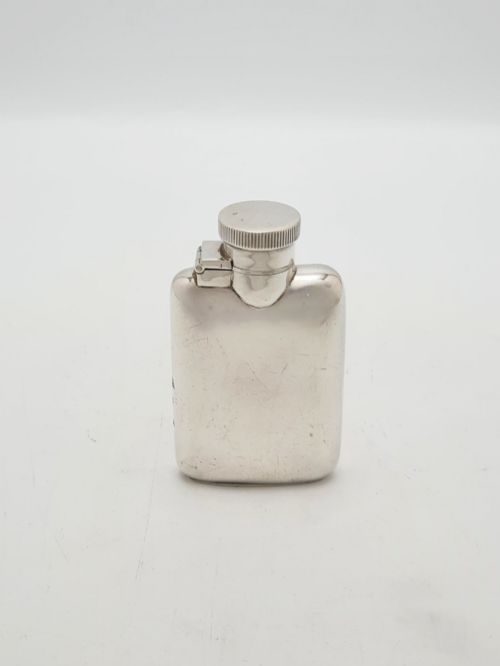
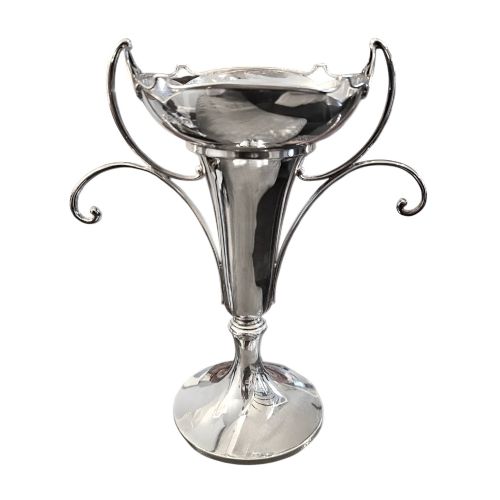
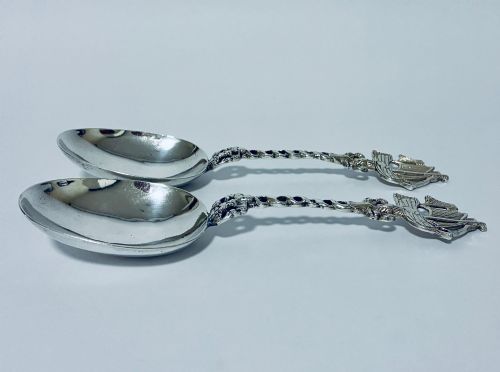
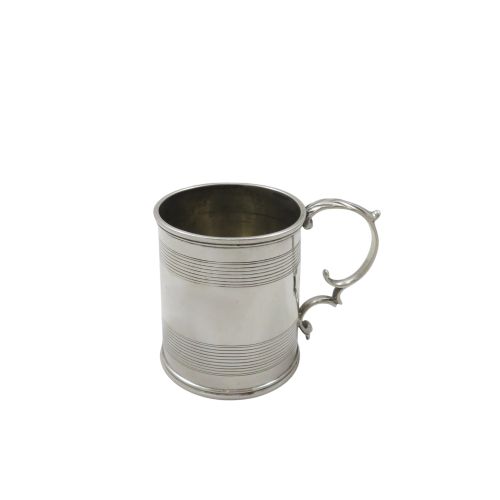
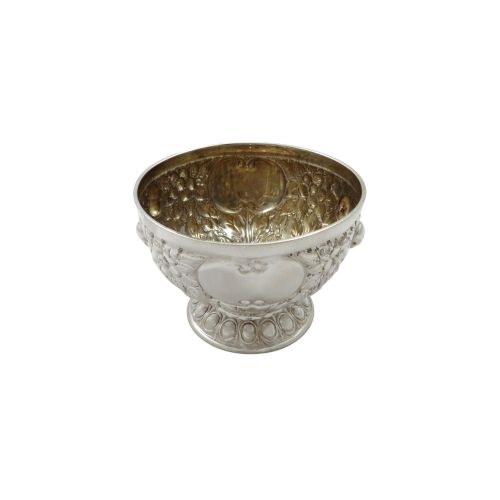
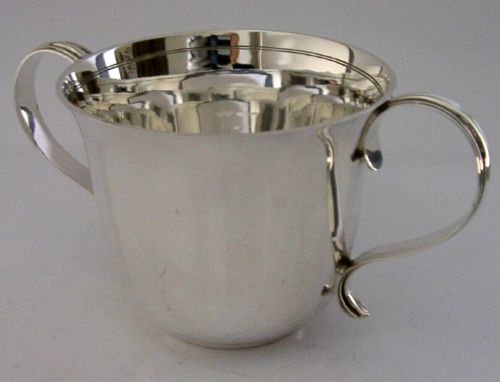
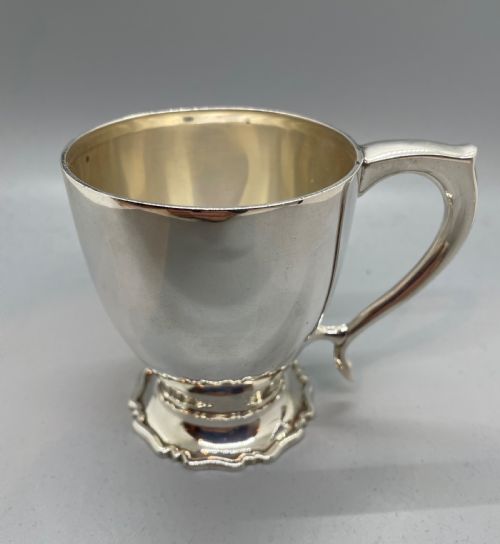
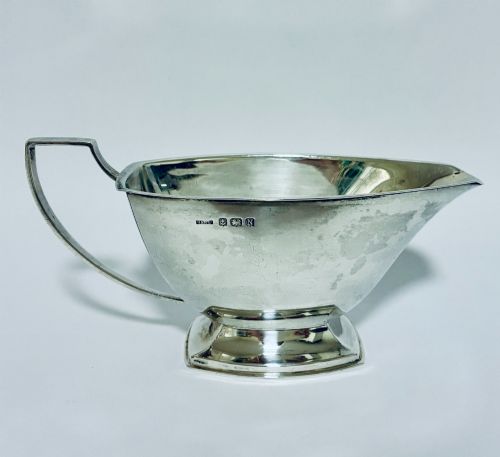
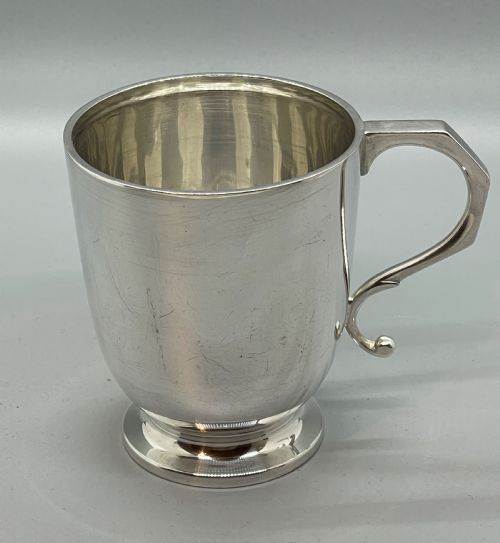
A solid silver vessel encompasses a wide variety of utilitarian and decorative hollowware, including mugs, tankards, condiment pots, bowls, and sauce boats. These objects span multiple eras, with strong representation from the Georgian, Victorian, and Edwardian periods alongside early twentieth-century examples.
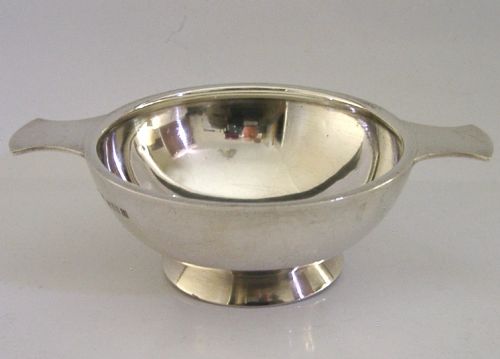
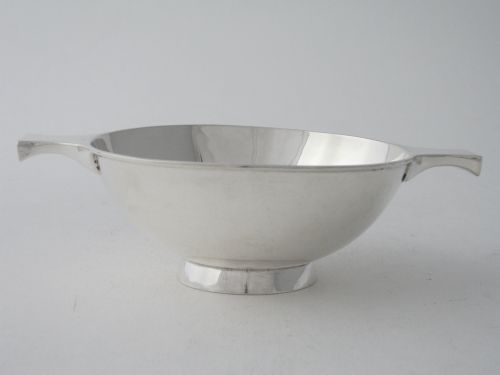
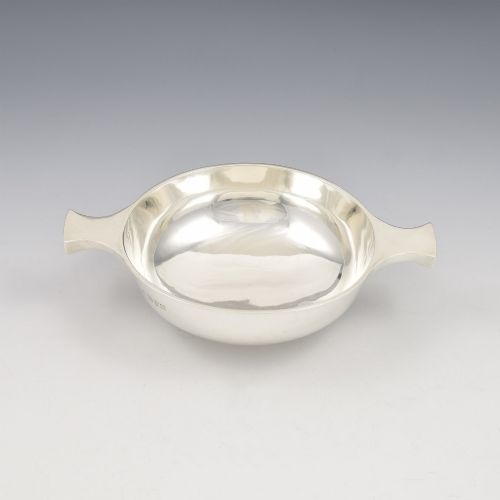
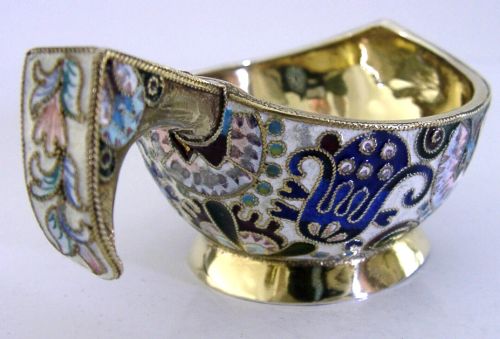
Buyers meet forms ranging from heavy English porringers and provincial teapots to specialised pieces like Scottish quaichs, mustard pots in the form of thistles, and Russian kovsh cups. Origins stretch across English workshops, Scottish and Irish centres, and continental or Eastern makers.
The category unites domestic table service with decorative display items, recording how households stored, served, and presented food, drink, and dry goods across centuries of metalworking.
Materials and technique
Makers shaped these items primarily from sterling silver or standard grade silver, often incorporating internal blue glass liners for condiment pots or wooden handles for teapots and water jugs. Techniques combined traditional hand-raising from sheet metal with casting for handles, feet, and decorative mounts.
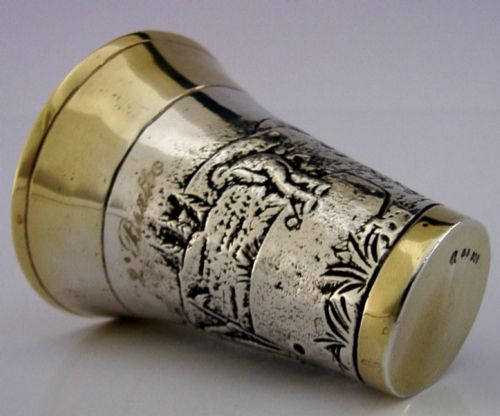
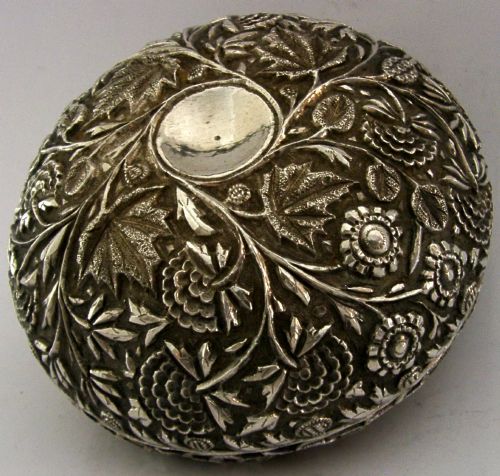
Surface treatments introduce variety through parcel-gilt and silver-gilt interiors, alongside detailed embossing, chased patterns, and enamel work seen on specific regional pieces. Hallmarks stamped directly into the metal record the assay office, maker's mark, and date of manufacture for English and British provincial work.
Solid Silver Vessel Retail Price Guide 2026
Typical asking prices for solid silver vessel among the pieces listed under this phrase on Sellingantiques today, from the lower quarter to the upper quarter. They describe what is for sale here now, not the wider market.
One unexpected item takes the literal shape of a miniature watering can.
Assessing the work
Quality rests in the gauge of the metal and the integrity of the original form, where heavier weight and substantial grammage indicate superior substance. Construction details such as tight joins, balanced handles, and crisp hallmarks separate ordinary domestic items from finer artisan commissions.
The precision of hand-chased or embossed decoration dictates the artistic merit of a piece, distinguishing sharp, deliberate tooling from worn or shallow surface work. Original components, including matching liners, lids, and hinges, preserve the structural harmony established by the maker.
Nathan and Hayes·George Unite·Matthew Boulton·John Payne·William Grundy·Robert Hennell I
The Solid Silver Vessel Glossary
- Quaich
- A traditional Scottish two-handled drinking vessel used for spirits, featuring a shallow circular bowl and flat lug handles.
- Porringer
- A small, two-handled bowl used historically for porridge, broths, or bleeding, distinguished by symmetrical flat or pierced ears.
- Tankard
- A tall, cylindrical drinking vessel with a single handle, sometimes fitted with a hinged lid for ale or beer.
- Sauce Boat
- A small jug with an oval body and a lip, designed for serving gravies and sauces at the dining table.
- Kovsh
- A traditional Russian boat-shaped drinking vessel or ladle, derived in form from wooden peasant water scoops.
Solid Silver Vessel: Frequently Asked Questions
What is a solid silver vessel used for?
These items served practical domestic functions at the table, from holding mustard and condiments to pouring tea, water, milk, and ale.
Over time, many transitioned into display pieces, christening gifts, or decorative table bowls rather than working tableware.
How do I date a silver vessel?
British pieces carry hallmarks that include date letters, assay office symbols, and maker marks which pinpoint the exact year of manufacture.
Stylistic cues, such as the proportions of George III tea ware or Art Deco geometric lines, provide additional chronological context.
How should I clean silver?
Maintenance requires gentle washing with mild soapy water and careful drying with a soft cloth to preserve the finish.
Abrasive polishes should be avoided to prevent wearing down delicate chasing, engraving, and the underlying hallmarks.
Are all silver vessels sterling?
Standard silver grades vary by origin and period, encompassing British sterling alongside continental standards like eight-hundred silver and Russian eighty-four zolotnik silver.
Hallmarks and purity stamps on the base or body indicate the specific alloy standard used by the maker.