

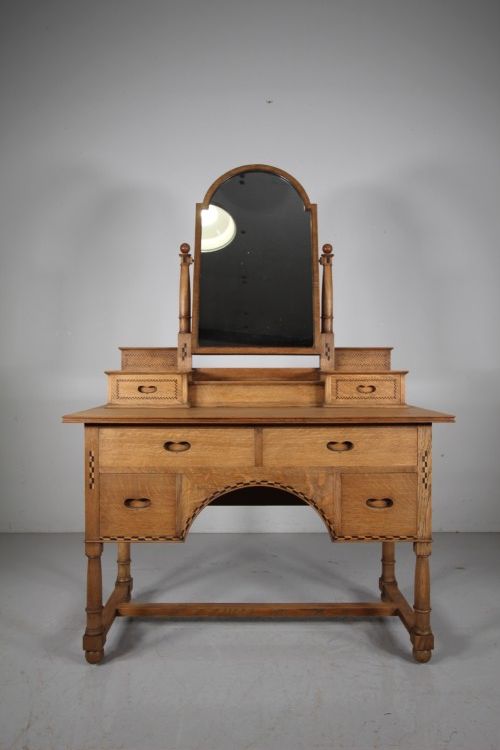


Solid Oak Mirror
A solid oak mirror brings robust timber grain and honest craftsmanship into a room, grounding the space with enduring architectural presence.
Solid Oak Mirror
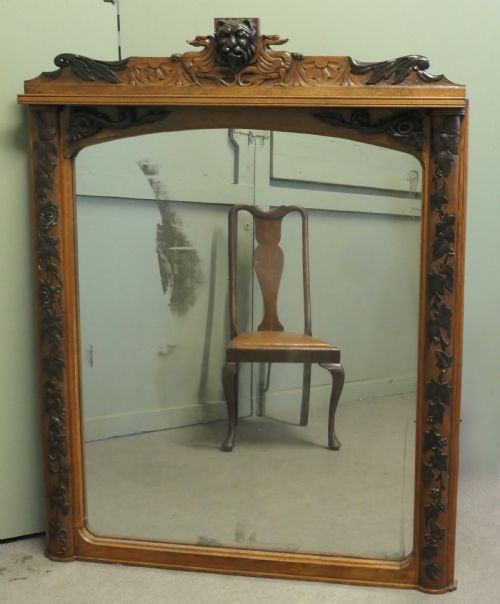
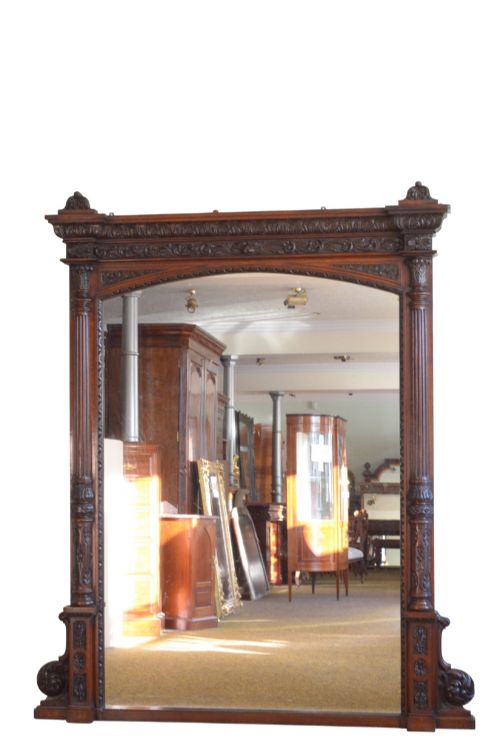
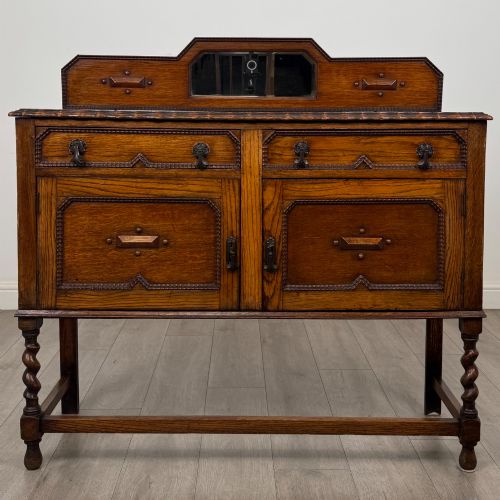
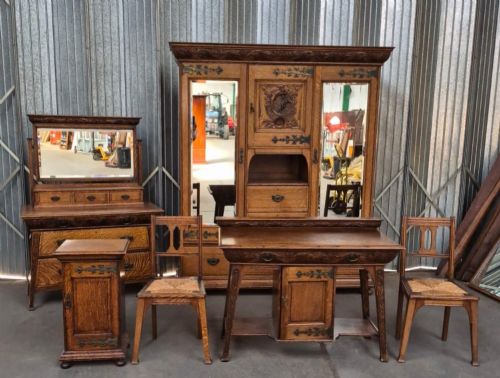
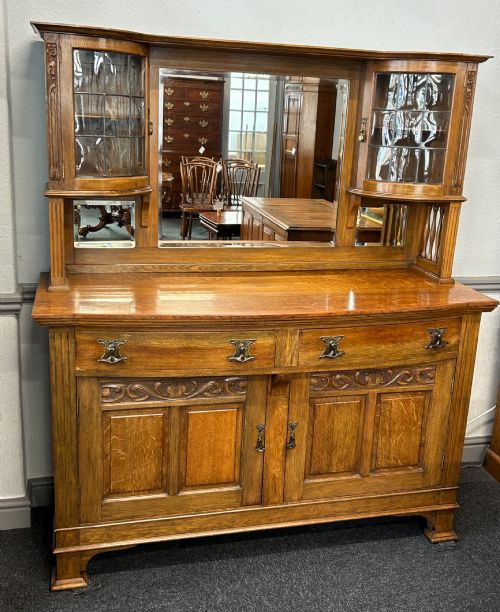
A solid oak mirror appears across various historical periods, frequently manifesting as large wall mirrors, grand overmantel pieces, or integrated components of dressing chests, dressing tables, and hall stands. These functional forms range from simple nineteenth-century wall frames to elaborate overmantel designs intended to anchor a principal reception room.
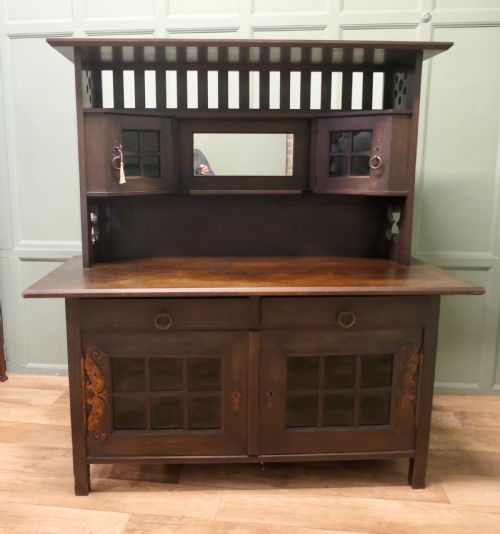
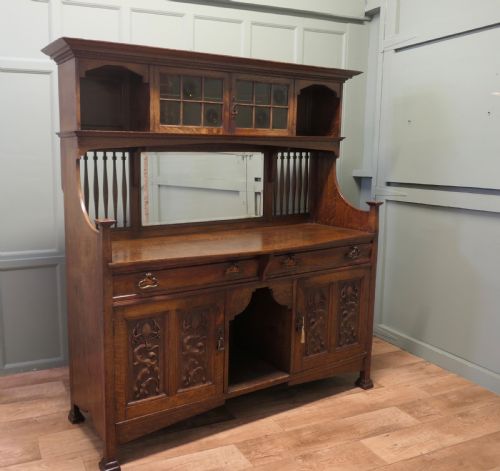
The aesthetic leans heavily into Arts and Crafts, Victorian, and Edwardian sensibilities, often incorporating structural elements like carved details, bevelled glass, or attached swing frames. Pieces from these eras combine heavy timber construction with utilitarian purpose, serving domestic spaces from bedrooms to grand hallways.
Judging the quality of a piece
The caliber of a solid oak mirror rests in the depth of its carving, the weight and clarity of the glass, and the integrity of the timber framing. Superior examples display thoughtful proportions and harmonious integration of decorative details rather than superficial ornamentation.
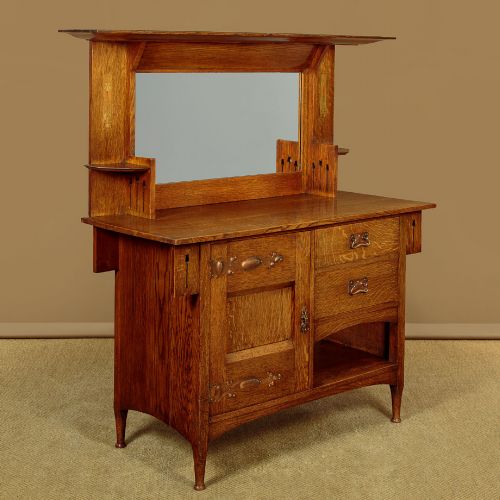
Makers who applied distinct design movements, such as the Arts and Crafts style, achieved higher quality through considered joinery and balanced composition. The presence of original bevel-edged glass and robust structural joints further distinguishes finer workshops from utilitarian production.
Several mirrors arrive with stubborn nineteenth-century silvering spots that act like tiny, polite constellations reminding you of the glass's long journey.
Leonard Wyburd for Liberty and Co·Shapland and Petter·Heals of London·George Walton
The Solid Oak Mirror Glossary
- Overmantel mirror
- A large mirror designed to hang directly above a fireplace mantelpiece. These pieces often feature extended horizontal proportions and architectural framing.
- Bevel edge
- An angled perimeter cut along the edge of the mirror glass. This traditional technique catches the light and adds depth to the reflection.
- Arts and Crafts
- A design movement prioritising traditional craftsmanship, plain surfaces, and honest construction. It rejects mass production in favour of visible hand-finished details.
- Barley twist
- A spiral turning technique resembling a twisted rope. Woodworkers utilise this decorative lathe-turned profile on uprights and frames.
- Dressing chest
- A low chest of drawers equipped with an attached mirror. These pieces combine storage with functional grooming surfaces.
Solid Oak Mirror: Frequently Asked Questions
How do I date a solid oak mirror?
Dating relies on examining the timber preparation, the style of carving, and the characteristics of the mirror glass itself. Pieces from the nineteenth century often show hand-planed surfaces and heavier proportions.
Later Edwardian and Arts and Crafts examples display characteristic strapwork, copper hardware, or specific maker signatures. Analysing the backboards and screw types also helps establish the era of manufacture.
How do I care for antique oak frames?
Maintain the timber by dusting regularly with a soft, dry cloth and applying natural beeswax sparingly to nourish the grain. Avoid placing the mirror in direct sunlight or near heat sources to prevent the wood from drying out or splitting.
Clean the glass using a mild solution applied to a cloth rather than sprayed directly onto the surface, protecting the surrounding oak from moisture damage.
What defines the Arts and Crafts style?
The Arts and Crafts style emphasises visible construction, natural materials, and functional simplicity. Pieces from this movement celebrate the honest qualities of solid oak without excessive, superficial ornamentation.
Designers in this tradition often incorporated subtle hand-carved details, metal strap hinges, or copper accents to highlight artisanal skill over industrial uniformity.