
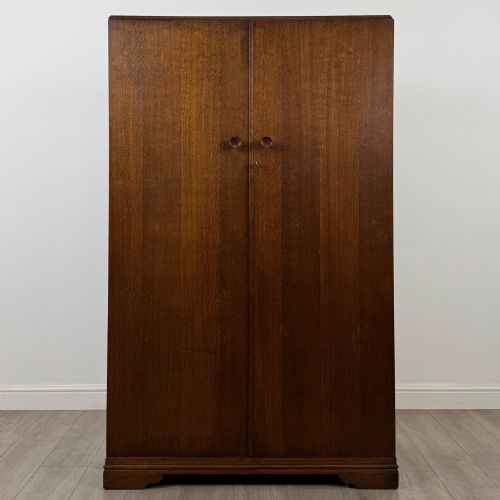
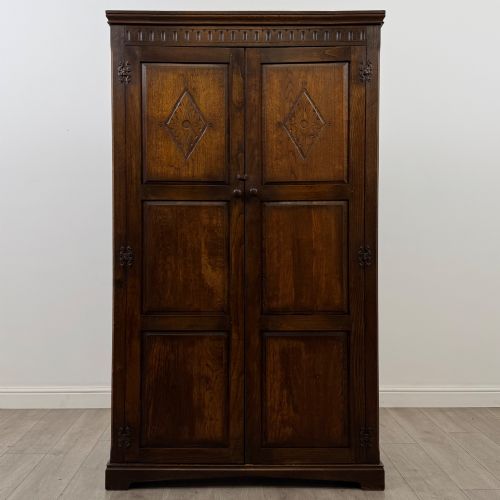
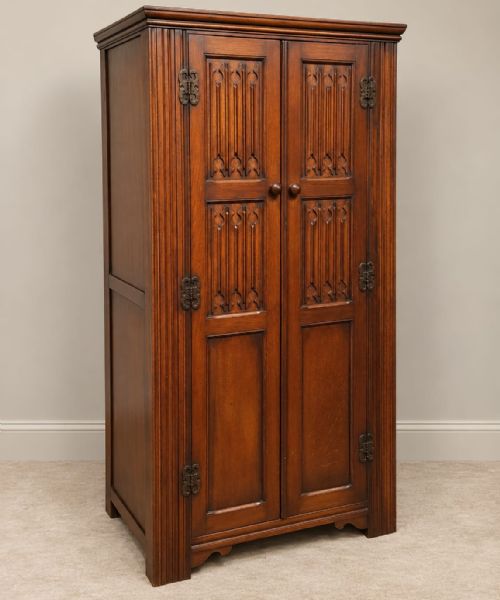
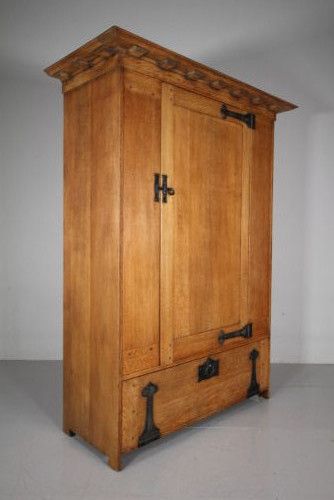
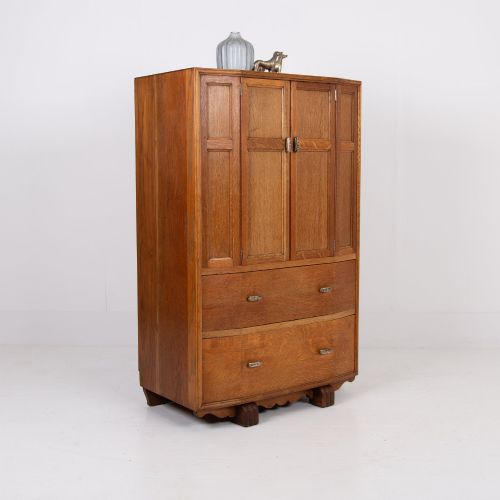


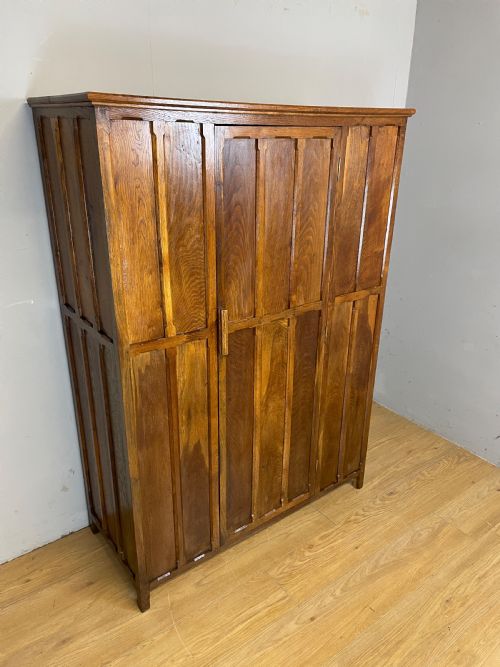


Solid Oak Clothes Press
A solid oak clothes press offers sturdy storage and enduring presence, uniting robust timber with practical compartments for daily use.
Solid Oak Clothes Press
A solid oak clothes press provides substantial storage through a combination of hanging space, shelves, and internal drawers enclosed by heavy timber doors. When exploring a solid oak clothes press, buyers encounter forms ranging from early eighteenth-century press cupboards to Edwardian wardrobes and tallboys.
The pieces on this page span the Georgian, Victorian, Edwardian, and Art Deco eras, alongside Arts and Crafts and Gothic Revival movements. Edwardian and nineteen-twenties examples appear frequently, often featuring panelled doors and fitted interiors designed for contemporary garments.
Older pieces from the eighteenth century demonstrate heavier proportions and traditional pegged construction, whereas later twentieth-century iterations incorporate simpler lines and fitted hanging compartments. Every solid oak clothes press shares a heavy wooden framework built to withstand decades of domestic service.
Materials and construction
Makers built these pieces primarily from solid oak, complemented by brass and iron hardware such as hinges, handles, and escutcheons. Glass panels occasionally appear in related wardrobe doors, while mother-of-pearl and wrought iron provide decorative accents on specific Arts and Crafts examples.
Joinery methods relied on traditional techniques including mortise and tenon joints, tongue and groove panelling, and hand-cut dovetails within the internal drawers. Timber selection balanced visual grain patterns with structural strength, ensuring the frame held the weight of heavy doors without sagging.
Some pieces retain original wrought iron hardware and mother-of-pearl inlay, reminding us that even utilitarian storage once received whimsical decorative touches.
Factors determining quality
Quality rests in the selection of the timber and the precision of the joinery rather than surface ornamentation alone. Superior examples display carefully matched grain across the doors and structural stability that keeps the heavy framework square.
Internal arrangements and original hardware also separate standard items from finer work. Complete brass fittings, working locks, and well-fitted internal linen slides or drawers indicate higher workshop standards during production.
Heals St Ives·Maple Co
The Solid Oak Clothes Press Glossary
- Clothes press
- A large cabinet designed for storing garments and textiles, often featuring upper cupboard doors and lower drawers. It precedes the modern wardrobe in domestic interiors.
- Tallboy
- A tall storage cabinet consisting of a chest of drawers stacked beneath or above a cupboard section. This form maximises vertical storage space in bedrooms.
- Mortise and tenon
- A traditional woodworking joint where a projecting tongue fits snugly into a matching cavity. This method creates strong, durable corners without relying on metal fasteners.
- Arts and Crafts
- A design movement prioritising simple forms, visible construction, and traditional craftsmanship over mass-produced ornamentation. Pieces from this style often display honest structural joinery and subtle metalwork.
- Escutcheon
- A protective plate surrounding a keyhole, usually fashioned from brass or iron. It prevents the wood around the lock from wearing down through repeated use.
Solid Oak Clothes Press: Frequently Asked Questions
What is a solid oak clothes press?
A solid oak clothes press is a heavy wooden storage cabinet designed for garments and linens, typically featuring panelled doors enclosing shelves or hanging space.
These pieces combine functional compartments with durable timber construction, making them a lasting addition to domestic spaces.
How do I care for solid oak furniture?
Solid oak benefits from regular dusting with a dry cloth and occasional treatment with suitable natural waxes to nourish the grain. Keeping the wood away from direct heat sources prevents shrinkage and splitting.
Maintaining stable room humidity protects the structural integrity of the joints and keeps the heavy doors hanging true.
How do I date a clothes press?
Dating relies on examining the construction methods, hardware styles, and overall proportions of the piece. Eighteenth-century examples display hand-cut dovetails and pegged frames, while Edwardian and later pieces use machine-sawn timber and different fixing methods.
Stylistic markers such as Arts and Crafts metalwork or Art Deco geometric lines also help place a piece within a specific era.
Will a clothes press fit modern hangers?
Older clothes presses, particularly those from the eighteenth and nineteenth centuries, were built for folded linens and garments rather than modern wardrobe rails. Some Edwardian and later adaptations include hanging space, but internal depths can vary.
Buyers should check internal dimensions carefully if intending to hang standard contemporary coats and suits.