






Solid Elm Captains Chair
A solid elm captains chair is a robust country seat offering deep comfort and honest craftsmanship, built for long hours at a desk or by the hearth.
Solid Elm Captains Chair
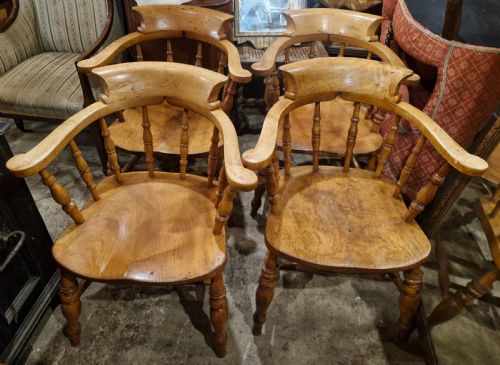
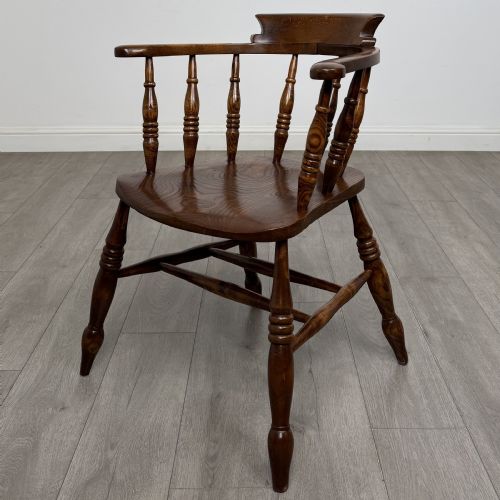
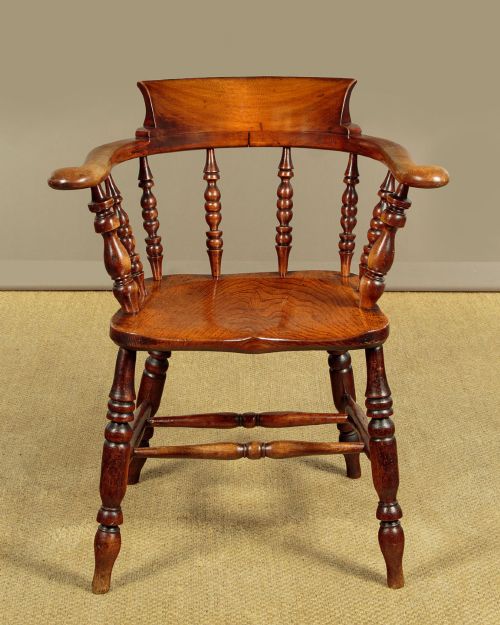
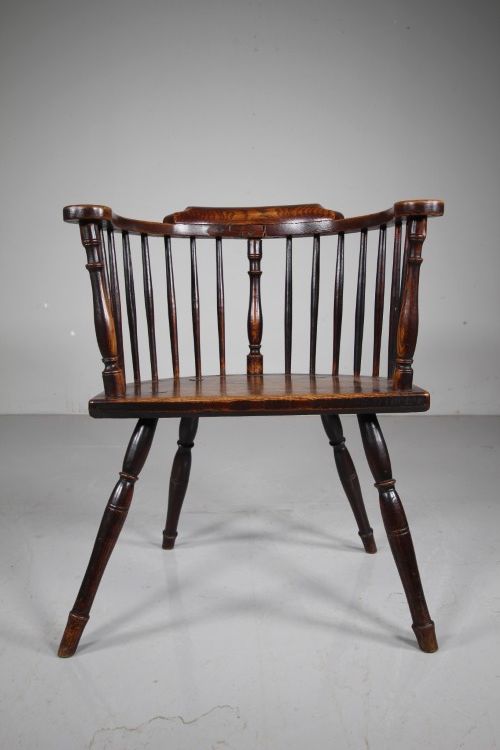
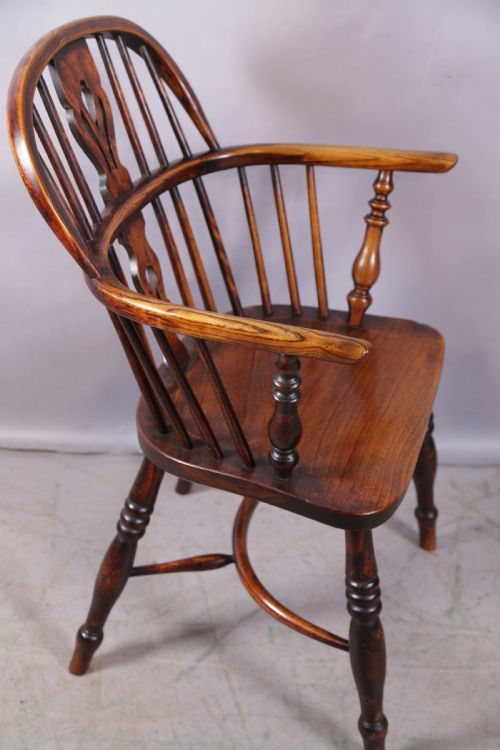
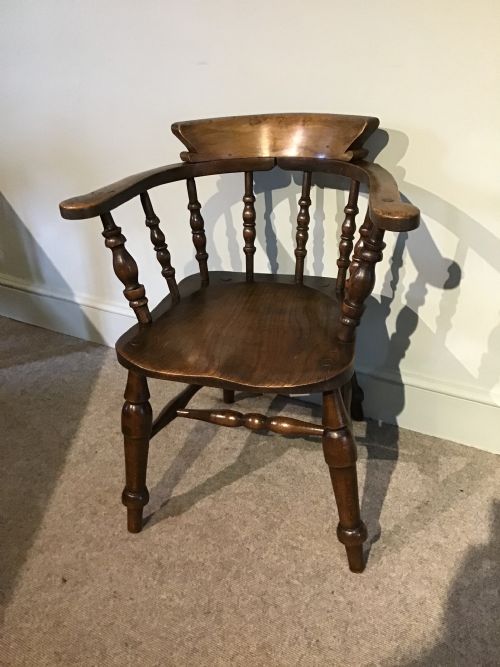
A solid elm captains chair, often called a smoker's bow or Windsor variant, is a sturdy timber armchair designed for utility and comfort in domestic or commercial settings. These sturdy seats appear across various periods, from the eighteenth century through the Victorian era and into the early twentieth century.
The versions most frequently encountered on this page date from the nineteenth century and the Victorian period, reflecting regional English country craftsmanship. They serve equally well today as desk chairs or low reading seats in traditional and modern interiors alike.
Makers shaped these utilitarian pieces as armchairs, desk chairs, and high-back Windsor variations, employing robust structural timbers suited to daily use. Their enduring appeal lies in the honest joinery and the rich patination acquired over generations of service.
Materials and construction methods
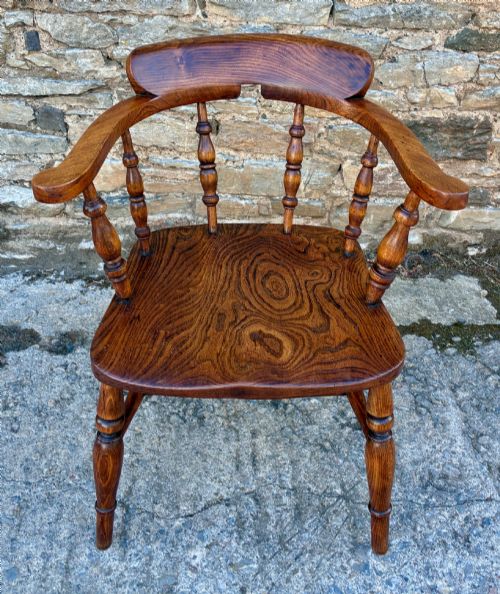
Makers selected elm primarily for solid seats, valuing its tough, interlocked grain that resisted splitting under heavy use. This timber was frequently paired with beech, ash, alder, or oak for spindles, bows, and legs.
Constructed using traditional Windsor techniques, these chairs feature turned legs and spindles wedged firmly into thick, saddled wooden seats. Steam-bent rails formed the characteristic continuous bow back that supports the arms.
Solid Elm Captains Chair Retail Price Guide 2026
Typical asking prices for solid elm captains chair among the pieces listed under this phrase on Sellingantiques today, from the lower quarter to the upper quarter. They describe what is for sale here now, not the wider market.
One remarkably honest nineteenth-century chair bears the actual signature stamp of Fred Walker, grounding anonymous country craftsmanship in a named hand.
Assessing quality and character
Quality rests in the depth of the seat saddling and the sculptural grace of the bentwood bow, which reveal the maker's eye for comfort and line. Thicker, well-figured elm seats show superior selection of raw materials.
The integrity of the structural joints and the warmth of the natural timber surface distinguish finer examples from more utilitarian workshop output. Original timber patination without excessive modern intervention preserves the historical honesty of the piece.
Fred Walker
The Solid Elm Captains Chair Glossary
- Smoker's bow
- A low-backed Windsor armchair featuring a continuous bentwood rail and thick wooden seat, closely related to the captain's chair. These comfortable seats were common in vernacular settings and public houses.
- Saddled seat
- A wooden seat base carved into a concave, ergonomic shape to improve comfort during long periods of sitting. This labor-intensive shaping is a hallmark of better country chair making.
- Windsor chair
- A chair built with a heavy solid wooden seat into which the legs and back spindles are independently inserted rather than framed. English regional versions frequently incorporated mixed native hardwoods.
- Steam bending
- The process of applying moisture and heat to timber until it becomes pliable enough to curve into continuous back rails or arm bows. This technique maximises the structural strength of the wood.
Solid Elm Captains Chair: Frequently Asked Questions
What is a solid elm captains chair?
A solid elm captains chair is a sturdy vernacular armchair featuring a bentwood bow back and a shaped wooden seat, designed for robust daily utility.
These chairs bridge domestic and workspace use, functioning historically as office seats, smoking chairs, and fireside armchairs.
How were these chairs used historically?
They served as practical seating in offices, country homes, and inns where durability mattered more than delicate ornament.
The supportive curved back and deep seat made them suitable for long hours of writing or reading.
How can I tell the Victorian pieces apart?
Victorian examples often display turned beech or ash spindles paired with elm seats, reflecting established regional English country traditions.
Subtle shifts in the shaping of the arm bow and the thickness of the seat timber help distinguish workshop output across the nineteenth century.
How do I live with an antique chair?
These robust timber chairs integrate easily into modern workspaces and dining rooms as practical, hard-wearing seating.
Keeping them away from direct heat sources helps preserve the stability of the mixed hardwood construction and the natural surface finish.