
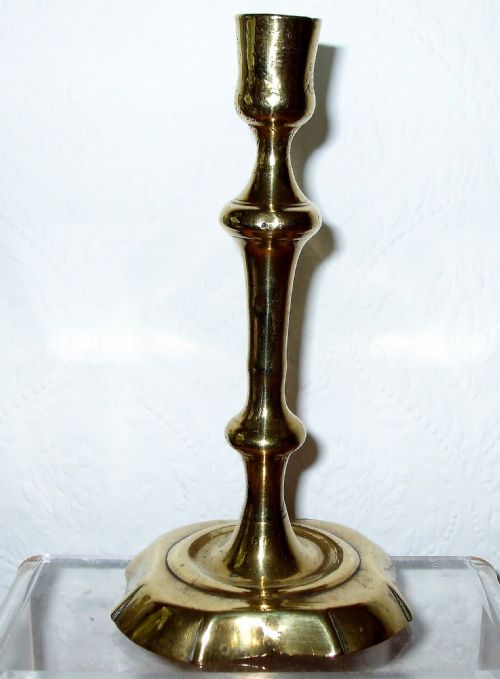


Solid Brass Candleholders
Solid brass candleholders bring heavy metal and warm metallic light into a room, offering enduring utility across centuries of design.
Solid Brass Candleholders
When you search for solid brass candleholders, you encounter robust domestic lighting pieces spanning the Georgian, Victorian, and Edwardian periods. These items include pairs of column candlesticks, single pieces on fitted bases, and occasional multi-light candelabra.
The inventory on this page leans heavily toward nineteenth-century examples alongside eighteenth-century items and early twentieth-century designs. Forms range from classical column shapes to Gothic revival styles, Anglo-Indian work, and Arts and Crafts creations.
How they were made
Maker workshops produced these items primarily through casting methods using brass, bell brass, and solid bronze. Artisans shaped columns, sockets, and bases through metalwork techniques that resulted in heavy, durable forms.
Specific variations include tear drop columns and fitted bases, demonstrating the metalworker's skill in turning and joining solid components. The material itself provides a weighty substance that distinguishes these items from plated alternatives.
Current listings span periods from the seventeenth century through to the 1930s, featuring brass, solid bronze, and bell brass materials.
What varies in quality
Quality rests in the crispness of the casting and the weight of the metal utilised in the construction. Finer examples show sharp architectural detail in columns and decorative motifs, whereas lesser pieces display softer edges and lighter material.
Proportion and balance also separate standard production items from more substantial pairs. Superior items maintain a satisfying heft and secure joining between the base, stem, and socket.
The Solid Brass Candleholders Glossary
- Brass
- An alloy of copper and zinc known for its bright golden appearance and durability. It forms the primary material for the vast majority of items listed here.
- Column candlestick
- A lighting form modelled after classical architectural columns, featuring a distinct base, vertical shaft, and top drip pan or socket. This style appears frequently across Georgian and Victorian listings.
- Candelabra
- A branched candlestick designed to hold multiple candles simultaneously. These offer greater light output than single candlesticks.
- Bell brass
- A specific alloy containing higher copper and tin content, traditionally utilised for bells. This material yields a resonant tone when struck and appears in early Swedish pieces.
- Arts and Crafts
- A design movement prioritising handcraftsmanship and simple forms over mass production. Pieces from this style exhibit honest construction and understated detail.
Solid Brass Candleholders: Frequently Asked Questions
How do I date solid brass candleholders?
Dating relies on observing the manufacturing technique, base construction, and stylistic clues from periods such as the Georgian or Victorian eras. Cast marks, patination, and assembly methods also provide clear indicators of age.
Earlier eighteenth-century examples often feature multi-part cast construction with distinct peg or screw fittings, while later nineteenth-century items introduce heavier machine finishing and varied stylistic revivals.
Are these candleholders solid brass?
The listings on this page comprise items made from solid brass, cast brass, bell brass, and solid bronze. These materials differ fundamentally from thin brass-plated metals.
Inspecting the interior socket and the overall weight helps confirm solid metal construction rather than surface plating.
How should I clean brass candleholders?
Maintenance typically involves gentle dusting with a soft cloth to preserve the natural patina built up over decades or centuries. Aggressive polishing removes the historical surface character that collectors value.
If cleaning is necessary, use a mild, non-abrasive metal cleaner specifically formulated for brass, applying it sparingly and buffing gently afterwards.
What styles are available?
The selection encompasses Georgian, Victorian, Edwardian, Neoclassical, Gothic Revival, Anglo-Indian, Arts and Crafts, and Baroque designs. Each style reflects the aesthetic preferences of its specific period.
Column forms and cobra motifs represent part of the diverse decorative vocabulary found within these categories.