





Small Wooden Slant Desk
A small wooden slant desk brings compact writing storage to any room, offering traditional craftsmanship in mahogany, walnut, and oak.
Small Wooden Slant Desk
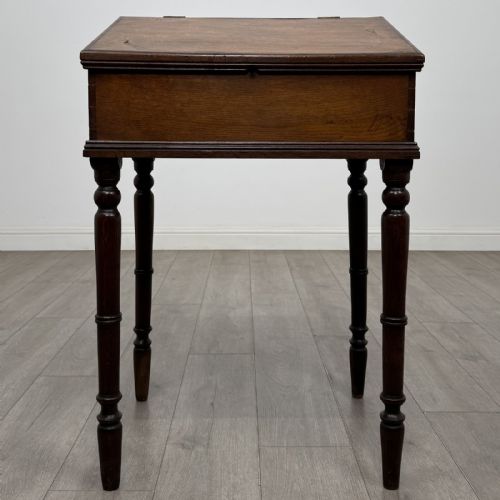
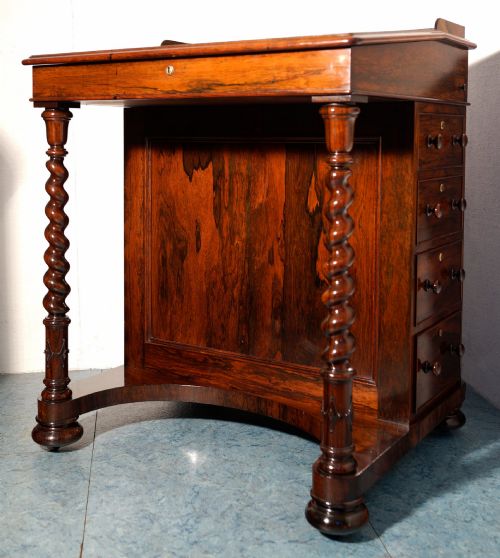
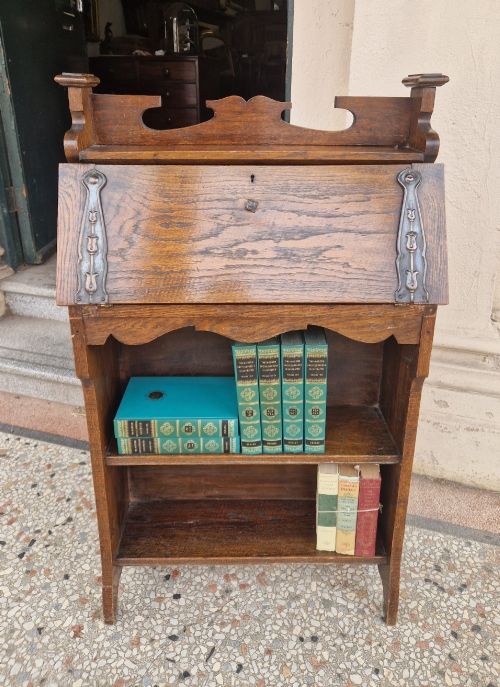
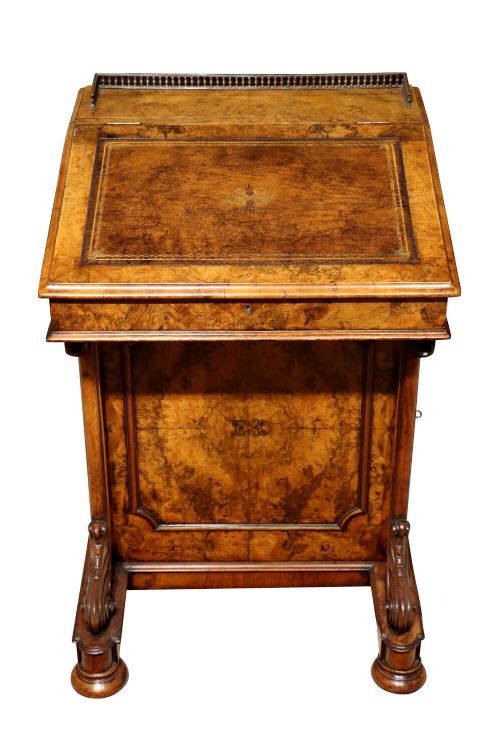
When you search for a small wooden slant desk, you are looking at compact writing furniture designed for domestic use across several centuries. The selections on this page predominantly take the form of Davenport desks, writing bureaux, and small child desks.
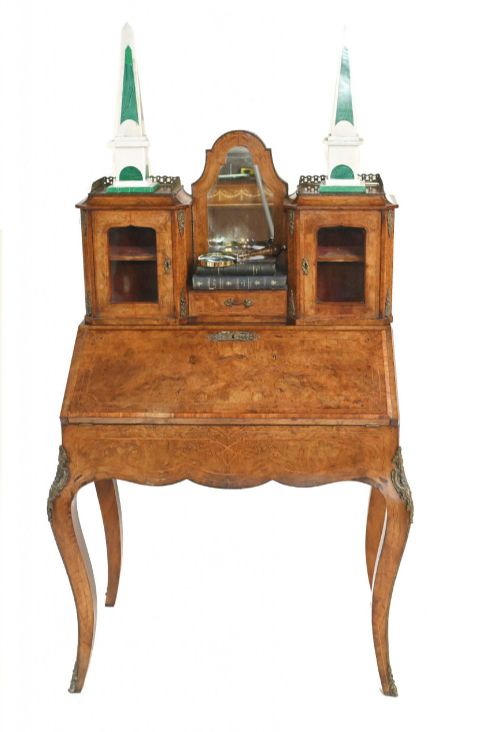
The periods represented stretch from the 18th century through the Victorian era and into the early 20th century. Buyers frequently encounter burr walnut Davenport desks alongside mahogany and oak writing bureaux from these periods.
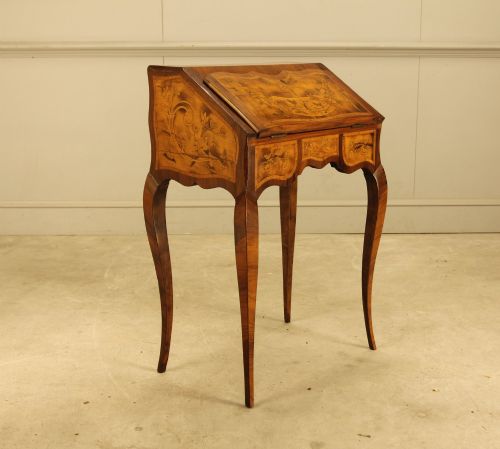
Origin and form vary considerably, ranging from Regency examples of diminutive proportions to Arts and Crafts oak pieces and Italian marquetry bureau desks. Each piece provides a sloping surface intended for correspondence and record keeping.
Materials and construction methods
Cabinet makers utilised dense hardwoods such as mahogany, oak, rosewood, and walnut to construct the main bodies of these writing pieces. Burr walnut veneers frequently appear on Victorian examples to create richly figured surfaces across the sloping lids.
Secondary details involve contrasting timbers like satinwood for internal compartments, alongside brass hardware and fitted leather writing surfaces. Marquetry inlay and carved ornamentation adorn specific pieces, particularly those influenced by French styles or Italian revival work.
Small Wooden Slant Desk Retail Price Guide 2026
Typical asking prices for small wooden slant desk among the pieces listed under this phrase on Sellingantiques today, from the lower quarter to the upper quarter. They describe what is for sale here now, not the wider market.
Listings feature pieces spanning from the 18th century through the Victorian era to early 20th century Arts and Crafts examples.
Distinctions in craftsmanship and materials
Quality separates through the selection of timber veneers and the intricacy of internal fittings such as satinwood drawers and secret compartments. Finer examples display meticulous marquetry and precise cabinet work that remains stable across the joints.
The integration of functional elements, including functioning keys, smooth-sliding drawers, and well-fitted writing slopes, marks the distinction between standard utility pieces and superior cabinet making.
Gillows·Pairs MFG Co
The Small Wooden Slant Desk Glossary
- Davenport desk
- A compact pedestal desk featuring a sloping top hinged to lift for storage, typically with drawers opening to the side. This form gained popularity during the 19th century for use in ladies' boudoirs and drawing rooms.
- Bureau
- A writing cabinet with a sloping flap that covers a fitted interior of pigeonholes and small drawers. When closed, it presents a neat rectangular profile.
- Marquetry
- The art of applying pieces of veneer to a structure to form decorative patterns and pictures. Makers utilised varied coloured woods to achieve pictorial designs on the surface.
- Satinwood
- A durable, lustrous timber with a yellowish sheen used primarily for interior drawer linings and fine stringing. Its bright tone contrasts effectively against darker outer woods like mahogany or walnut.
- Pedestal desk
- A heavy freestanding desk supported by two vertical columns of drawers. Smaller variations incorporate cabinets or banks of drawers beneath the writing surface.
Small Wooden Slant Desk: Frequently Asked Questions
What is a Davenport desk?
A Davenport desk is a compact writing cabinet featuring a sloping top and side drawers.
Originating in the 19th century, it was designed to occupy minimal space while providing comprehensive stationery storage.
How do I identify a bureau?
A bureau consists of a hinged writing flap that opens to reveal internal compartments and small drawers.
When closed, the sloped surface conceals the writing materials and keeps the room tidy.
What timbers were commonly used?
Cabinet makers predominantly used mahogany, walnut, burr walnut, and oak for these compact desks.
Rosewood and kingwood also appear on select refined examples from the Regency and Victorian periods.
Where were these desks placed?
These pieces suited domestic sitting rooms, drawing rooms, and ladies' boudoirs where space was at a premium.
Their diminutive proportions allowed them to function as practical writing stations without dominating the floor plan.