



Small Wooden Press
A small wooden press offers compact, period storage, built from mahogany, oak, and ash across centuries of British craftsmanship.
Small Wooden Press
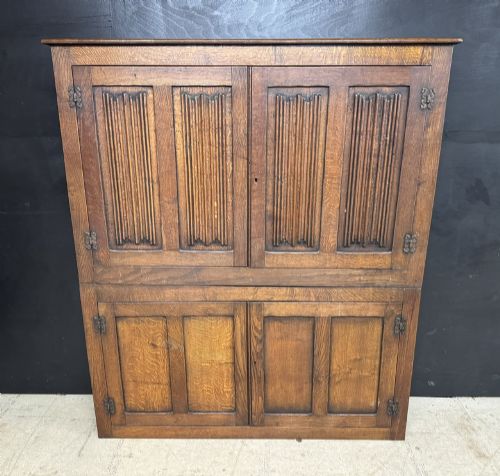
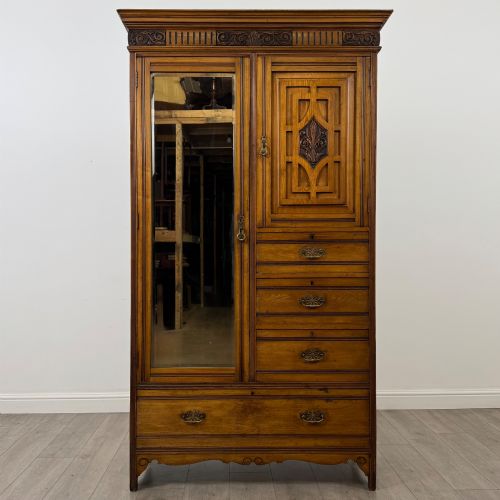
A small wooden press serves as a compact storage piece, encompassing linen cupboards, dwarf presses, and miniature cabinets designed to hold textiles or small household items. When you search for a small wooden press, you encounter pieces that scale down the imposing architecture of larger country house linen presses and wardrobes for tighter domestic spaces.
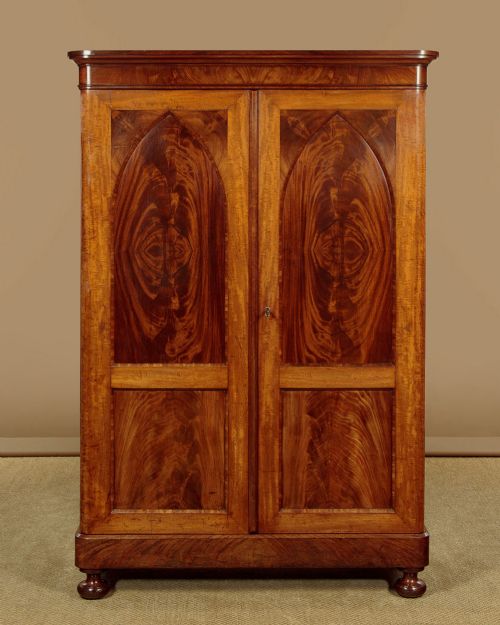
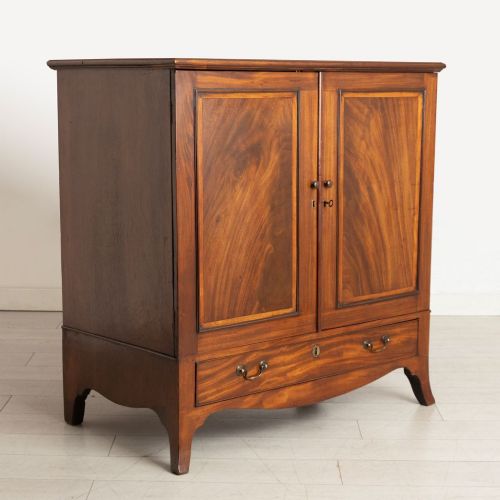
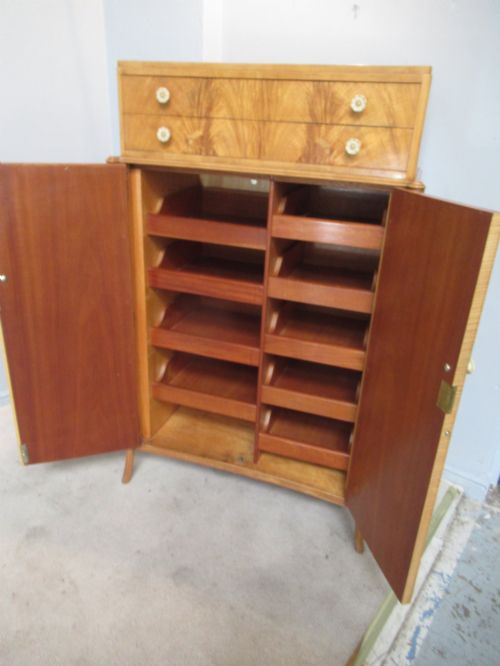
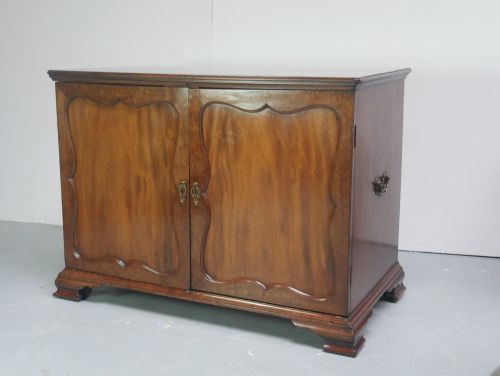
The pieces appearing on this page span several centuries and styles, ranging from Georgian mahogany designs to Victorian ash compactums and 1920s oak hall cupboards. You are most likely to meet mahogany and oak examples, often featuring fitted interiors or dwarf proportions that distinguish them from standard full-size bedroom furniture.
Makers adapted traditional forms into smaller formats, yielding miniatures, dwarf cupboards, and compactums that served specific storage needs in bedrooms and halls. These pieces combine utility with distinct period character, drawing on Georgian, Victorian, and revival styles.
Materials and Construction
Cabinet makers utilised dense hardwoods such as mahogany, oak, and ash, often applying flame mahogany veneer to primary surfaces for visual depth. Secondary timbers and structural elements reflect the specific period, whether using solid oak for Tudor revival pieces or pale maple in later 1930s variations.
Metal hardware played a functional role in construction, incorporating brass fittings and iron elements to secure doors, drawers, and fitted interiors within these compact frames. Joinery methods varied by era, supporting the architectural details seen in court cupboards and dwarf linen presses.
Small Wooden Press Retail Price Guide 2026
Typical asking prices for small wooden press among the pieces listed under this phrase on Sellingantiques today, from the lower quarter to the upper quarter. They describe what is for sale here now, not the wider market.
Listings feature mahogany, oak, ash, and maple across periods from the 18th century through the 1930s.
Assessing Quality and Character
Quality in these pieces rests on the selection of timber, particularly the grain figuration in flame mahogany veneer or the integrity of solid oak and ash. Superior examples display thoughtful proportion between the body and fitted interior, maintaining architectural balance despite their reduced scale.
The refinement of period details, from the execution of revival styles to the precision of brass hardware, separates standard utility items from finer cabinet work. Original surfaces and untouched timber patination further distinguish pieces that retain their integrity over centuries.
The Small Wooden Press Glossary
- Compactum
- A multi-compartment wardrobe or storage cabinet designed to hold various types of clothing in a restricted footprint. It often includes a combination of hanging space, drawers, and sliding trays.
- Dwarf Linen Press
- A low-standing cupboard specifically proportioned for storing household linens and textiles. This form sits lower than traditional full-height presses while retaining the characteristic upper doors and lower drawer configuration.
- Court Cupboard
- An antique storage cabinet featuring stacked tiers or enclosed upper and lower sections, often associated with revival styles. These pieces display distinct architectural carving and heavier wooden construction.
- Flame Mahogany Veneer
- A thin slice of mahogany timber cut from the point where a branch joins the main trunk, producing a flickering, flame-like grain pattern. Cabinet makers applied this to prominent exterior surfaces for decorative effect.
Small Wooden Press: Frequently Asked Questions
What is a small wooden press used for?
These pieces function primarily as compact storage cabinets, historically holding household linens, napkins, or clothing in smaller rooms.
Today, they serve a similar purpose in contemporary interiors, fitting into hallways, bedrooms, or living spaces where full-sized wardrobes are impractical.
How do I identify a Georgian press?
Georgian pieces typically feature solid mahogany or mahogany veneers, clean architectural proportions, and traditional bracket feet or plinth bases.
They rely on understated elegance rather than heavy ornamentation, distinguishing them from later Victorian revivals.
What materials are common in these pieces?
Mahogany, oak, and ash form the primary structure of these cabinets, frequently paired with secondary woods and decorative veneers.
Metal elements such as brass handles and iron fittings complete the construction, varying according to the period and style.
Where should I place a dwarf press?
Their reduced height makes them versatile enough to sit in entrance halls, landings, or compact bedrooms without overwhelming the floor plan.
Many examples offer flat top surfaces that can display decorative objects while concealing storage below.