



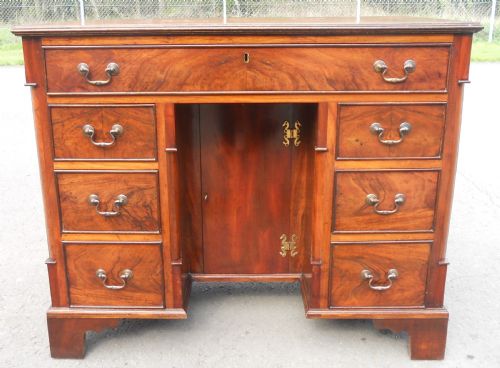


Small Wooden Pedestal Desk
A small wooden pedestal desk brings functional workspace into a compact footprint, offering fitted drawers and writing surfaces scaled for modest rooms.
Small Wooden Pedestal Desk
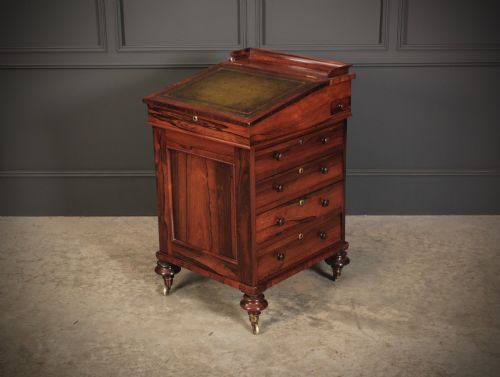
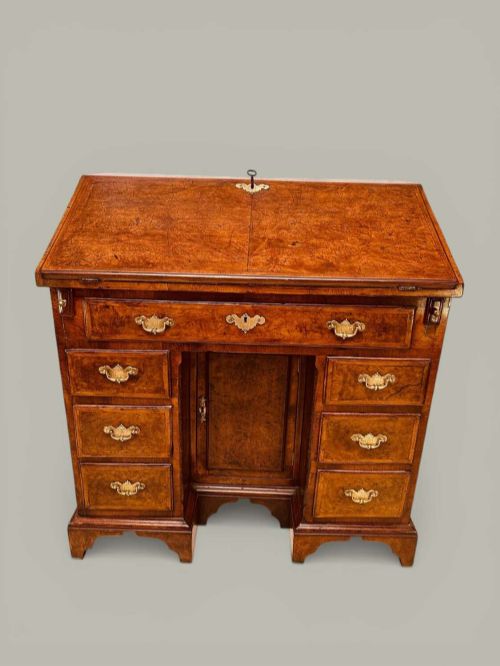
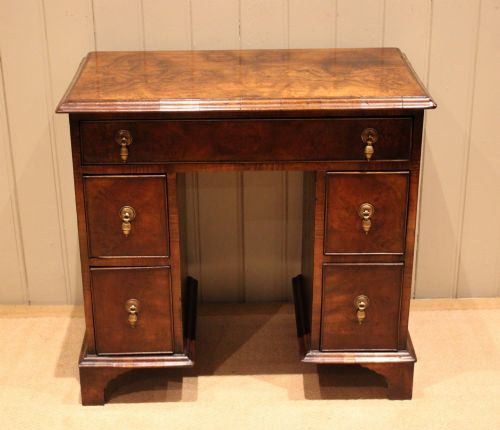
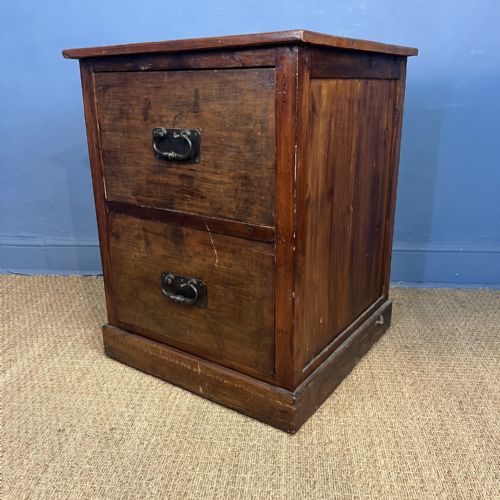
A small wooden pedestal desk sits at the intersection of practical writing furniture and compact antique design, designed to organise correspondence and paperwork without dominating a room. When exploring a small wooden pedestal desk, buyers encounter diverse forms ranging from kneehole desks and miniature writing tables to specialised davenports and cabinet-style pieces. The pieces appearing here span centuries from the eighteenth century through the Victorian and Edwardian eras, reflecting changing domestic requirements for personal administration.
The configurations vary significantly among the items documented on this page, taking shapes such as bureau desks, drum tables, and pedestal sideboards. Proportions remain consistently compact, often described through terms denoting miniature scale or diminutive dimensions. Woods range across native and exotic timbers, each establishing a distinct visual presence suited to period interiors.
Materials and construction methods
Cabinetmakers utilised dense hardwoods such as mahogany, oak, walnut, and teak, frequently selecting highly figured veneers like burr walnut to create striking decorative surfaces on drawer fronts and writing slopes. Structural integrity relied on traditional joinery methods that accommodated the movement of solid timbers and applied veneers over decades of daily use.
Secondary materials such as brass for handles, locks, and casters, alongside leather inserts for writing surfaces, completed the functional specification. These components were chosen for durability and tactile quality, ensuring the furniture endured rigorous use in studies and libraries.
Small Wooden Pedestal Desk Retail Price Guide 2026
Typical asking prices for small wooden pedestal desk among the pieces listed under this phrase on Sellingantiques today, from the lower quarter to the upper quarter. They describe what is for sale here now, not the wider market.
Listings feature mahogany, oak, walnut, burr walnut, and teak, spanning the eighteenth, nineteenth, and early twentieth centuries.
Assessing craftsmanship and finish
The distinction between standard production and exceptional execution rests in the selection of timber veneers, the precision of internal drawer construction, and the integrity of the finish. Finer examples display carefully matched wood grains across secondary panels and primary facades, maintaining structural alignment without relying on heavy modern adhesives.
Hardware retention and the condition of integrated mechanisms, such as writing slopes or specialised filing arrangements, indicate the original standard of manufacture. Superior pieces retain matching period brasswork and smooth-sliding drawers that demonstrate the maker's underlying skill.
The Small Wooden Pedestal Desk Glossary
- Pedestal desk
- A freestanding writing table supported by two banks of drawers or cupboards beneath the work surface.
- Davenport
- A compact writing desk featuring a sloping top hinged above a pedestal of side drawers.
- Kneehole desk
- A small desk with a central recess for the user's legs, flanked by narrow pedestals of drawers.
- Padauk
- A heavy, dense tropical timber prized for its reddish-brown colour and durability in colonial furniture.
- Breakfront
- A cabinet or desk facade where the central section projects forward from the flanking wings.
Small Wooden Pedestal Desk: Frequently Asked Questions
What defines a small pedestal desk?
These desks combine a manageable footprint with functional storage arranged in supporting pedestals beneath the primary writing surface.
They were built in various proportions to suit private chambers and smaller studies where full-sized library furniture proved impractical.
How do I care for a wood desk?
Protect antique timber surfaces from direct sunlight and sudden temperature shifts to prevent timber splitting or veneer lifting.
Apply traditional wax polishes sparingly and buff gently with a soft cloth to maintain the natural sheen of the grain.
Where were these desks used?
Owners placed them in private libraries, bedrooms, and drawing rooms for managing personal correspondence and household accounts.
Their compact scale allowed them to function effectively as secondary writing spaces away from formal offices.
How are different wood types identified?
Examination of grain patterns, weight, and colour variations reveals whether a piece utilises native hardwoods or exotic imported timbers.
Familiarity with historical cabinet-making trends helps distinguish between indigenous oak and mahogany versus exotic padauk or teak.
What is a davenport desk?
A davenport is a compact form of writing furniture featuring a sloping, often leather-lined writing lid positioned above a pedestal.
Interior compartments and side-opening drawers maximise storage within a remarkably small floor area.