

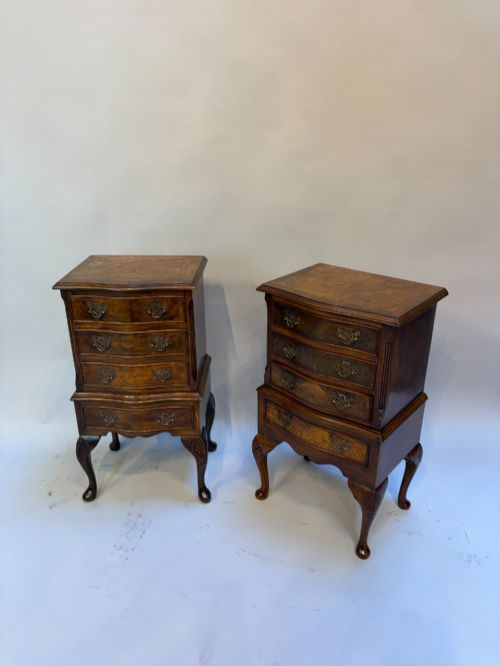
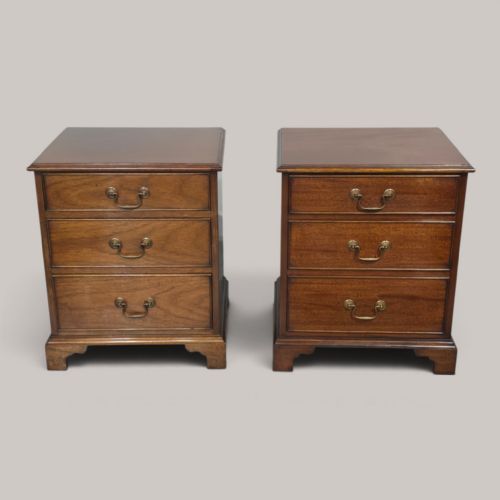
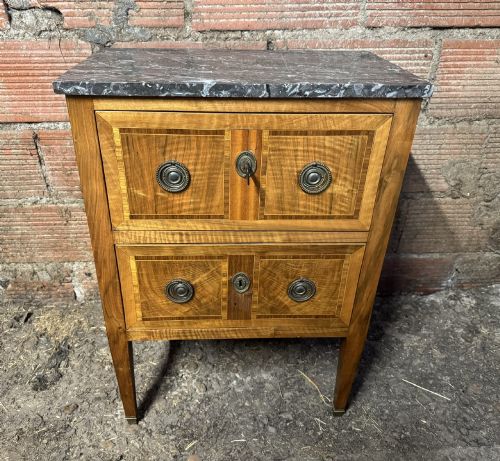
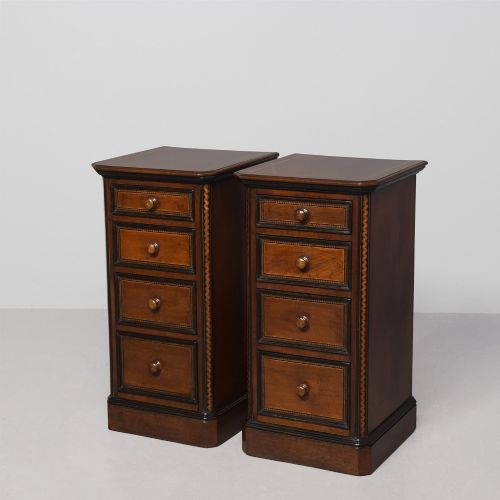

Small Wooden Bedside Chests
Small wooden bedside chests bring compact storage and period character to a bedroom, spanning Georgian elegance down to Art Deco lines.
Small Wooden Bedside Chests
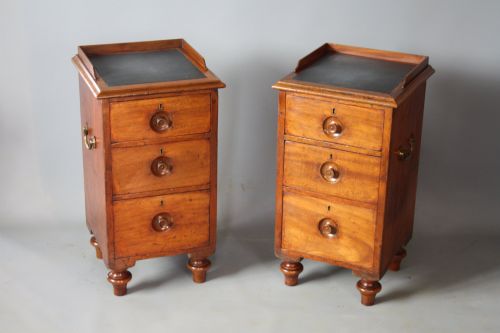
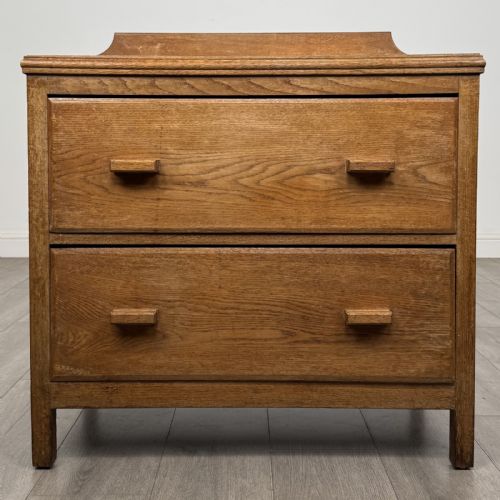
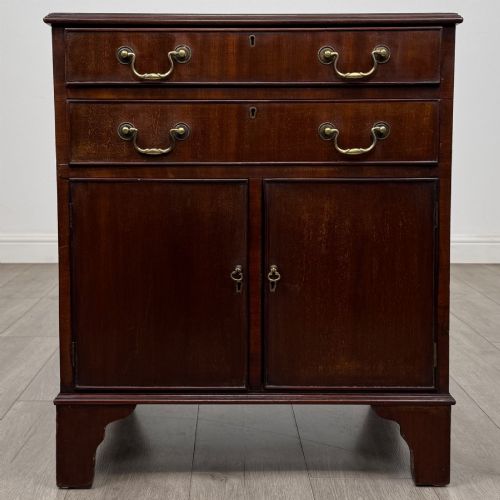
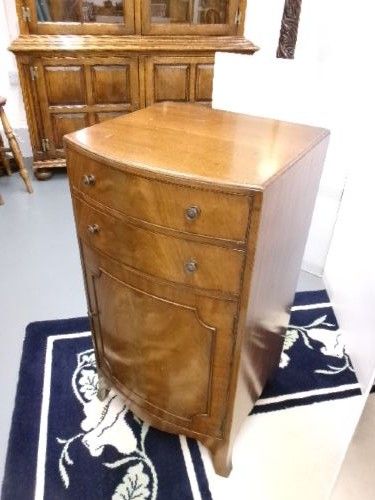
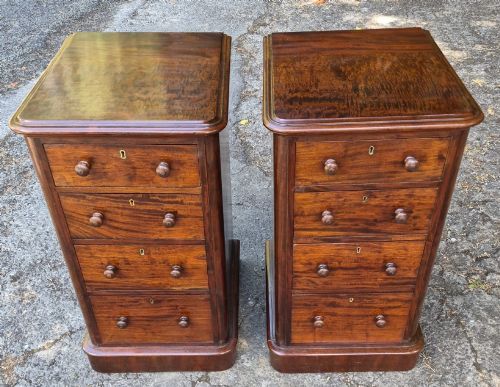
Small wooden bedside chests comprise compact chests of drawers, bedside cabinets, and commodes designed to sit beside a bed. The pieces appearing here stretch from the eighteenth century through the Victorian and Edwardian eras into the nineteen-thirties.
Mahogany and oak dominate the forms, alongside walnut, satinwood, elm, and ash. Buyers frequently encounter pairs of Victorian mahogany chests or single Georgian and Edwardian examples featuring small drawers and cupboards.
Makers shaped these utilitarian pieces for servants' quarters, country houses, and town bedrooms alike. Their modest proportions suit modern rooms precisely while retaining original timber patination.
Materials and Construction
Cabinetmakers built these pieces primarily from solid hardwoods and select veneers, employing mahogany, oak, and walnut. Timber selection governed the strength of drawer linings and the stability of top boards.
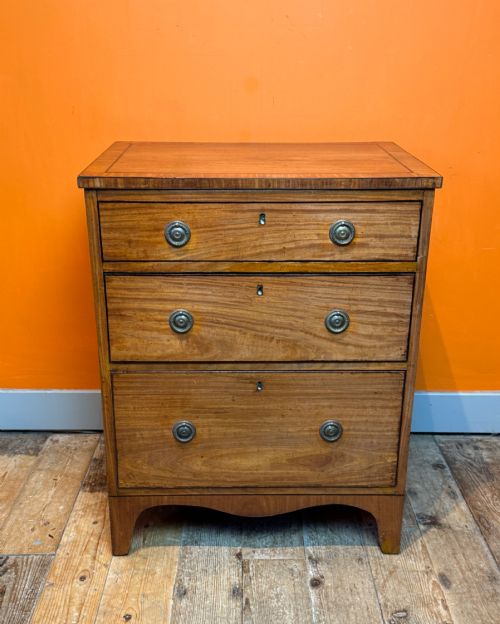
Joinery methods included dovetail joints for drawer construction and inset brass hardware for handles. Surfaces received wax or polished finishes that highlighted the natural grain of flame mahogany, burr walnut, and golden oak.
Small Wooden Bedside Chests Retail Price Guide 2026
Typical asking prices for small wooden bedside chests among the pieces listed under this phrase on Sellingantiques today, from the lower quarter to the upper quarter. They describe what is for sale here now, not the wider market.
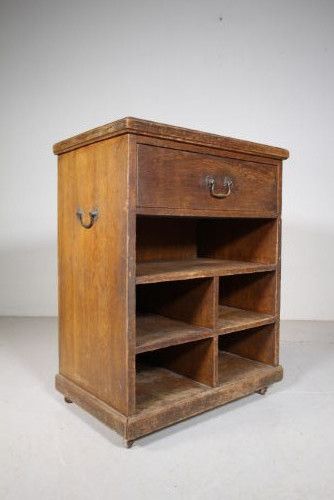
One eighteenth-century oak close stool disguises sanitary work as a charming small bedside chest.
Evaluating Quality
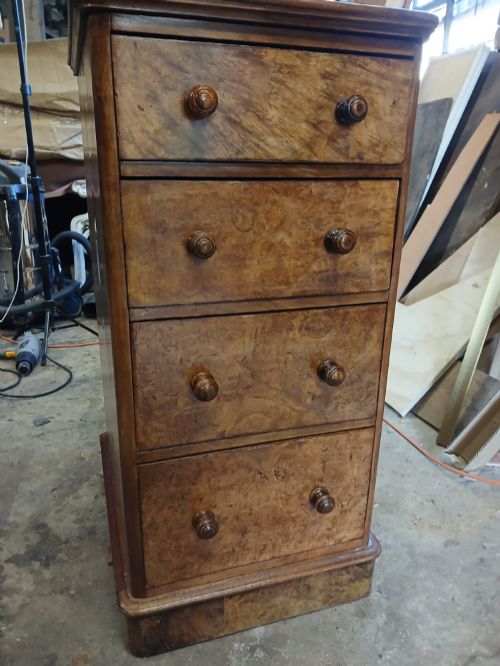
Quality rests in the crispness of timber selection, such as figured flame mahogany or burr oak, and the restraint of decorative inlay. Better workshops achieved balanced proportions and clean drawer movement without unnecessary elaboration.
Original brass handles, sound bracket feet, and untouched patination distinguish superior survivors. Later alterations or heavy refinishing diminish the integrity of period pieces.
The Small Wooden Bedside Chests Glossary
- Brushing slide
- A pull-out shelf above the top drawer used for folding clothes or setting down small items. It typically operates on wooden runners set within the cabinet frame.
- Serpentine front
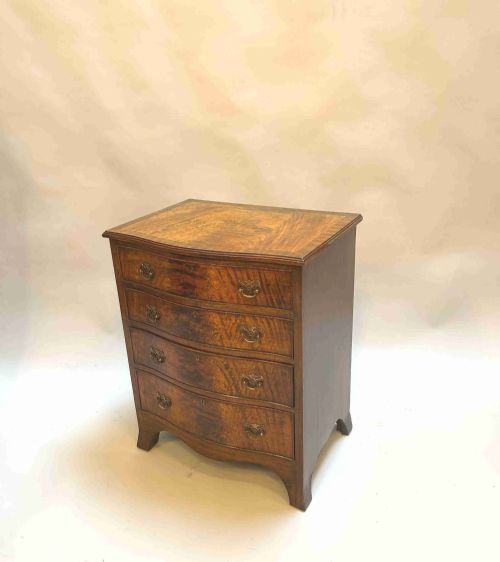
- A furniture front curved with a convex centre flanked by concave wings. This shape requires skilled carpentry to shape solid timber or apply matched veneers.
- Commode
- A piece of furniture enclosing a chamber pot, often disguised as a small chest of drawers or cupboard. Georgian examples frequently feature hinged tops or doors hiding the interior fitting.
- Close stool
- An early form of indoor sanitary seating enclosed within a wooden box or small chest. Examples from the eighteenth century use oak and incorporate hinged lids.
- Raised gallery
- A low wooden rail or upstand fixed around the top surface of a chest or table. This feature prevented objects from sliding off the edge.
- Bow front
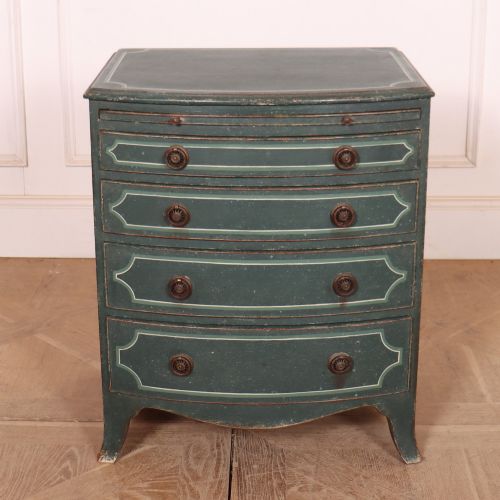
- A convexly curved furniture front that projects outward in a smooth arc. Cabinetmakers utilised this profile extensively on Georgian and Victorian mahogany pieces.
Small Wooden Bedside Chests: Frequently Asked Questions
What periods do these chests come from?
The pieces span the eighteenth century, the Georgian and Victorian eras, Edwardian years, and into the nineteen-thirties. You will find styles ranging from formal Regency satinwood to rustic oak and Art Deco walnut.
Each era brought distinct timber preferences and handle designs to these small bedside proportions.
Were these originally made as bedside tables?
Many historic pieces served different initial functions before becoming bedside chests. Some started as commodes, close stools, scullery chests, or small trinket storage units.
Their compact footprints make them well suited for modern bedroom layouts despite their varied origins.
How do I identify mahogany from oak pieces?
Mahogany displays a reddish-brown tone with a fine, straight or flamed grain that takes a high polish. Oak shows a paler golden or brown hue with prominent medullary rays and an open texture.
Cabinetmakers matched these timbers to the prevailing fashion of the maker's workshop and period.
Do matching pairs appear often?
Pairs do appear among the Victorian and Edwardian selections, alongside single bespoke pieces and eighteenth-century examples. Finding matching chests from earlier centuries remains uncommon.
Most antique chests were built as individual items for specific rooms.