



Small Wood Clock
A small wood clock brings compact traditional timekeeping into a room, offering rich timber cases and mechanical movements that anchor a mantel or desk.
Small Wood Clock
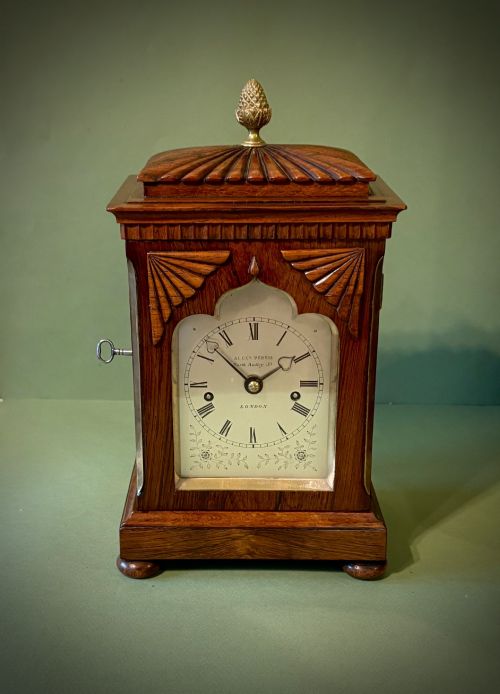
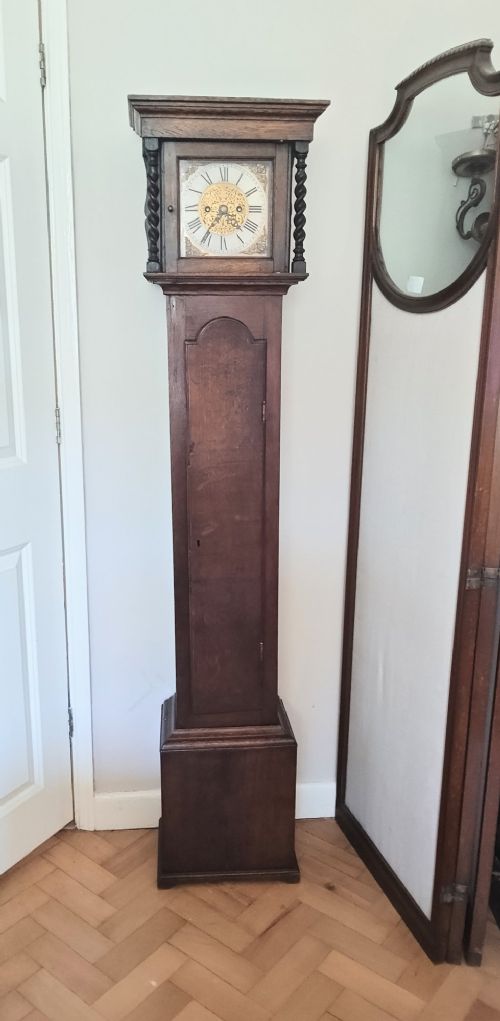
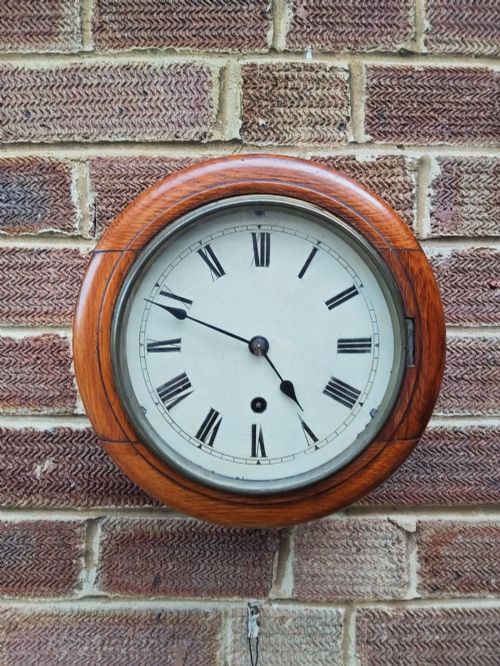
A small wood clock encompasses a diverse group of compact timepieces spanning the 18th century to the mid 20th century. Buyers searching for a small wood clock encounter forms ranging from miniature longcase grandmother clocks to mahogany table clocks and wall-mounted dial clocks.
The materials reflect centuries of cabinetmaking traditions, utilising mahogany, oak, walnut, satinwood and ebonised wood alongside brass dials and glass bezels. These pieces bridge decorative arts and practical function, appearing in Edwardian, Victorian, Regency and Georgian revival styles.
Mantel clocks, desk clocks and bracket clocks dominate the tabletop and shelf categories, whilst slim musical movements appear in miniature floor-standing cases. Each configuration offers a distinct way to incorporate period woodwork into interior spaces.
Materials and Construction
Cabinetmakers constructed the timber housings using solid and veneered mahogany, oak, burr walnut and satinwood, frequently applying ebonised finishes for contrast. These woods were shaped into architectural bracket forms, balloon cases and miniature longcase bodies.
Mechanically, these timepieces rely on brass movements, enamel dials and glass viewing panels. Fusee movements and chiming mechanisms provide the internal complexity housed within the fitted wooden cabinetry.
Small Wood Clock Retail Price Guide 2026
Typical asking prices for small wood clock among the pieces listed under this phrase on Sellingantiques today, from the lower quarter to the upper quarter. They describe what is for sale here now, not the wider market.
Quality Variations
The standard of a small wood clock rests on the precision of the cabinetwork and the refinement of the internal movement. Finely figured timbers, crisp carving and balanced proportions distinguish superior examples from standard production pieces.
Makers' signatures and specialised escapements, such as fusee movements, elevate individual items within their period. The integration of the dial with the wooden case reveals the level of bespoke craftsmanship invested in the piece.
Sir John Bennett·Joseph Jump·Perigal and Duterrau·Hampston Prince and Cattles·Baldwin of Loughborough
The Small Wood Clock Glossary
- Fusee
- A conical pulley used in clock movements to maintain even force on the gear train as the mainspring unwinds. This mechanism improves timekeeping accuracy across the power reserve.
- Dial clock
- A wall-mounted timepiece featuring a prominent circular face, frequently housed in a timber surround with a glazed door. These functional clocks were widely used in public and domestic spaces.
- Grandmother clock
- A slender, reduced-scale version of a traditional longcase clock standing lower to the floor. They deliver the presence of a grandfather clock in a compact footprint.
- Bracket clock
- A portable table clock historically designed to sit upon a dedicated wall bracket or furniture top. They typically feature architectural wooden cases and fine brass carrying handles.
- Enamel dial
- A clock face created by fusing powdered glass onto a metal substrate under high heat. This technique produces a durable, bright white surface for painted numerals.
Small Wood Clock: Frequently Asked Questions
Where should I place a small wood clock?
These compact timepieces suit mantelpieces, desks, shelves and smaller wall spaces where full-sized floor clocks do not fit. Their varied forms allow them to function as focal points in studies, hallways and living rooms.
Keep wooden cases away from direct heat sources and strong sunlight to protect the polish and prevent timber movement.
How do I wind a fusee movement?
Use the designated key on the dial face to turn the winding arbor clockwise until resistance is felt. Care must be taken not to overwind antique mechanical movements.
Consult the specific movement type to determine whether the clock requires weekly or daily winding to maintain accurate time.
What is the difference between a mantel clock and a bracket clock?
Bracket clocks originated as portable spring-driven clocks with architectural timber cases and carrying handles designed for placement on furniture or wall brackets. Mantel clocks emerged later as dedicated shelf timepieces.
Both categories utilise wood cases, but bracket clocks often feature higher-grade fusee movements and distinct period styling.
How do I date an antique wooden clock?
Examine the timber species, case style, dial materials and internal movement construction to establish a period of origin. Stylistic markers such as Regency curves or Edwardian inlay provide primary clues.
Signatures on the dial or movement backplate often point directly to specific makers active during the 18th or 19th centuries.