

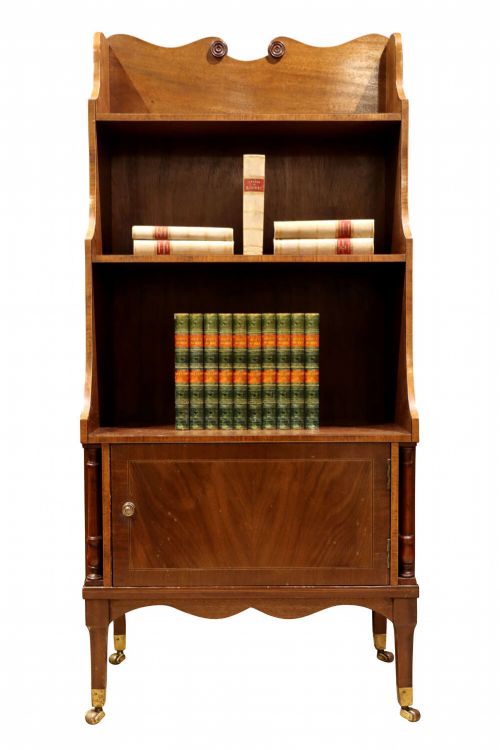


Small Waterfall Shelves
Small waterfall shelves offer stepped tiers for display, combining compact footprints with elegant ascending tiers.
Small Waterfall Shelves
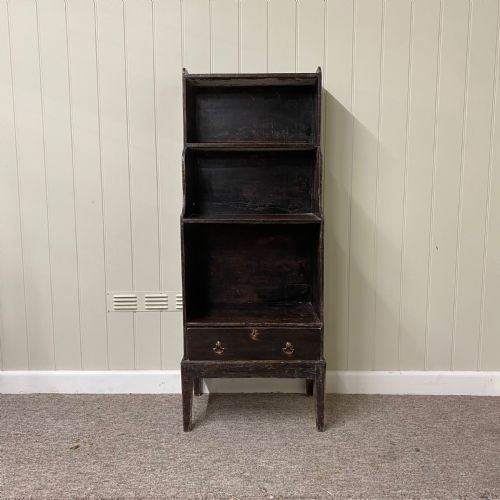
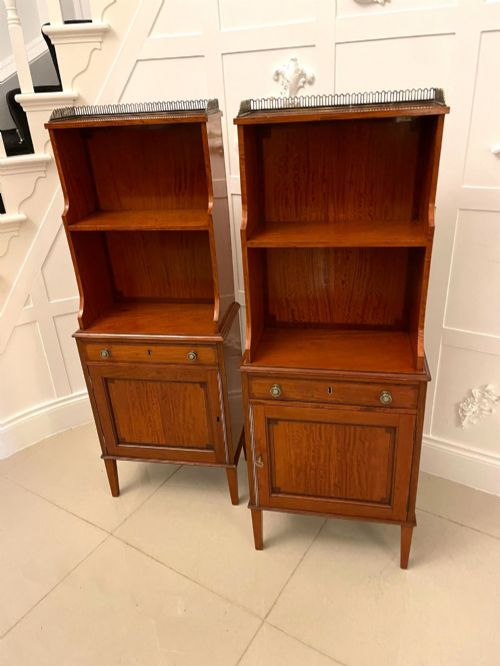
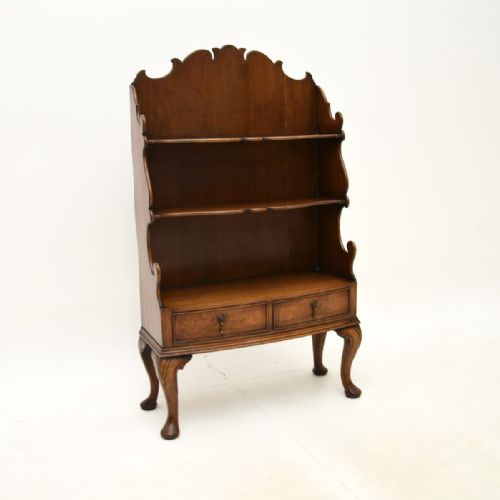
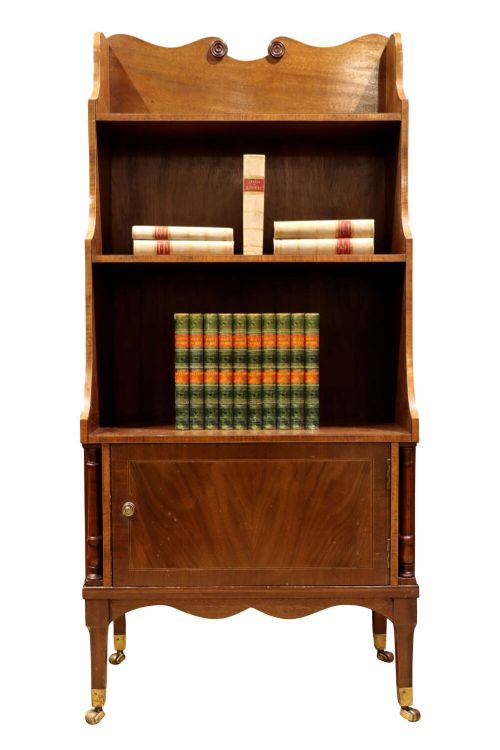
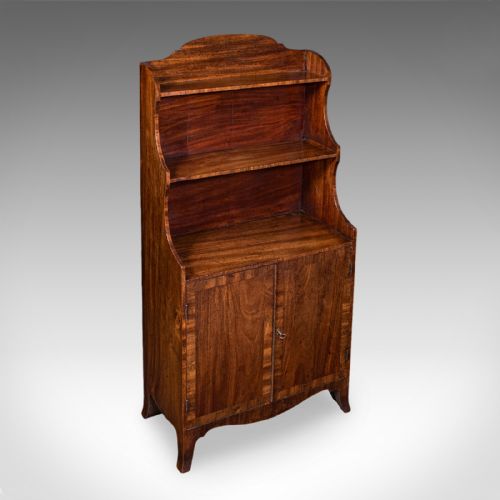
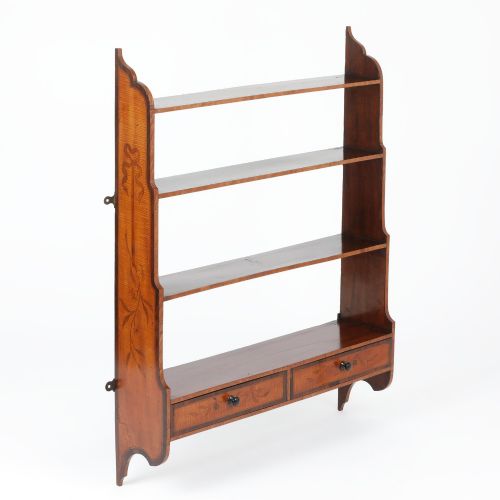
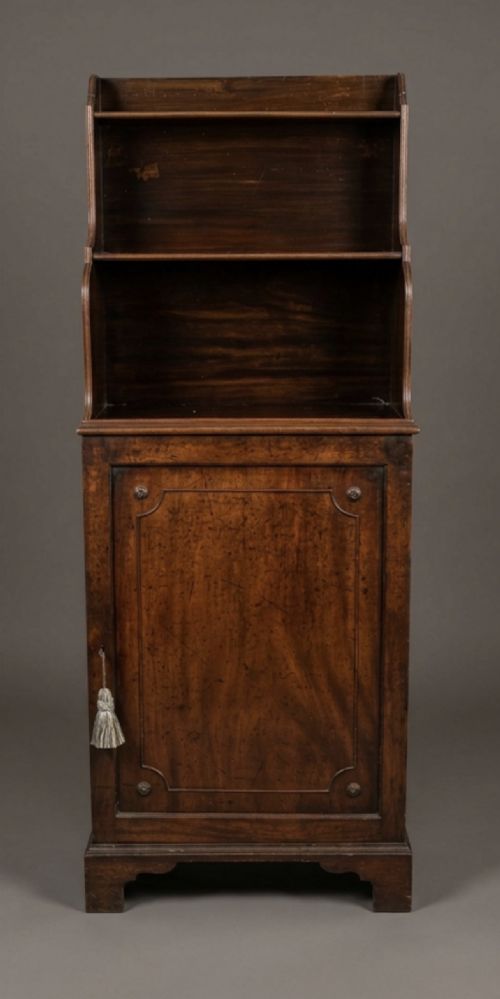
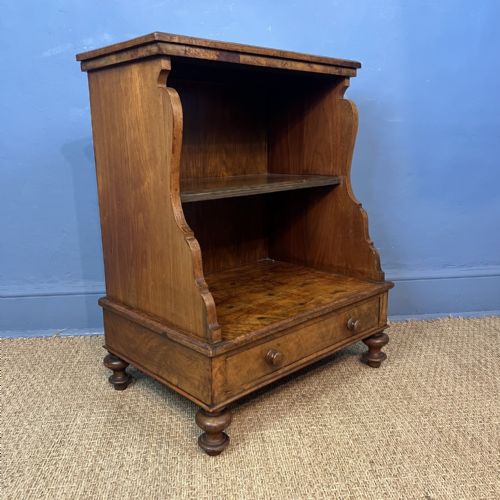
Small waterfall shelves comprise tiered open shelves stepping back progressively from bottom to top, often featuring cupboards or small drawers beneath. You will encounter freestanding cabinets, hanging bookshelves, and low bedside units reflecting this graduated form.
The selections span periods from the Georgian era through the Victorian period and into Edwardian and later revival styles. Mahogany, satinwood, burr walnut, and oak form the primary woods encountered across these listings.
Makers such as Gillows and Shapland and Petter appear alongside unmarked pieces from the nineteenth and early twentieth centuries. Forms range from simple wall-mounted bookshelves to elaborate cabinet bases fitted with brass castors.
Materials and Construction
Timbers like mahogany, satinwood, and burr walnut are selected for their grain and figure, often applied as veneers over secondary woods. Cabinetmakers construct the stepped tiers with careful joinery to support the ascending shelves securely.
Brass fittings such as castors and handles appear on cabinet bases and larger freestanding units. Inlaid details using lighter woods decorate the surfaces of pieces from the Victorian and Edwardian periods.
Small Waterfall Shelves Retail Price Guide 2026
Typical asking prices for small waterfall shelves among the pieces listed under this phrase on Sellingantiques today, from the lower quarter to the upper quarter. They describe what is for sale here now, not the wider market.
Some miniature units stand low enough to serve bedside duties while holding a cascading library of tiny volumes.
Assessing Quality
The refinement of the timber figure and the crispness of any inlaid decoration distinguish finer examples from simpler utilitarian pieces. Higher quality execution shows in the balanced proportions of the graduating tiers and the integration of lower cupboards.
Original hardware, sound structural framing, and well-fitted drawers or cabinet doors indicate superior workshop standards. The harmony between the stepped upper shelving and the lower base unit determines the overall presence of the piece.
Gillows·Shapland and Petter
The Small Waterfall Shelves Glossary
- Waterfall bookcase
- A set of open shelves stepped back progressively from the bottom tier to the top. This configuration displays books and small objects with clear visibility.
- Satinwood
- A pale, hard timber with a natural sheen, frequently used for fine cabinetmaking and decorative inlay work. It brings a bright finish to late pieces.
- Burr walnut
- Wood taken from a growth on a walnut tree, showing intricate, swirling grain patterns. It is sliced into veneers to cover prominent furniture surfaces.
- Chiffonier
- A small sideboard or low cabinet, often incorporating shelves above. The term describes compact storage furniture combining display space with enclosed cupboards.
- Regency revival
- A stylistic movement looking back to the early nineteenth century for design inspiration. Pieces in this manner copy classic Regency proportions and motifs.
Small Waterfall Shelves: Frequently Asked Questions
What are small waterfall shelves?
Small waterfall shelves are compact storage units featuring stepped tiers that recede from bottom to top. They serve to display books and decorative objects within a minimal floor or wall space.
Most examples seen here date from the nineteenth and early twentieth centuries, constructed in woods like mahogany and walnut. Some variations include a small cupboard or drawer at the base.
How were waterfall shelves used historically?
Historically, these shelves provided accessible storage for books, portfolios, and ornaments in parlours and studies. Their graduated tiers kept frequently read volumes within easy reach.
Freestanding versions often stood beside desks or seating areas, while hanging variants maximised wall space in smaller rooms. Lower cabinets added enclosed storage for correspondence or smaller items.
How do I style waterfall shelves at home?
Place freestanding waterfall shelves against a clear wall or beside low seating where the stepped profile remains visible. Their compact proportions suit narrow hallways, alcoves, and bedside positions.
Use the varying shelf depths to organise items by size, placing taller books at the bottom and smaller objects above. Keep the display uncluttered to highlight the graduated timber tiers.
How can I tell different periods apart?
Georgian and Regency examples tend to display clean architectural lines in solid mahogany or simple veneers. Victorian and Edwardian pieces often incorporate richer inlays, burr walnut figures, or brass castors.
Arts and Crafts pieces from the later period show distinctive construction details and different aesthetic influences like Moorish designs. Examining the secondary woods and joinery methods helps confirm the era of manufacture.