




Small Walnut Side Cupboard
These small walnut side cupboards bring compact timber storage and period character to a room, spanning Victorian and Art Deco eras.
Small Walnut Side Cupboard
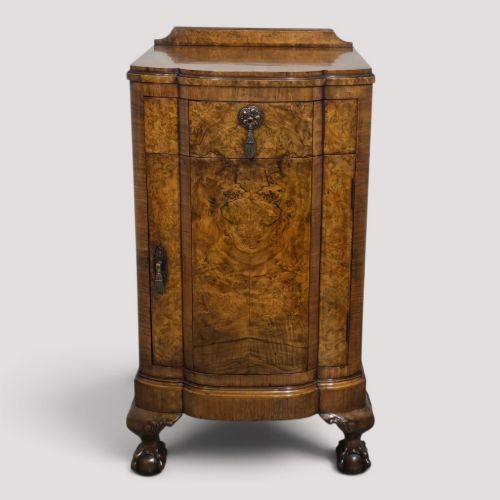
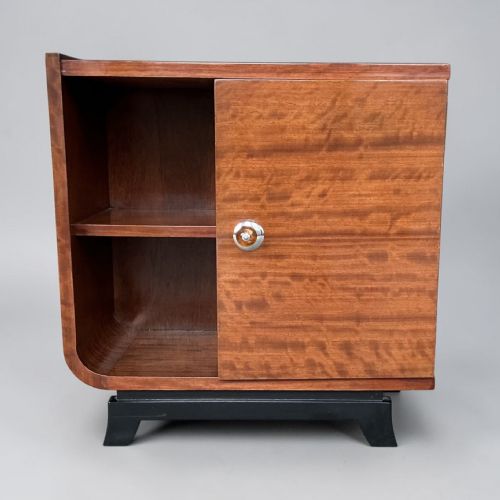
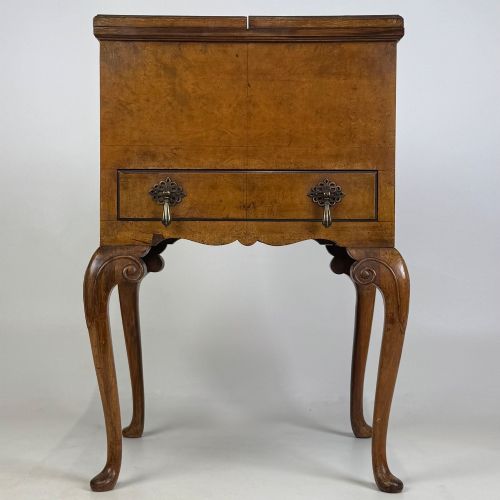
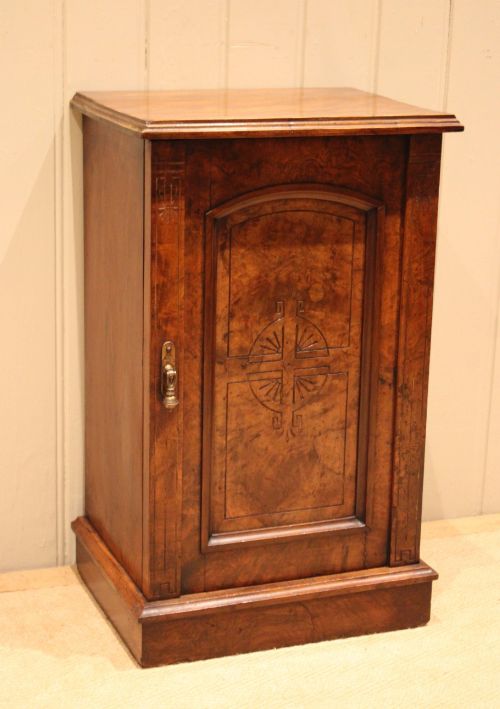
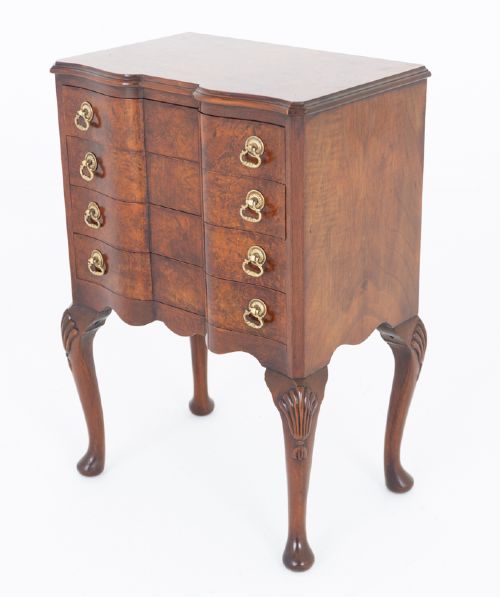
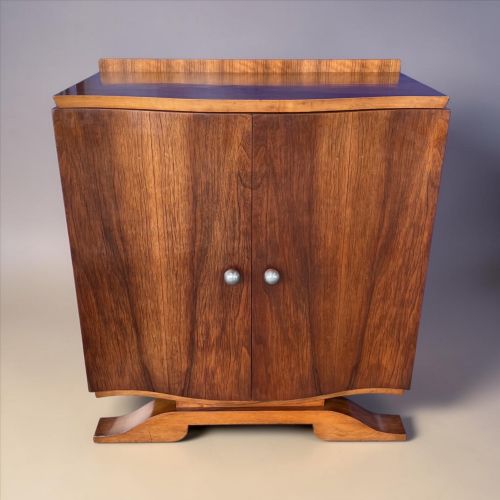
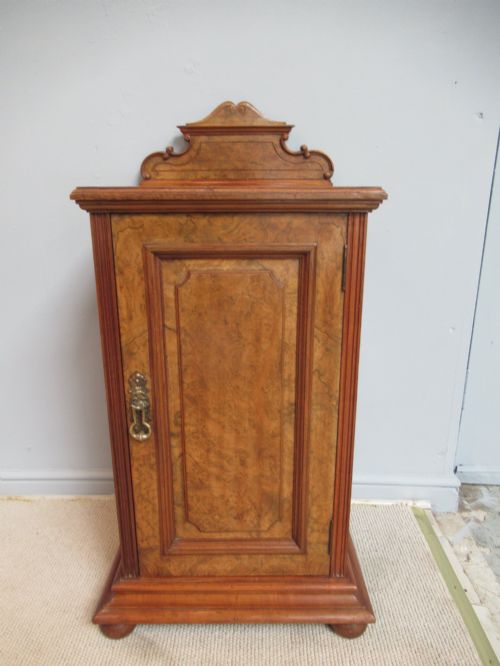
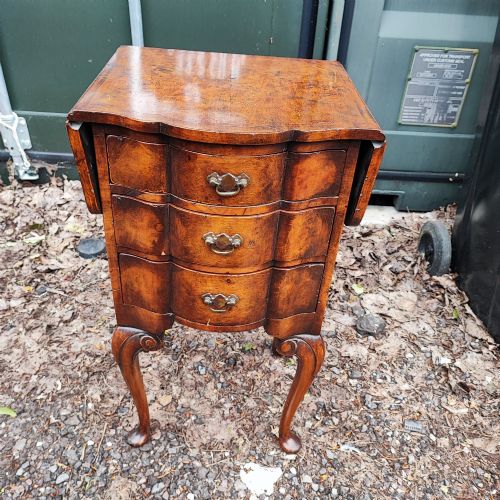
A small walnut side cupboard serves multiple domestic functions, appearing in formats such as bedside cabinets, pier cabinets, music storage, and compact chests. Buyers searching this phrase meet pieces shaped by diverse periods, including Victorian, Edwardian, and Art Deco designs.
Origins span English, French, Italian, and American workshops, demonstrating how makers adapted walnut timber to local tastes. Pieces integrate seamlessly into modern rooms while retaining distinct historical forms from the nineteenth and twentieth centuries.
Materials and Construction
Walnut and burr walnut form the primary visual surfaces, often applied as veneers over secondary timbers to display rich grain patterns. Craftsmen utilised quarter veneer and parquetry techniques to create geometric patterns across door fronts and table tops.
Metal mounts in brass and ormolu add decorative contrast to the dark timber, frequently appearing on key escutcheons and door fittings. Glass panels feature in display variations, while ebonised wood and inlaid details punctuate specific Victorian and Edwardian pieces.
Materials documented across the inventory include solid walnut, burr walnut veneer, brass, glass, ormolu, and ebonised wood.
Craftsmanship and Material Selection
Quality rests upon the selection of the walnut timber, where highly figured burr veneers command attention for their complex grain patterns. Superior examples display meticulous book-matching and parquetry alignment across the visible exterior surfaces.
Construction standards appear in the precision of the joinery, the smooth operation of drawers and tambour doors, and the preservation of original mounts. Finer pieces maintain crisp carving and intact glass or mirror components without replacement timber.
Gordovil Spain
The Small Walnut Side Cupboard Glossary
- Burr Walnut
- A specialised wood cut from walnut tree growths, producing swirling, highly decorative grain patterns prized by cabinet makers.
- Pier Cabinet
- A slender display cabinet designed to fit against the wall space between windows.
- Tambour
- A flexible shutter made of narrow strips of wood glued to canvas, allowing curved cabinet doors to slide open.
- Parquetry
- A geometric mosaic of wood pieces used for decorative floors and cabinet surfaces.
- Ormolu
- Gilt bronze ornamentation applied to furniture and decorative objects during the eighteenth and nineteenth centuries.
Small Walnut Side Cupboard: Frequently Asked Questions
What rooms suit a small walnut side cupboard?
These compact cabinets fit easily beside a bed, in a hallway, or as an accent piece in a living room. Their modest dimensions provide useful storage without overwhelming smaller spaces.
They pair well with both traditional period interiors and modern neutral schemes, functioning as lamp tables or storage chests.
How do I date a walnut cabinet?
Dating relies on stylistic clues, construction methods, and materials recorded in the piece. Victorian examples often feature rich burr walnut and marquetry inlay, while Art Deco pieces from the nineteen-thirties display cleaner geometric lines.
Secondary timbers inside drawers and back panels also offer evidence of the period of manufacture.
What is the difference between a pier cabinet and a bedside cabinet?
Pier cabinets were originally designed to stand against the narrow wall space between windows, often featuring glass doors for display. Bedside cabinets are lower units built specifically to hold small night-time essentials.
Both fall under the wider category of small side cupboards due to their compact footprints.
How should I care for walnut veneer surfaces?
Keep walnut furniture away from direct sunlight and strong heat sources to prevent the wood and veneer from drying out. Dust regularly with a soft, dry cloth and avoid applying silicone-based polishes.
Applying a traditional beeswax occasionally helps nourish the timber and maintain its natural lustre.