






Small Vanity Desk
A small vanity desk brings intimate writing and grooming spaces together in compact proportions suited to tighter rooms.
Small Vanity Desk
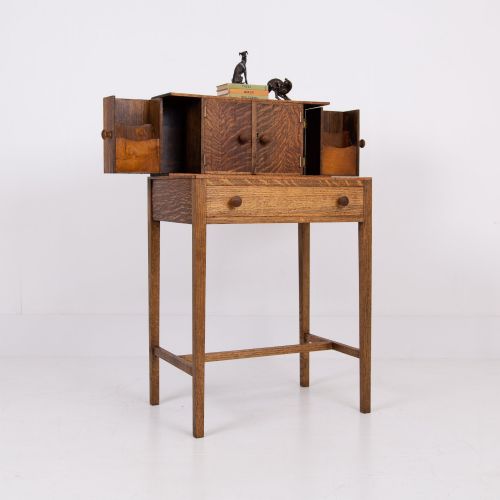
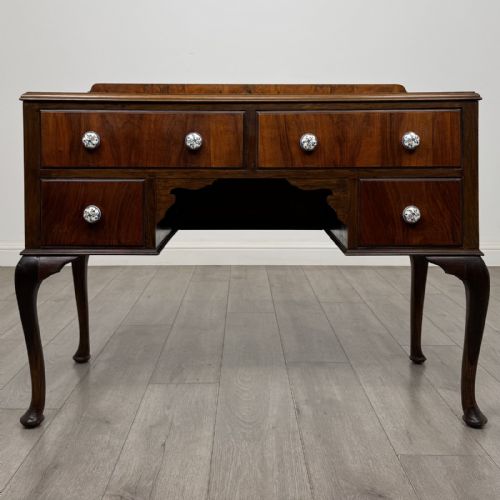
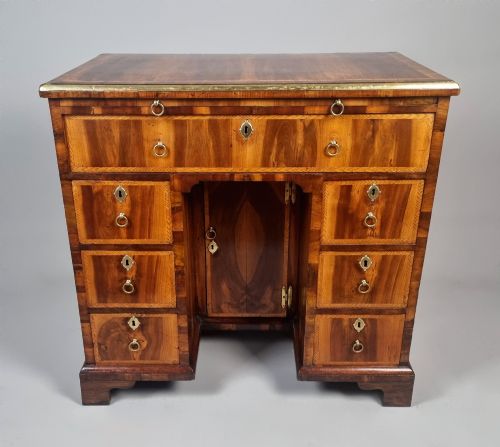
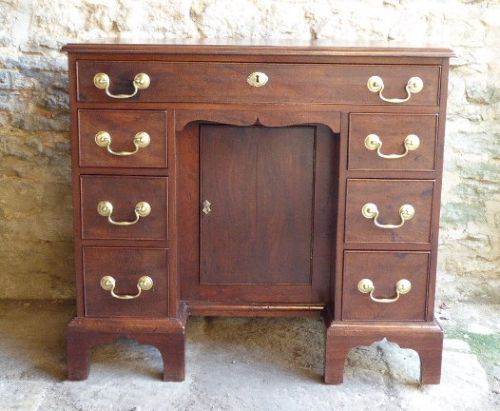
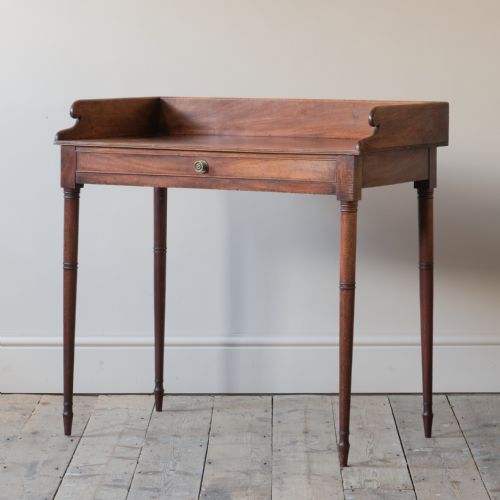
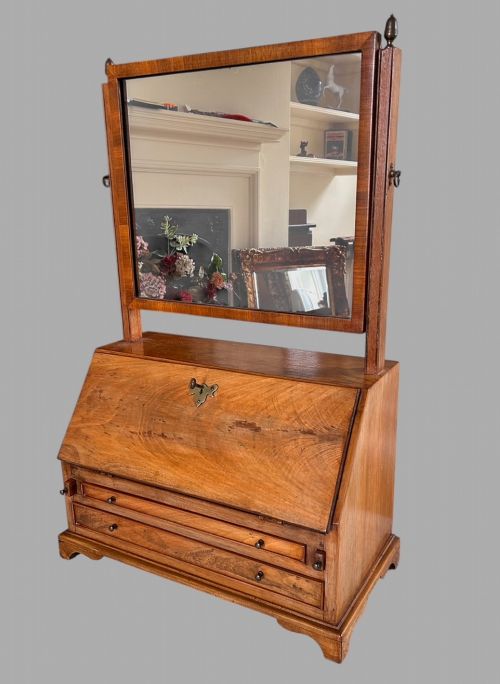
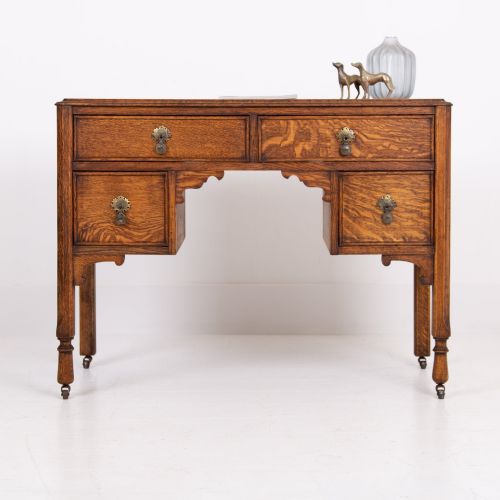
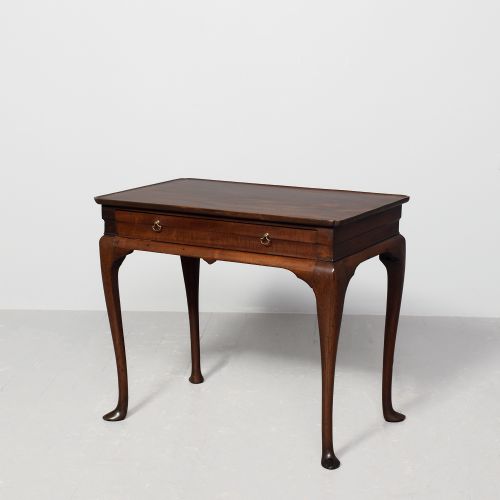
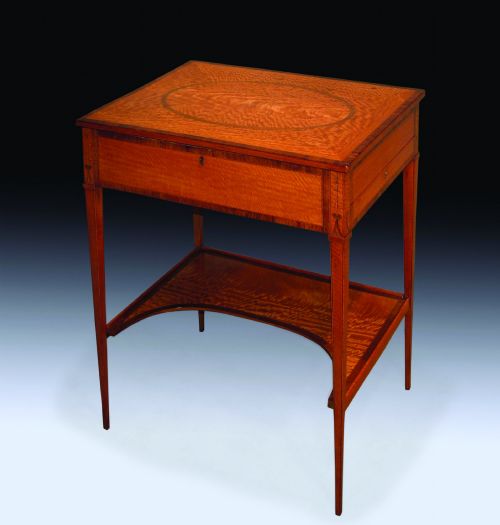
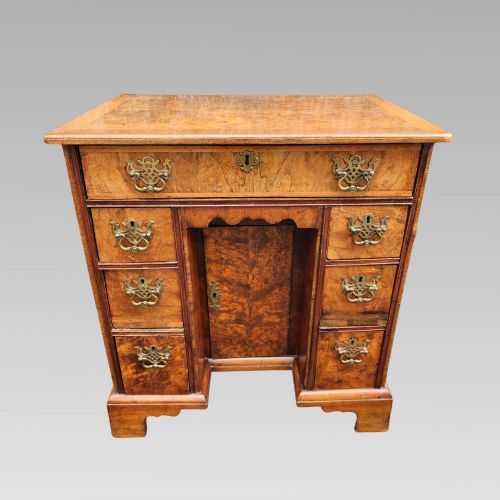
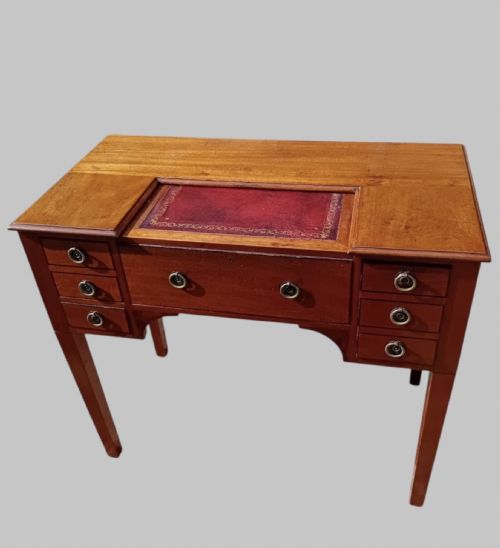
A small vanity desk serves multiple domestic purposes, merging the functions of a writing surface and a dressing table into a single piece of furniture. When hunting for a small vanity desk, buyers encounter forms ranging from Georgian lowboys and kneehole desks to Victorian bonheur du jours and Edwardian writing tables.
The pieces listed here draw upon periods spanning the eighteenth century through to the early twentieth century, alongside regional variations such as French revival styles. Compact proportions dictate the category, offering refined utility without overwhelming a chamber.
Materials and construction
Cabinetmakers constructed these pieces primarily using dense hardwoods such as mahogany, walnut, satinwood and rosewood, frequently enhanced by delicate stringing or figured veneers. Secondary timbers like pine appear on internal drawer linings and structural carcases.
Surfaces often incorporate leather inserts for writing, brass hardware for drawer pulls, and integrated glass mirrors for dressing functions. Joinery techniques reflect traditional cabinetmaking standards of the periods represented, ensuring stability across slender legs and kneehole configurations.
Small Vanity Desk Retail Price Guide 2026
Typical asking prices for small vanity desk among the pieces listed under this phrase on Sellingantiques today, from the lower quarter to the upper quarter. They describe what is for sale here now, not the wider market.
Listings feature pieces spanning the 18th century to the 1930s, utilising mahogany, walnut, satinwood, rosewood, oak, pine, brass, glass and leather.
Judging quality and execution
Quality rests upon the choice of timber figurations, such as burr walnut or figured satinwood, and the precision of inlaid details. Superior examples exhibit harmonious proportions, clean drawer construction with hand-cut dovetails, and original brass fittings.
The refinement of carved mouldings and the integration of secondary compartments elevate certain pieces above standard utility furniture. Finer items maintain structural integrity alongside crisp detailing on stylistic flourishes like French Rococo curves or Sheraton crossbanding.
Edwards and Roberts
The Small Vanity Desk Glossary
- Bonheur du jour
- A small lady's writing desk featuring a tiered superstructure with shelves, drawers, or a cabinet above the main writing surface. This French form gained popularity during the eighteenth and nineteenth centuries.
- Lowboy
- A small dressing table or side table featuring one or more rows of drawers beneath a flat top, typically raised on cabriole or straight legs. They date predominantly from the Georgian period.
- Kneehole desk
- A compact desk or dressing table featuring a central recessed space for the legs, flanked by pedestals of small drawers. They offer substantial storage within a minimal footprint.
- Satinwood
- A lustrous, yellowish-gold timber prized for its fine grain and reflective surface, frequently utilised in elite Sheraton and Edwardian pieces. It accepts marquetry and contrasting stringing exceptionally well.
Small Vanity Desk: Frequently Asked Questions
Where should I place a small vanity desk?
These compact pieces fit comfortably in bedrooms as functional dressing spaces or in smaller reception rooms as occasional writing desks. Their modest dimensions allow them to sit neatly against walls or within alcoves without dominating the room.
Ensure adequate natural or artificial light reaches the surface if utilised for grooming or detailed writing tasks. Pairing the desk with a low, armless chair ensures proper clearance beneath the writing slide or kneehole.
How do I distinguish a Georgian piece from an Edwardian revival?
Georgian pieces from the eighteenth century display structural joinery and timber patination characteristic of the period, often featuring solid mahogany, oak, or walnut construction. Secondary woods and tool marks reveal the age of the underlying framework.
Edwardian interpretations frequently incorporate lighter satinwood timbers, machine-assisted precision in veneers, and decorative revivals of earlier Georgian or Sheraton motifs. Examining the drawer linings and interior construction clarifies the actual period of manufacture.
What is the difference between a lowboy and a kneehole desk?
A lowboy typically stands on four taller legs with a single horizontal row of drawers beneath the top, operating primarily as a side table or dressing surface. They offer open space underneath without flanking pedestals.
A kneehole desk provides enclosed drawer stacks on both sides of a central recess, prioritising partitioned storage and a dedicated workspace. Both share compact dimensions suitable for smaller rooms.
How should I care for antique wood surfaces?
Maintain polished wood surfaces by dusting regularly with a soft, dry cloth and avoiding silicone-based sprays that build up over time. Applying traditional beeswax periodically nourishes the timber and preserves the natural lustre of the finish.
Keep these pieces away from direct heat sources and strong sunlight to prevent the timber from splitting or the veneer from lifting. Protecting leather writing inserts from moisture spills preserves the original hide.