

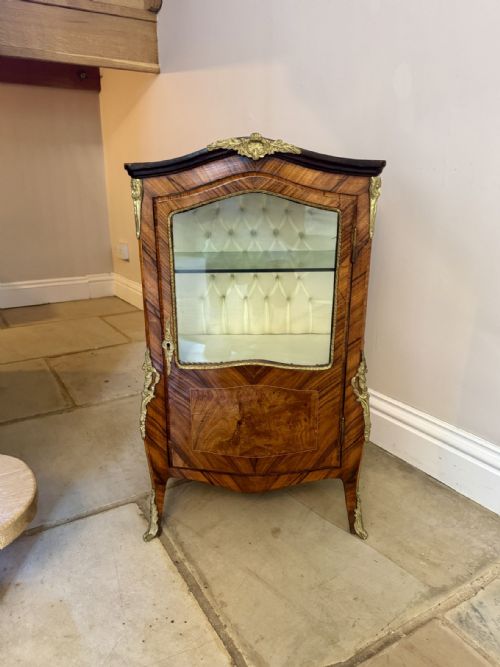


Small Tabletop Showcase
A small tabletop showcase is a compact glazed display case designed for counters and desks, offering collectors a neat way to present small treasures.
Small Tabletop Showcase
When you search for a small tabletop showcase, you encounter compact display vessels that sit upon counters, desks and tables to protect and exhibit items. These pieces date across the nineteenth and twentieth centuries, spanning Victorian, Edwardian and Art Deco periods.
The versions met most frequently on this page take the form of countertop display cabinets framed in oak, mahogany or walnut. They arrive with glass panels and doors, serving domestic collectors and retail shops alike.
Origin and regional style vary, encompassing French walnut and kingwood designs alongside Victorian Dutch models and utilitarian apothecary cabinets. Each provides a neat footprint for exhibiting small objects without claiming floor space.
How they were made
Cabinet makers constructed these small tabletop showcases using solid hardwoods like oak, mahogany, walnut and ebonized timber, often incorporating decorative veneers such as kingwood and burr walnut. Brass hardware, including hinges, latches and occasionally ormolu mounts, provides structural joining and functional detail.
Glazing forms the primary technical requirement, setting large glass panes into timber frames to maximise visibility from multiple angles. Drawer integration beneath the main display chamber appears on selected variants, requiring standard cabinet-making joinery for the internal carcase.
Small Tabletop Showcase Retail Price Guide 2026
Typical asking prices for small tabletop showcase among the pieces listed under this phrase on Sellingantiques today, from the lower quarter to the upper quarter. They describe what is for sale here now, not the wider market.
Even apothecary shops needed to show off their wares, proving that medicine and miniature display cabinets make charming companions.
What varies in quality
Quality rests upon the selection of timbers and the finesse of the glazing frame, where fine grain figures in walnut or mahogany elevate the piece beyond standard commercial utilitarian builds. The integration of decorative elements like brass mounts and fitted interior drawers distinguishes more ambitious cabinet work from plain workshop output.
Proportion and the clarity of the original glass panels also determine the standing of a showcase, as intact period glass and balanced dimensions preserve the visual integrity of the design. Makers who applied refined French or Dutch stylistic influences achieved a lighter presence than strictly utilitarian shop counters.
The Small Tabletop Showcase Glossary
- Countertop
- A descriptive term for cabinets scaled to sit upon shop counters or tabletops for retail or domestic display. These pieces provide accessible eye-level viewing.
- Kingwood
- A dense, richly figured timber used as a veneer on decorative French cabinets. It yields deep brown tones with striking lighter streaks.
- Ormolu
- Gilded bronze mounts applied to furniture for decorative enrichment. This technique appears on finer period pieces.
- Ebonized
- Timber treated to resemble ebony through a dark staining or finishing process. This technique gains popularity in twentieth-century commercial pieces.
Small Tabletop Showcase: Frequently Asked Questions
What is a small tabletop showcase?
A small tabletop showcase is a glazed cabinet built to sit on counters or furniture for displaying small items. They protect objects from dust while allowing full visibility.
These pieces range from Victorian burr walnut table cabinets to Edwardian oak countertop units and Art Deco glass cases.
How were these cabinets used?
Merchants utilised them on shop counters to display small merchandise securely to customers. Domestic collectors later adopted them to exhibit medals, trinkets and curiosities.
They keep delicate items enclosed while remaining prominent within a room.
What woods appear most often?
Oak and mahogany form the backbone of Edwardian and commercial countertop models. Walnut, ebonized wood and exotic veneers like kingwood appear on decorative variants.
Brass hardware and glass panels accompany all these timbers.
How do I date a showcase?
Dating relies on stylistic clues, construction methods and timber choices. Victorian examples show heavier proportions, while 1920s and 1930s pieces reflect commercial or Art Deco lines.
Edwardian oak cabinets display characteristic early twentieth-century workshop traits.