

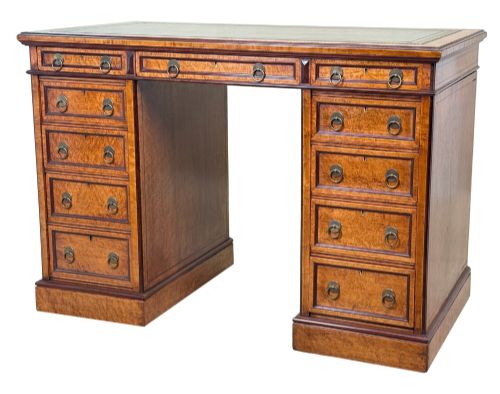
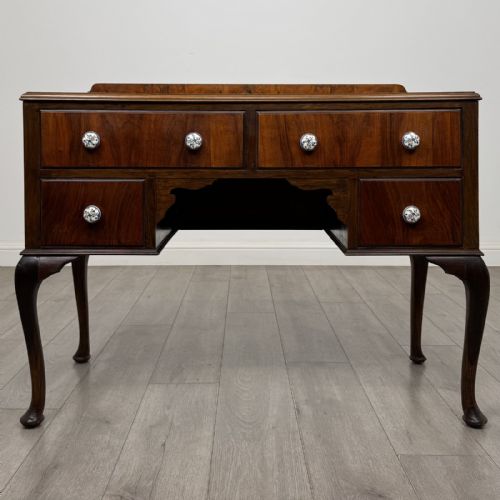
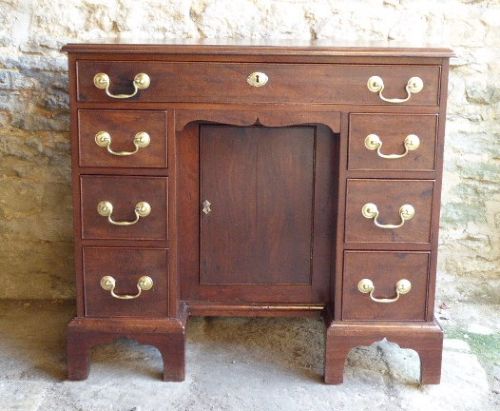
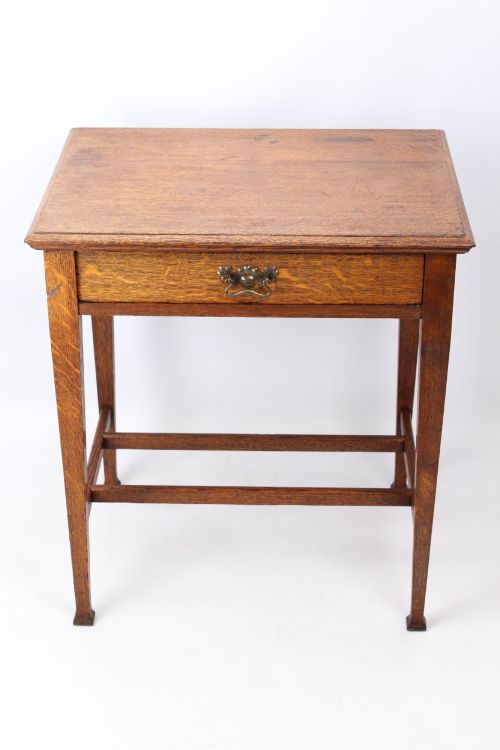
Small Study Table
A small study table delivers compact workspace and timeless character, uniting practical writing surfaces with refined period craftsmanship.
Small Study Table
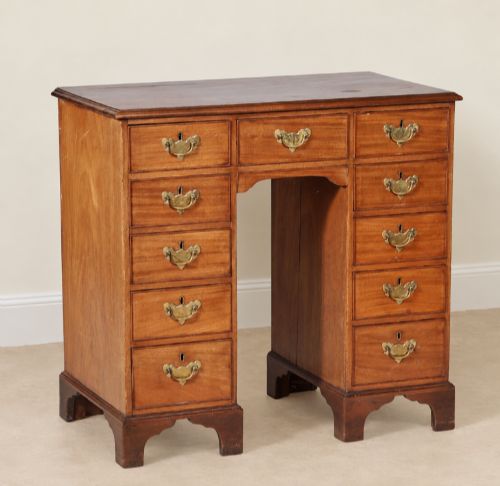
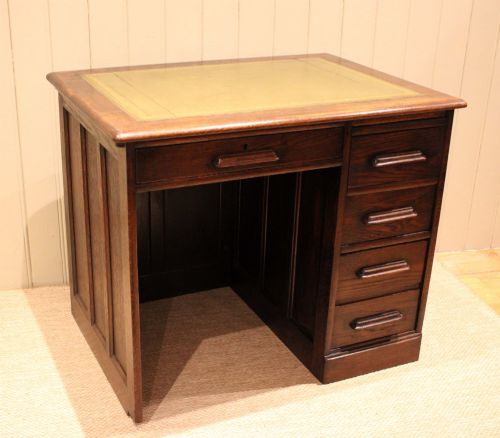
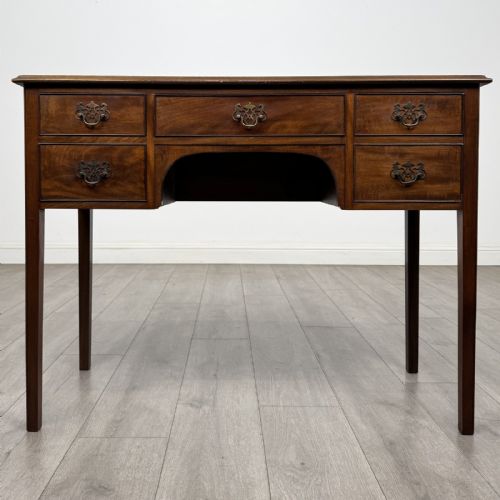
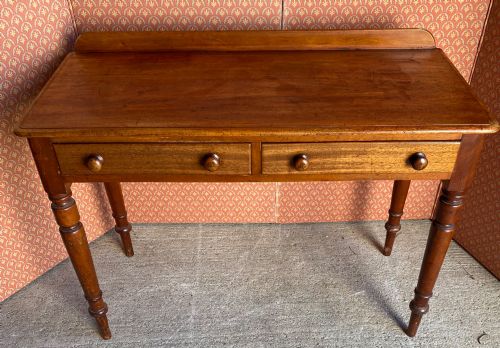
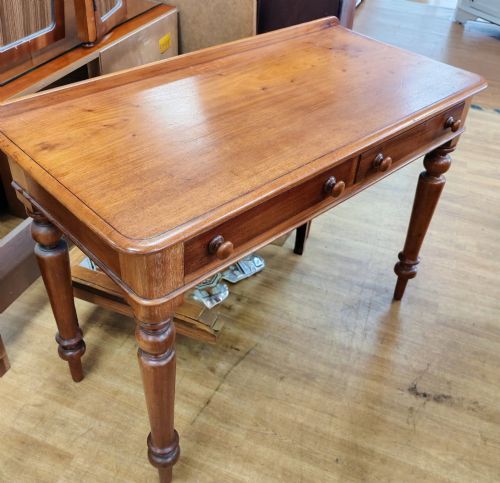
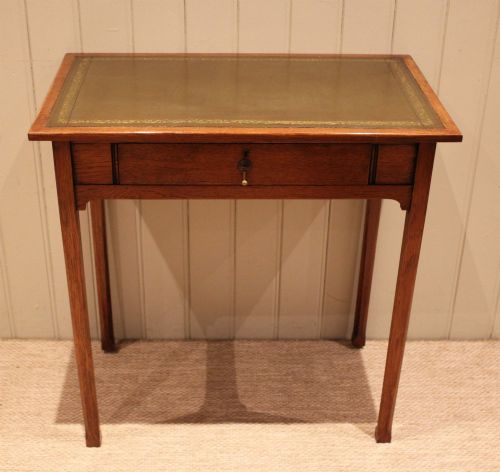
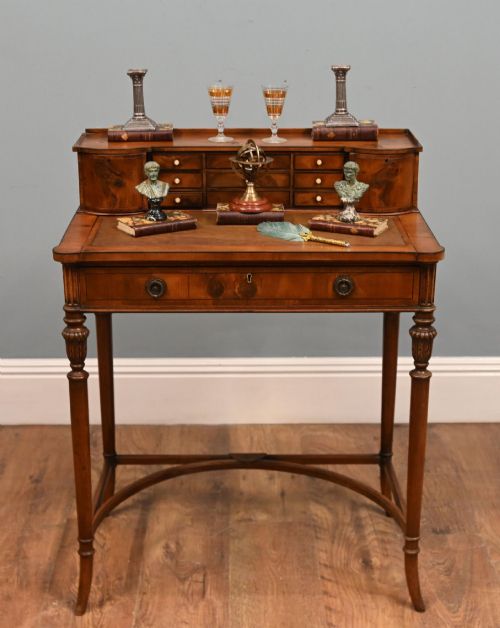
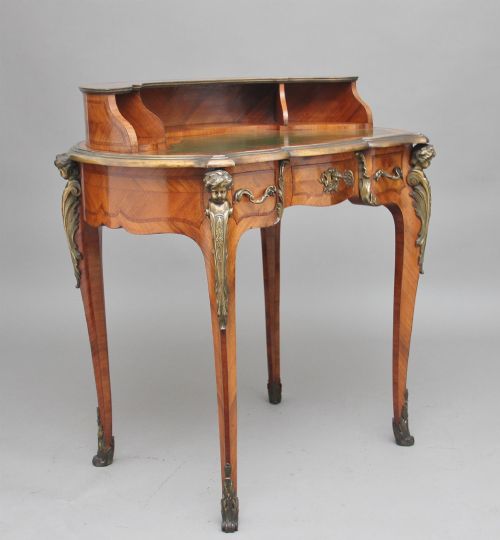
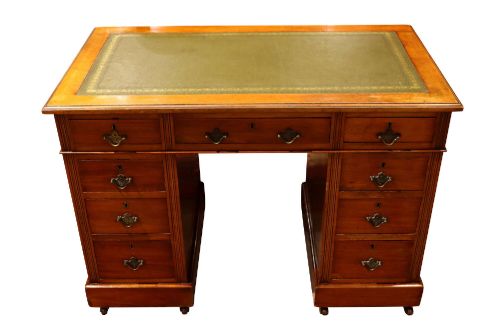
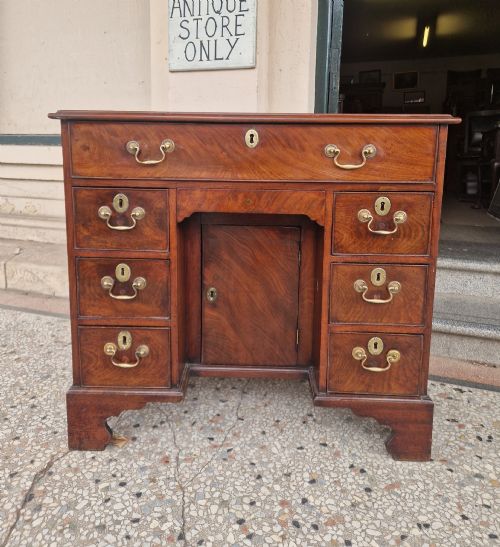
A small study table provides a dedicated surface for correspondence and reading while occupying minimal floor space in a home or office. Buyers seeking a small study table will find various forms here, ranging from pedestal desks and kneehole desks to compact writing tables and bonheurs du jour.
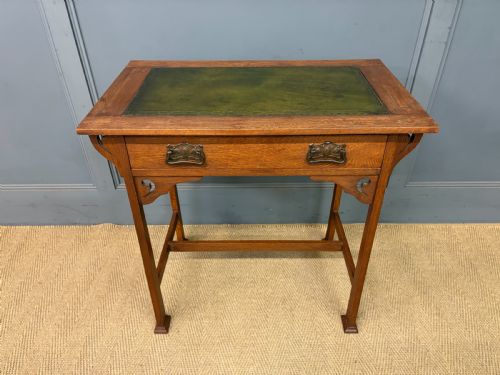
The pieces on this page span several centuries and design movements, including Georgian, Regency, Victorian, Edwardian, and Arts and Crafts periods. Mahogany, oak, and walnut appear frequently as the primary woods, often paired with leather writing inserts.
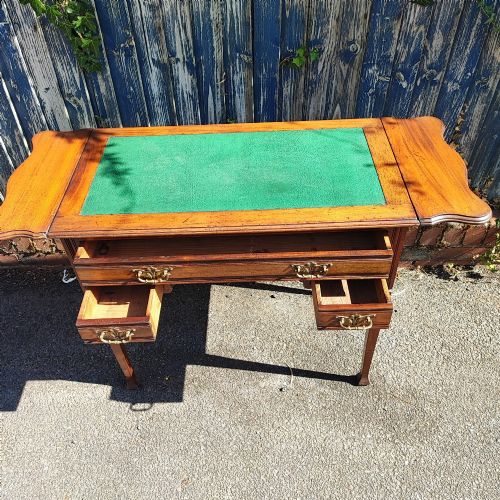
Pedestal desks with multiple drawers sit alongside simpler side tables and drop-side writing surfaces. Many examples reflect specific historical revivals such as Georgian Revival and Louis XV Revival styles.
How they were made
Cabinetmakers constructed these tables using dense hardwoods like mahogany, oak, walnut, and rosewood, frequently enhanced by decorative veneers such as birdseye maple, satinwood, and kingwood. Crossbanding, stringing, and marquetry inlay provide ornamental detail to drawer fronts and tabletops.
Writing surfaces often feature inset panels of tooled leather, whilst structural elements utilise traditional joinery techniques such as dovetailed drawers and sturdy mortise and tenon frames. Metal mounts in brass or ormolu appear on select Regency and Victorian pieces to accent handles and corners.
Small Study Table Retail Price Guide 2026
Typical asking prices for small study table among the pieces listed under this phrase on Sellingantiques today, from the lower quarter to the upper quarter. They describe what is for sale here now, not the wider market.
The inventory encompasses periods from Georgian and Regency through Victorian, Edwardian, and Arts and Crafts movements.
What varies in quality
The refinement of timber selection and veneer matching dictates the visual impact of each piece, with figured grain woods commanding greater visual depth. Subtle hand-carved details and precise inlay work separate standard utilitarian furniture from exceptional cabinetmaking.
The integrity of secondary woods used in drawer linings and the survival of original hardware or leather inserts contribute significantly to the standing of an individual desk or table.
James Shoolbred·Jenners
The Small Study Table Glossary
- Kneehole desk
- A compact desk featuring a central recess for the user's legs, flanked by pedestals of smaller drawers. This form became popular during the Georgian period for domestic studies.
- Bonheur de jour
- A light ladies' writing desk equipped with a small superstructure of drawers, shelves, or a cabinet above the main writing surface. Originating in France, it gained popularity in various revival styles.
- Ormolu
- Gilt bronze mounts applied to furniture for decorative effect, frequently seen on Regency and nineteenth-century pieces. The technique involves applying a mercury and gold amalgam to bronze.
- Crossbanding
- A decorative border technique where veneer strips are laid perpendicularly to the grain of the central panel. This frames the top surface of a table or desk with contrasting wood grain.
- Tray-top
- A writing table edge surrounded by a raised wooden gallery or rim to prevent items from rolling off. Early nineteenth-century examples often incorporate this practical feature.
Small Study Table: Frequently Asked Questions
What is a small study table used for?
These tables provide a compact writing surface for correspondence, laptop work, and home organisation.
Their restrained proportions allow them to fit into bedrooms, small home offices, and living spaces without dominating the room.
How do I date a wooden writing table?
Dating relies on examining timber choices, construction methods, hardware styles, and overall design characteristics.
Earlier pieces from the Georgian period utilise solid mahogany or oak with hand-dovetailed drawer construction, whereas later Victorian and Edwardian examples often employ machine-cut elements and distinct revival motifs.
Are leather writing surfaces original?
Many antique desks retain their original tooled leather inserts, though heavily used surfaces frequently underwent replacement during later restorations.
Examining the wear patterns and the method of edge gilding helps determine whether the leather dates to the period of manufacture.
How do I care for an antique desk?
Protect antique wood finishes by placing tables away from direct sunlight and extreme temperature fluctuations from radiators.
Applying occasional appropriate wax preserves the polish of hardwoods like mahogany, walnut, and oak without building up heavy residues.