

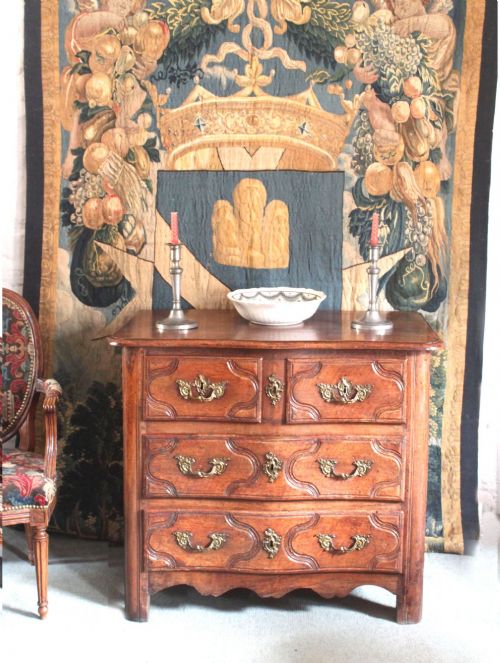
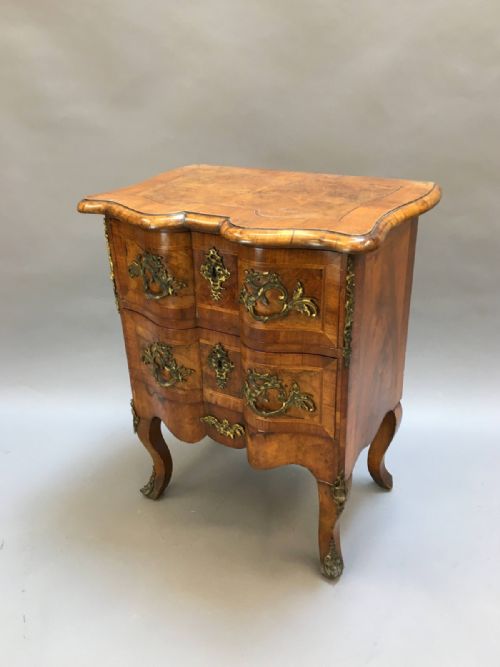


Small Serpentine Commode
A small serpentine commode offers curved elegance and practical storage, making it a sought-after choice for compact spaces.
Small Serpentine Commode
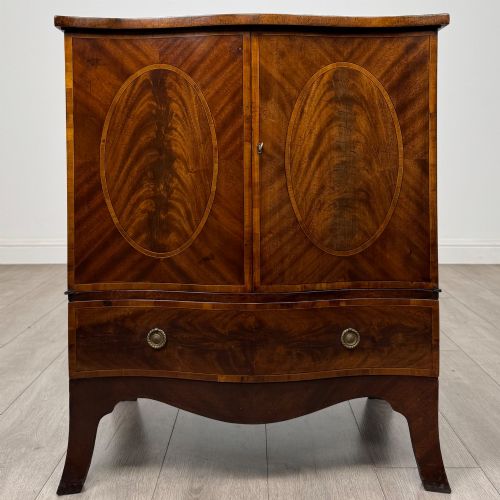
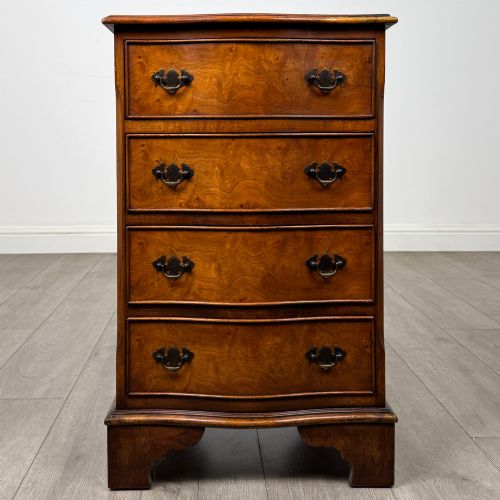
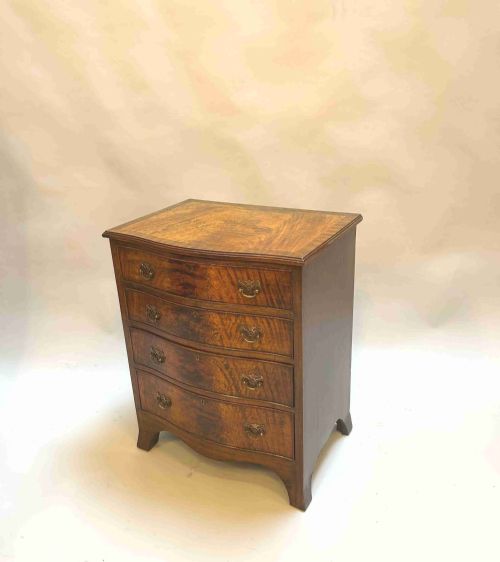
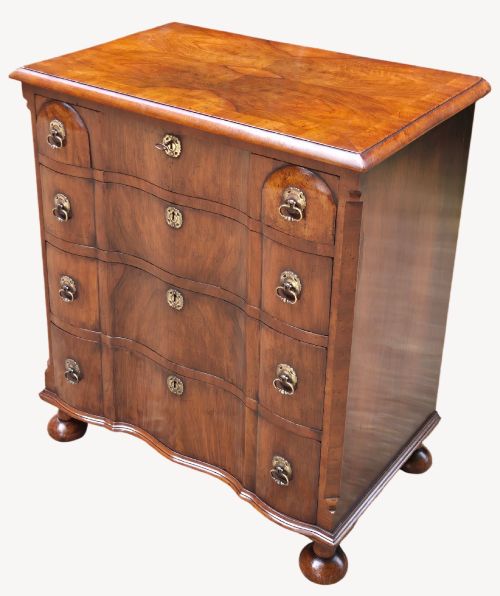
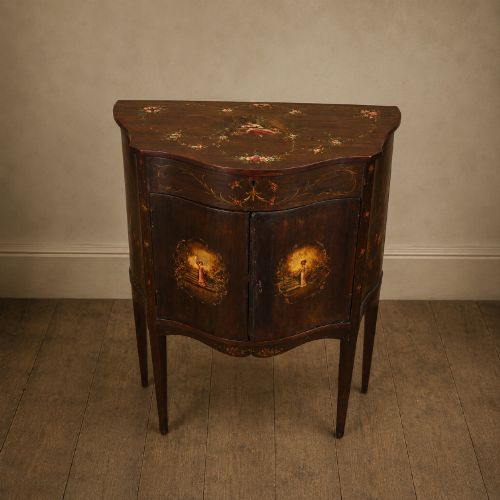
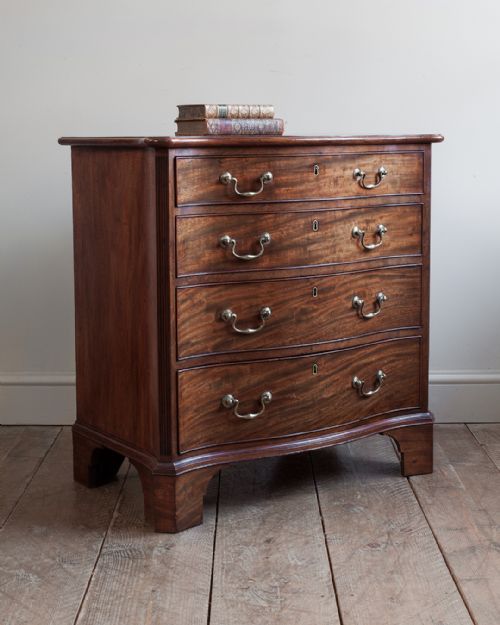
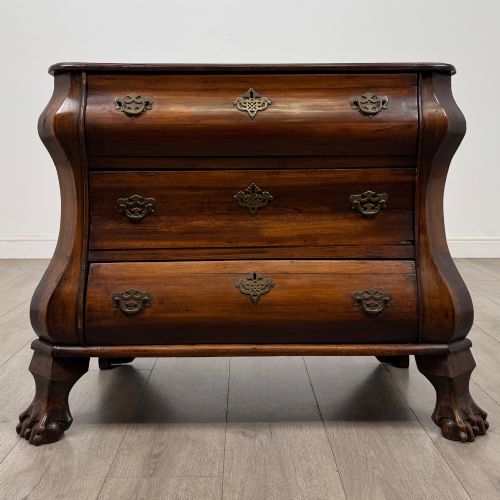
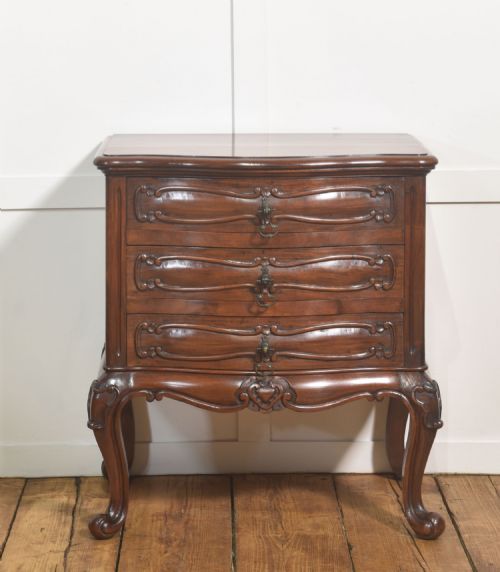
A small serpentine commode brings undulating fronts and graceful proportions to interior spaces, functioning primarily as a chest of drawers or bedside cabinet. These pieces appear across various periods, from the eighteenth century to the twentieth century, reflecting both English and continental designs.
Buyers select these items for their ability to fit into smaller rooms while providing surface space and deep drawers. The undulating wooden fronts create dynamic light reflection and visual interest.
Materials and construction methods
Cabinetmakers constructed these pieces using solid and veneered timbers, predominantly mahogany and walnut, alongside burr walnut and kingwood for decorative surfaces. Secondary woods like pine support the internal structures and drawer linings.
Curved serpentine fronts required skilled shaping of timber, often achieved through bending or carefully cutting solid wood blocks and applying matched veneers. Brass and ormolu mounts, handles, and escutcheons were fitted to enhance the operational and visual aspects of the drawers and doors.
Listings feature items spanning the Georgian period, the nineteenth century, and twentieth-century revivals.
Assessing craftsmanship and condition
Quality rests in the precision of the curved drawer fronts and the tightness of the timber joints, where superior examples show seamless grain continuity across the drawers. The choice of primary timber, such as highly figured burr walnut or dense mahogany, dictates the visual richness.
Finishing details like hand-cut dovetails on the drawer carcasses and the original patination of the wood separate high-end cabinetwork from standard production. The integration of quality cast brass or ormolu hardware also marks a superior piece.
The Small Serpentine Commode Glossary
- Serpentine
- A shape that curves inward in the centre and outward at the ends, creating an S-like contour on the front of a piece of furniture. This profile demands advanced woodworking skill to execute properly.
- Commode
- A low chest of drawers or cabinet, typically originating from French furniture traditions. The term applies broadly to decorative storage units across various European styles.
- Ormolu
- Gilded bronze mounts and decorative details applied to furniture. This technique adds metallic contrast and ornamentation to wooden surfaces.
- Marquetry
- Inlaid patterns formed from different coloured wood veneers applied to a carcase. Craftsmen use this method to create intricate pictorial or geometric designs.
- Quarter-veneered
- A method of arranging four matching slices of wood veneer so their grain patterns mirror one another. This creates a symmetrical, decorative panel on drawer fronts or table tops.
Small Serpentine Commode: Frequently Asked Questions
What is a serpentine commode?
A serpentine commode is a low chest of drawers or cabinet featuring a front edge that curves inward at the middle and outward at the sides.
These pieces combine decorative appeal with functional storage, appearing in various woods and historical styles.
Where were these commodes made?
These items were produced across England, France, Italy, Portugal, and Sweden during different centuries.
Regional workshops adapted local timbers and aesthetic preferences, resulting in distinct English Georgian models and continental provincial designs.
How do I style a small commode?
A small commode fits well in hallways, bedrooms, or living areas as a bedside table or side cabinet.
Its compact footprint allows it to provide surface display space and drawer storage without overwhelming small rooms.
How do I identify the period?
Period identification relies on examining the construction techniques, timber choices, and secondary woods used inside the drawers.
Stylistic markers such as Georgian bracket feet or French revival marquetry also help narrow down the date of manufacture.