




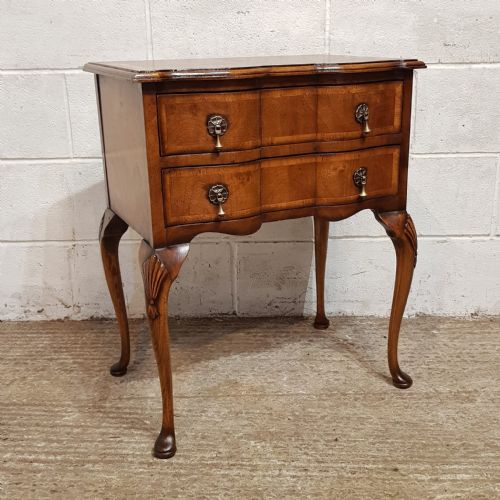


Small Serpentine Chest
A small serpentine chest brings fluent, undulating curves to compact spaces, offering practical storage through distinctive shaped drawer fronts.
Small Serpentine Chest
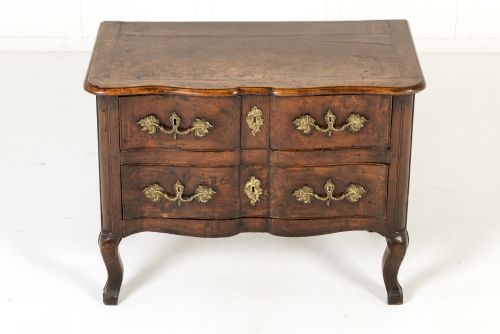
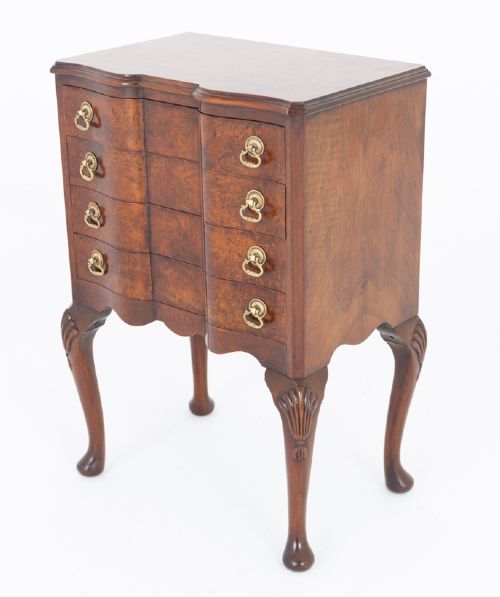
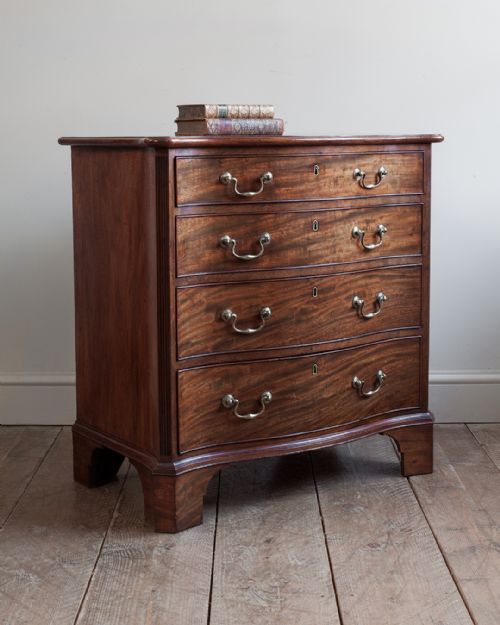
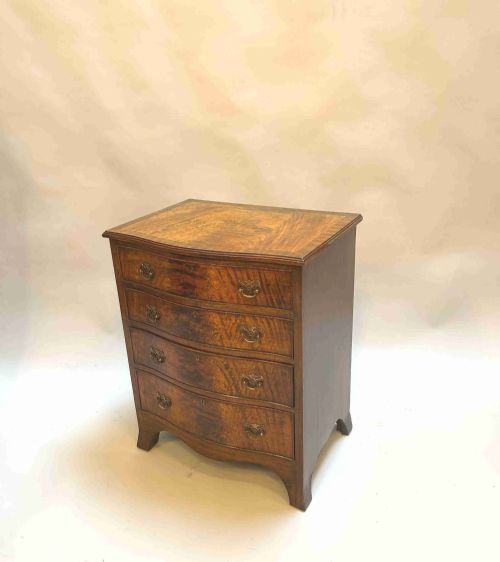
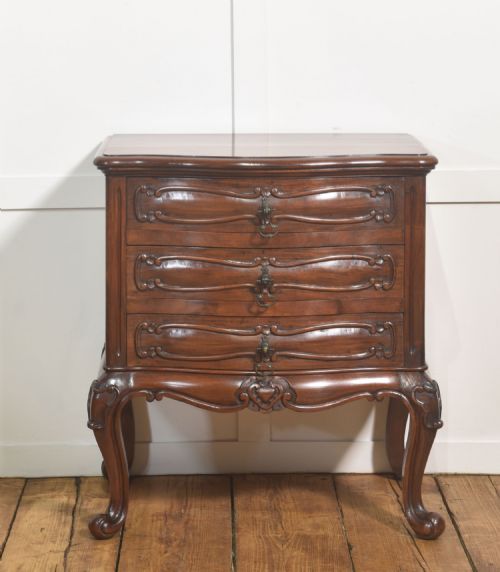
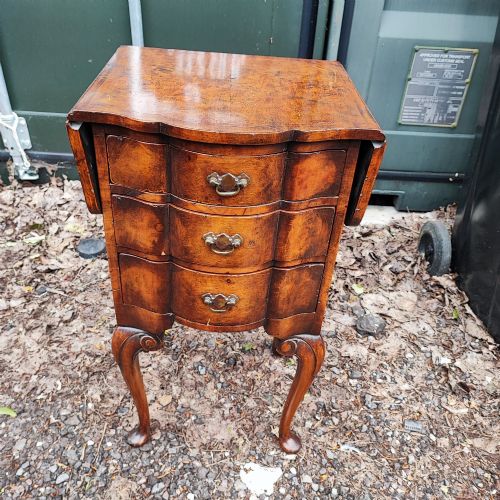
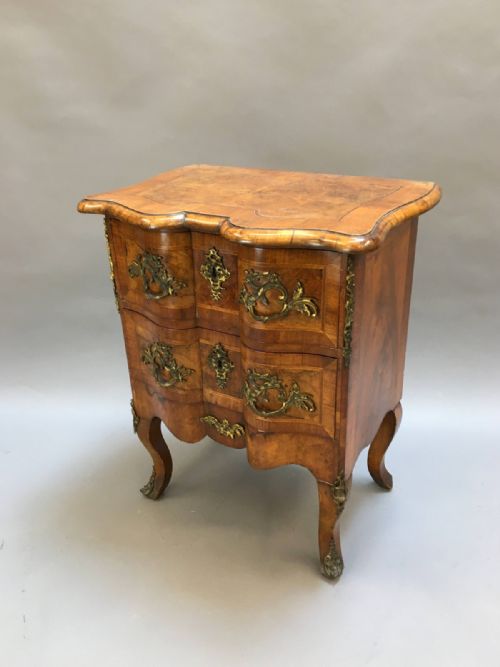
A small serpentine chest presents a distinctive convex-centre front flanked by concave wings, creating a gentle S-curve across the facade of the piece. When you search for a small serpentine chest, you encounter compact chests of drawers, bedside cabinets, commodes, and side tables designed for smaller rooms without sacrificing presence.
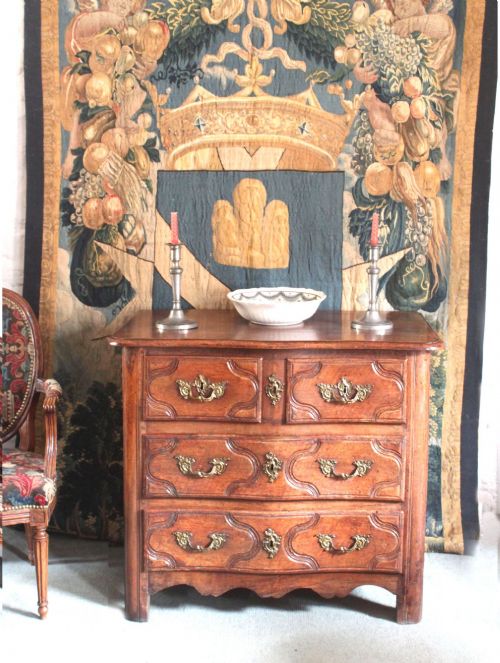
The pieces on this page span several centuries and revivals, ranging from eighteenth-century Georgian originals to Edwardian reproductions and twentieth-century revivals. Walnut and mahogany dominate the selection, often enriched by burr figuring or flame veneer, alongside specialised regional forms from France, the Netherlands, and Sweden.
Forms vary from traditional drawer chests and bedside units to miniature pieces and apprentice chests. These items combine useful surface areas with shaped storage, making them versatile additions to modern and period interiors alike.
Materials and construction methods
Cabinet makers utilised dense hardwoods such as mahogany and walnut, frequently selecting burr walnut or flame mahogany veneers for decorative fronts. These timbers provide the stable substrate necessary for cutting complex curved profiles into solid wood and veneered panels.
Advanced joinery techniques allowed craftsmen to shape the undulating drawer fronts and carcasses without compromising structural integrity. Drawer pulls and mounts cast in brass or ormolu complete the construction, secured to the hardwood bodies.
Small Serpentine Chest Retail Price Guide 2026
Typical asking prices for small serpentine chest among the pieces listed under this phrase on Sellingantiques today, from the lower quarter to the upper quarter. They describe what is for sale here now, not the wider market.
Miniature apprentice chests demonstrate that even tiny drawers require just as much dovetailing patience as full-sized furniture.
Judging the quality of a serpentine chest
Quality rests upon the crispness of the curved serpentine line across the front and the skilful matching of wood grain on the drawers. Superior examples maintain fluid symmetry in their curves and select timbers that wrap harmoniously around the undulating surfaces.
The integration of original hardware, such as brass handles and decorative feet, distinguishes finer pieces. Construction details like hand-cut dovetails on the drawers and the condition of the underlying mahogany or walnut carcass dictate the overall standing of the item.
The Small Serpentine Chest Glossary
- Serpentine
- A front profile characterised by a convex centre section flanked by two concave curves. This contour requires precise carpentry to shape both the drawers and the frame.
- Commode
- A low chest of drawers or cabinet, often of French or continental origin. The term frequently applies to decorative chests dating from the eighteenth and nineteenth centuries.
- Brushing slide
- A pull-out shelf inset above the top drawer used for writing or brushing clothes. It slides flush into the cabinet when not in use.
- Burr walnut
- Timber taken from a tree growth or wart, yielding complex, swirling grain patterns. Cabinet makers prized this wood for high-status veneered furniture.
- Marquetry
- The art of applying decorative pieces of veneer to a structure to form intricate designs. This technique appears on continental commodes alongside kingwood and mahogany.
Small Serpentine Chest: Frequently Asked Questions
What is a serpentine chest?
A serpentine chest is a set of drawers featuring a front that curves outward in the middle and inward at the sides. This rhythmic contour creates a sophisticated silhouette distinct from flat-fronted furniture.
Such chests were produced in various sizes, with smaller proportions favoured for bedrooms, dressing rooms, and compact reception spaces.
How do I style a small serpentine chest?
The curved profile makes these chests ideal as standalone focal points in hallways, landings, or sitting rooms. Their compact dimensions allow them to function effectively as bedside cabinets or lamp tables.
Keep surface styling simple to let the undulating wood grain and brass hardware remain the primary visual feature.
How do I date an antique serpentine chest?
Dating relies on examining the timber species, construction methods, and hardware styles used in the piece. Georgian originals exhibit specific cabinet-making traits and native hardwoods, whereas Edwardian and later revivals utilise different interior woods and assembly techniques.
Comparing the secondary timbers inside the drawers often clarifies the period of manufacture.
What is the difference between a commode and a chest?
While both provide drawer storage, the term commode frequently describes continental European pieces, particularly French designs with decorative veneers and mounts. A chest of drawers often refers to British or domestic forms with simpler structural lines.
Both categories include serpentine fronts depending on the regional style and period.