



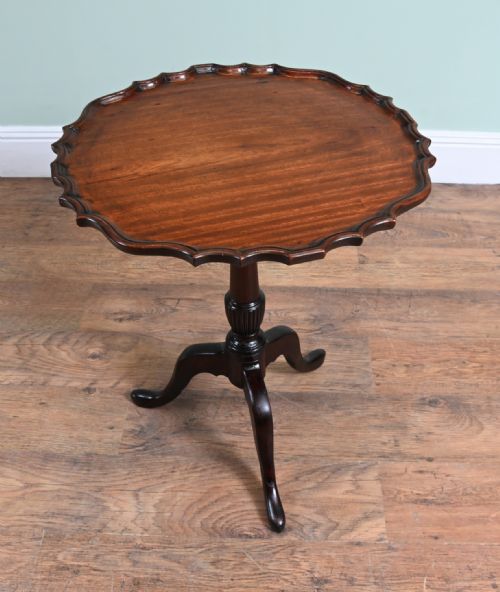
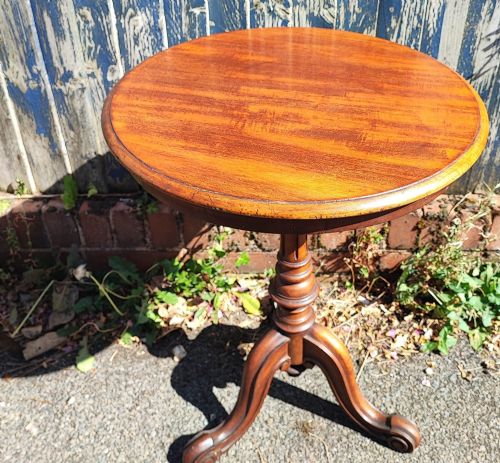
Small Round Tilt Table
A small round tilt table is a compact pedestal piece designed to save space, and these examples bring centuries of timber and turning to a corner.
Small Round Tilt Table
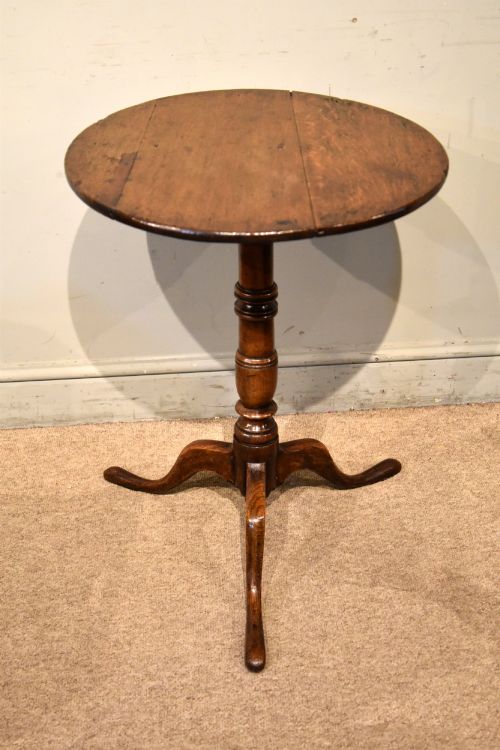
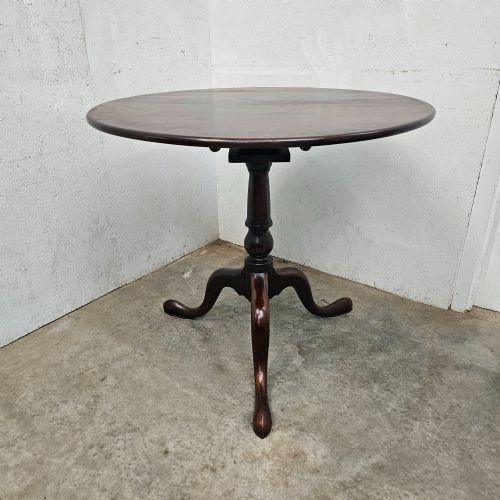
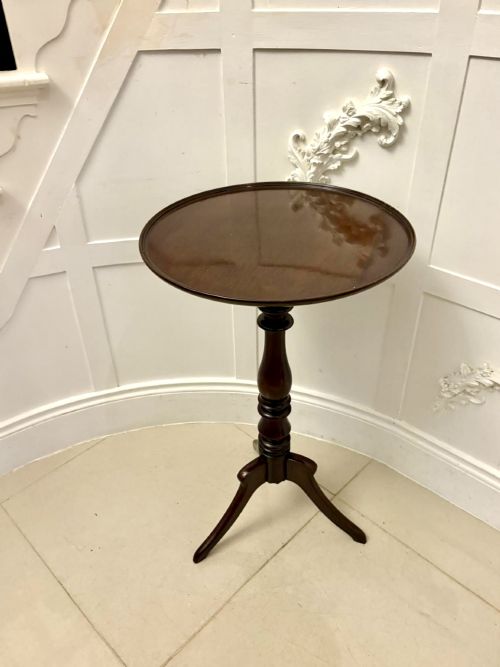
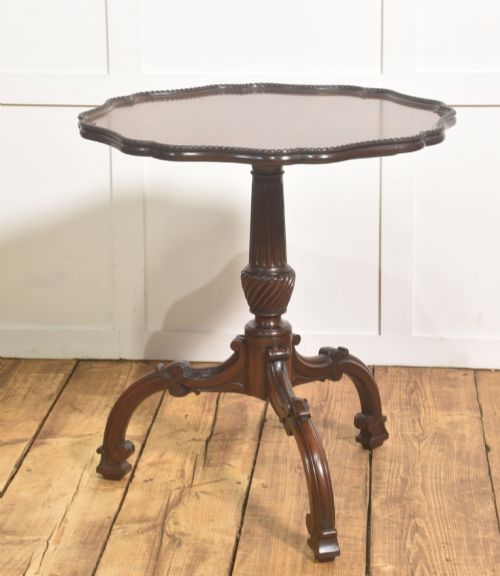
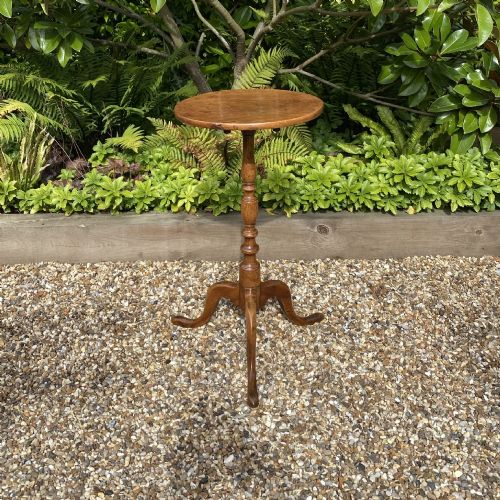
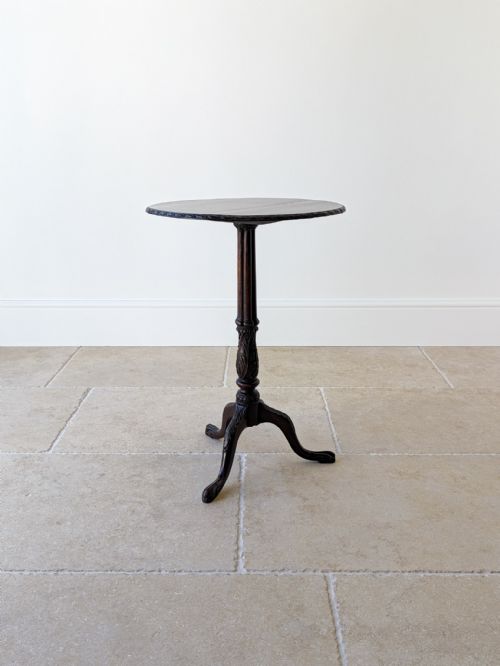
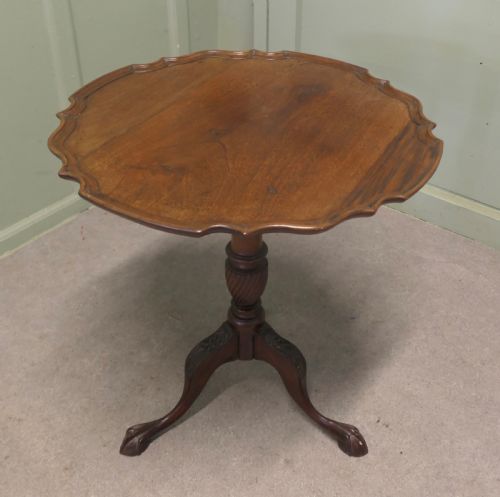
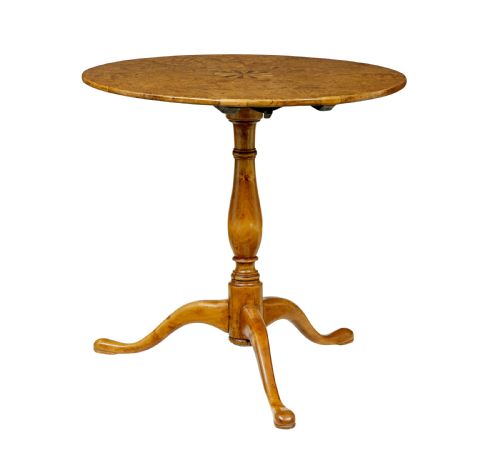
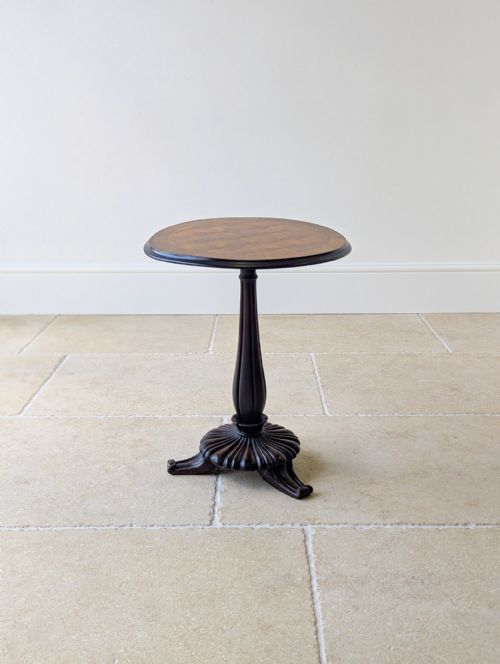
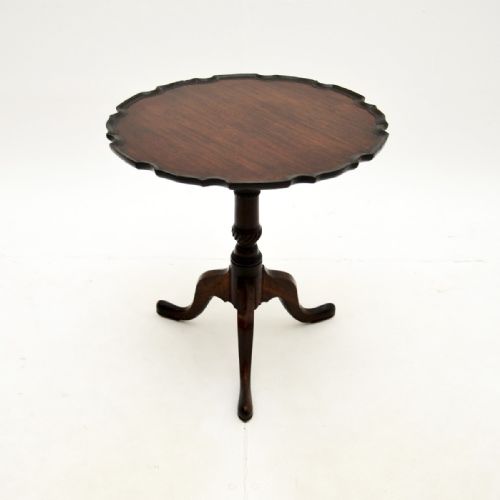
A small round tilt table is typically encountered as a wine table or occasional table supported by a tripod base, designed with a top that tips vertically when not in use. The form appears across the eighteenth and nineteenth centuries, spanning Georgian, Regency, and Victorian periods.
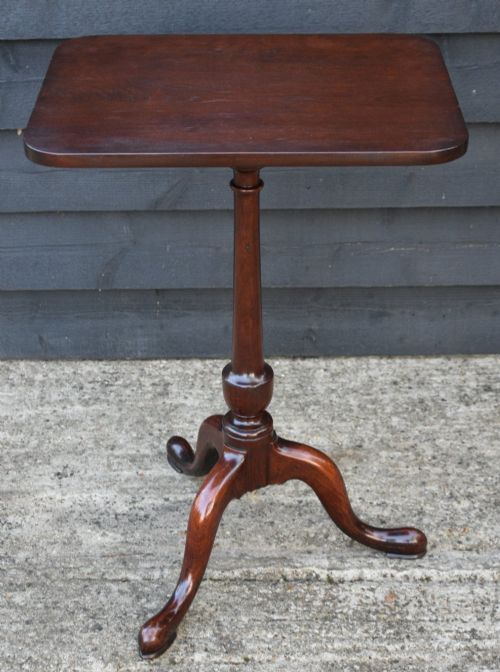
The profile relies on a central pedestal rising from three legs, often terminating in pad feet or brass fittings. Smaller variants function well beside a chair as a lamp table.
How they were made
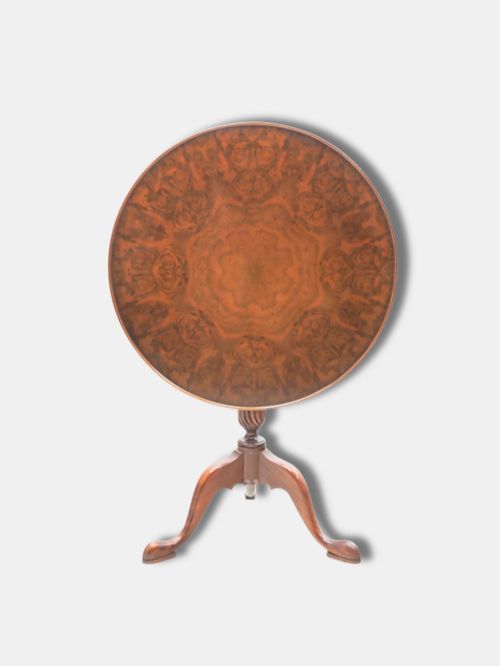
Makers utilised solid mahogany and walnut for the primary structure, turning the central pedestals on lathes and shaping the tripod legs by hand. Burr veneers supplied decorative grain patterns on the circular tops of finer nineteenth-century pieces.
The tilting mechanism typically employs a birdcage or a simple block hinge with a brass catch, allowing the top to pivot upright against the column. Joinery relied on precise dovetails and pegged tenons to secure the legs to the pillar.
Small Round Tilt Table Retail Price Guide 2026
Typical asking prices for small round tilt table among the pieces listed under this phrase on Sellingantiques today, from the lower quarter to the upper quarter. They describe what is for sale here now, not the wider market.
Listings feature mahogany, walnut, burr walnut veneer, burr birch, and pine across Georgian, Regency, and Victorian periods.
What varies in quality
Quality rests in the choice of timber and the crispness of the turning on the pedestal column. Superior examples display carefully matched grain on the circular top and robust, well-proportioned tripod legs that sit firmly on the floor without wobble.
The sophistication of the tilting mechanism and the retention of original brass catches distinguish finer workshop output from simpler vernacular pieces. Hand-carving on the knees or pillar, such as fluting or subtle shaping, elevates the standing of an individual table.
The Small Round Tilt Table Glossary
- Tilt top
- A table top mounted on a hinge mechanism that pivots to a vertical position. This design allowed the furniture to be stored flat against a wall when not in use.
- Tripod base
- A support structure featuring three legs radiating from a central column. It provides stable placement on uneven floors.
- Pie crust
- A raised, carved edge shaped in alternating curves around the circumference of a circular top. This detail is commonly found on Georgian and revival pieces.
- Pedestal
- The central upright post supporting the table top. It connects the circular surface to the tripod feet below.
Small Round Tilt Table: Frequently Asked Questions
What were small round tilt tables used for?
These tables served primarily as movable stands for wine glasses, candles, or small lamps during the evening. Their pivoting tops allowed servants to clear them away and store them compactly against the wall.
Over time, owners placed them beside seating areas as general occasional furniture or intimate dining spots for small numbers of guests.
How do I tell an 18th-century table from a 19th-century one?
Eighteenth-century examples often exhibit simpler, robust proportions with heavy mahogany timbers and straightforward turning on the pedestal. The joinery tends to show hand-cut elements specific to earlier workshop practices.
Nineteenth-century pieces, including Victorian and Regency revivals, frequently incorporate decorative veneers like burr walnut or intricate inlay work. They may also show more refined machinery-assisted turning and standardised hardware.
How do I care for a mahogany tilt table?
Keep the timber away from direct heat sources and strong sunlight to prevent the wood from drying out or the veneer from lifting. Dust regularly with a dry cloth and apply a traditional beeswax sparingly to nourish the finish.
Support the top securely when operating the tilt mechanism to avoid placing sudden strain on the central hinge and catch.
Are all these tables English?
While the majority of the listed pieces originate from English workshops spanning the Georgian and Victorian eras, other origins appear. Continental pieces, such as Swedish examples in burr birch, are also represented.
Each region utilised local timbers and distinct stylistic preferences while maintaining the core tripod and tilt-top form.