

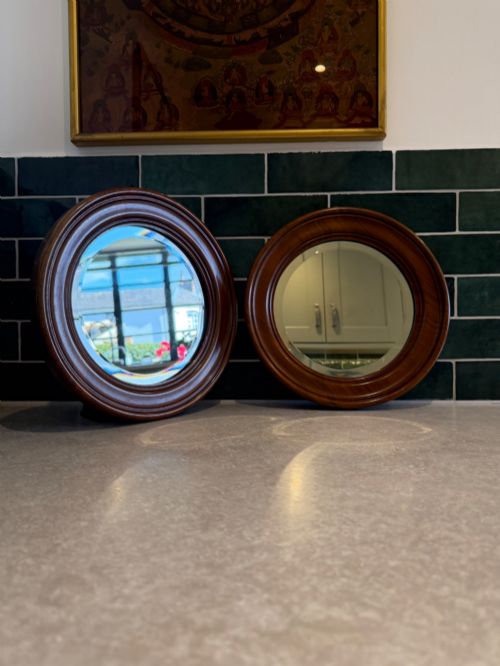
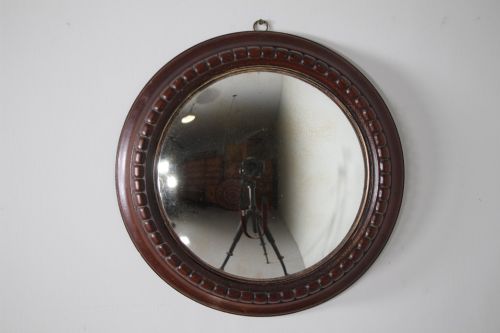
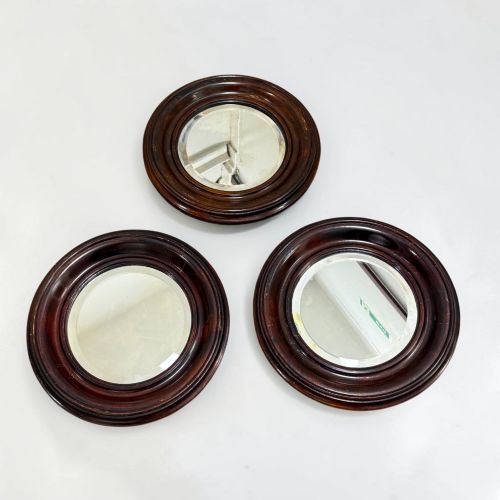
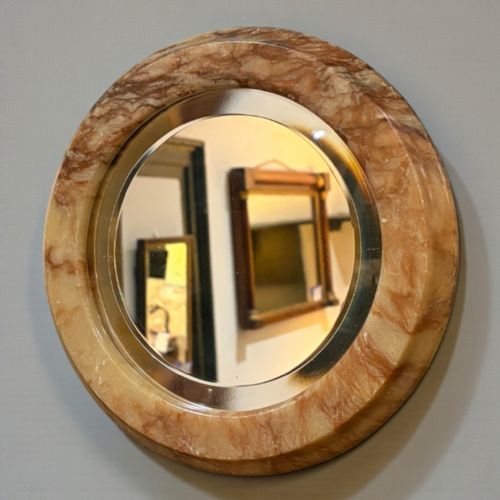




Small Round Mirror
A small round mirror brings immediate depth and light to a room, offering compact reflection framed in period timber and gilt.
Small Round Mirror
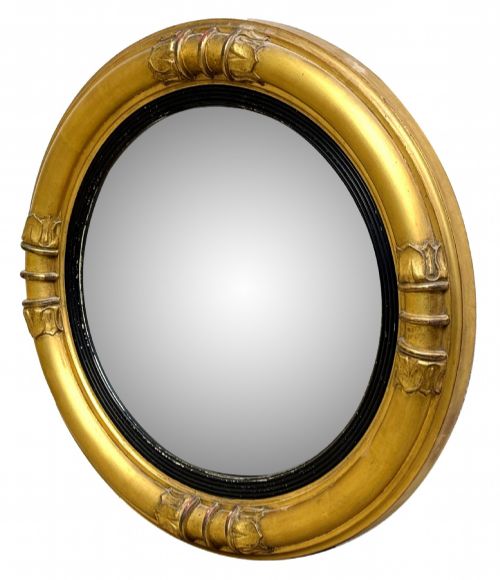
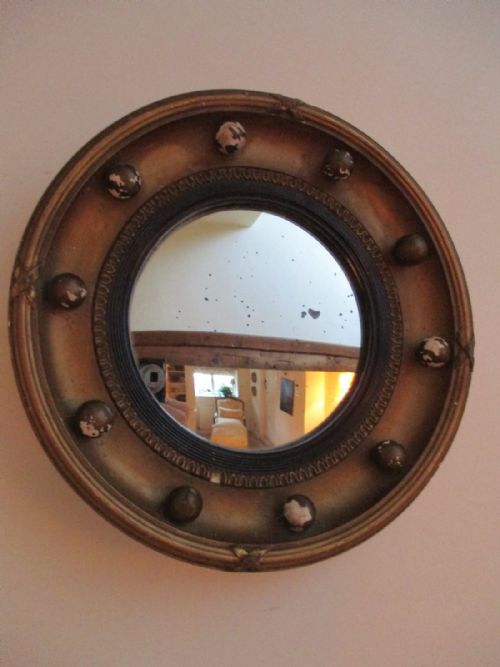
A small round mirror provides compact wall reflection, most frequently encountered in nineteenth-century convex formats framed in giltwood, ebonised wood, or walnut. These pieces originate across the Regency, Victorian, and Edwardian eras, spanning styles from Louis Philippe to Arts and Crafts and Art Deco.
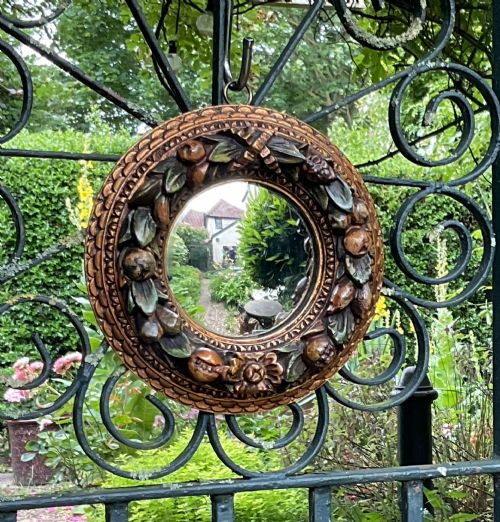
Buyers seeking a small round mirror will find circular wall mirrors alongside rarer variants such as convex plates with carved wooden surrounds or alabaster frames. The selection includes modest domestic looking glasses and decorative wall pieces designed to catch light in tighter spaces.
How they were made
Makers shaped these frames from native timbers such as oak, walnut, and turned wood, often applying gesso before gilding or ebonising the surface. Glass plates were cut to circular or convex proportions, sometimes exhibiting age through foxing on the reflective surface.
Decorative detailing relies on carved wooden motifs, moulded giltwood surrounds, and contrasting finishes like gilt and ebony. Japanning and simpler polished wood techniques appear across nineteenth-century and early twentieth-century examples.
Small Round Mirror Retail Price Guide 2026
Typical asking prices for small round mirror among the pieces listed under this phrase on Sellingantiques today, from the lower quarter to the upper quarter. They describe what is for sale here now, not the wider market.
Current listings feature materials including glass, giltwood, ebonised wood, gesso, walnut, brass, and oak across the nineteenth and early twentieth centuries.
What varies in quality
Quality rests in the crispness of the timber turning, the depth of the original gesso and gilding, and the character of the glass plate. Finer examples retain their original convex curvature and unblemished frames, whereas simpler pieces show softer moulding and later finishes.
The sophistication of the surround distinguishes a standard domestic looking glass from an accomplished Regency or Victorian decorative piece. Proportion, the integrity of the original wood grain, and the harmony between frame and plate govern the standing of each mirror.
The Small Round Mirror Glossary
- Convex mirror
- A round mirror with an outward-curving glass plate designed to reflect a wide panoramic view of the room. These pieces were popular during the Regency and Victorian periods.
- Giltwood
- Timber carved and coated with a thin layer of gold leaf over gesso. It appears frequently on nineteenth-century wall mirrors.
- Ebonised wood
- Timber treated to resemble ebony through staining or painting. This dark finish provides sharp contrast against gilt details.
- Foxing
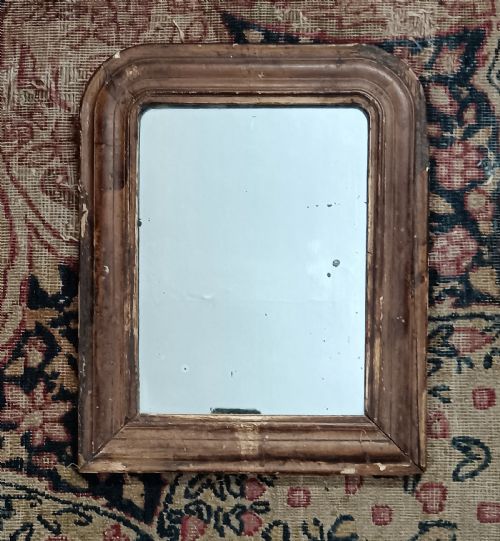
- Age-related spotting and discoloration within the glass plate itself. Collectors often value this natural patina as proof of antique origin.
- Gesso
- A plaster-like mixture applied to wood frames to create a smooth surface for gilding. Fine application preserves intricate decorative relief.
Small Round Mirror: Frequently Asked Questions
Where should I hang a small round mirror?
These compact mirrors suit smaller wall spaces, narrow hallways, or above a mantlepiece where they can catch and distribute natural light.
Because of their scale, they also work effectively when grouped alongside larger artworks or integrated into a gallery wall arrangement.
How do I date an antique round mirror?
Dating relies on examining the construction of the wooden frame, the composition of the gesso, and the manufacturing characteristics of the glass plate.
Turned walnut and heavy giltwood frames typically point to nineteenth-century manufacture, while later Edwardian and 1920s examples show distinct stylistic shifts.
What does foxed glass mean?
Foxed glass refers to the small dark spots and mottled patches that develop on antique mirror plates as the backing degrades over time.
Rather than a defect, many collectors appreciate this natural ageing process as evidence of genuine period authenticity.