

Small Regency Pedestal Table
A small regency pedestal table brings compact proportion and architectural balance to a room, serving as a versatile surface for lamps, drinks or books.
Small Regency Pedestal Table
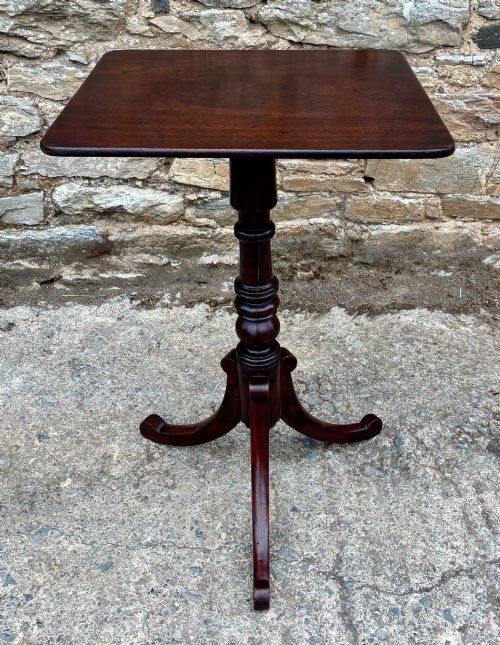
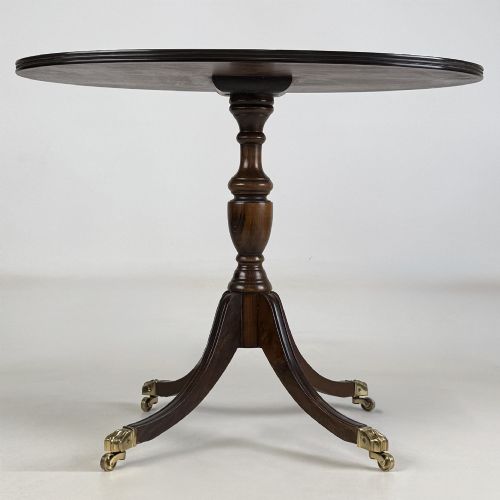
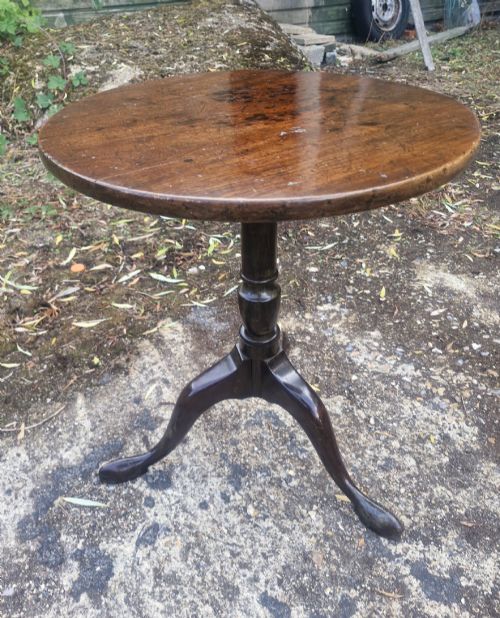
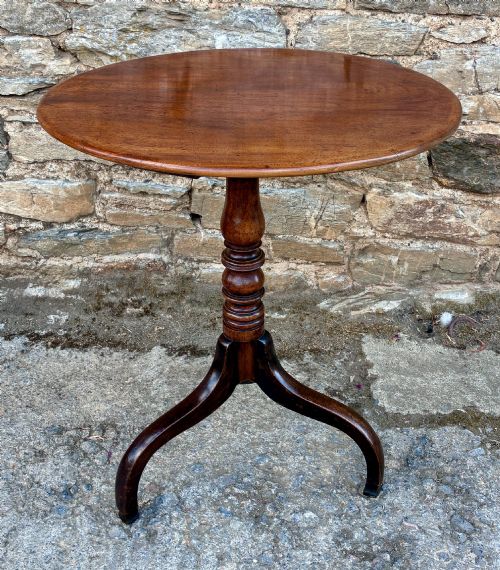
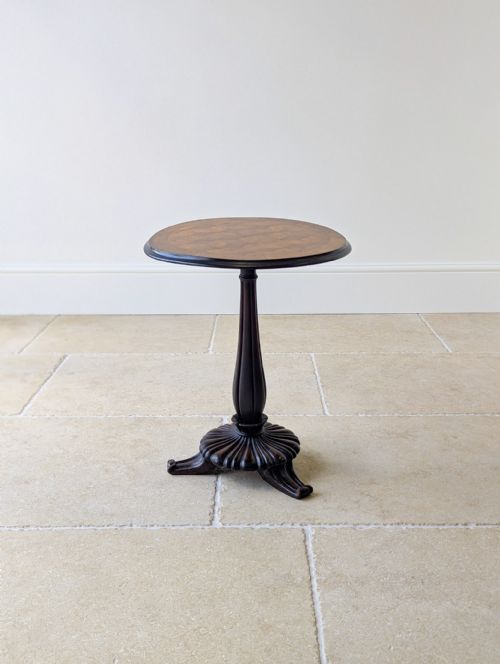
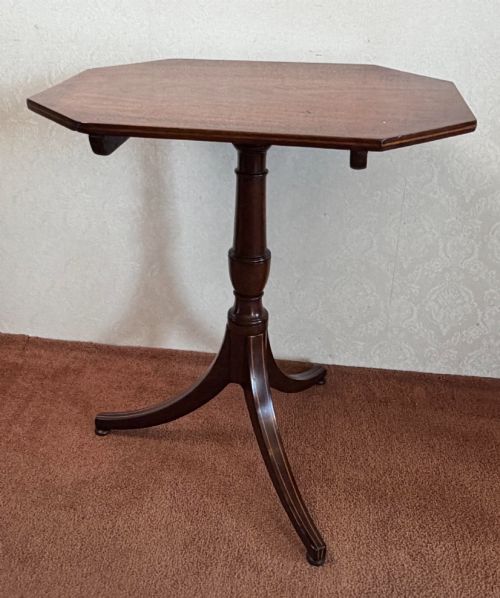
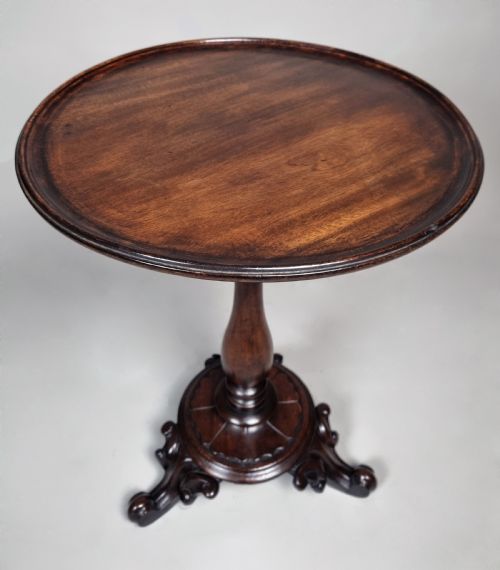
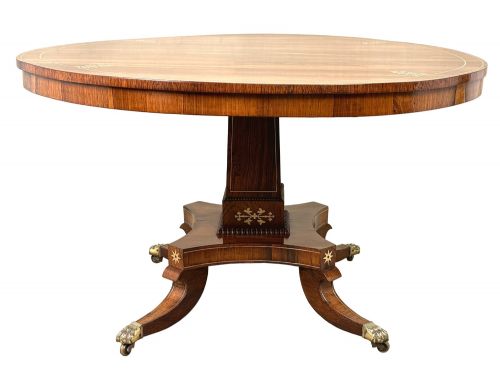
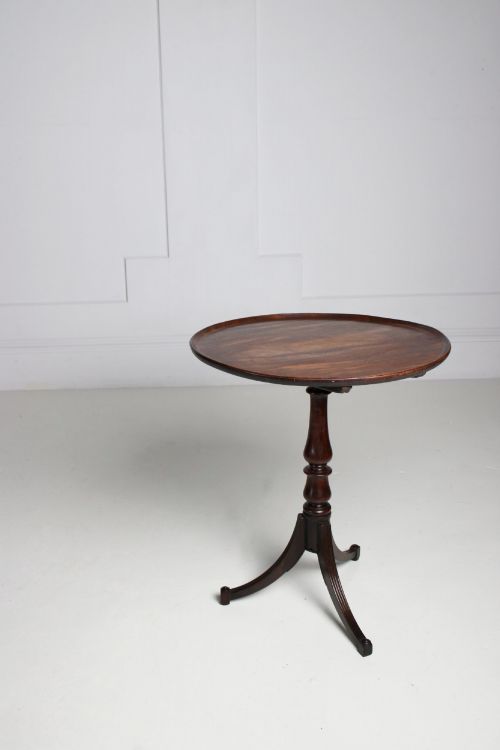
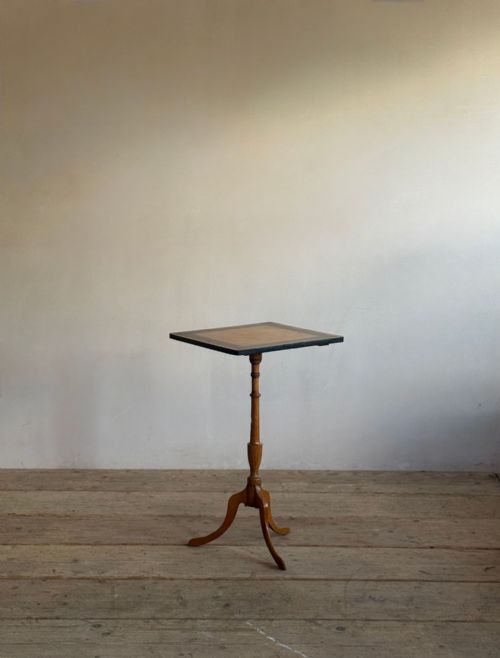
When you search for a small regency pedestal table, you encounter compact circular, oval and drum forms supported by a central pillar and tripod or plinth base. These pieces originate from the nineteenth century, alongside later revivals from the Edwardian era and the nineteen-thirties.
The selection ranges from simple wine tables and candle stands to more elaborate occasional tables featuring brass inlay or penwork decoration. They function primarily as side tables, lamp tables or bedside surfaces within both traditional and modern interiors.
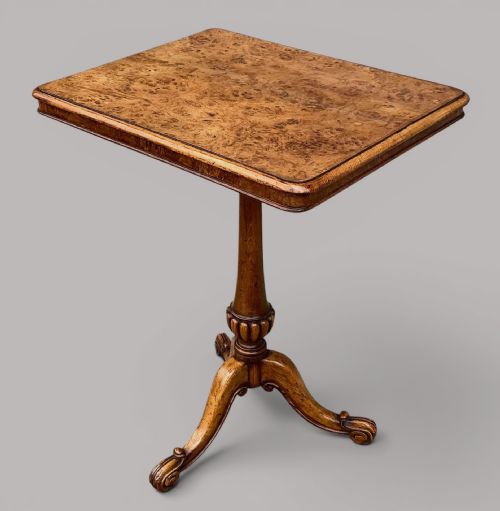
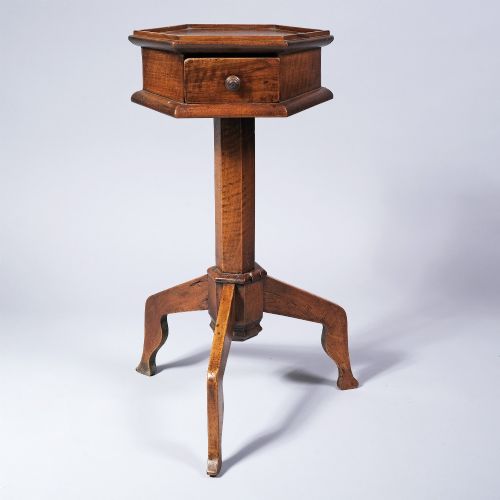
Makers and cabinetmakers of the period utilised rich timbers to create functional furniture designed for flexible placement in drawing rooms and parlours. The survivals on this page reflect this variety, spanning genuine period examples and later stylistic interpretations.
Materials and construction methods
Cabinetmakers relied heavily on dense tropical hardwoods such as mahogany and rosewood, often complemented by figured veneers like burr oak, burr yew and amboyna. These timbers provided a stable foundation capable of taking a fine polished finish while supporting slender pedestals and tripod legs.
Decorative detailing involved contrasting elements including boxwood stringing, brass inlay and intricate penwork applied directly to the timber surfaces. Tops were frequently turned from single boards or veneered carefully onto secondary woods to achieve balanced grain patterns.
Some nineteenth-century wine tables feature tiny raised rims designed specifically to stop rolling bottles during lively dinner parties.
Assessing quality and craftsmanship
Quality reveals itself in the crispness of the turning on the central column and the stability of the joint where the pedestal meets the legs. Superior examples display thoughtful timber selection, where veneer matches symmetrically across the circular or oval top.
Subtle details such as precise boxwood stringing, neat brass inlays and well-fitted drawers elevate a piece above standard utility furniture. The integrity of the original construction and the depth of the polished finish distinguish fine workshop production from simpler vernacular items.
The Small Regency Pedestal Table Glossary
- Tripod table
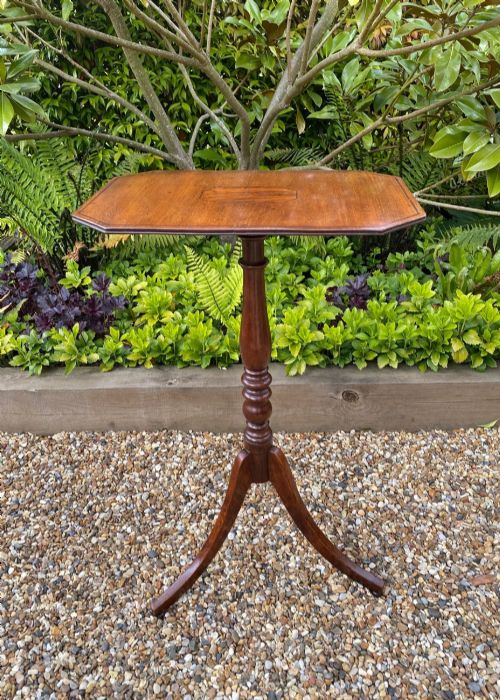
- A small freestanding table supported by a central pillar resting on three legs. This construction prevents rocking on uneven historic floors.
- Wine table
- A compact occasional table designed specifically to hold a glass or decanter beside a seating area. They often feature small circular tops and slender pedestal bases.
- Drum table
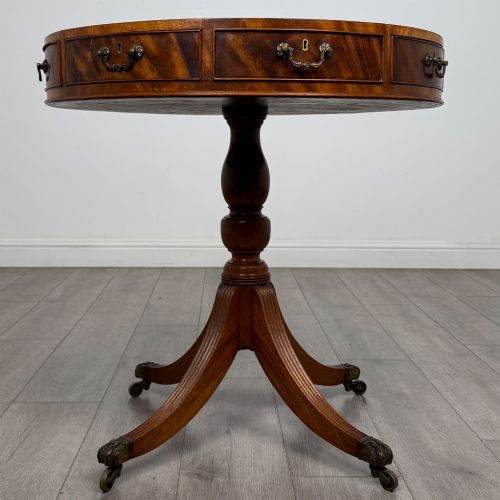
- A circular library or occasional table with a deep frieze resembling a drum, frequently fitted with drawers. They sit on a robust central pillar and splayed legs.
- Stringing
- A narrow inlay of contrasting wood used to outline the edges of table tops and drawers. This technique adds subtle linear definition to plain timber surfaces.
- Pedestal
- The central vertical column supporting the weight of the table top. It distributes pressure evenly down to the feet or base.
Small Regency Pedestal Table: Frequently Asked Questions
Where should I place a small pedestal table?
These compact tables fit easily beside armchairs, sofas or beds where surface space is limited. Their central pillar design allows them to tuck neatly into corners or awkward spaces without blocking movement.
They also function effectively as freestanding lamp tables in hallways or drawing rooms, providing a stable platform for lighting or decorative objects.
How do I distinguish period pieces from later revivals?
Examine the construction methods, timber patination and secondary woods used beneath the surface. Genuine nineteenth-century examples show hand-cut joinery and signs of age consistent with continuous use.
Twentieth-century revivals often utilise more uniform machine-sawn timber and modern adhesives, even when styled precisely after earlier Regency prototypes.
Can these tables support heavy lamps?
Most tripod and pedestal tables balance standard table lamps securely if the base is weighted and the legs spread wide. However, very slender wine tables suit lighter items rather than heavy ceramic bases.
Ensuring the central fixing bolt underneath remains tight will keep the column rigid and prevent any wobble.
What is the difference between a wine table and a side table?
Wine tables traditionally feature small, round tops specifically sized for holding a single glass or bottle. Side tables often offer larger rectangular, oval or drum surfaces with greater utility for general storage.
Both share the compact proportions typical of nineteenth-century occasional furniture.