

Small Red Oriental Rug
A small red oriental rug brings rich tribal character and deep madder tones to a floor, offering durable wool textiles woven across Persia, the Caucasus, and Anatolia.
Small Red Oriental Rug
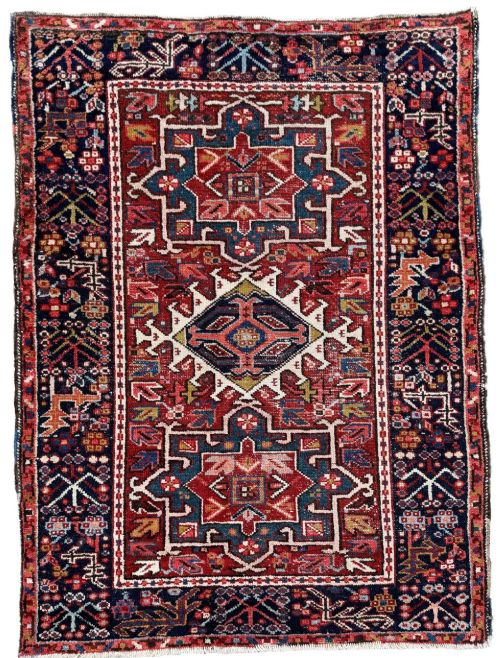
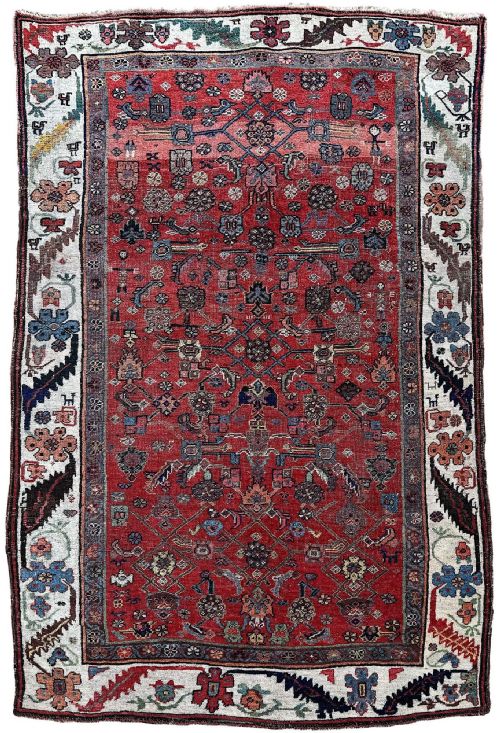
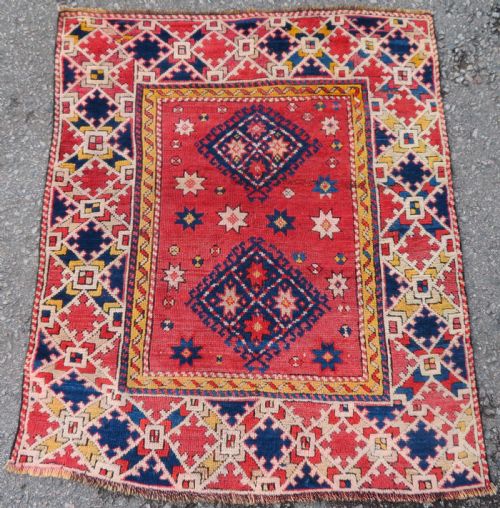
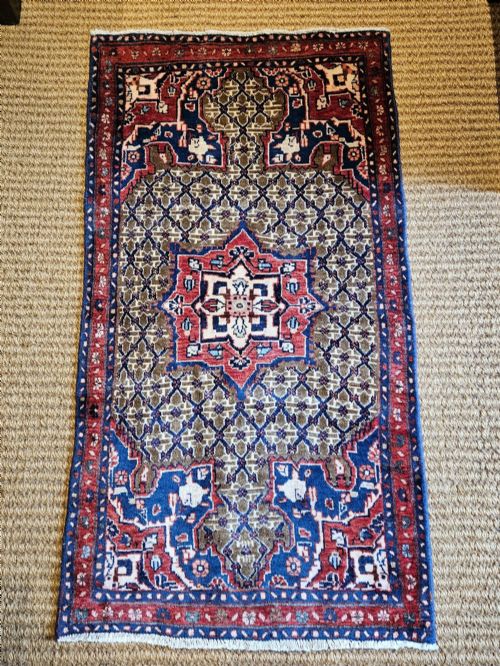
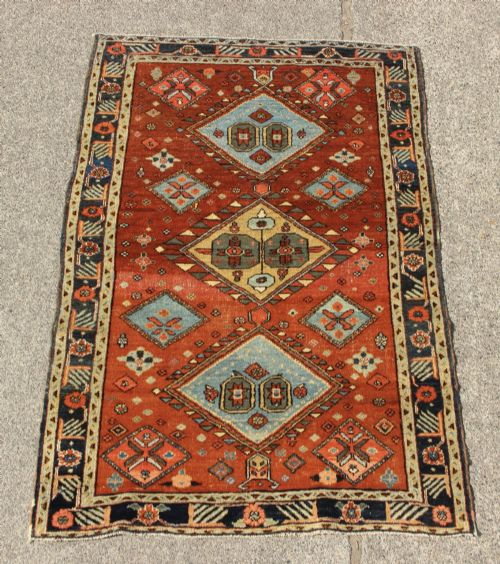
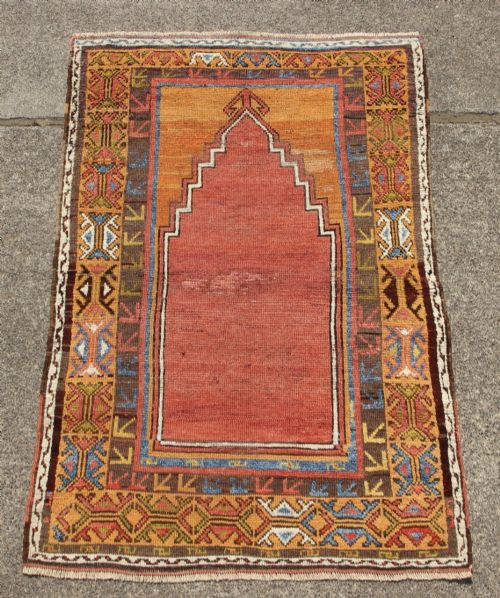
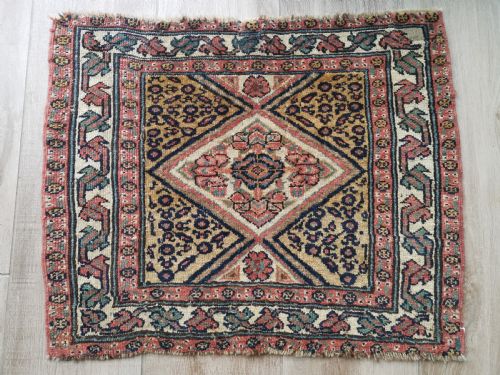
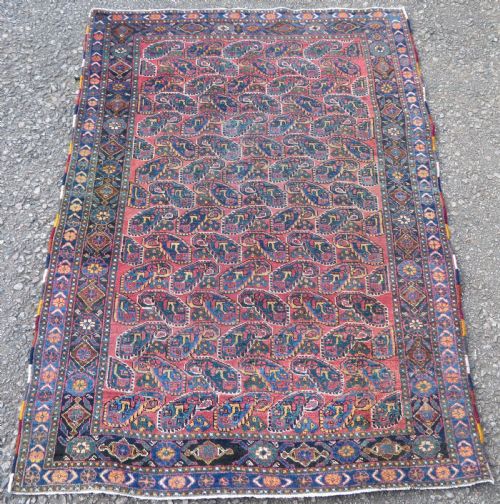
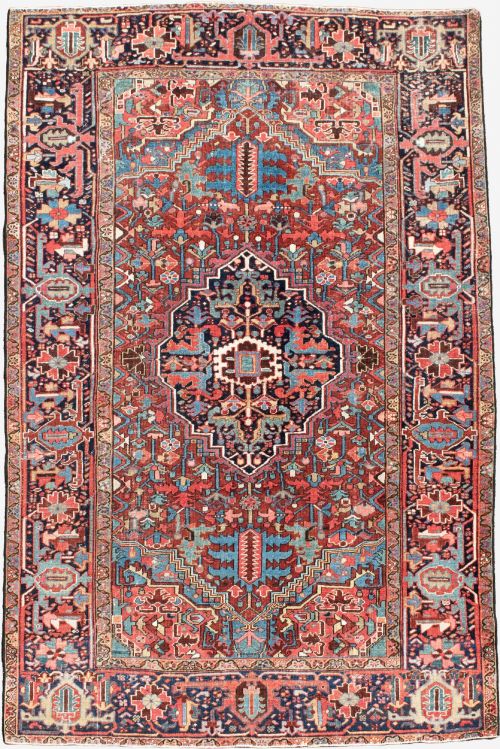
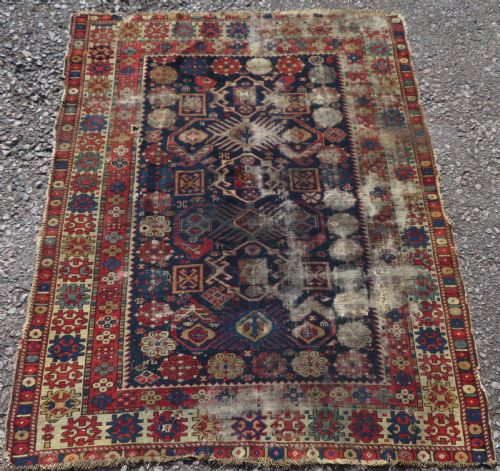
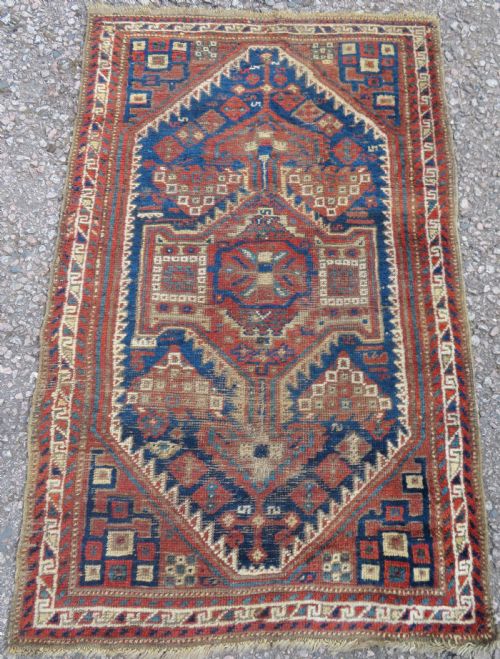
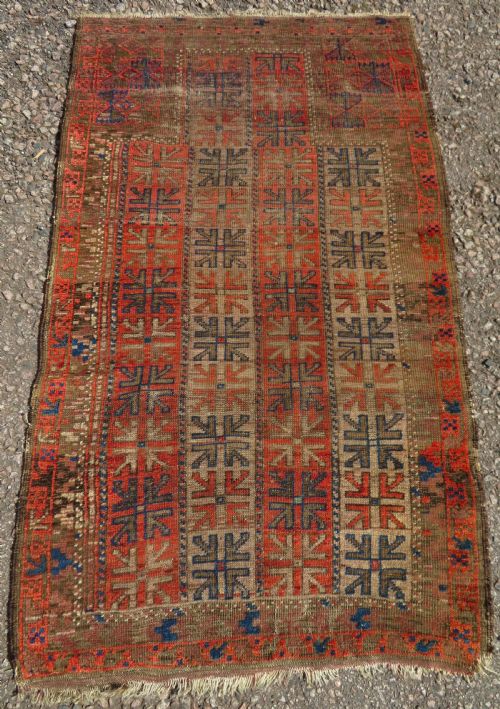
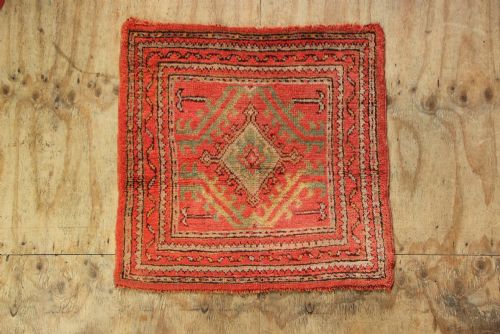
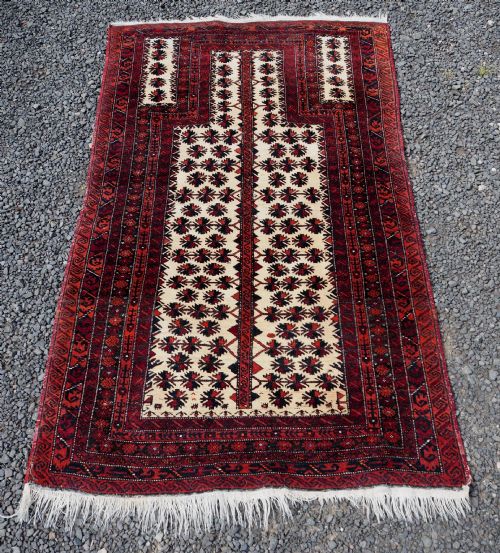
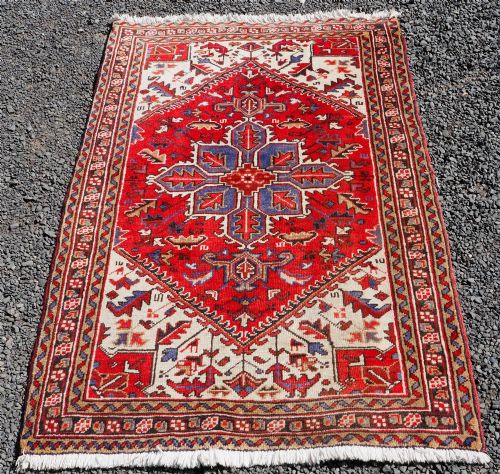
A small red oriental rug is a woven textile originating from traditional weaving centres across Persia, the Caucasus, and Anatolia, typically encountered here in room-anchoring or hearth-sized dimensions. Buyers searching for a small red oriental rug will find village and tribal pieces ranging from compact mats and prayer rugs to square formats and bag faces. These floor coverings bridge centuries of nomadic and town craftsmanship, bringing dense crimson and madder colour palettes into domestic spaces.
The selection on this page leans heavily toward Persian tribal pieces, including Heriz, Bidjar, Karaja, and Afshar rugs, alongside Caucasian and Turkmen examples. Most pieces date from the nineteenth and early twentieth centuries, spanning periods from eighteen-fifty to nineteen-thirty. Forms vary from standard rectangular area rugs to square formats, prayer niches, and storage bag faces.
How they were made
These textiles rely on hand-spun wool for the pile, providing resilience and a soft lustre that matures with age. The foundation typically consists of a sturdy cotton or wool warp and weft, giving the structure stability and strength.
Weavers utilised natural dyes to achieve deep red tones, often derived from madder root, which interact with the wool to create rich tonal variations across the surface. Knotting techniques vary by region, resulting in distinct pile densities and reverse textures unique to each weaving tradition.
Listings feature pieces spanning the mid-nineteenth century to nineteen-thirty, utilising hand-spun wool and natural dyes across Persian, Caucasian, and Turkmen traditions.
What varies in quality
Quality in these textiles rests upon the precision of the knotting and the integrity of the materials, where hand-spun wool and deeply saturated natural dyes command greater appreciation. The crispness of the tribal motifs and the balance of the overall design structure reveal the weaver's skill and local tradition.
Survival condition also distinguishes pieces, as even distressed examples retain historical charm, while intact piles and robust edges reflect careful historical use. The complexity of the field design, from geometric medallions to pictorial elements, separates standard village production from finer workshop output.
The Small Red Oriental Rug Glossary
- Warp
- The vertical foundation threads stretched tightly on the loom before weaving begins.
- Weft
- The horizontal threads passed through the warp to secure the knots in place.
- Madder
- A natural red dye derived from the root of the Rubia plant, widely used in traditional oriental rugs.
- Prayer rug
- A small rug featuring a mihrab or niche design, historically used for daily Islamic prayers.
- Gul
- A repeating octagonal medallion motif frequently found in Turkmen and tribal weaving traditions.
Small Red Oriental Rug: Frequently Asked Questions
Where should I place a small red oriental rug?
These compact rugs suit smaller floor spaces such as entryways, hallways, beside a bed, or positioned as a hearth rug in a living room. Their rich red tones anchor furniture groupings and add warmth to timber floors.
Because many examples measure around one to two metres in length, they easily fit into spaces where a full-sized carpet would overwhelm the room layout.
How do I care for an antique wool rug?
Gentle, regular vacuuming without a beater bar removes surface dust and protects the hand-spun wool pile from abrasive grit. Professional cleaning suited for antique textiles preserves the natural dyes and fibres.
Keep the rug out of direct, prolonged sunlight to prevent the madder reds and secondary colours from fading unevenly over time.
How do I tell different tribal designs apart?
Tribal designs often feature distinct geometric structures, such as the bold geometric medallions of Heriz rugs or the repeated octagonal gul motifs characteristic of Turkmen weaving. Regional palettes and border arrangements also offer clues to origin, distinguishing Caucasian pieces from Persian village work.
Examining the knotting density on the reverse side reveals whether a piece stems from a nomadic camp, a settled village, or a larger town workshop.
What does a distressed pile mean for an antique rug?
A distressed pile indicates age and active history, where decades of foot traffic have worn down the wool to reveal the foundation threads beneath. Many collectors value this weathered patina for the softness it brings to the reds and secondary colours.
Distressed pieces remain structurally stable as long as the warp and weft foundation remains secure and free from major losses.