




Small Proportioned Desk
These small proportioned desk pieces are compact writing furniture designed for tight spaces, offering practical surfaces without dominating a room.
Small Proportioned Desk
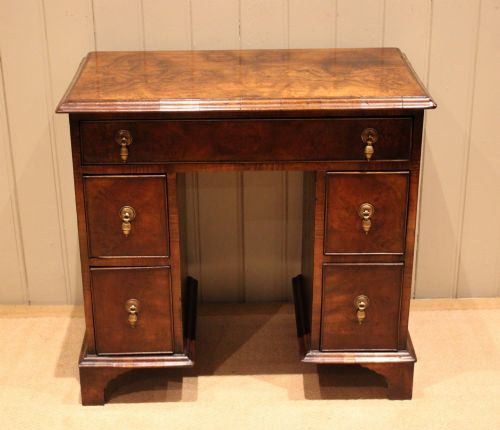
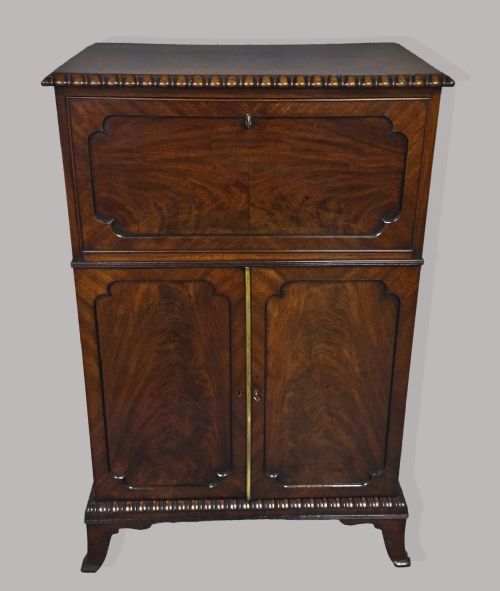
A small proportioned desk encompasses compact writing furniture designed for smaller spaces, ranging from pedestal forms to bureau cabinets. Buyers searching this phrase seek items that provide a functional workspace while maintaining a diminutive physical footprint in a room.
The selections available here span several centuries and styles, frequently drawing on Georgian, Regency, and Victorian periods. Mahogany and walnut dominate the structural timbers, alongside specialised forms like Davenport desks, kneehole desks, and bureau bookcases.
Origin variations include English cabinet-making traditions alongside continental pieces, such as French provincial cherry wood tables and Boulle work centre tables. These items accommodate compact interiors by scaling down traditional dimensions without losing their functional purpose.
Materials and construction methods
Makers utilised dense cabinet timbers like mahogany, walnut, and burr walnut, frequently applying flame mahogany veneer to primary surfaces for visual depth. Structural integrity relied on solid oak or secondary hardwoods for drawer linings and interior framing.
Metal components such as brass handles, escutcheons, and gilt bronze mounts provided both functional hardware and decorative contrast against dark timber. Boulle work incorporates red tortoiseshell and brass marquetry, showcasing intricate inlay techniques across table surfaces.
Small Proportioned Desk Retail Price Guide 2026
Typical asking prices for small proportioned desk among the pieces listed under this phrase on Sellingantiques today, from the lower quarter to the upper quarter. They describe what is for sale here now, not the wider market.
Listings feature woods spanning mahogany, walnut, burr walnut, cherry wood, and figured satinwood, alongside brass and gilt bronze.
Evaluating quality and execution
Quality reveals itself in the selection of timber veneers and the precision of the cabinet work, particularly around dovetail joints in drawers and internal pigeonholes. Superior pieces maintain harmonious proportions and original hardware, reflecting the skill of the original workshop.
Finer examples integrate secondary materials like figured satinwood or delicate marquetry with exact alignment, whereas simpler pieces rely on standard timber construction. The crispness of cast gilt bronze mounts or the tightness of veneer joints distinguishes workshop execution.
Gillows·Druce & Co
The Small Proportioned Desk Glossary
- Burr walnut
- A figured timber veneer taken from walnut tree growths, valued for its swirling patterns and rich texture. It appears frequently on luxury Victorian and Georgian cabinet furniture.
- Davenport
- A compact writing desk featuring a sloping top for writing and a set of drawers accessed from the side. This form gained popularity during the Regency period for use in boudoirs and small studies.
- Kneehole desk
- A flat-top pedestal desk with a central recess for the sitter's legs, flanked by banks of small drawers. Early examples often feature a concealed cupboard behind the kneehole space.
- Secretaire cabinet
- A piece of furniture containing a pull-down drawer or flap that conceals a writing surface and small pigeonholes. These cabinets combine storage capacity with a concealed desk facility.
Small Proportioned Desk: Frequently Asked Questions
What defines a small proportioned desk?
These items are built to a smaller scale than standard library or partners desks, making them suitable for tighter architectural spaces. They retain full writing utility through clever internal compartmentalisation.
Cabinetmakers achieved this reduction in size without compromising the structural integrity required for daily writing tasks.
How do I date a mahogany bureau?
Dating relies on examining construction methods like hand-cut dovetails, secondary timbers used in drawer linings, and the overall style of the brass hardware. Georgian examples typically show denser mahogany and simpler interior layouts than later Victorian pieces.
Changes in cabinet-making technology through the nineteenth century introduced different veneer thicknesses and mechanical fittings.
Where were these compact desks used?
Historically, smaller writing furniture suited private chambers, bedrooms, and small drawing rooms where grand furniture would overwhelm the space. Ladies bureaus and Davenport desks were particularly common in domestic sitting rooms.
Their mobility allowed owners to move them closer to light sources near windows or fireplaces.
How should I care for timber surfaces?
Maintain walnut and mahogany surfaces by avoiding direct sunlight and excessive humidity shifts that cause veneer lifting or timber splitting. Regular dusting with a soft cloth preserves the wax finish.
Avoid liquid polish containing silicone, opting instead for traditional beeswax applied sparingly to nourish the grain.