

Small Oak Nightstand
These small oak nightstand selections provide practical bedside storage and surface space, grounded in robust materials and traditional forms.
Small Oak Nightstand
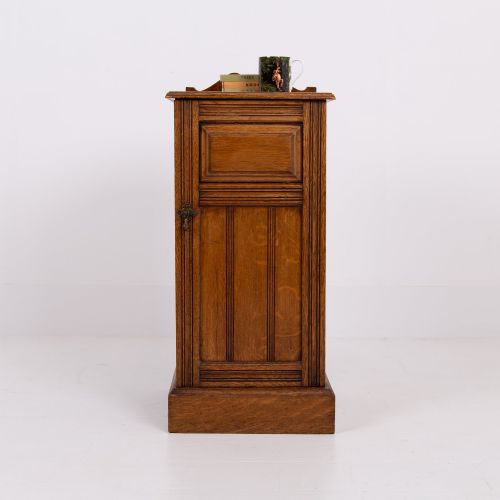
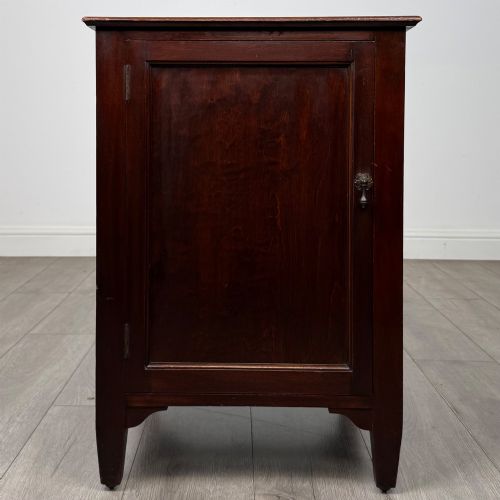
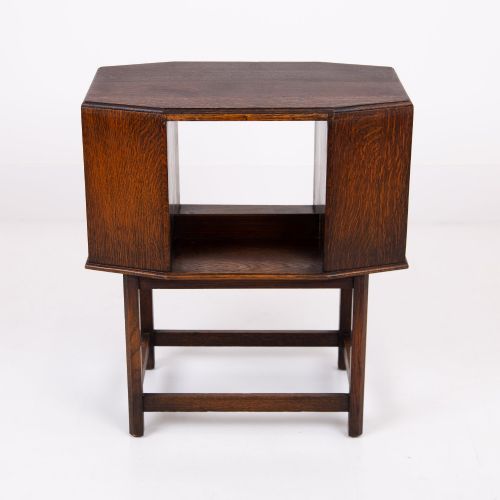
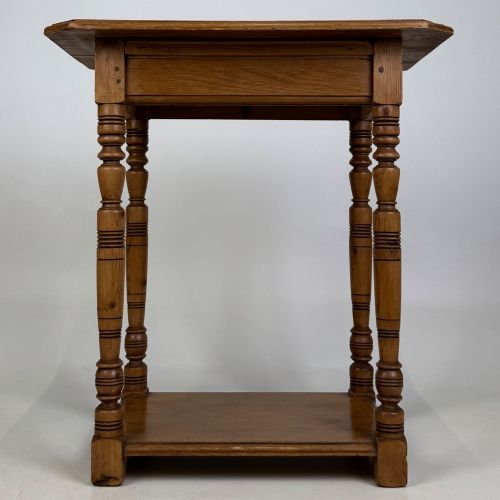
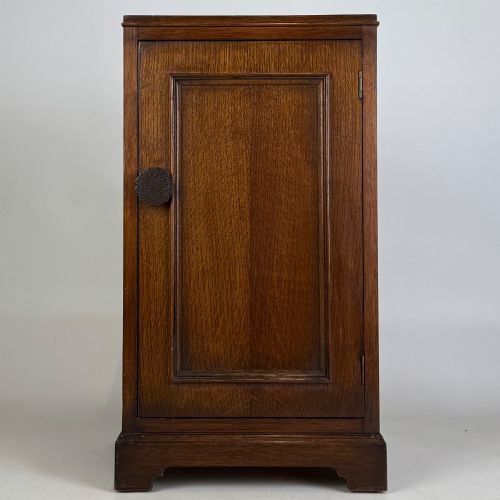
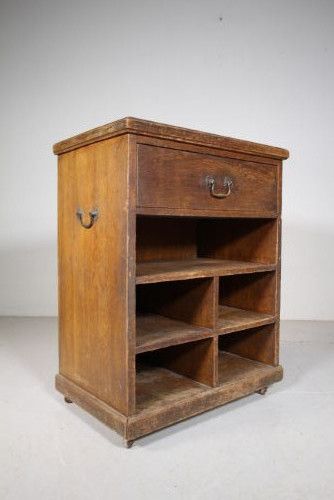
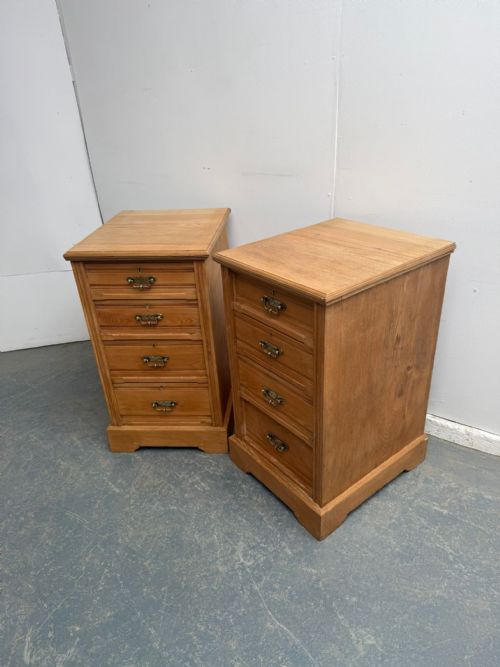
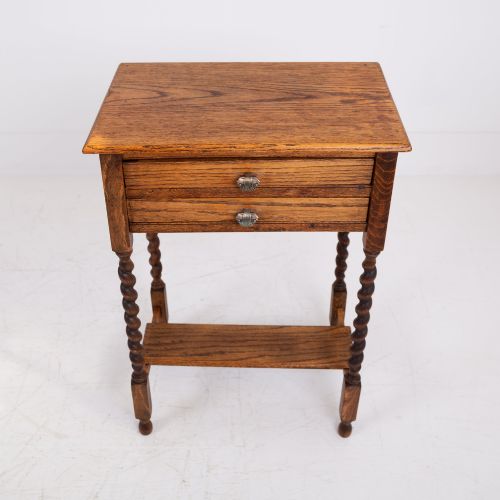
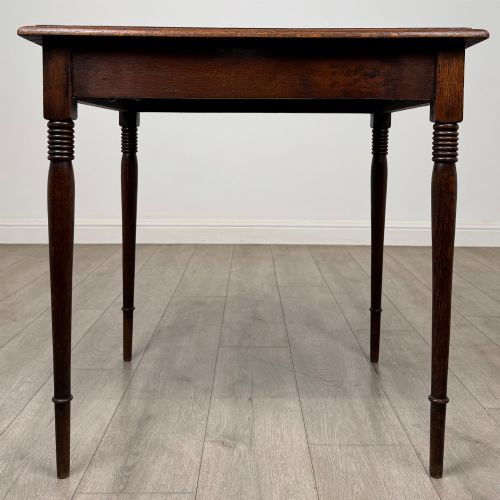
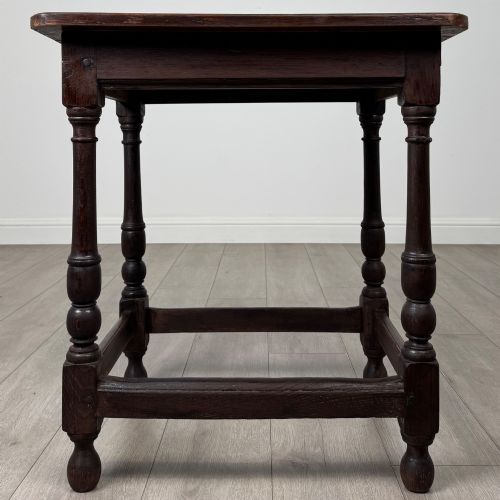
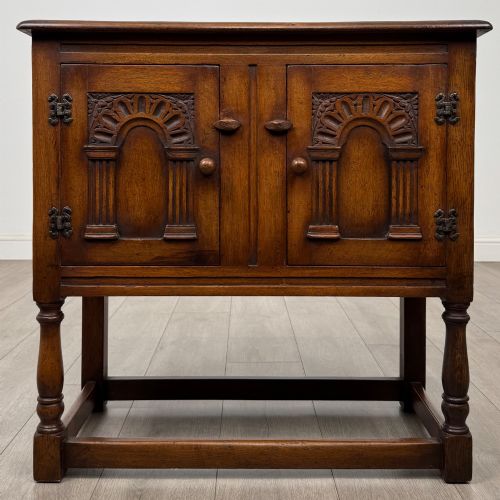
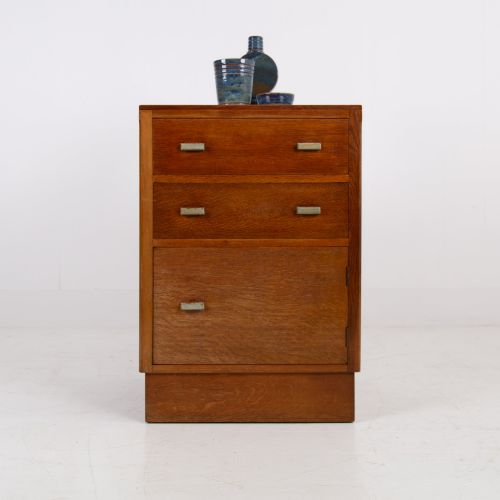
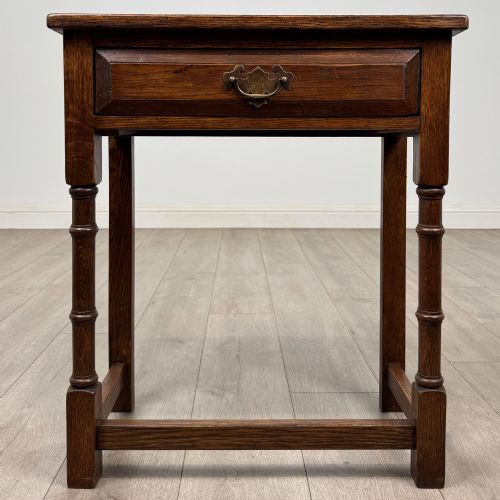
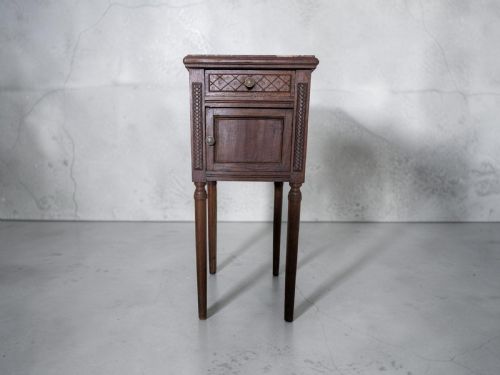
A small oak nightstand brings compact utility to the bedroom, offering designated surfaces for lamps and nighttime essentials alongside enclosed storage. The selection spans straightforward side tables, enclosed bedside cabinets, pot cupboards, and compact chests of drawers.
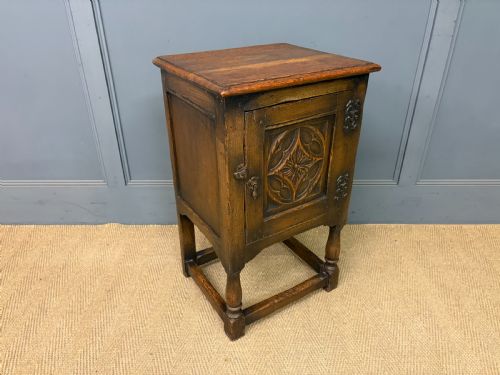
Most examples originate from the Edwardian era and the 1920s, reflecting a heavy concentration of early twentieth-century domestic furniture. Pieces range from simple Jacobean Revival and Arts and Crafts designs to utilitarian side tables and small carved cabinets.
Earlier Georgian and Victorian forms appear occasionally alongside French Provincial and Gothic style variants, providing alternative silhouettes. Buyers encounter diverse functional formats, including single-door cupboards, open side tables, and multi-drawer chests tailored for small spaces.
Materials and Construction
The primary material is oak, utilised either in solid form or paired with supporting timbers like ash and pine, and occasionally enhanced with stained finishes. Secondary elements introduce brass hardware, iron hinges, and wrought iron details to doors and drawers.
Construction techniques combine traditional joinery with period specific detailing, such as carved friezes, panelled doors, and occasional tile tops. Waxed treatments protect the timber surfaces while highlighting the natural grain and figuring of the oak.
Materials extend beyond solid oak to include ash, pine, stained wood, brass, and wrought iron.
Defining Quality
Quality rests on the integrity of the timber selection and the crispness of any carved detailing on the frieze or panels. Superior examples demonstrate thoughtful proportion and balanced integration of hardware like brass pulls and iron fittings.
The sophistication of the stylistic execution distinguishes standard utilitarian pieces from more ambitious Arts and Crafts, Jacobean Revival, or Gothic derivations. Construction stability and the retention of original surface finishes further divide the range.
Gomme
The Small Oak Nightstand Glossary
- Jacobean Revival
- A nineteenth and twentieth century furniture style emulating seventeenth century English woodwork. It often incorporates heavy mouldings, geometric panelling, and dark oak finishes.
- Arts and Crafts
- A design movement prioritising honest construction, visible hand craftsmanship, and simple utility. Pieces in this style frequently display plain oak surfaces with minimal, purposeful ornamentation.
- Pot Cupboard
- A traditional bedside cabinet designed originally to enclose a chamber pot. These compact units typically feature a single panelled door and an internal shelf.
- Tile Top
- A tabletop surface inset with decorative ceramic tiles. This feature appears commonly on late nineteenth and early twentieth century washstands and occasional cabinets.
- Close Stool
- An eighteenth century box form designed to enclose a commode seat. They often masquerade as small chests or side tables for discreet bedroom use.
Small Oak Nightstand: Frequently Asked Questions
What is a small oak nightstand used for?
These compact pieces serve beside a bed to hold reading lamps, books, and personal items within easy reach. Many designs incorporate cupboards or small drawers to keep bedroom clutter concealed.
Their modest footprints make them adaptable for tight spaces, functioning equally well as lamp tables or occasional side tables in other rooms.
How do I date an oak nightstand?
Dating relies on observing construction methods, hardware types, and prevailing stylistic indicators like Edwardian simplicity or 1920s Jacobean Revival motifs. Oak furniture from the early twentieth century often displays machine-assisted dovetailing alongside traditional hand joinery.
Earlier nineteenth-century and Georgian pieces show different proportions, hand-cut joints, and surface patination developed through decades of use.
Are these nightstands made of solid oak?
The listings feature pieces constructed predominantly from solid oak, sometimes accompanied by internal or secondary timbers such as ash and pine. Stained wood and painted finishes also occur on specific Victorian and Edwardian examples.
Hardware elements incorporate brass, iron, and wrought iron for handles, hinges, and decorative mounts.
How do I fit a small oak nightstand into a modern room?
The neutral tones and natural grain of oak allow these nightstands to anchor both contemporary and traditional interior schemes. Their modest dimensions ensure they sit comfortably beside low modern beds without dominating the room.
Pairing a functional cupboard or drawer unit with a minimalist lamp creates a balanced bedside focal point that maintains everyday utility.