


Small Oak Credenza Buffet
These small oak credenza buffet pieces offer compact storage with timeless character, making them essential for a traditional dining room or hallway.
Small Oak Credenza Buffet
A small oak credenza buffet combines the functions of a sideboard, cupboard, and dresser base into a compact footprint suitable for modern rooms. When searching for a small oak credenza buffet, you encounter formats designed primarily for storage and display.
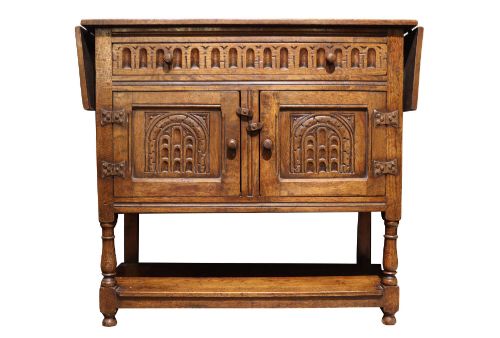
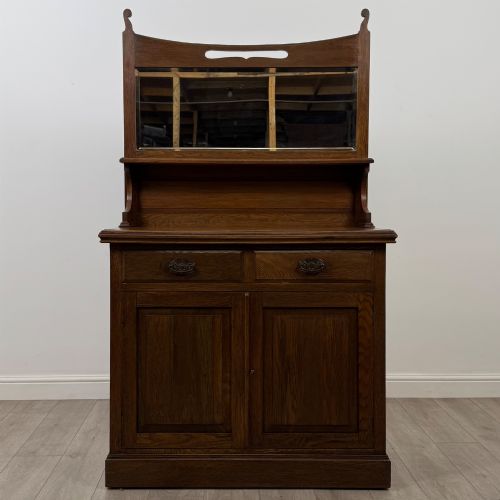
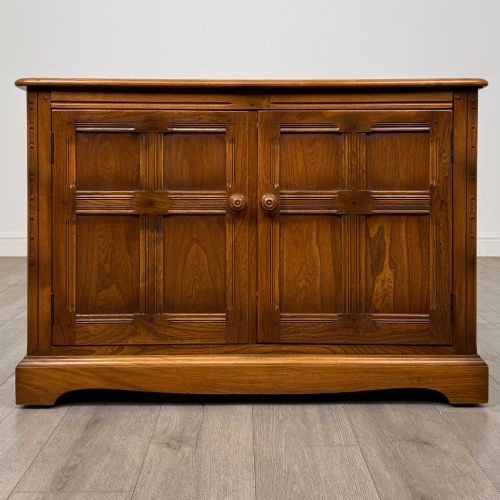
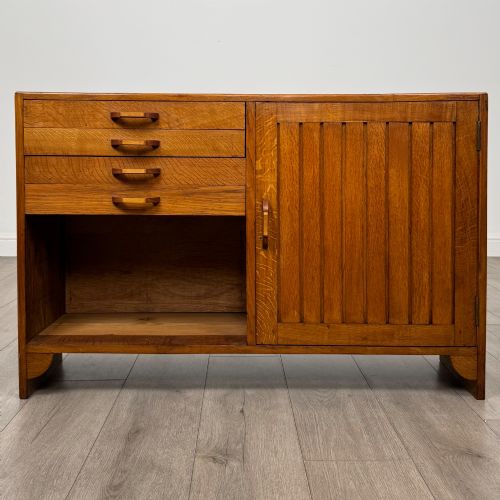
The selections span multiple eras, encompassing Edwardian interpretations, 1920s cabinetmaking, 17th Century styles, and Georgian periods. These compact units typically manifest as sideboards, cupboards, and dresser bases.
Jacobean Revival, Gothic Revival, Art Deco, and Mid-Century Modern styles influence the physical form of these items. Golden oak, limed oak, and standard oak define the predominant finishes across the available selection.
How they were made
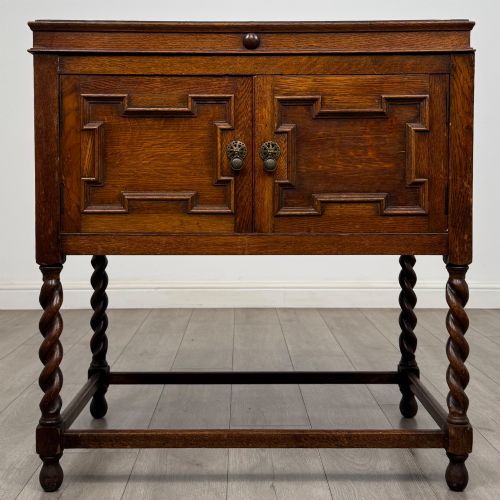
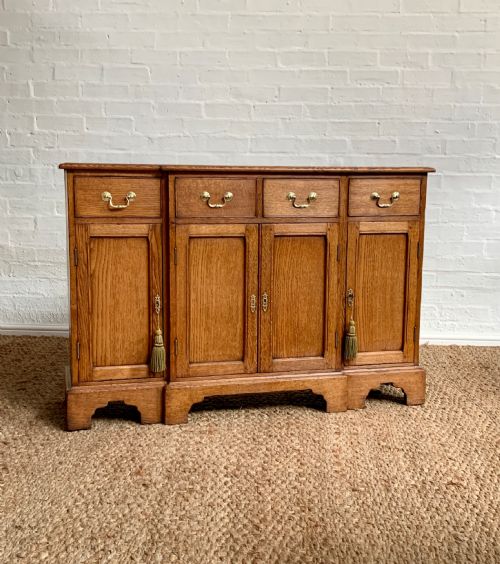
Construction relies heavily on solid oak timber, frequently accented with brass hardware and iron fittings. Cabinetmakers shaped these materials using traditional joinery and surface carving techniques.
Finishes vary from natural golden oak to limed oak treatments, reflecting the aesthetic preferences of Edwardian and 1920s workshops. Specific pieces exhibit detailed surface carving characteristic of Jacobean and Gothic revivalism.
Listings span four distinct periods: Edwardian, Georgian, seventeenth century, and the nineteen twenties.
What varies in quality
Quality differentiates itself through the selection of solid timber versus veneered alternatives, alongside the crispness of surface carvings. Pieces displaying refined proportions and heavier construction sit at the higher end of the scale.
Hardware choices, such as brass pulls and iron mountings, contribute significantly to the overall integrity and period accuracy of the cabinet. The application of specialised finishes, like limed oak, also marks the distinction between standard production and finer workshops.
Heals of London
The Small Oak Credenza Buffet Glossary
- Credenza
- A sideboard or buffet cabinet historically used for storing and serving food. Modern usage often applies this term to low storage cabinets.
- Dresser base
- The lower section of a traditional dresser featuring cupboards and drawers without the upper plate racks. These serve effectively as standalone sideboards.
- Jacobean Revival
- A nineteenth and twentieth century style mimicking the heavy, carved oak furniture of the seventeenth century. It utilises dark finishes and geometric moulding.
- Limed oak
- A wood finishing technique that leaves a white or pale pigment in the grain of the oak. This creates a lighter, decorative surface appearance popular in the twentieth century.
Small Oak Credenza Buffet: Frequently Asked Questions
What is a small oak credenza buffet used for?
These cabinets function primarily as sideboards and storage units for dining rooms and hallways. They provide surface space for serving and internal shelving for tableware.
The compact proportions allow them to fit into smaller rooms where standard furniture would overwhelm the space. Their enclosed cupboards keep items dust-free and organised.
How do I identify the period of an oak sideboard?
Dating relies on examining the construction methods, hardware types, and stylistic revivals present in the piece. Edwardian items often feature golden oak finishes and revival detailing.
Earlier styles, such as 17th Century interpretations or Georgian pieces, display distinct proportions and hand-carved motifs. Comparing the woodwork and finish helps narrow down the era of manufacture.
Are these buffets made of solid wood?
Many of the listed items feature solid oak construction, particularly those described as dresser bases and small proportions. Timber selection varies across different periods and workshops.
Examining the grain patterns and edge joints helps determine whether solid timber or secondary woods were utilised in the cabinet construction.