

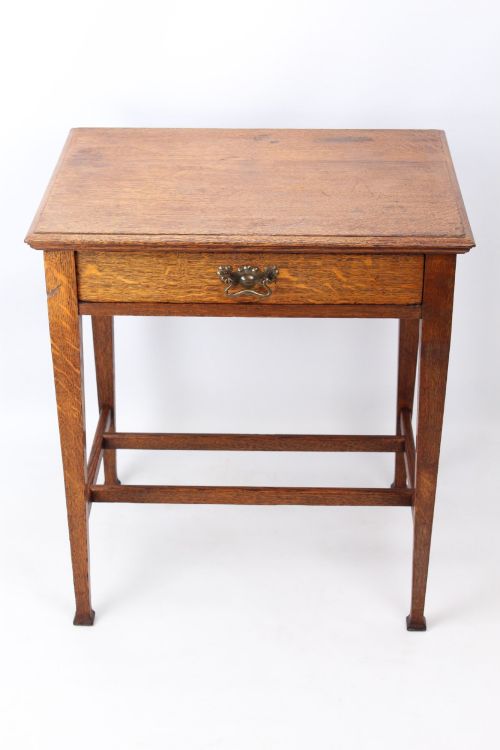

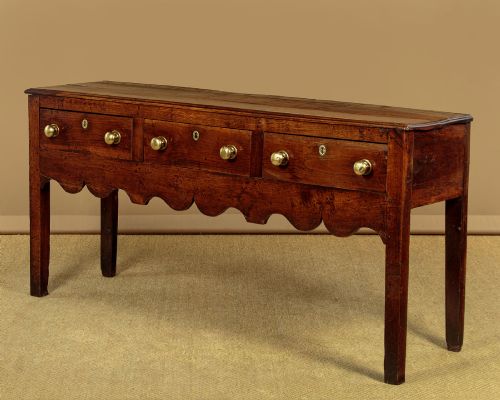
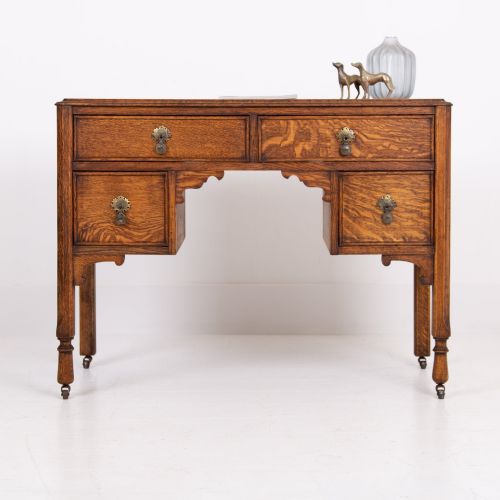
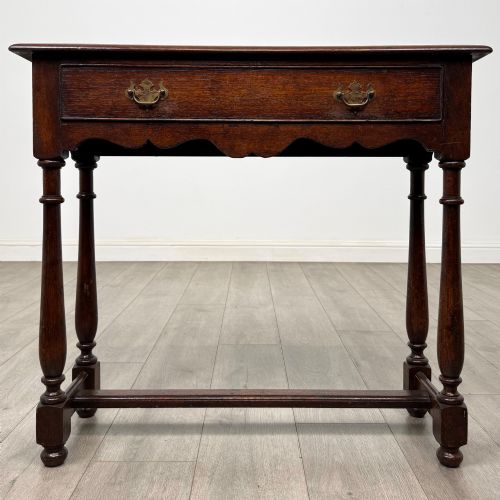
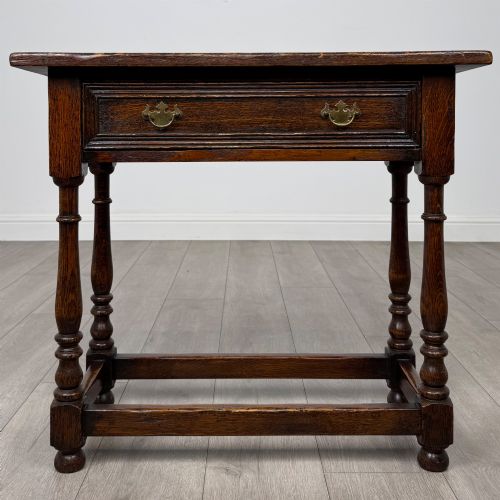
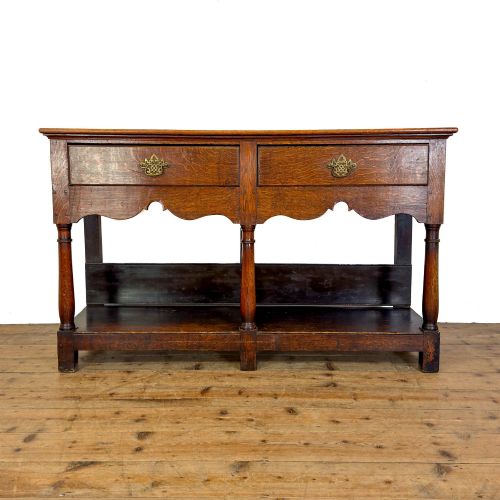
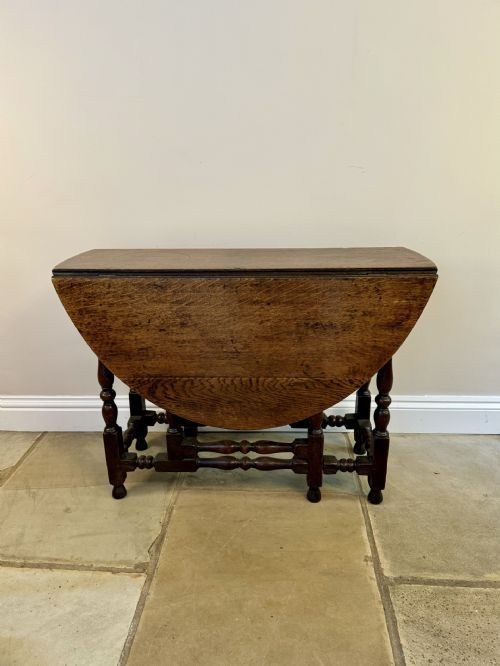

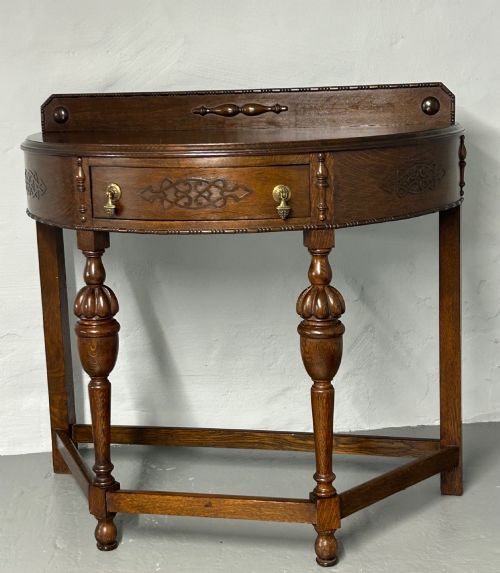


Small Oak Console
A small oak console offers compact utility in a narrow hallway or living space, bringing robust timber grain and period character to a room.
Small Oak Console
A small oak console represents a practical piece of furniture designed to fit modest spaces without dominating a room. When searching for a small oak console, buyers encounter forms ranging from side tables and desks to dresser bases and writing tables.
The selection includes pieces spanning the seventeenth century through to the nineteen-twenties, incorporating revival styles and arts and crafts influences. Examples vary from simple domestic tables to elaborately carved or galleried variants.
The most frequent iterations on this page are twentieth-century side tables and writing desks, alongside eighteenth-century dresser bases and drop-leaf tables. These serve equally well as hall tables, lamp tables or compact writing surfaces.
Materials and construction methods
Construction relies primarily on solid oak, frequently paired with secondary timbers like mahogany and accented with brass handles, leather desk inserts, or metal fittings. Pollard oak and golden english oak provide varied grain patterns across different periods.
Joinery methods reflect the date of manufacture, using traditional pegged joints on earlier examples and machine-cut construction on later twentieth-century pieces. Surfaces display natural timber textures, sometimes enhanced with carved detailing or inlaid decoration.
Materials utilised across the selection include solid oak, pollard oak, brass hardware, and leather desk inserts.
Assessing quality in oak furniture
Quality rests in the selection of timber figure, the crispness of any carved enrichment, and the integrity of the original construction. Superior pieces demonstrate thoughtful proportion and careful timber matching across the top and drawers.
Secondary elements such as brass hardware, leather writing surfaces, and drawer linings distinguish standard utility pieces from finer workshops. Original patination and untouched surface finishes elevate a piece above later stripped or heavily restored examples.
James Shoolbred·Jenners
The Small Oak Console Glossary
- Dresser base
- A low sideboard or table fitted with drawers, originating as a kitchen serving surface but frequently utilised in reception rooms today. These pieces often feature pot boards or open lower tiers.
- Pollard oak
- Timber taken from trees that have been pollarded, producing a gnarled grain pattern with rich figuring. It appears on decorative writing tables and luxury furniture.
- Drop leaf table
- A table with hinged flaps on one or both sides that fold down to save space when not in use. These versatile items function as dining tables or side furniture.
- Demi lune
- A half-moon or semicircular shape used for console tables designed to sit flush against a wall. This profile minimises floor space intrusion in hallways.
Small Oak Console: Frequently Asked Questions
Where should I place a small oak console?
These compact pieces suit narrow hallways, landings, or living rooms where floor space is limited. Their modest proportions allow them to function as lamp tables, telephone stands, or writing surfaces without overcrowding a room.
Positioning them against a wall ensures stability, particularly for tables with drawers or drop leaves. They anchor a hallway visually while providing a surface for keys and post.
How do I care for an antique oak surface?
Maintain the timber by applying a traditional beeswax polish occasionally to nourish the grain and protect the finish. Avoid placing oak furniture in direct sunlight or close to heat sources to prevent timber splitting.
Use coasters and placemats to guard against moisture rings and heat damage. Gentle dusting with a dry, soft cloth keeps the surface clean without stripping the historic patina.
How can I tell an eighteenth-century table from a revival piece?
Examine the construction methods and timber characteristics closely. Eighteenth-century pieces exhibit hand-cut joints, subtle timber movement, and authentic wear patterns built up over centuries of use.
Revival furniture, such as early twentieth-century Jacobean pieces, often displays more uniform machining and heavier, sometimes theatrical carving. Tool marks and the nature of the fixings offer reliable clues to the actual date of manufacture.
What is the difference between a console table and a side table?
Console tables traditionally anchor against a wall, sometimes relying on the wall or front legs for support, and often feature semicircular or demi lune tops. Side tables are freestanding four-legged items designed to stand against any wall or beside seating.
In modern usage, the terms frequently overlap, particularly regarding small oak examples used in hallways. Both forms provide surface space and drawer storage while maintaining a shallow depth.