




Small Oak Bench
A small oak bench brings the tactile grain and quiet authority of vernacular woodwork directly into an entrance hall or compact interior.
Small Oak Bench
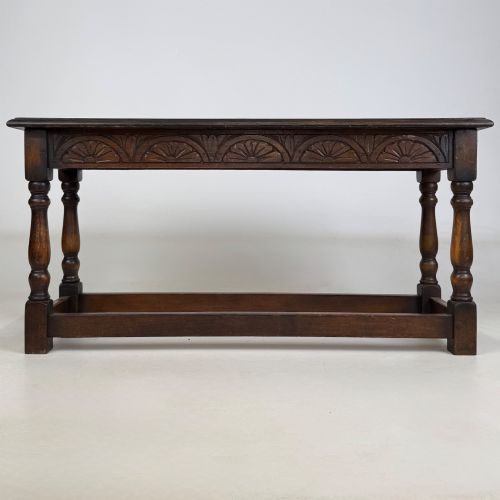
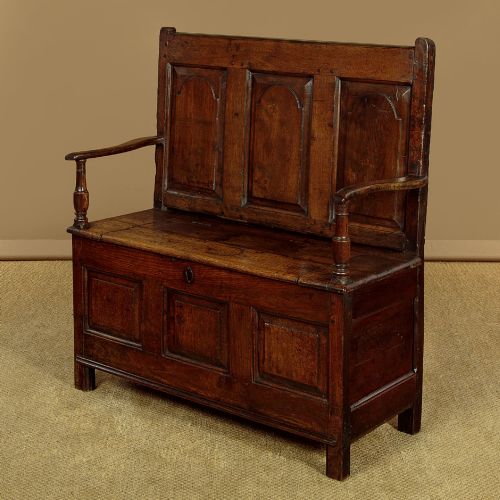
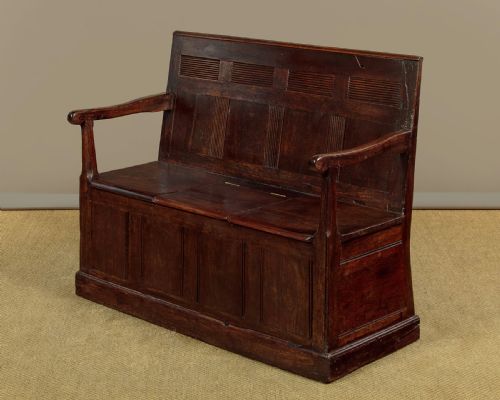
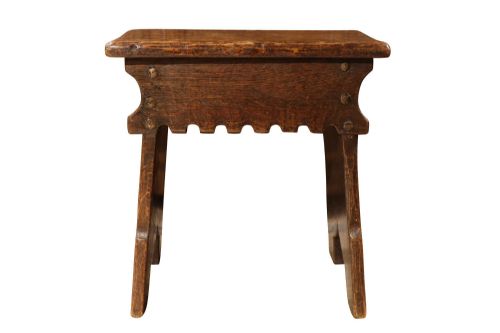
The selection ranges from low stools and narrow hall benches to multi-functional seat furniture with lift-up lids or folding tabletops. These pieces reflect regional vernacular traditions across Britain and beyond, utilising solid timber built for daily domestic utility.
Materials and construction
Makers relied primarily on solid English oak and related hardwoods, sometimes incorporating pegged joints, framed panels, and board construction. Joinery techniques such as mortise and tenon or simple pegging provided structural stability without reliance on metal fasteners.
Secondary materials like iron fixings, cane work, and fabric upholstery occasionally appear alongside carved linenfold panels and moulded details. The emphasis remained on robust timber construction suited to heavy everyday use.
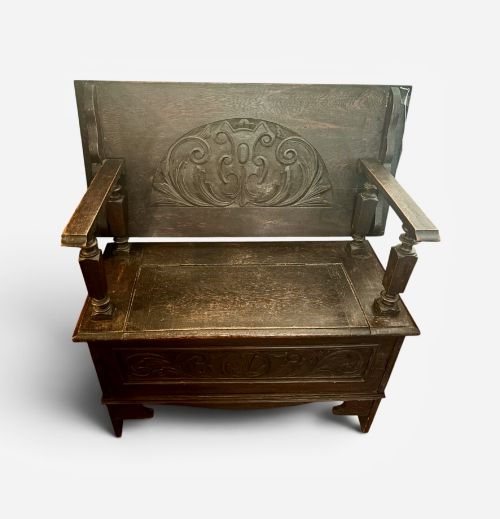
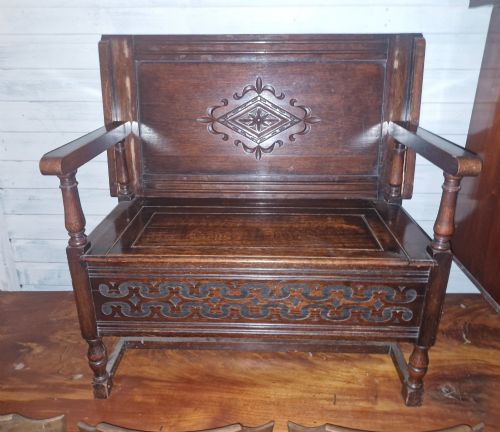
Several pieces include hidden box seats and folding tabletops, perfect for concealing small treasures or sudden cups of tea.
Judging the execution
Quality rests in the integrity of the timber selection, the crispness of any hand-carved ornamentation, and the survival of original surfaces. Pieces retaining genuine patina and uncompromised structural joinery stand apart from later assembled items.
Proportion and scale dictate the success of a compact bench, where well-balanced turnings and original hinges or lift mechanisms elevate the piece above utilitarian workshop output.
The Small Oak Bench Glossary
- Settle
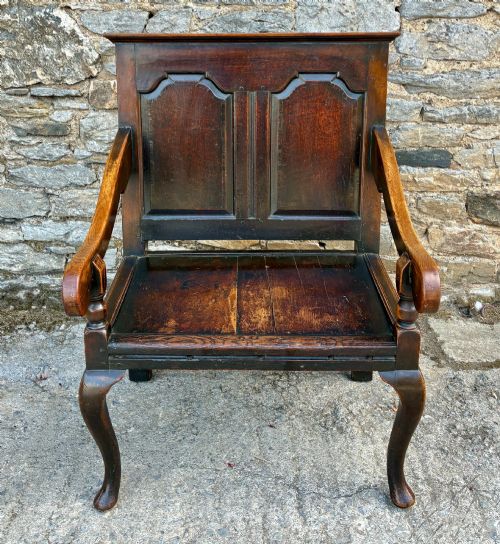
- A wooden wooden bench with a high back, solid arms, and often a storage compartment beneath the seat. It was designed to keep draughts away from the sitter in older interiors.
- Monk's bench
- A multi-functional piece of furniture featuring a hinged top that folds down to convert the backrest into a table surface. It is frequently encountered in compact nineteenth-century revivals.
- Pegged construction
- A traditional method of securing joinery by driving wooden pegs through mortise and tenon joints. This technique accommodates seasonal wood movement.
- Apprentice piece
- A miniature or small-scale item created by a trainee craftsman to demonstrate mastery of joinery and carving skills. These objects display the full techniques of standard furniture on a reduced scale.
- Vernacular
- Furniture rooted in local building traditions and practical utility rather than formal academic design styles. These pieces utilise regional materials and straightforward construction methods.
Small Oak Bench: Frequently Asked Questions
What is a monk's bench used for?
A monk's bench served dual purposes in smaller spaces as both a seated bench with a high back and a table when the top was folded over. This configuration offered practical workspace and seating in compact rooms.
Historically, the design maximised limited floor space in domestic settings without requiring separate tables and chairs.
How do I date a small oak bench?
Dating relies on observing construction methods, tool marks, timber characteristics, and stylistic revival details. Pegged joints, hand-sawn boards, and integrated panel work generally indicate earlier or vernacular periods.
Comparing hardware like hinges and the depth of timber patination helps distinguish eighteenth-century examples from later nineteenth-century revivals.
Where should I place a hall bench?
A hall bench suits narrow entryways, corridors, or small reception spaces where compact seating and low profiles are required. Models with lift-up seats or box storage additionally provide discreet places for household items.
Positioning the bench away from direct heat sources helps protect the solid oak timber from drying out and splitting over time.
Are these benches made of solid oak?
Many listings feature solid oak or related hardwoods, though secondary timbers can occasionally appear in internal framing or secondary panels. The listings show traditional materials like English oak, hardwood, and occasional cane inserts.
Examining the grain pattern and board edges helps verify whether the construction relies entirely on solid timber.