

Small Marquetry Desk
A small marquetry desk brings patterned wood veneers and compact writing surfaces into a room, offering both character and a practical writing place.
Small Marquetry Desk
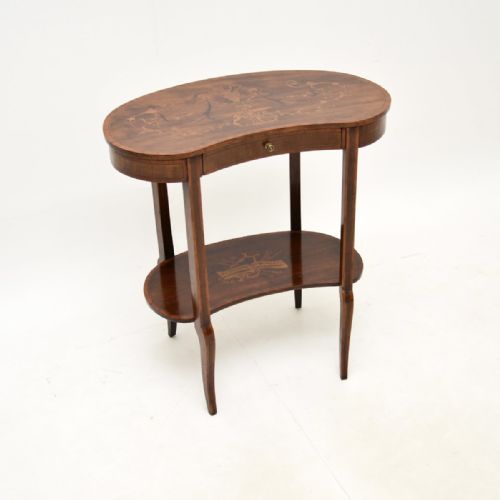
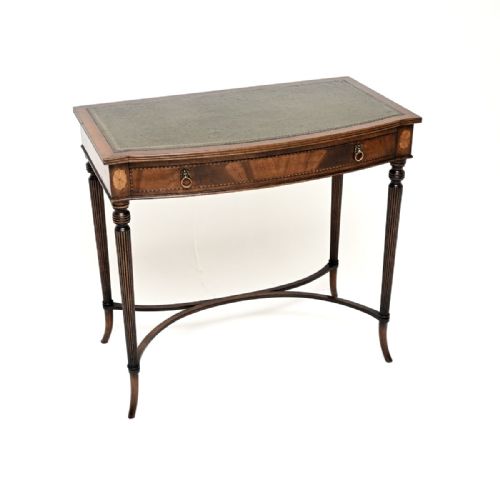
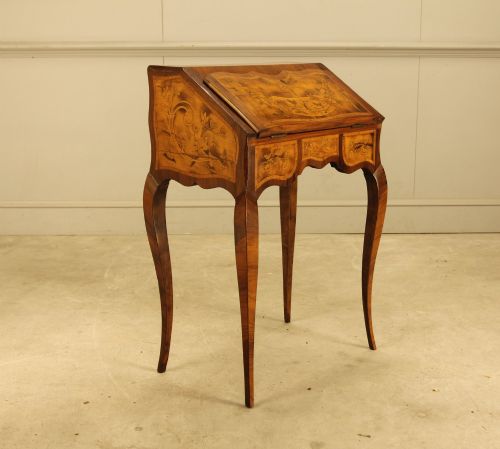
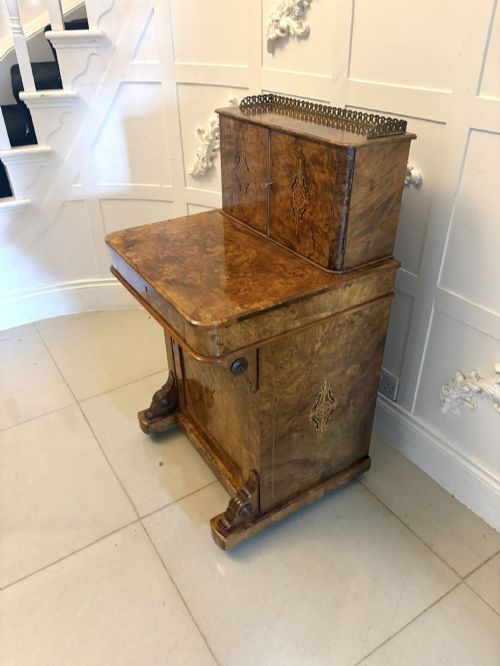
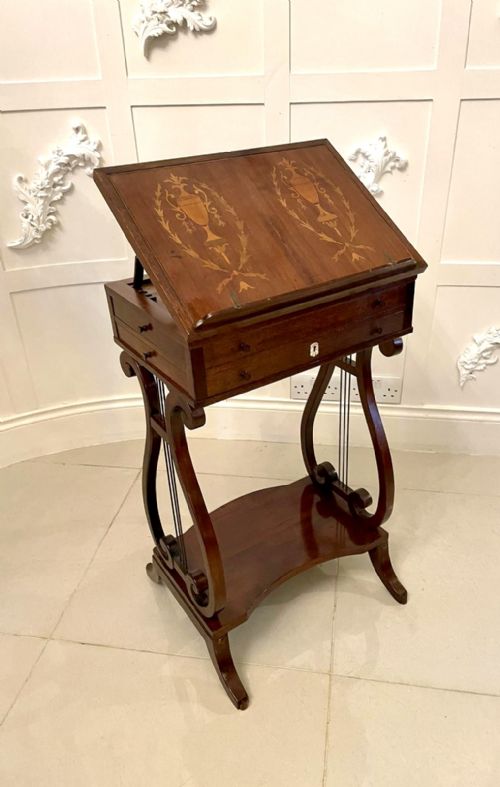
When you search for a small marquetry desk, you encounter compact writing furniture decorated with detailed wood inlay. The selections on this page span Victorian, Edwardian, and nineteenth-century periods, alongside French and revival styles.
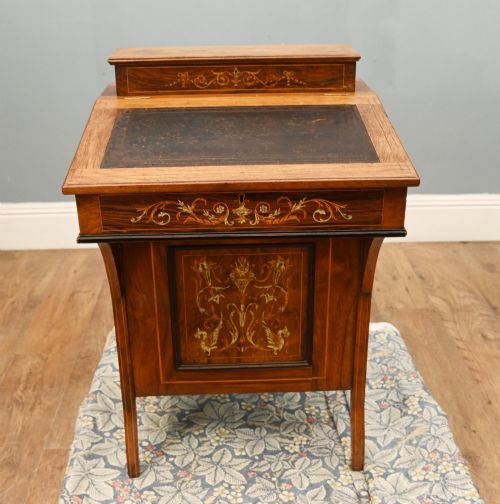
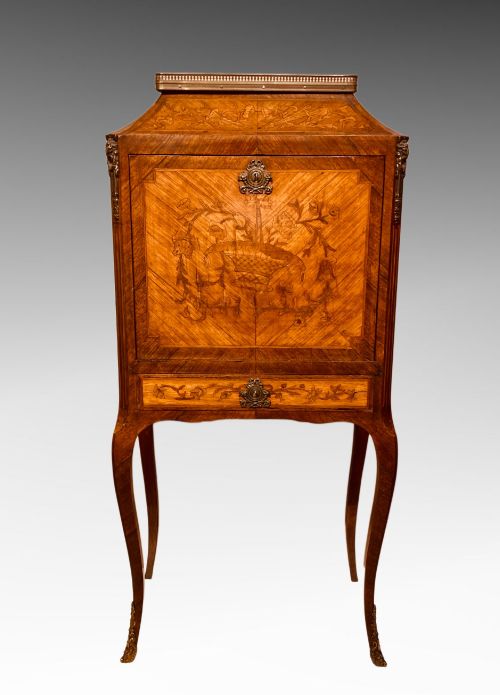
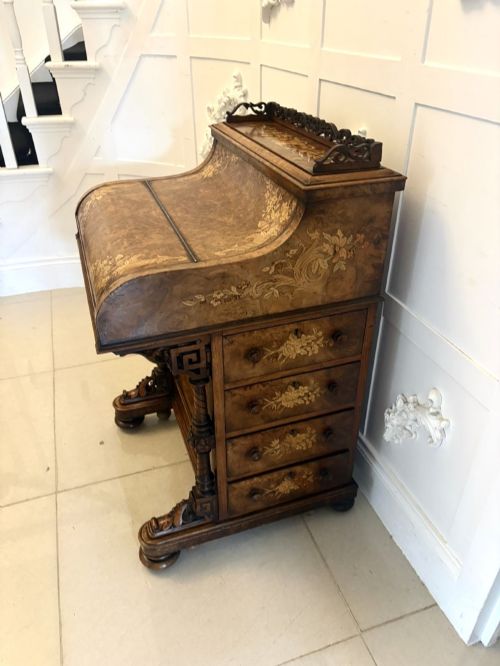
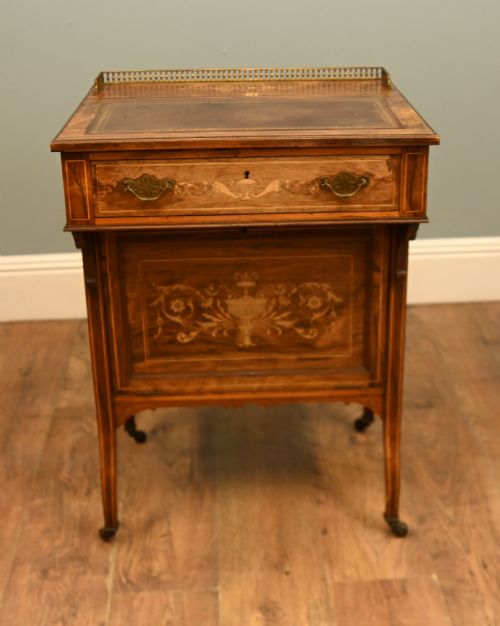
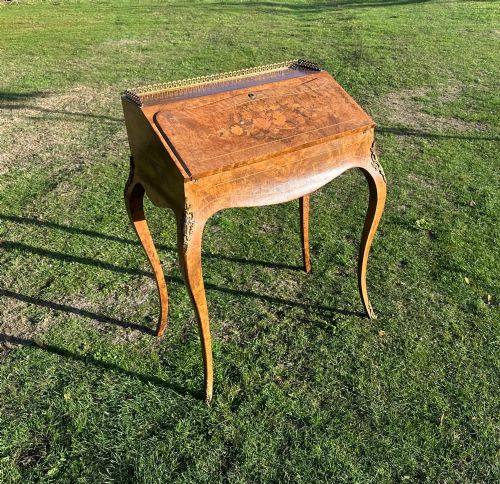
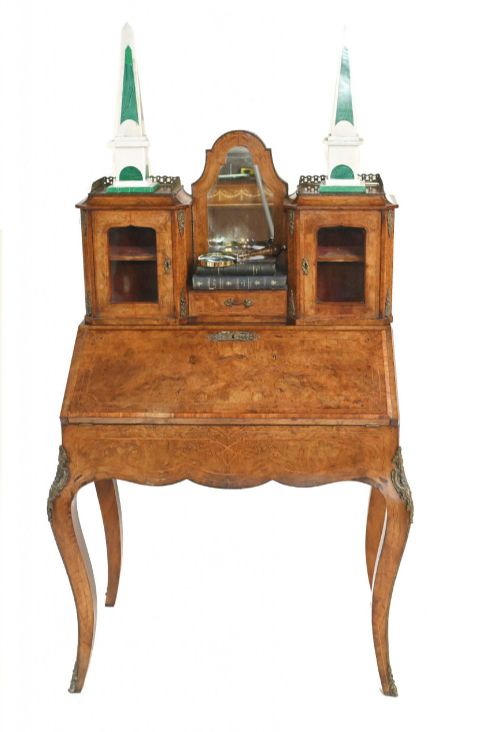
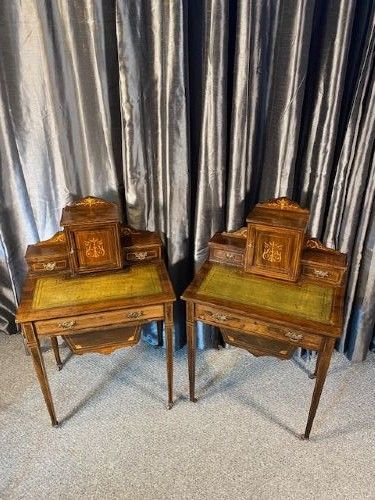
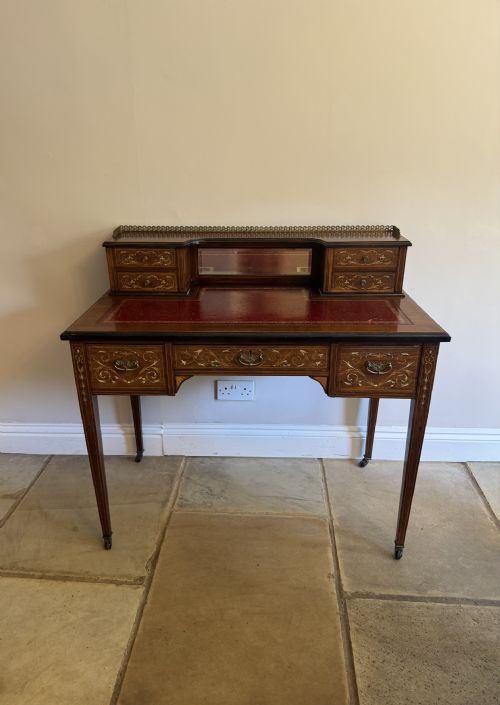
Most examples take the form of Davenport desks, bonheur-du-jour writing tables, and bureau de dame forms. These compact pieces were originally designed for ladies' boudoirs or small writing rooms.
The materials combine structural timbers like walnut, rosewood, and mahogany with contrasting veneers arranged in floral or geometric patterns. Brass mounts and ormolu often accent the corners and edges.
How they were made
Cabinetmakers constructed the carcases using solid timbers such as mahogany, oak, or walnut, providing a stable foundation for decorative surfaces. Veneers of burr walnut, satinwood, and rosewood were then sliced thin and applied to the exterior.
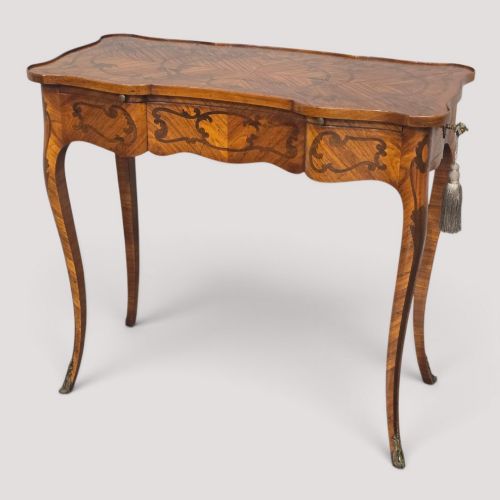
Marquetry and parquetry decoration involved hand-cutting different woods and fitting them together like a puzzle to form intricate floral or geometric motifs. These inlaid panels were glued to the surface and polished to a smooth finish.
Metal components, including brass galleries and cast ormolu mounts, were cast and chased before being fitted to secure corners, frame drawers, or support upper tiers.
Small Marquetry Desk Retail Price Guide 2026
Typical asking prices for small marquetry desk among the pieces listed under this phrase on Sellingantiques today, from the lower quarter to the upper quarter. They describe what is for sale here now, not the wider market.
The listings show Victorian and Edwardian examples built from walnut, rosewood, and mahogany with French revival influences.
What varies in quality
The refinement of the marquetry cutting and the choice of timbers set individual pieces apart. Finer examples use rich burr walnut or rosewood with tightly detailed floral inlays rather than simpler geometric lines.
Construction details reveal the standard of workshop execution, from the smooth movement of internal drawers to the crispness of cast ormolu mounts. Secondary woods and the precision of the dovetail joints indicate the care taken by the maker.
The Small Marquetry Desk Glossary
- Marquetry
- Decorative veneer work formed by fitting together small pieces of various woods to create pictorial or floral designs. This technique covers the flat surfaces of tabletops and drawer fronts.
- Davenport desk
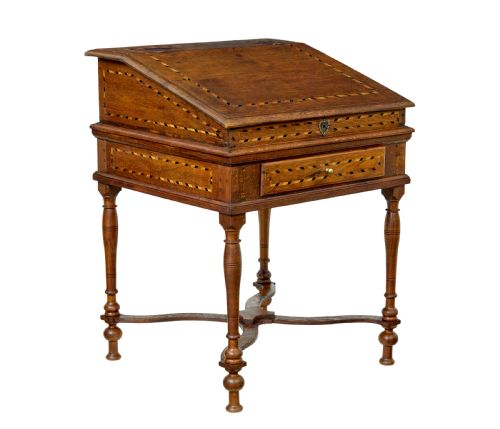
- A compact Victorian writing desk featuring a sloping, desk lid above a pedestal of side drawers. These pieces often include stationery compartments built into the upper section.
- Bonheur-du-jour
- A light ladies' writing table featuring a small cabinet, shelves, or pigeonholes upon the top surface. Originating in France, this form became popular during the nineteenth century.
- Ormolu
- Gilded bronze used for decorative mounts, feet, and gallery rails on nineteenth-century furniture. The metal is cast and finished to provide a bright golden accent against dark woods.
- Parquetry
- Geometric wood inlay forming repeating patterns such as cubes or chequers. Unlike marquetry, parquetry relies on angular shapes rather than curved pictorial designs.
Small Marquetry Desk: Frequently Asked Questions
What is a Davenport desk?
A Davenport is a compact Victorian writing desk with a sloping lid on top and a bank of drawers down one side. The stationary box often sits raised at the back.
These pieces were designed for correspondence in smaller rooms, combining a writing slope with enclosed storage for paper and ink.
How do I identify French revival styles?
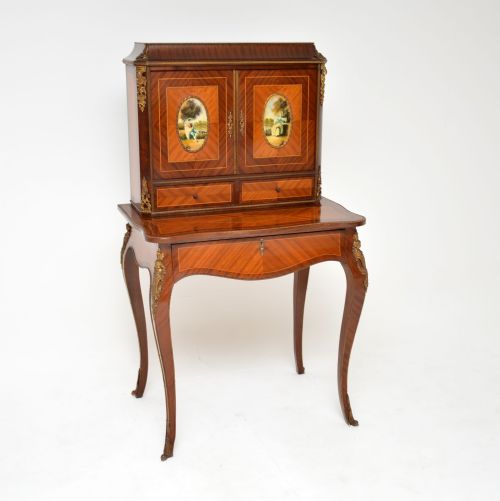
French revival pieces display curved cabriole legs, serpentine fronts, and extensive ormolu mounts inspired by Louis XV designs. Walnut and rosewood veneers form the primary surfaces.
Cabinetmakers during the nineteenth century revived these eighteenth-century motifs to satisfy demand for ornate, elegant drawing-room furniture.
Where were these desks placed?
These small desks fit easily into parlours, bedrooms, and drawing rooms where large partners desks proved too heavy. They served as personal writing stations for household correspondence.
Freestanding models were finished on all sides so they could sit away from the wall in the middle of a room.
What is the difference between marquetry and parquetry?
Marquetry uses varied wood veneers cut into curved floral, scroll, or pictorial patterns. The craftsperson fits these pieces together to create intricate surface images.
Parquetry relies on straight-edged geometric shapes to form repeating patterns like cubes or herringbone designs across the timber surface.