





Small Mahogany Writing Slope
A small mahogany writing slope is a portable or compact desk built for correspondence, offering hinged writing surfaces and fitted compartments.
Small Mahogany Writing Slope
When you search for a small mahogany writing slope, you encounter a variety of compact desks designed for correspondence and storage. The selection spans several periods, including Georgian, Regency, Victorian, and Edwardian eras, reflecting changing tastes in domestic furniture.
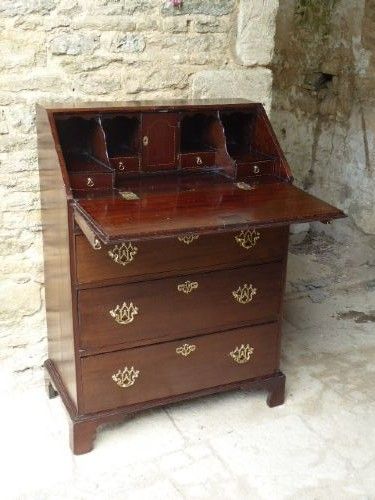
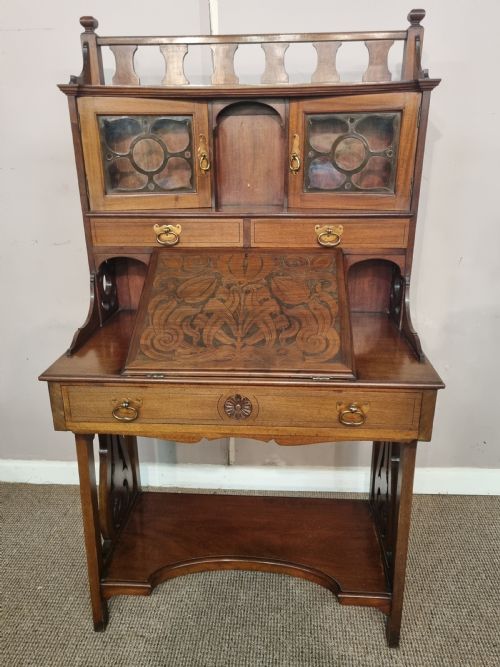
The forms vary between traditional slope boxes, fall-front bureaux, and Davenport desks equipped with drawers and stationery compartments. Many examples date from the nineteenth century, though eighteenth-century and early twentieth-century pieces also appear.
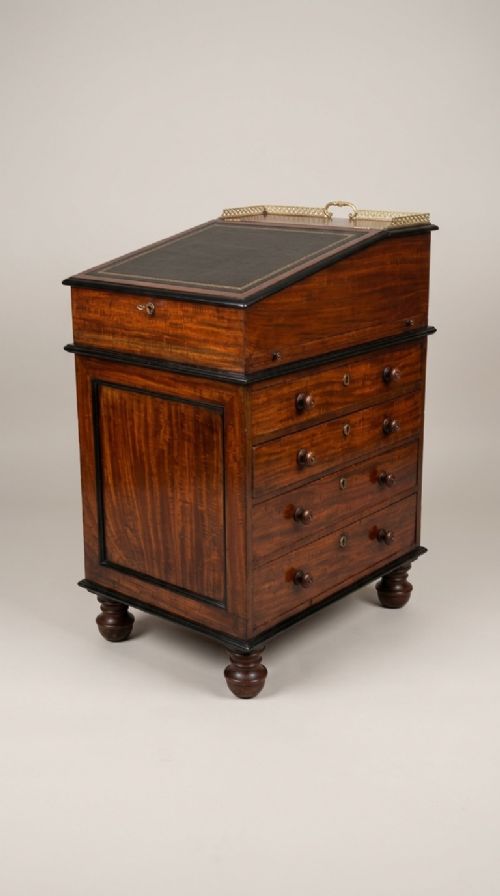
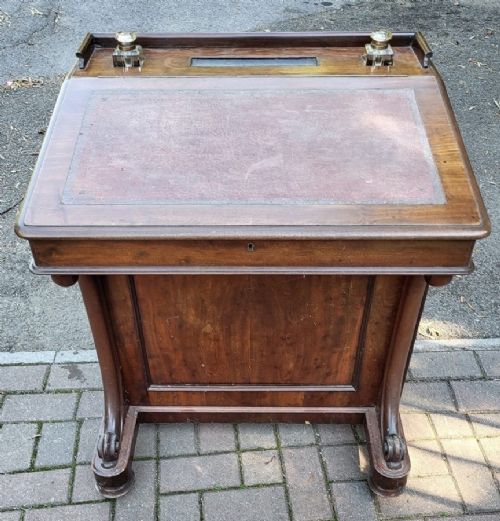
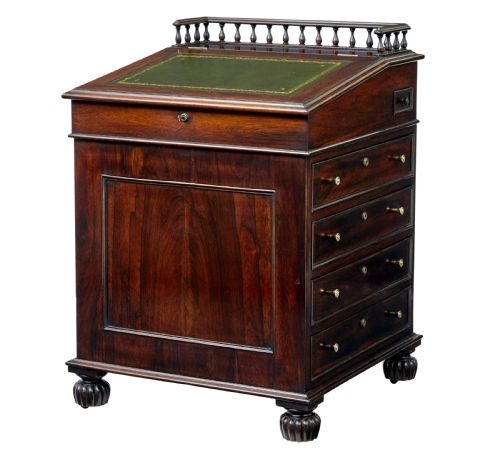
Victorian Davenport desks and Georgian bureaux represent the most common formats on this page. These pieces combine writing surfaces with internal pigeonholes and side drawers, using mahogany as the primary timber.
Materials and construction methods
Cabinet makers utilised solid mahogany and flame mahogany veneers over secondary timbers to construct these desks. Brass handles, hinges, and inlays frequently provide structural reinforcement and decorative contrast.
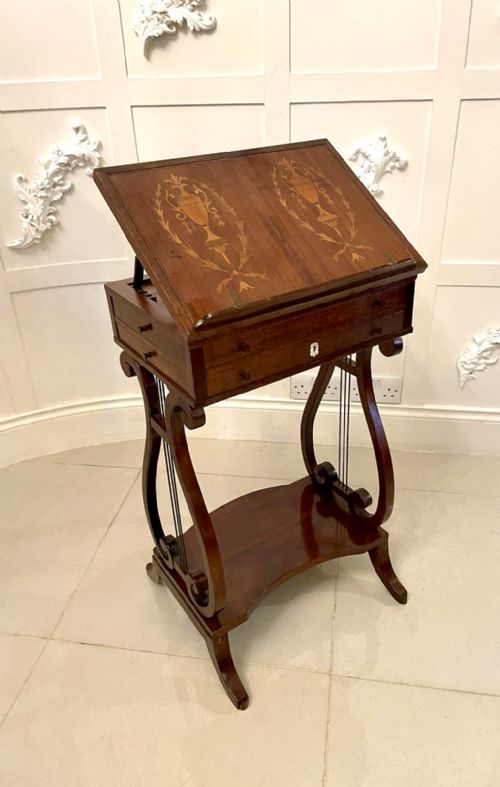
Writing surfaces often incorporate inset leather panels to provide a smooth platform for pen and paper. Satinwood inlay and ebonised wood details appear on select pieces from the Regency and Edwardian periods.
Materials recorded across the inventory include solid mahogany, flame mahogany veneers, brass hardware, leather writing surfaces, and satinwood inlay.
Distinctions in quality and execution
The standard of timber selection largely dictates the quality of a piece, with figured flame mahogany commanding greater attention. Finer examples display precise dovetail joinery in the drawer construction and well-fitted internal compartments.
The integration of secondary woods and the crispness of carved or inlaid details reveal the maker's skill. Original brass hardware and working locks with keys further distinguish superior desks from standard utilitarian items.
Gillows of Lancaster
The Small Mahogany Writing Slope Glossary
- Davenport
- A small desk featuring a sloping writing surface above a pedestal of drawers. This form became particularly popular during the Victorian period.
- Bureau
- A desk with a hinged sloping flap that opens to reveal pigeonholes and small drawers. Early examples date to the eighteenth century.
- Flame mahogany
- Timber veneer cut from the fork of the mahogany tree to create a distinctive, swirling flame-like pattern. Cabinet makers reserved this for prominent exterior surfaces.
- Satinwood
- A durable, light-coloured tropical timber utilised for contrasting stringing and geometric inlay work. It appears frequently on pieces from the Georgian and Edwardian eras.
- Pigeonhole
- A small, open compartment fitted inside a desk interior for sorting letters and papers. These compartments are often concealed behind a fall-front flap or sliding door.
Small Mahogany Writing Slope: Frequently Asked Questions
What is a Davenport desk?
A Davenport is a compact desk style featuring a sloping writing surface on top of a pedestal of drawers. They typically include side drawers and internal compartments.
First appearing around the Regency period, these desks remained popular through the Victorian era as space-saving writing furniture.
How do I date a mahogany bureau?
Dating relies on construction methods, drawer dovetails, and timber characteristics. Georgian pieces often show hand-cut dovetails and simpler internal layouts.
Later Victorian and Edwardian examples may incorporate machine-sawn elements, different secondary woods, and distinct inlay styles such as satinwood banding.
What is flame mahogany?
Flame mahogany is a highly figured veneer taken from the point where a branch joins the main tree trunk. It produces a dramatic, rippling pattern.
Cabinet makers placed these veneers on the fall-fronts and drawer faces of better-quality desks to create visual impact.
Were these desks used for travel?
Some slope forms were built as portable boxes for travel, while Davenport desks and bureaux were stationary items meant for home use.
Portable writing slopes contained compartments for inkwells, pens, and paper, allowing correspondence away from a fixed study.