


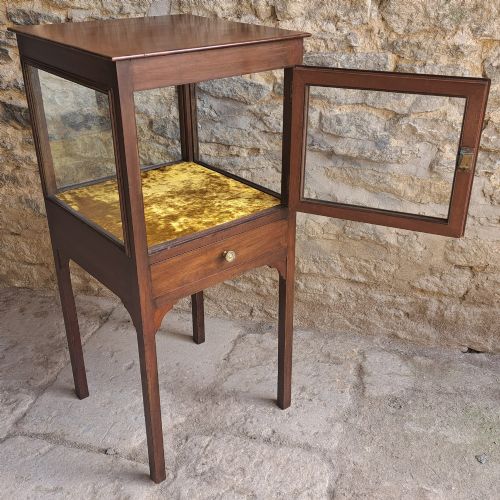


Small Glass Showcase
A small glass showcase brings together glass, brass, mahogany and oak to hold curiosities and miniatures.
Small Glass Showcase
When you search for a small glass showcase, you find a range of display furniture designed to protect and present small objects, curiosities and jewellery. These pieces span periods from the eighteenth century through the Edwardian era and the nineteen-twenties, incorporating styles like Louis XV, Art Deco and Georgian.
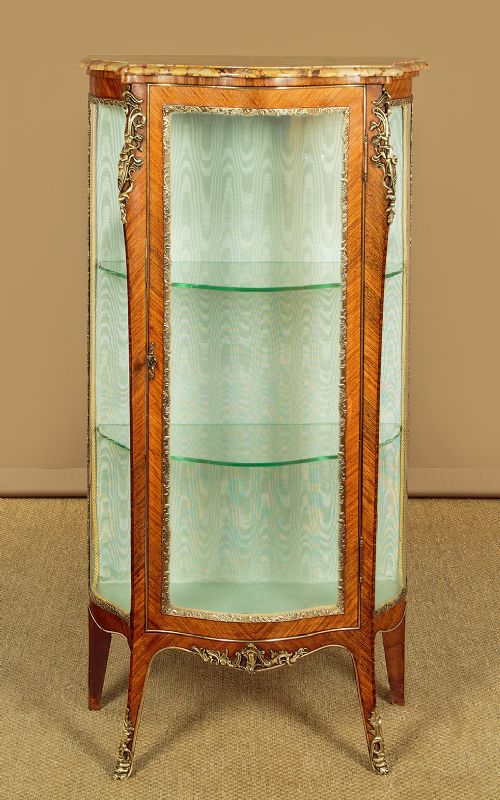
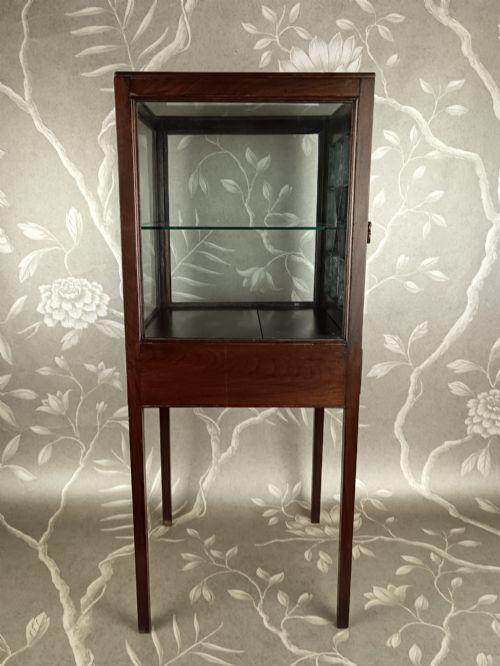
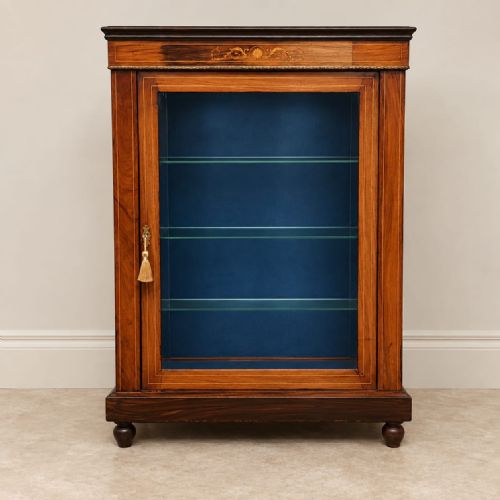
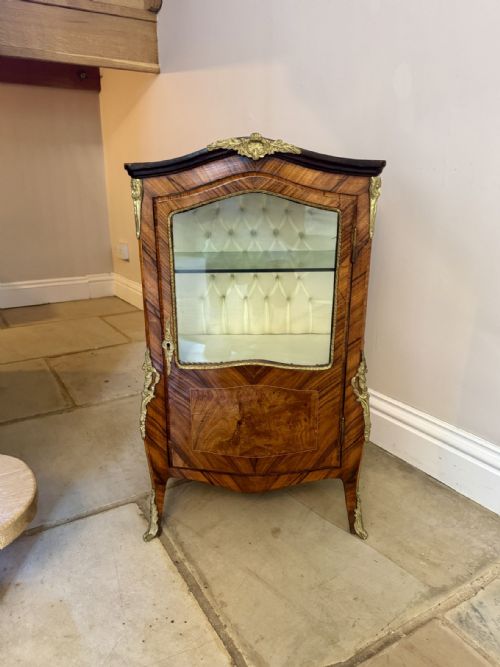
You are most likely to meet countertop models, vitrines and bijouterie tables on this page. These forms vary from tall pier cabinets to low glass cases meant for tabletops and counters.
Origins stretch from English workshops to French cabinet-makers, utilising woods such as mahogany, walnut, oak and rosewood alongside glass and brass fittings.
How they were made
Cabinet-makers constructed the frames of these small glass showcases using timbers like mahogany, oak, walnut and rosewood, frequently adding satinwood crossbanding or fine inlay work. Glass panels were then fitted into doors and tabletops to enclose the display space.
Brass hinges, handles and mounts secure the opening sections, while internal surfaces often feature fabric linings. Joinery techniques reflect the period, from Georgian cabinet-making to early twentieth-century commercial construction.
Small Glass Showcase Retail Price Guide 2026
Typical asking prices for small glass showcase among the pieces listed under this phrase on Sellingantiques today, from the lower quarter to the upper quarter. They describe what is for sale here now, not the wider market.
Listings include oak, mahogany, walnut, rosewood and yew wood, alongside glass, brass and fabric.
What varies in quality
The distinction between standard commercial pieces and finer examples rests on timber selection and timber preparation, such as figured mahogany, burr walnut or kingwood veneers. Finer showcases display meticulous joinery, precise inlay and heavier brass fittings rather than plain pine or basic oak carcases.
Proportion and glass quality also define the standard. Well-balanced glazing bars and clear, undamaged glass elevate a vitrine or table cabinet above utilitarian shop fittings.
The Small Glass Showcase Glossary
- Vitrine
- A glass-fronted cabinet used for displaying fine porcelain, curiosities or books. It usually stands on legs or sits upon a base.
- Bijouterie table
- A glass-topped display table specifically designed for small ornaments, medals and jewellery. These tables often feature hinged lids lined with fabric.
- Pier cabinet
- A tall, narrow cabinet designed to stand against the wall space between windows. Victorian examples frequently incorporate glazed doors and brass mounts.
- Crossbanding
- A decorative border technique where strips of veneer are laid so the grain runs perpendicular to the main surface. It appears on Edwardian and Georgian pieces.
- Display dome
- A blown glass cover mounted on a wooden base, typically beech or oak. These protect delicate items such as taxidermy or clocks.
Small Glass Showcase: Frequently Asked Questions
What is a small glass showcase used for?
These pieces protect and exhibit small collections, jewellery, silverware and curiosities. They allow objects to be viewed clearly while keeping dust away.
Countertop versions were historically used in shops to present goods to customers, while domestic vitrines and bijouterie tables held personal treasures.
How do I date a glass showcase?
Dating relies on timber choices, construction methods and stylistic details like Art Deco geometry or Georgian glazing bars. Secondary woods and hardware also offer clues.
For instance, Edwardian pieces often use inlaid mahogany, whereas nineteen-twenties commercial cases favour ebonised or plain oak frames.
Where should I place a table cabinet?
Table cabinets and countertop display cases suit sideboards, desks or dedicated tables where natural light can enter through the glass panels. They need stable surfaces away from heavy traffic.
Ensure the room humidity remains moderate to protect the antique wood and fabric linings inside the case.
What is the difference between a vitrine and a bijouterie table?
A vitrine is an upright display cabinet with glass sides and doors for vertical viewing. A bijouterie table is a low table with a glazed top and a shallow drawer or well for looking down at items.
Both serve to display collections, but one stands against a wall while the other functions as a freestanding table.