


Small Gilded Vase
These small gilded vase examples bring cabinet-scale decorative presence into a room through rich metallic leaf and delicate ceramic bodies.
Small Gilded Vase
A small gilded vase stands as a compact display piece, designed for mantelpieces, cabinets or occasional tables where space is measured. When you search for a small gilded vase, you encounter items intended primarily for ornamental display rather than heavy floral arrangements.
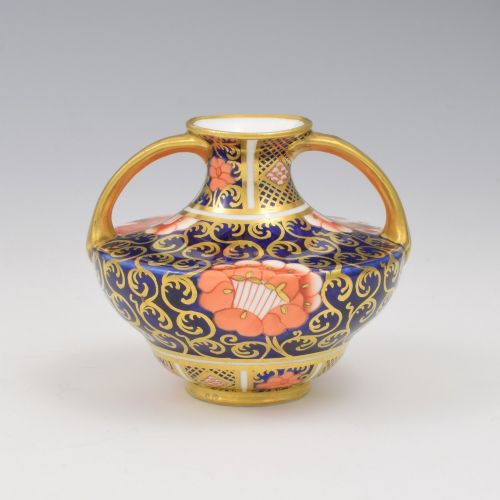
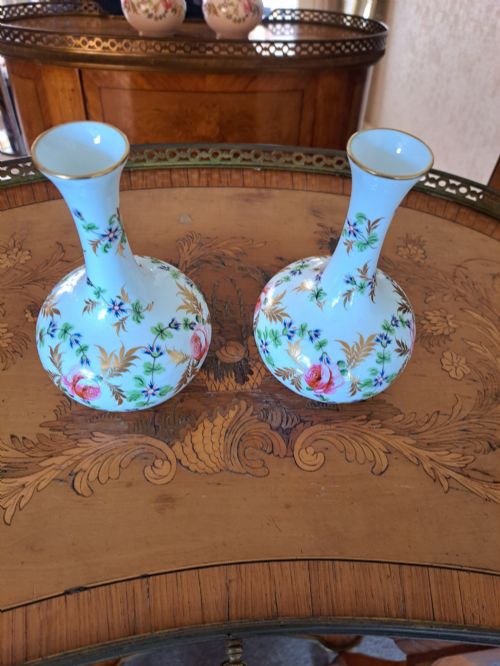
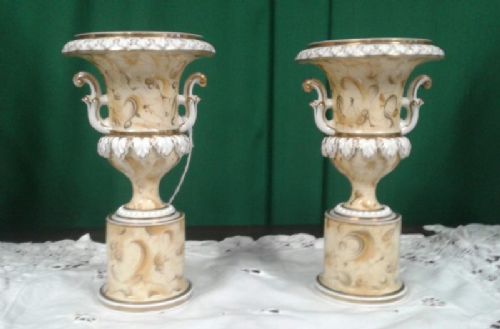
The inventory on this page spans the nineteenth century up through the nineteen-thirties, incorporating Edwardian, Victorian, and Art Nouveau aesthetics alongside Japanese imports. These pieces take various forms, from campana shapes and miniature twin-handled vessels to bud vases and scent bottles converted into table lamps.
Materials and construction
The bodies of these vessels rely on porcelain, bone china, earthenware, and specialised ceramics like Carrara ware or ordinary lustre. Makers applied gold leaf and gilding directly onto glazed or painted surfaces, sometimes combining enamel work with distinct regional patterns.
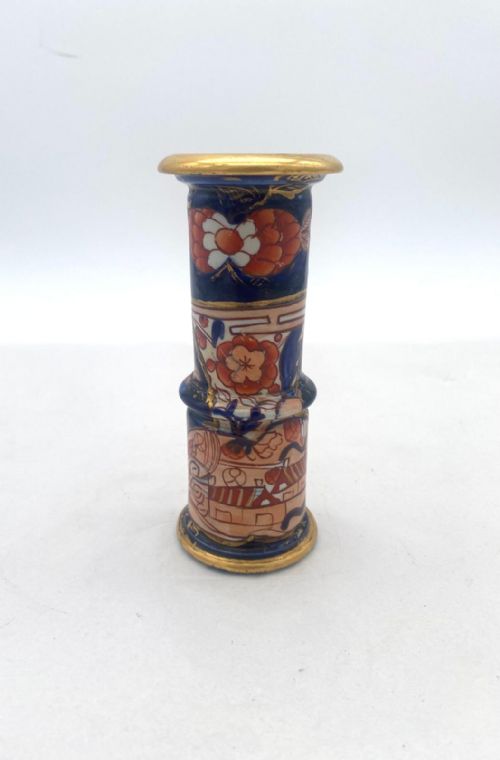
Techniques range from hand-painted botanical and animal scenes by named ceramic artists to transfer-printed Imari designs and moulded earthenware shapes. Surface decoration often includes intricate garlands, dragon motifs, and gilding highlights applied over contrasting cobalt or white grounds.
Listings feature items from the nineteenth century, the Edwardian era, and the nineteen-twenties, incorporating porcelain, earthenware, and bone china.
Assessing quality
Quality in these decorative objects rests on the crispness of the modelled form and the precision of the hand-painted details. Finer examples display meticulous brushwork from established porcelain factories and well-regarded artists, whereas simpler pieces rely on standard transfer-printed patterns.
The integrity of the gilding and enamel work also dictates the grade of the piece, with heavier, brighter gold leaf or burnished gilt indicating superior craftsmanship. The presence of factory marks, distinct pattern numbers, and original pairings further separates standard production items from more desirable specimens.
Royal Crown Derby·Ridgeways·Royal Worcester·Doulton Lambeth·Wedgwood·Moorcroft Macintyre
The Small Gilded Vase Glossary
- Campana
- A bell-shaped vessel with a flaring rim and a footed base, frequently seen in classical revival ceramics. This classical silhouette was popular throughout the nineteenth century.
- Imari
- A style of ceramic decoration originating in Japan, characterised by cobalt blue, iron red, and gold highlights. British factories frequently adopted and adapted these vibrant palettes.
- Lustre
- A type of ceramic glaze that imparts a metallic sheen or iridescent quality to the surface. It is achieved through metallic oxides fired in a reducing atmosphere.
- Spill vase
- A small, narrow container designed to hold wooden spills used for lighting candles or fires. These practical domestic items evolved into purely decorative mantel ornaments.
- Satsuma
- A type of earthenware from Japan featuring a crackled ivory glaze decorated with polychrome enamels and rich gilding. These wares were widely exported during the late nineteenth and early twentieth centuries.
Small Gilded Vase: Frequently Asked Questions
Were these bud vases meant for flowers?
Many smaller nineteenth and early twentieth-century vessels served primarily as decorative garniture rather than functional flower holders. Their narrow necks and miniature proportions made them better suited for mantel displays or cabinet collections.
While some were indeed used for single stems or flower buds, their survival in pristine condition often indicates they spent their lives as ornamental objects rather than utility items.
How can I tell the period?
Dating relies heavily on factory backstamps, registration marks, and stylistic indicators such as colour palettes and moulding techniques. Victorian pieces often favour heavier classical revivals, while Edwardian and later items embrace lighter floral motifs or Japonisme influences.
Comparing pattern numbers and glaze types against known factory production timelines helps narrow down the decade of manufacture.
What is Satsuma ware?
Satsuma refers to Japanese earthenware distinguished by its characteristic pale, finely crackled glaze serving as a canvas for intricate enamel and gold decoration. These pieces were produced in large quantities for the Western export market from the late nineteenth century onward.
They are easily identified by their warm, ivory-coloured ground and dense application of gilded patterns depicting figures, flora, and fauna.