



Small French Vitrine
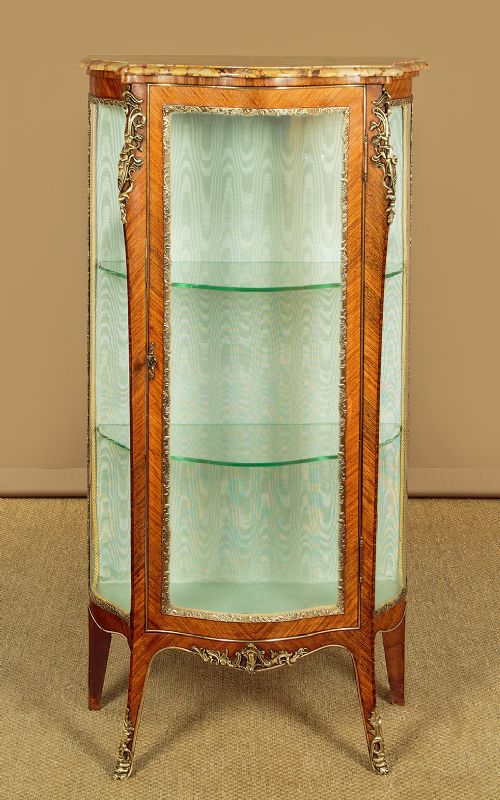
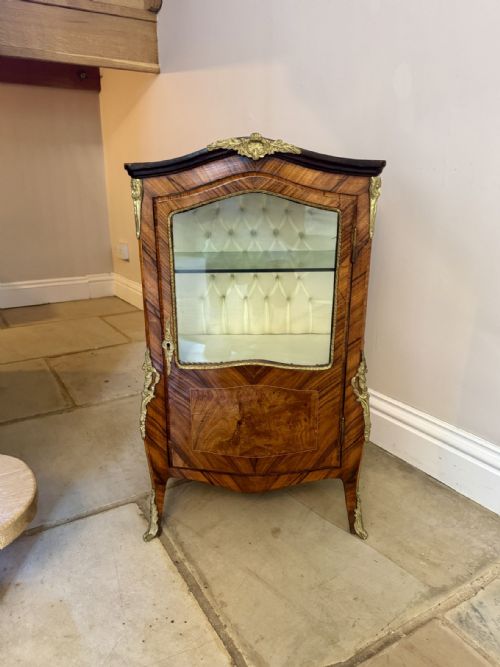
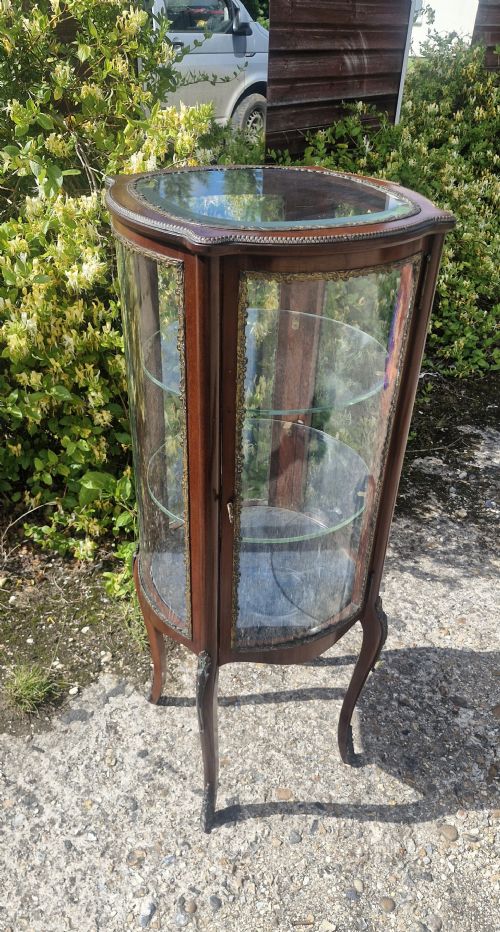
A small french vitrine is a glazed display cabinet built for collecting and showing miniatures, designed in revival styles from the nineteenth and early twentieth centuries.
Small French Vitrine
A small french vitrine is a glazed cabinet or table designed to hold precious objects, drawing on revival aesthetics from the nineteenth and early twentieth centuries. These pieces range from serpentine display cabinets to bijouterie tables with glass tops for viewing items from above.
The selections span periods including the Edwardian era and the 1930s, alongside nineteenth-century pieces decorated in Louis XV styles and French Rococo Revival forms. Cabinets often feature small proportions suitable for intimate interior spaces.
Makers and cabinetmakers built these display pieces to showcase porcelain, silver, and small collections using polished timbers and glazed panels. Buyers encounter variations in height, glazing shape, and the inclusion of stands or shelves.
How they were made
Carpenters constructed carcasses from foundational hardwoods such as mahogany, walnut, and kingwood, frequently applying decorative veneers like burr walnut or parquetry. These timbers provided a stable base for intricate inlay and curved serpentine fronts.
Metalworkers added gilt bronze and ormolu mounts to frame doors, corners, and legs, enhancing the decorative effect of the revival styles. Glass panels were fitted into wooden doors or curved frames to enclose the display space securely.
Interiors were often lined with fabric or velvet to provide a contrasting background for displayed objects. Brass hardware, hinges, and locks completed the construction of these cabinets and bijouterie tables.
Small French Vitrine Retail Price Guide 2026
Typical asking prices for small french vitrine among the pieces listed under this phrase on Sellingantiques today, from the lower quarter to the upper quarter. They describe what is for sale here now, not the wider market.
Materials in these listings include mahogany, walnut, kingwood, glass, ormolu, brass, and velvet across Edwardian and nineteenth-century periods.
What varies in quality
The refinement of the timber work and veneer selection marks the distinction between standard production and finer pieces. Cabinets featuring complex parquetry or carefully matched burr walnut display a higher level of cabinetmaking skill.
The quality and weight of the ormolu mounts vary, with cast and chased bronze fittings offering sharper detail than simpler metal elements. Structural integrity in the joints and the precise fit of curved glass doors also indicate superior craftsmanship.
The Small French Vitrine Glossary
- Vitrine
- A glass-fronted cabinet designed for displaying fine objects or collections. They became prominent during revival periods for domestic display.
- Ormolu
- Gilded bronze mounts applied to furniture for decoration. Artisans cast and chased these metal elements to accent corners and frames.
- Bijouterie table
- A display table with a glazed top and shallow compartment for small valuables. These pieces allow items to be viewed from above.
- Kingwood
- A dense exotic timber used for decorative veneers in cabinetmaking. Its distinct grain patterns suit detailed inlay work.
- Parquetry
- Geometric wood mosaic work used for surface decoration on tabletops and cabinet fronts. Craftsmen arrange small veneer pieces to form patterns.
Small French Vitrine: Frequently Asked Questions
What is a small french vitrine used for?
These cabinets were built to display porcelain, medals, miniatures, and small curiosities safely behind glass.
Today, they serve the same purpose in domestic interiors, holding collections while protecting objects from dust.
Which woods are common in these cabinets?
Mahogany and walnut form the primary structure of many pieces, often enhanced with decorative veneers.
Kingwood and burr walnut appear frequently in inlaid surfaces, paired with ormolu mounts.
How do I care for velvet-lined interiors?
Textile linings require gentle dusting with a soft brush to prevent accumulation without disturbing the fabric.
Keeping the cabinet out of direct sunlight preserves the colour of both the fabric and the timber.