



Small French Clock
These small french clock examples bring precise metalwork and dial artistry to mantelpieces and desks.
Small French Clock
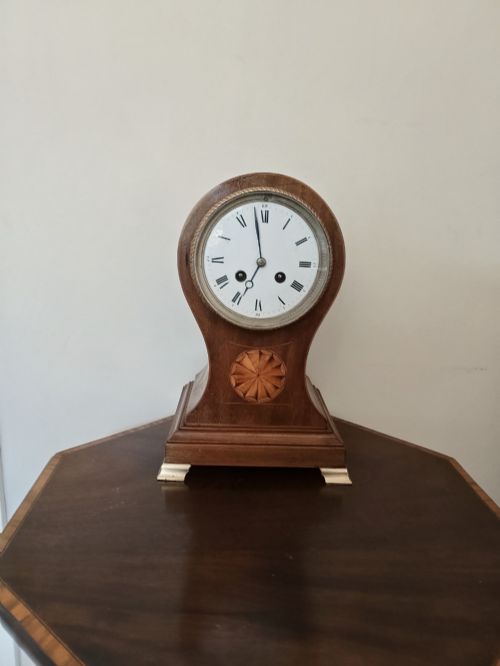
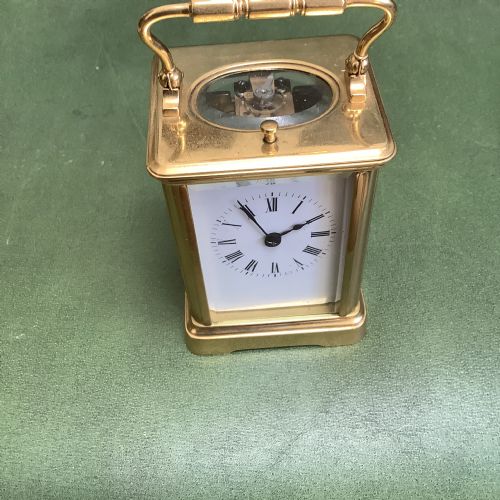
A small french clock sits within a rich tradition of continental horology spanning the nineteenth century and early decades of the twentieth century. When examining this selection, buyers encounter various forms including carriage clocks, four glass mantel pieces, and petite boudoir timepieces.
Makers housed these movements in diverse housings such as gilt brass, marble, mahogany, and bronze. The designs draw upon Victorian, Edwardian, Louis XVI, and Art Deco aesthetics, reflecting the changing tastes of their original owners.
Carriage clocks and four glass mantel clocks dominate the selection, often featuring engraved cases and delicate enamel dials. Pieces range from simple travelling timepieces with eight-day movements to elaborate striking clocks set upon bronze plinths.
Materials and construction
Movements relied on metal components such as steel pinions and brass plates, driven by springs or pendulum mechanisms including silk suspensions. Artisans also incorporated decorative elements like carved marble, alabaster, mahogany, and inlaid wood veneers into the housings.
Small French Clock Retail Price Guide 2026
Typical asking prices for small french clock among the pieces listed under this phrase on Sellingantiques today, from the lower quarter to the upper quarter. They describe what is for sale here now, not the wider market.
Listings feature brass, gilt bronze, marble, mahogany, and glass across Victorian, Edwardian, and Art Deco styles.
Distinctions in quality
The refinement of the case engraving and the crispness of the gilt bronze or ormolu casting separate standard production from superior work. Fully engraved gorge cases and finely detailed porcelain or enamel dials indicate skilled artisan labour.
The sophistication of the internal movement dictates value, with repeater complications, eight-day durations, and platform escapements representing higher manufacturing standards. Original travelling cases and signed maker movements further elevate a piece's standing.
Tiffany·Lenzkirch·Richard co·Drocourt·J C Vickery
The Small French Clock Glossary
- Gorge case
- A distinctively shaped carriage clock case with stepped mouldings to the top and base. This style provides a refined frame for the bevelled glass panels.
- Ormolu
- Gilt bronze created by applying a mercury and gold amalgam to a bronze base. It yields a rich metallic lustre seen on many nineteenth-century clock mounts.
- Four glass clock
- A mantel clock featuring glass panes on all four sides to expose the movement. These pieces often sit on brass or marble plinths.
- Boudoir clock
- A small timepiece designed for intimate residential rooms rather than public salons. They frequently incorporate decorative enamel or silver elements.
- Platform escapement
- The tiny spring-driven assembly that regulates the beat in portable clocks. It replaced the pendulum in carriage clocks and pocket watches.
Small French Clock: Frequently Asked Questions
How do I wind a small french clock?
Insert the matching key into the dial or back winding arbor and turn it gently clockwise until you feel resistance. Avoid overwinding, as this can strain the mainspring.
Ensure you support the clock securely if it lacks a fixed base. For striking models, allow the strike train to finish its sequence before adjusting the hands.
What is an eight day movement?
An eight day movement requires winding approximately once a week to maintain continuous operation. This mechanism uses a longer mainspring barrel housed inside the brass plates.
Such movements appeared frequently in nineteenth-century carriage and mantel clocks to reduce the frequency of manual winding.
How do I clean the brass case?
Dust the exterior regularly with a soft, dry microfibre cloth to prevent the accumulation of grime in engraved crevices. Avoid chemical polishes on gilt or ormolu surfaces, as abrasive liquids strip the metallic finish.
Professional conservation is recommended if tarnishing obscures the original gilding on antique brass and bronze housings.
Where should I place a small french clock?
Position the clock on a stable, level surface away from direct sunlight, draughts, and moisture sources. Mantelpieces, desks, and secure side tables offer ideal display locations.
Ensure mechanical pieces rest away from heavy vibrations that might disrupt the delicate balance wheel or pendulum suspension.