



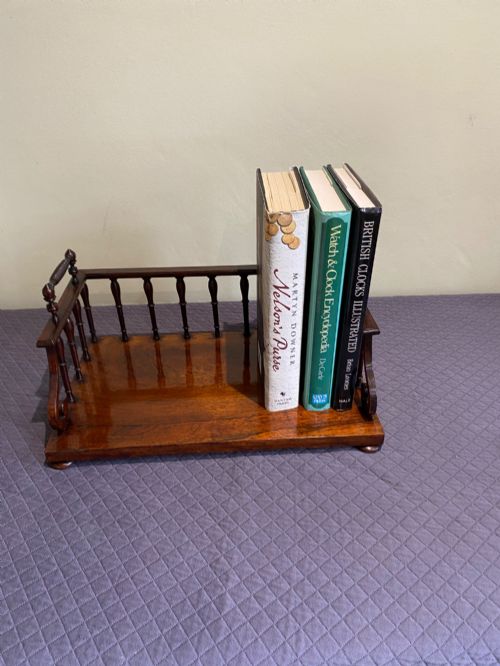
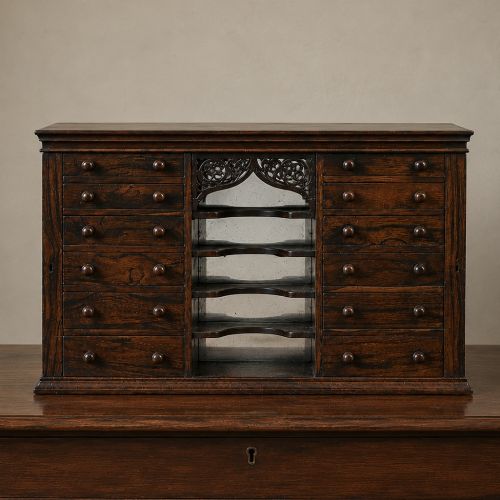


Small Desktop Organizer
A small desktop organizer keeps papers, letters and tiny treasures in order while lending genuine period character to a workspace.
Small Desktop Organizer
A small desktop organizer gathers compact items like stationery, letters and specimens into dedicated drawers, shelves and cabinets designed to sit upon a writing surface. The examples found here range from modest country house post boxes to refined Georgian apprentice chests and Victorian specimen cases.
Most pieces date from the eighteenth century through to the early twentieth century, spanning periods such as the Regency, Victorian and Edwardian eras. Buyers frequently encounter tabletop cabinets, miniature chests of drawers and revolving bookcases rendered in traditional timber forms.
Makers designed these utilitarian objects for specific tasks, whether housing dental supplies in milk glass lined compartments, sorting correspondence behind brass drop handles, or displaying small collections within mirrored Wellington chests.
Materials and construction
Cabinetmakers relied heavily on hardwoods like mahogany, oak and rosewood, often selecting dense grains for durability and fine appearance. Pine and beech served for more utilitarian storage units, while secondary timbers formed internal drawer linings and dividers.
Metal fittings such as brass drop handles, hinges and specialised locks provided both structural security and functional operation. Specialised interiors sometimes incorporated milk glass linings to maintain hygiene in medical or dental cabinets.
Small Desktop Organizer Retail Price Guide 2026
Typical asking prices for small desktop organizer among the pieces listed under this phrase on Sellingantiques today, from the lower quarter to the upper quarter. They describe what is for sale here now, not the wider market.
Tabletop storage forms on this page include revolving bookcases, miniature bow front chests, spice cabinets and specialised filing drawers.
Judging quality in desktop storage
Superior pieces display thoughtful proportion and careful timber selection, particularly where figured veneers match across drawer fronts and cabinet doors. Fine craftsmanship appears in the precision of the joinery, such as cleanly cut dovetails on drawer boxes and smoothly operating slides.
Hardware choice distinguishes standard utility items from finer commissions, with heavy cast brass handles and working locks indicating greater original cost. The condition of the surface finish, whether deep polished mahogany patina or original carved oak details, influences the visual presence of the piece.
The Small Desktop Organizer Glossary
- Wellington chest
- A tall, narrow chest of drawers secured by a locking side pilaster bar that fastens over the drawer edges.
- Specimen case
- A specialised cabinet fitted with shallow drawers designed for organising and displaying natural history collections or small artefacts.
- Fall front desk
- A compact writing desk featuring a hinged flap that pulls down to form a writing surface.
- Collector's cabinet
- A secure tabletop unit containing multiple small drawers intended for sorting precious items or classification.
- Waterfall shelves
- Graduated open shelving where each lower tier extends slightly further forward than the one above it.
Small Desktop Organizer: Frequently Asked Questions
What were small desktop organizers originally used for?
These compact pieces served a variety of clerical and domestic sorting tasks in studies, offices and country houses. They held incoming correspondence, writing paper, household accounts and specialised collections.
Over time, owners adapted them to store anything from dental instruments to dried spices and sewing supplies, depending on the internal configuration of shelves and drawers.
How do I distinguish an 18th century piece from a Victorian one?
Eighteenth century examples, particularly Georgian pieces, often feature solid oak or early mahogany with hand cut dovetails and simple, functional brass pulls. Their proportions tend to reflect classical architectural rules.
Victorian and later pieces frequently introduce machine produced elements, richer polished veneers, or specialised interiors like milk glass linings and locking mechanisms suited to industrial era offices.
Can I use these cabinets on a modern desk?
Their modest footprints make them exceptionally practical for organising modern workspaces, where they easily accommodate letters, stationery and small electronic accessories. They bring historical timber textures and warm patinas directly onto contemporary work surfaces.
Placing them on a desk requires checking the depth of the surface to ensure the piece sits securely without overhanging the edge.
How should I care for antique wood storage?
Maintaining these pieces involves keeping them away from direct heat sources and strong sunlight, which can dry out old timbers and fade polished finishes. A light application of quality beeswax periodically helps nourish the wood.
Avoid excessive moisture on unsealed interior surfaces, particularly in older pine or oak drawers where dampness might affect the timber.