

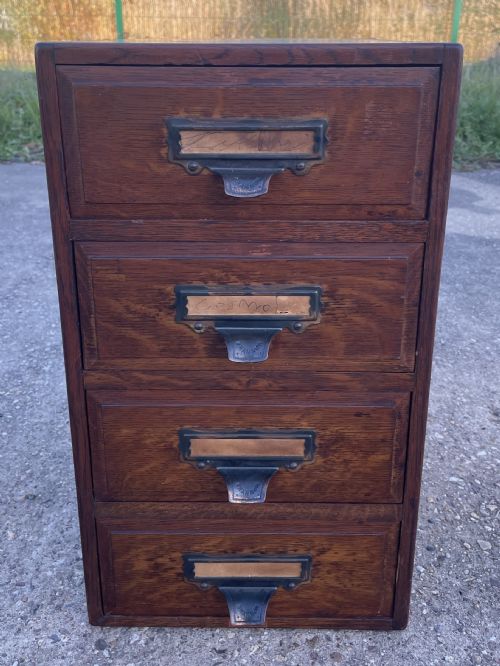
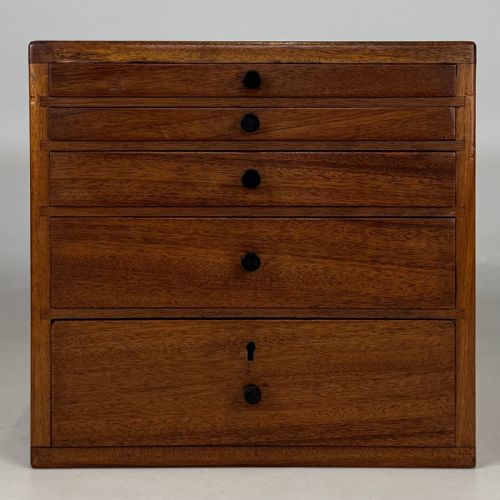
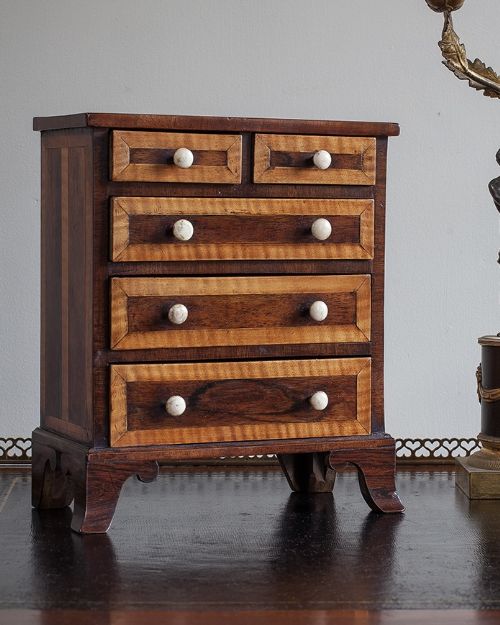
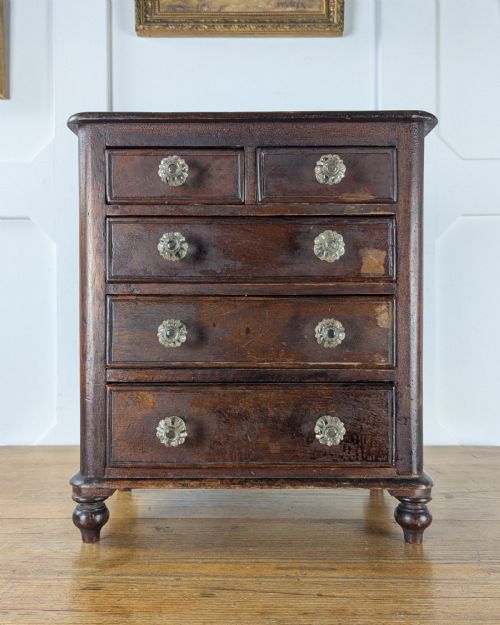
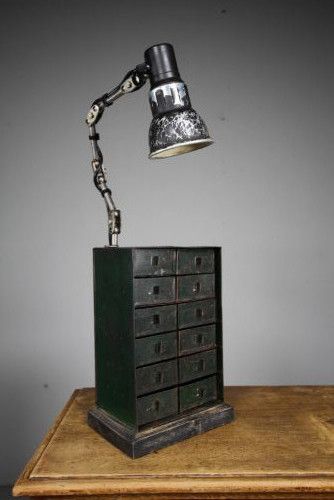
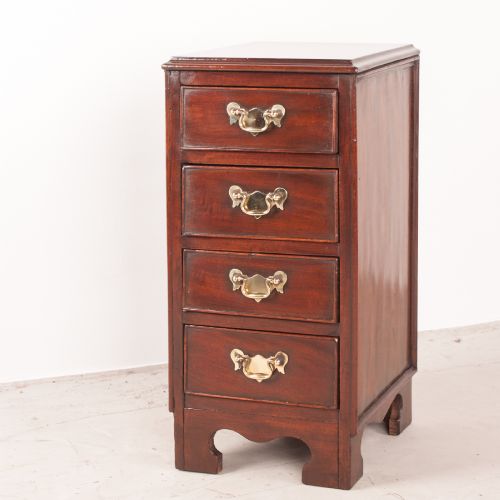
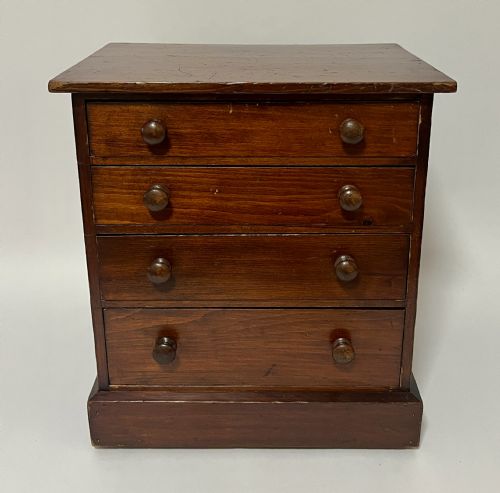
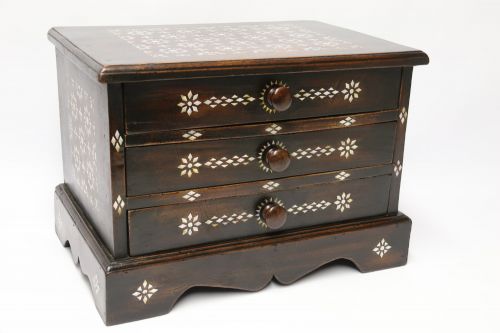


Small Desktop Drawer Unit
These small desktop drawer unit pieces offer practical tabletop storage in miniature chests, cabinets, and filing drawers from the Victorian era up to the 1930s.
Small Desktop Drawer Unit
A small desktop drawer unit provides compact storage for collectors, jewellers, and offices, drawing on forms such as miniature apprentice chests, specimen cabinets, and filing drawers. These table-top pieces sit comfortably on a desk or counter while keeping small items organised in multiple drawers.
The selection here spans from the 19th century and the Victorian period through Edwardian times to the 1930s, reflecting changing functional needs across domestic and commercial settings. Mahogany and oak appear frequently, alongside alternative woods and metals.
Buyers are most likely to encounter miniature chests of drawers and collectors cabinets in woods like mahogany and oak, often dating from the Victorian era or the early 20th century. These pieces combine traditional craftsmanship with the practical utility required for desktop organisation.
Materials and construction
Cabinet makers utilised hardwoods such as mahogany, rosewood, and oak for durability and finished appearance, alongside pine, deal, and beech for functional interior or utility drawers. Brass fittings, bone accents, and milk glass linings appear in specific functional pieces like dental and jewellers chests.
Construction techniques range from traditional dovetail joints on miniature chests of drawers to metal and wood combinations seen in industrial filing cabinets and watchmaker work chests. Inlaid details and turned feet denote more decorative items, while straightforward framing serves utilitarian filing drawers.
Small Desktop Drawer Unit Retail Price Guide 2026
Typical asking prices for small desktop drawer unit among the pieces listed under this phrase on Sellingantiques today, from the lower quarter to the upper quarter. They describe what is for sale here now, not the wider market.
Materials recorded across the inventory include mahogany, oak, rosewood, brass, bone, milk glass, and metal.
Assessing quality and finish
Quality rests upon the selection of timber, the precision of the drawer joints, and the retention of original fittings such as brass handles and milk glass linings. Finer examples display careful wood selection and thoughtful proportions, whether in a miniature apprentice chest or a specialised specimen cabinet.
The integrity of the original surface finish and the smoothness of the drawer action separate superior examples from more utilitarian storage items. Pieces retaining their specific working elements, such as light fittings or specialised internal divisions, demonstrate higher manufacturing ambition.
The Small Desktop Drawer Unit Glossary
- Apprentice chest
- A miniature chest of drawers traditionally made by a craftsman to demonstrate skill or as a salesman's sample. These small pieces replicate full-size furniture with working drawers and turned feet.
- Specimen cabinet
- A small desktop cabinet fitted with multiple shallow drawers designed for holding natural history specimens or small collectibles. They often feature tight-fitting drawers to protect delicate contents.
- Watchmaker's cabinet
- A specialised tabletop work chest containing numerous small drawers for holding watch parts, tools, and tiny components. These sturdy wooden units were built for intensive workshop use.
- Deal
- A softwood timber, typically pine or fir, commonly used for secondary furniture parts and utilitarian cabinets. It provides a pale, plain surface that takes stain readily.
- Milk glass
- An opaque white or coloured glass used for interior linings in specialised medical or dental cabinets. It offers a hygienic, easy-clean surface for small instruments.
Small Desktop Drawer Unit: Frequently Asked Questions
What were small desktop drawer units used for?
These units served various specialised storage needs in offices, workshops, and homes. They held items ranging from watch parts and jewellery to dental instruments and natural history specimens.
Over time, forms adapted for filing correspondence, index cards, and small household trinkets on top of a desk or table.
How do I date a small desktop drawer unit?
Dating relies on identifying the timber, construction methods, and prevailing style of the period. Victorian and Edwardian pieces often show distinct handle styles, dovetailing techniques, and wood choices such as mahogany or oak.
Reference markers like patent names on filing hardware or specific trades like watchmaking give further clues to the decade of manufacture.
Are these drawer units suitable for modern desks?
Their compact dimensions make them practical for organising modern desk spaces, stationery, and small accessories. They fit easily on tabletops while adding period character to a room.
Care should be taken to measure the available depth and height of the desktop workspace before purchase.
What is the difference between a specimen cabinet and a filing drawer?
Specimen cabinets typically contain many shallow drawers designed for tiny collectibles, fossils, or insects, often with enclosed framing. Filing drawers are built deeper to hold papers, cards, or standard documents.
Materials also differ, with filing units frequently utilising oak, beech, or metal for robust daily office use.