



Small Crystal Waterfall Pendant
A small crystal waterfall pendant brings concentrated sparkle to compact spaces through cascading tiers of glass prisms.
Small Crystal Waterfall Pendant
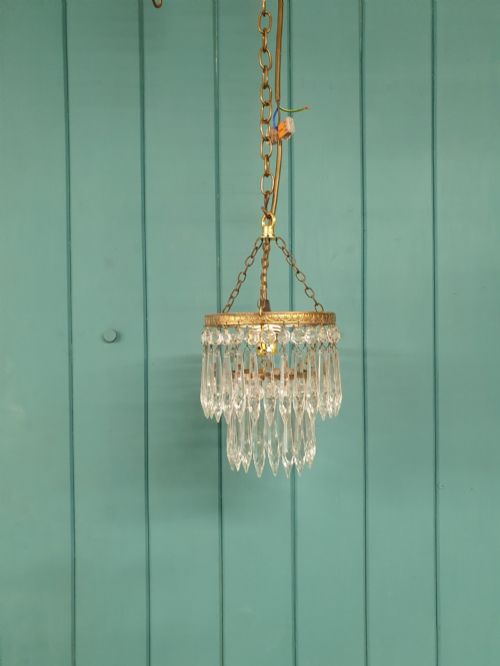
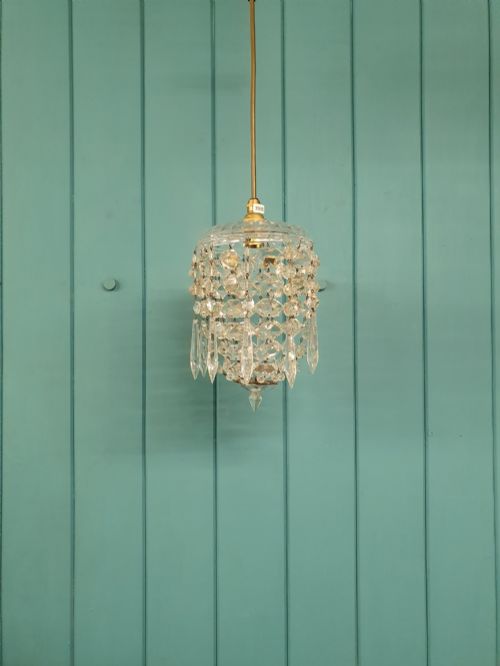
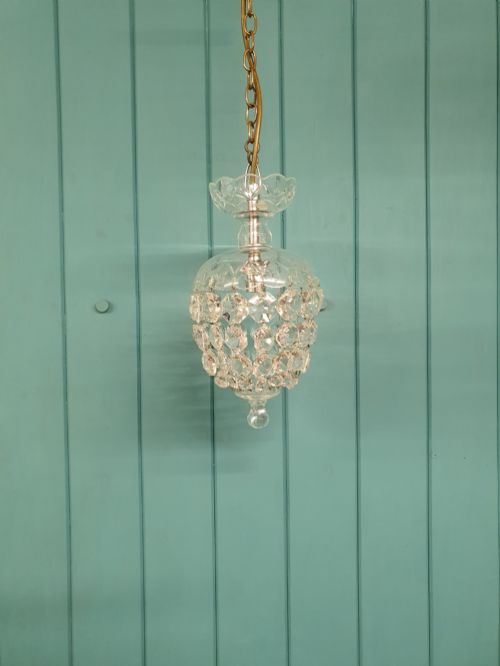
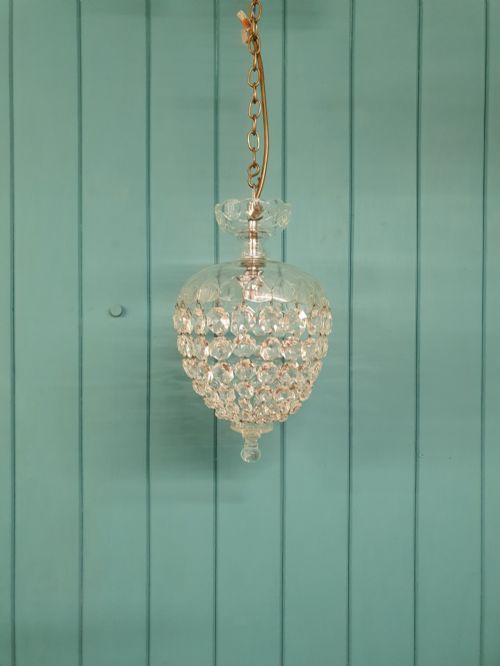
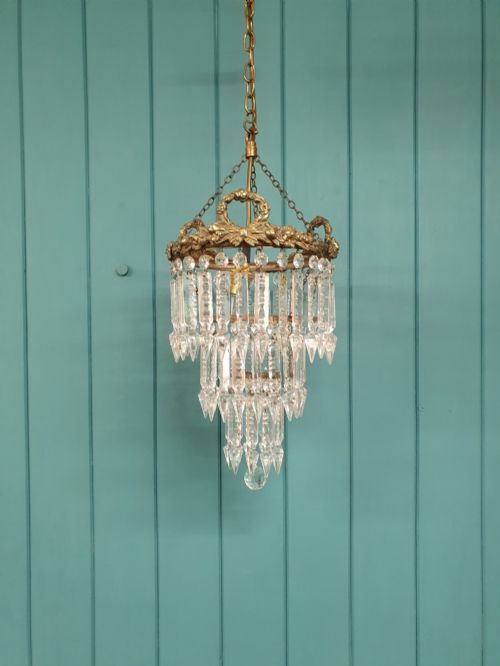
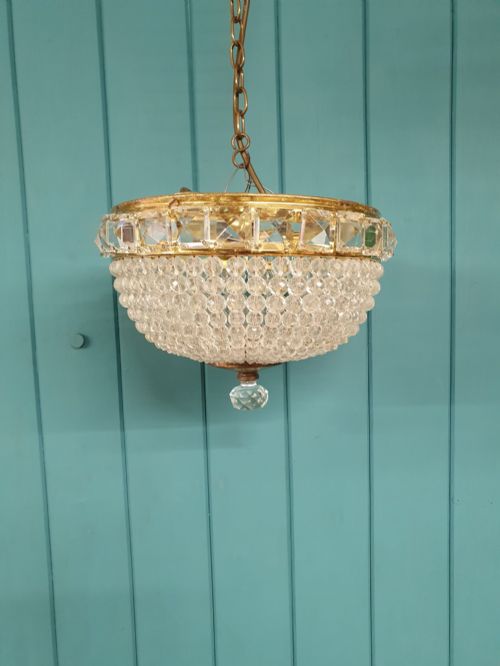
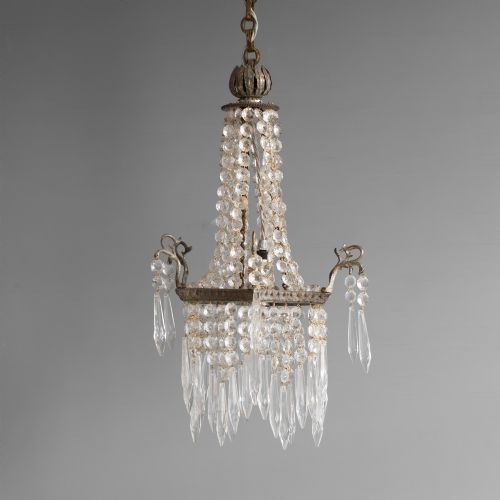
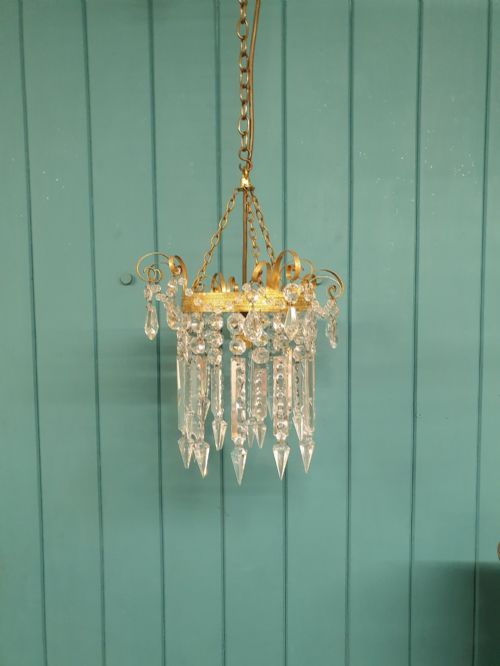
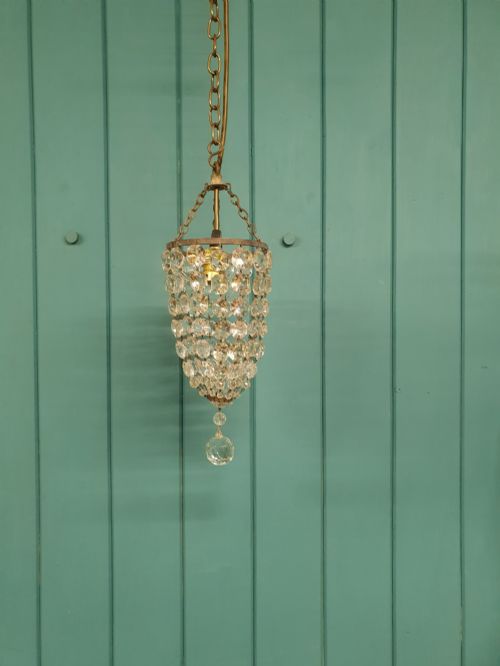
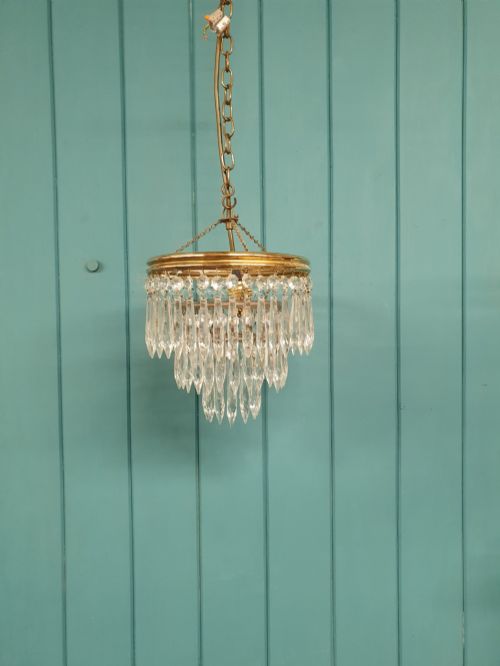
A small crystal waterfall pendant or compact chandelier brings focused illumination and refractive brilliance to smaller rooms. Buyers seeking a small crystal waterfall pendant typically encounter early twentieth century Edwardian and nineteen thirties designs configured as bag, basket, dome top or spike chandeliers. These hanging lights utilise tiered glass drops and crystal beads suspended from brass or wire frames to create a cascading visual effect.
The forms span dome top profiles, tapered bag shapes, and multi tier spike arrangements derived from French Empire and Regency styles. Edwardian examples frequently combine brass mounts with cut glass drops, while later nineteen thirties pieces introduce wire frames and intricate swag details. Each configuration hangs closely from the ceiling to deliver decorative presence without dominating the volume of a modest space.
How they were made
Construction relies on structural metal frameworks fabricated from brass, gilt brass or wire to support the hanging weight of the glass components. Brass mounts secure the primary frames, while delicate wire links connect individual crystal beads and glass prisms into cohesive swags and baskets.
The refractive elements consist of cut glass, crystal glass and moulded glass drops attached to the metal matrix by small brass pins or wire loops. Artisans arranged these prismatic components into layered tiers, domes and bag sections designed to catch and scatter light from internal bulb fittings.
Listings for this phrase span the Edwardian era through the nineteen thirties, encompassing brass, wire, glass and crystal materials.
What varies in quality
The calibre of these hanging lights rests upon the depth of hand cutting on the crystal prisms and the precise density of the glass elements. Superior examples display crisp faceting that refracts light cleanly, paired with heavier brass mountings rather than lightweight wire frames.
Complexity of assembly also distinguishes the standard of work, where multi tier arrangements featuring blue prisms, cherub motifs or integrated bead swags demonstrate greater artisanal investment than simple single layer dome designs.
The Small Crystal Waterfall Pendant Glossary
- Bag chandelier
- A light fixture featuring a flat top ring and a gathered lower metal base that holds a dense mass of cascading crystal drops.
- Spike chandelier
- A hanging fixture finished at the base with outward pointing crystal or glass spikes arranged in a circular formation.
- Prism
- A cut piece of glass or crystal designed to refract light into spectral colours as illumination passes through its facets.
- Swag
- A decorative chain or garland of glass beads and crystal drops draped in a curve between mounting points.
- Tent and bag
- A design combining an upper tent shaped section of gathered glass strands above a lower bag or basket holding numerous crystal drops.
Small Crystal Waterfall Pendant: Frequently Asked Questions
Where should I hang a small crystal pendant?
These compact hanging lights suit lower ceilings, hallways, cloakrooms or intimate dining areas where standard chandeliers prove too large. Their modest drop allows them to provide decorative impact and focused illumination without obstructing movement.
Positioning them centrally within smaller architectural spaces ensures the cascading glass prisms can catch natural light during the day and scatter artificial light effectively at night.
How do I clean a crystal pendant?
Maintenance involves gentle cleaning of the individual glass drops and wire frameworks using a mild soapy solution and a soft cloth. Removing the prisms is rarely necessary if you wipe each component carefully in place and dry it thoroughly to prevent water spots.
Support the lower bag or basket section with one hand while wiping the crystal elements to avoid straining the delicate wire connectors and brass mounts.
What is the difference between Edwardian and 1930s chandeliers?
Edwardian hanging lights often emphasise traditional brass frames paired with heavy cut glass spikes and formal dome top profiles. They reflect earlier Victorian and Regency design influences through structured symmetry and solid metal mounts.
Nineteen thirties variants frequently introduce lighter wire frameworks, integrated floral details, cherub motifs, and elaborate bead swags that reflect evolving decorative tastes of the interwar period.
Are these lights wired for modern electricity?
Most surviving antique and vintage pendant lights have been adapted or rewired for standard contemporary electrical fittings during their history. Buyers should consult the specific listing details to confirm the current wiring status and bulb requirements.
Qualified electricians can easily integrate these fixtures into modern domestic circuits while preserving the original brass frames and vintage glass components.