




French Style Pendant Lamp
These french style pendant lamp choices bring nineteenth and early twentieth century illumination into a room, offering grand focal points through crystal drops and gilded metal frames.
French Style Pendant Lamp
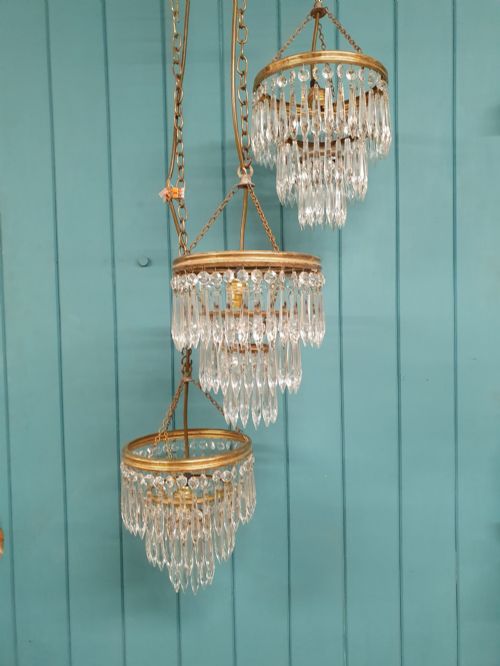
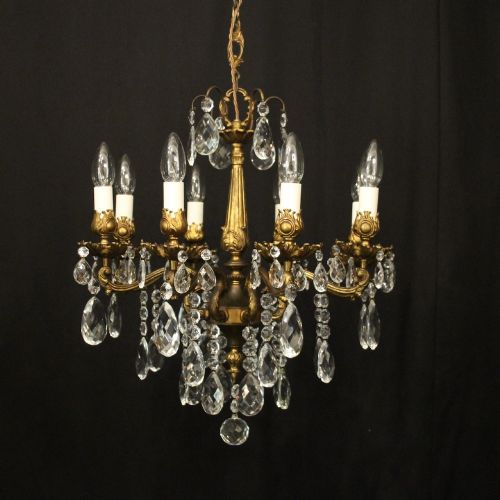
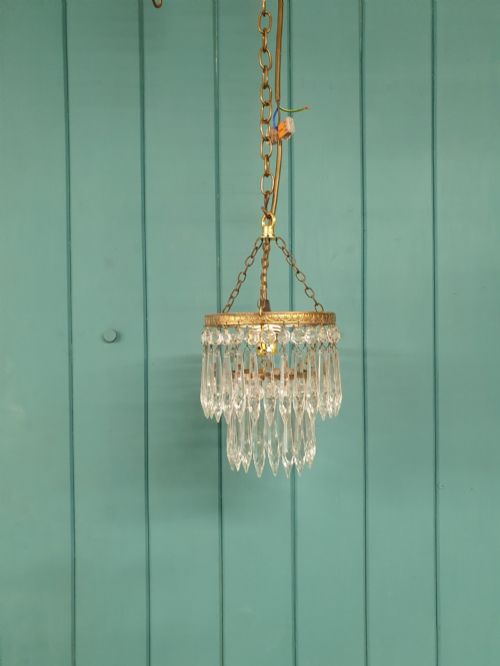
A french style pendant lamp encompasses elaborate chandeliers, hall lanterns, and ceiling lighting spanning from the Victorian and Edwardian eras into the mid-twentieth century. Buyers searching this phrase typically encounter multi-light fittings, tent and waterfall constructions, and convex lanterns designed to hang centrally from a ceiling.
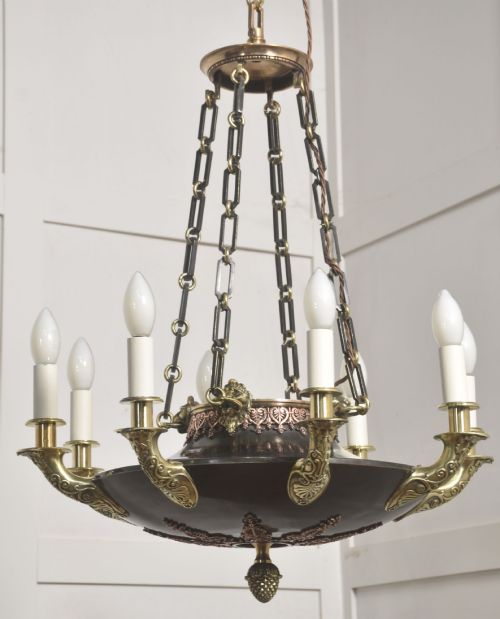
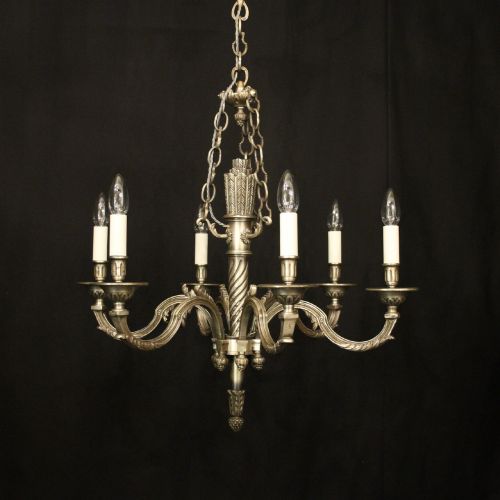
The selection here draws heavily on French Chateau, Empire, Neoclassical, and Rococo aesthetics. Pieces range from modest single-light fixtures and small spike chandeliers to substantial multi-arm bronzes suited for principal reception rooms.
Dating primarily from the late nineteenth century through the nineteen-thirties, these overhead fittings demonstrate enduring historic revivalism. They provide decorative presence alongside functional illumination, utilising classic continental silhouettes.
Materials and Construction Techniques
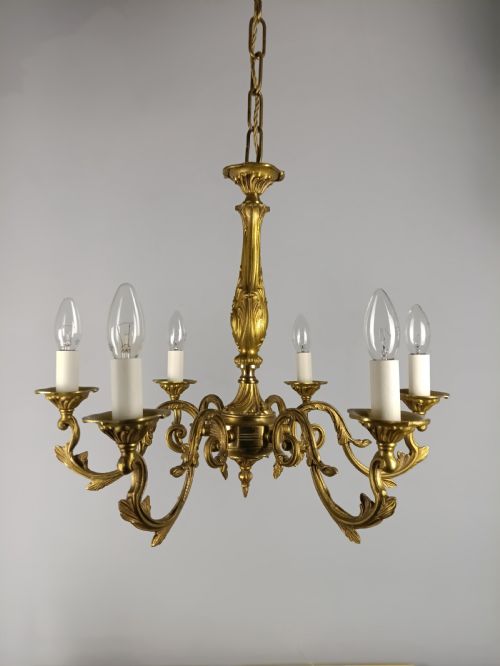
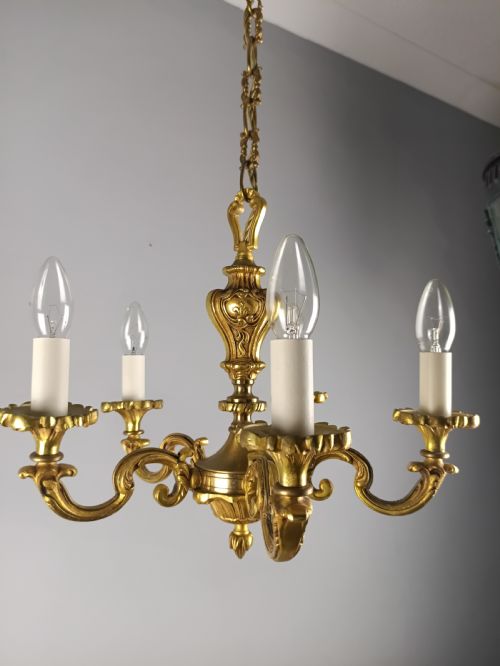
Metalwork forms the structural backbone of these fixtures, utilising cast and chased bronze, brass, copper, and gilt metals. Gilding and silvering techniques applied to bronze and brass provide a reflective surface that enhances the distribution of light across a room.
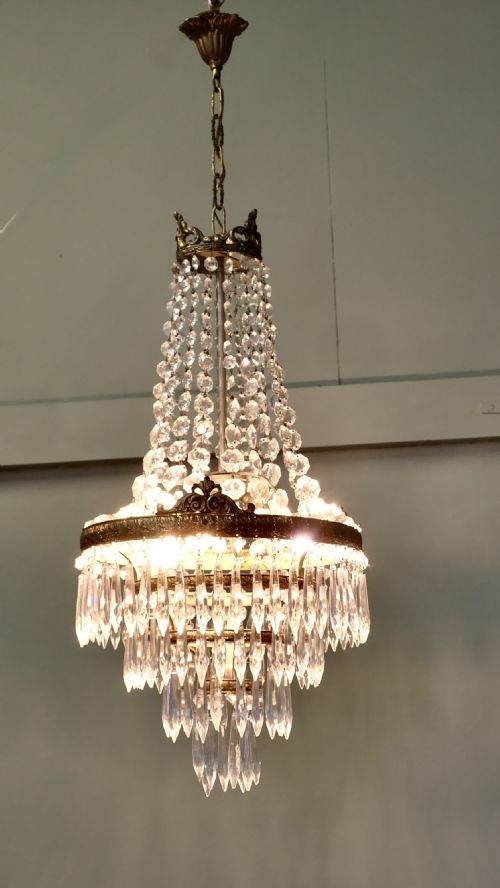
Glass and crystal components are integrated extensively through cut glass drops, beads, tent formations, and moulded shades. These translucent elements work alongside metal arms to catch and refract light from multiple bulb or candle points.
Listings span multiple decades from the Victorian and Edwardian periods through the nineteen-thirties, dominated by brass, gilt bronze, and cut crystal materials.
Distinguishing Quality and Execution
Superior examples display crisp chasing on the bronze or brass mounts, where decorative motifs remain sharp and well-defined. Lower tiers often rely on simpler castings with softer surface detail and less intricate ornamentation.
The quality of the glass and crystal elements dictates the brilliance of the fixture. Cut glass with precise facets and heavy lead crystal drops reflect light far more cleanly than pressed glass alternatives.
The French Style Pendant Lamp Glossary
- Tent and waterfall
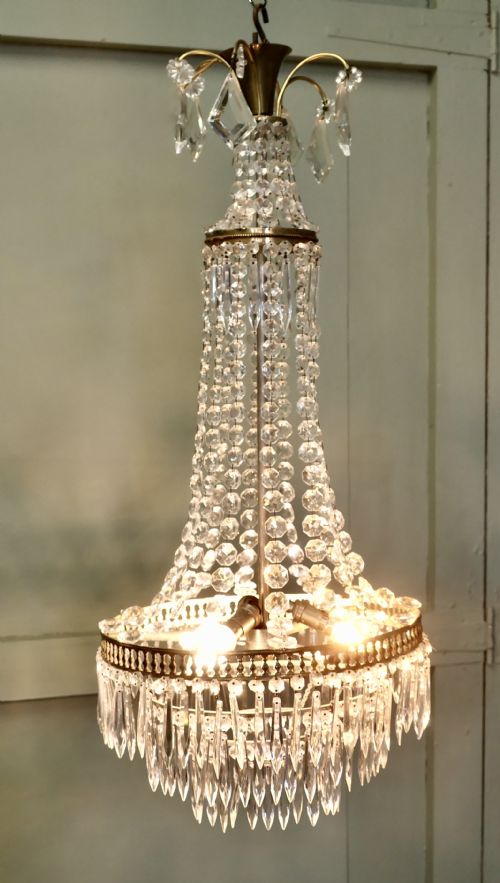
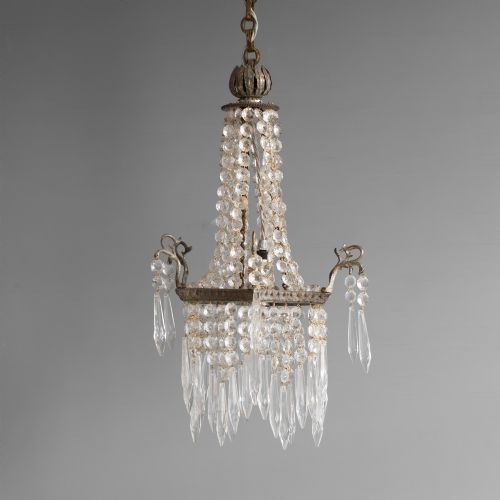
- A lighting configuration where strings of crystal beads form an upper conical tent shape cascading down into a wider bowl or ring of lights.
- Gilt bronze
- Metalwork treated with a fine layer of gold leaf or mercury gilding, commonly known asormolu in finer antique pieces.
- Hall lantern
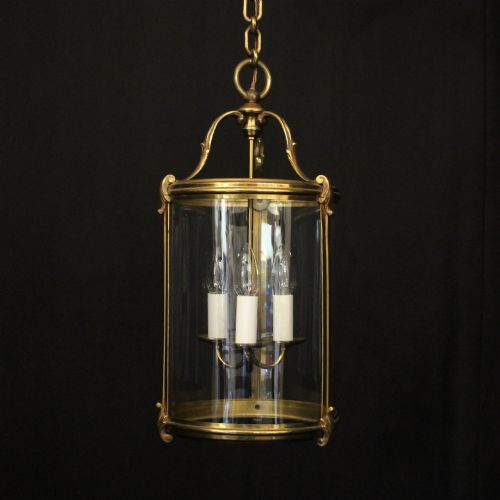
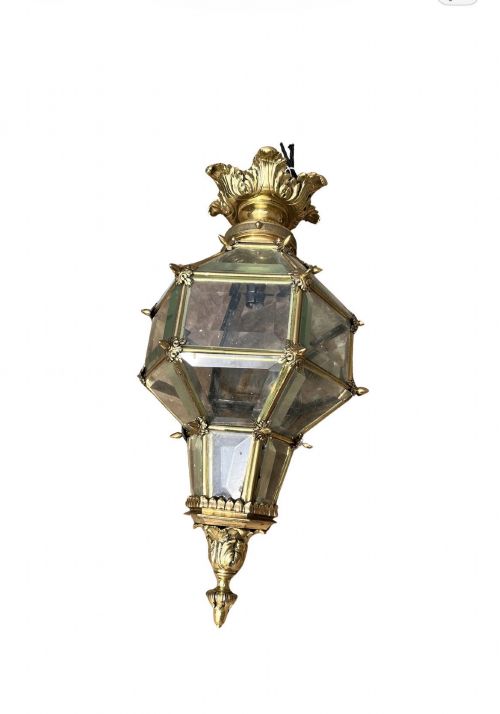
- An enclosed ceiling fixture designed for entranceways and corridors, frequently featuring bevelled glass panels within a decorative metal frame.
- Spike chandelier
- A compact fitting characterised by upward-pointing or radiating metal spikes, often accompanied by glass drops or beads.
- Toleware
- Painted or enamelled sheet metal objects offering colourful decorative surfaces distinct from plain polished brass or bronze.
French Style Pendant Lamp: Frequently Asked Questions
How do I hang a heavy antique chandelier safely?
Heavy fixtures require direct anchoring into ceiling joists using rated steel fixings rather than relying on standard plasterboard anchors. Professional installation ensures the structural weight of bronze and crystal is supported securely.
Electrical wiring should also be inspected and updated to meet current safety standards before securing the lamp permanently in position.
What rooms suit a convex hall lantern best?
Convex lanterns work particularly well in entrance hallways, stairwells, and vestibules where their enclosed glass design provides focused downward illumination. Their compact footprint fits narrower ceiling heights without dominating the spatial volume.
They also serve as striking focal points in smaller reception rooms or transitional corridors connecting larger living spaces.
How do I clean crystal drops on a chandelier?
Cleaning delicate crystal requires a mild solution of warm water and a gentle cleaning agent, applied carefully with a soft cloth while the drops remain attached or after removing them individually. Avoiding harsh chemical cleaners preserves the historic surface finish of the surrounding metal frame.
Allowing components to dry naturally prevents streaks from forming on the cut glass surfaces.
How do I identify an Empire revival piece?
Empire revival lighting draws on early nineteenth-century neoclassical motifs, typically featuring symmetrical arrangements, laurel wreaths, and classical drapery patterns in brass or bronze. These pieces often incorporate tent and waterfall crystal configurations.
Distinguishing original nineteenth-century manufacture from later revival periods involves examining the tooling marks, mounting screws, and overall wear on the metalwork.