
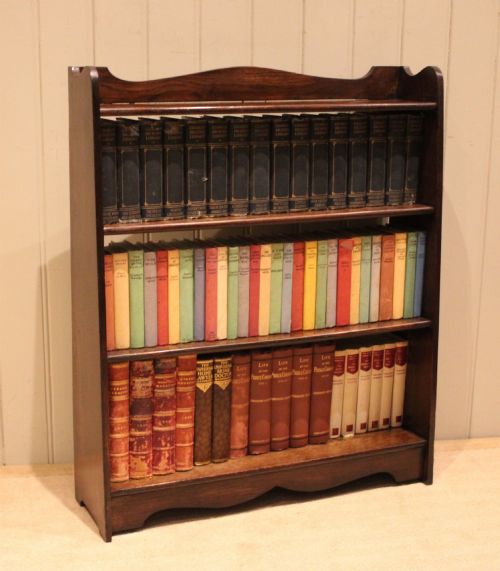
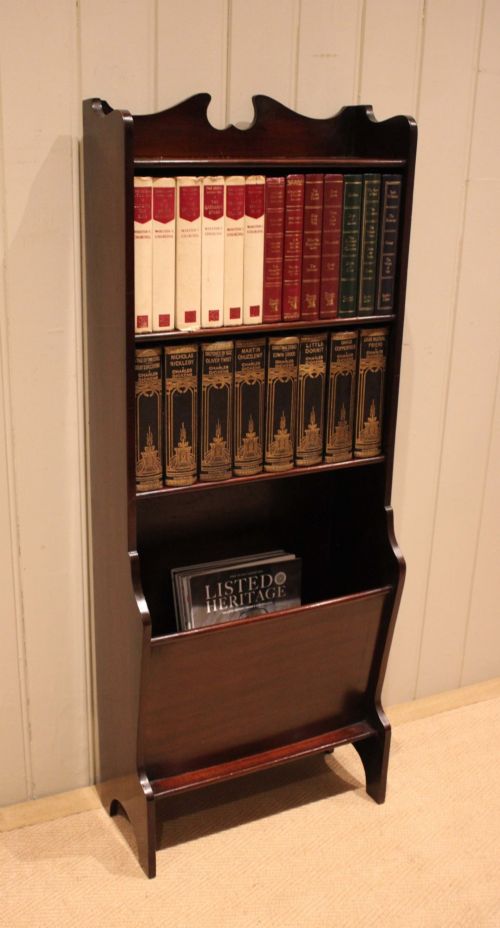
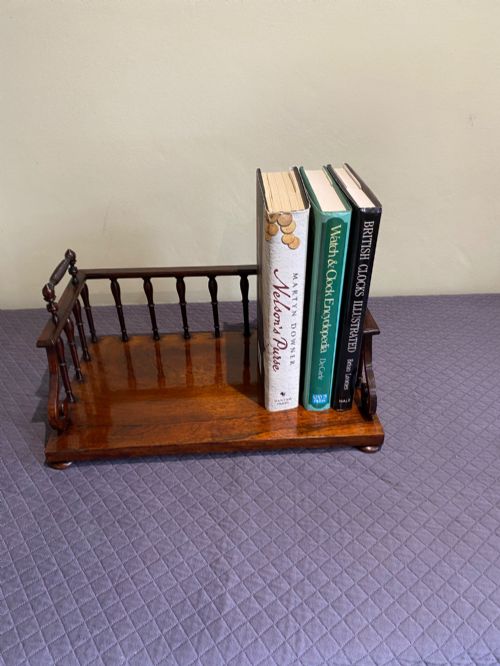
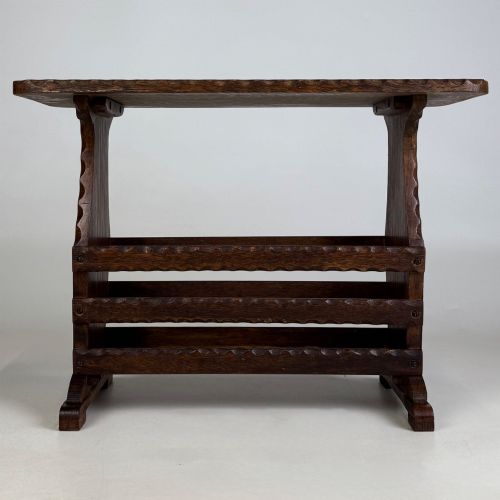


Small Book Trough Stand
A small book trough stand holds daily reading within arm's reach, combining a compact footprint with accessible open storage.
Small Book Trough Stand
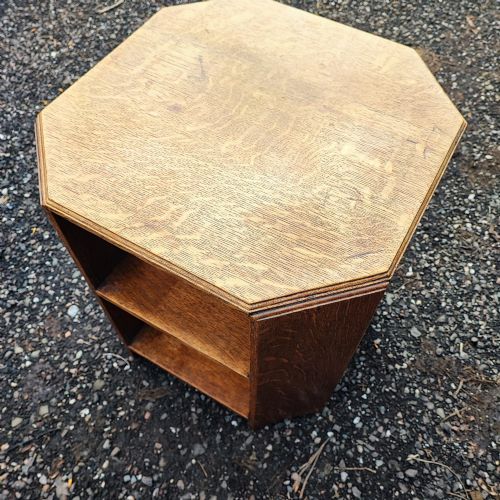
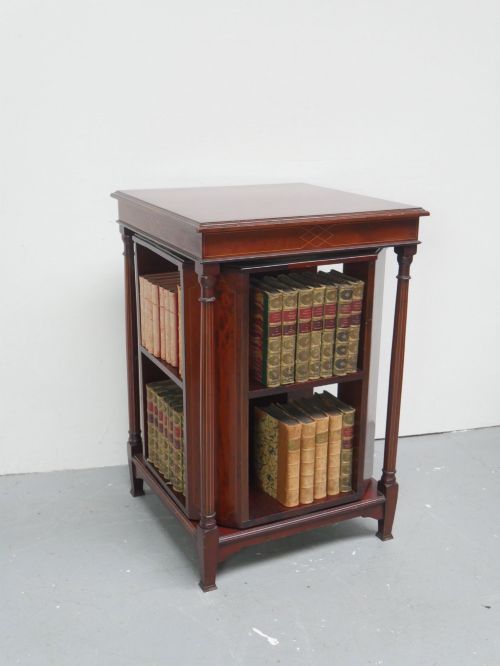
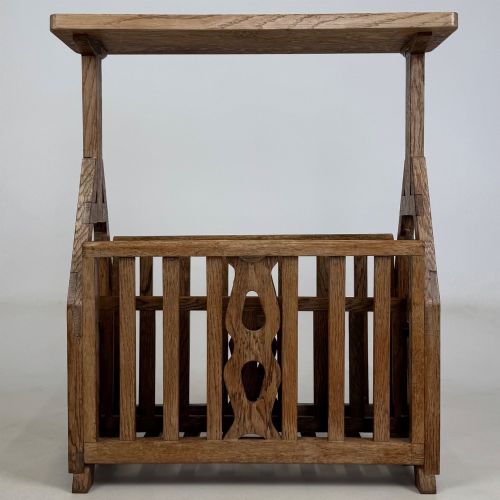
A small book trough stand is designed to keep volumes and periodicals close at hand, appearing in forms such as open-fronted troughs, slope-shelf cases, and revolving table-top models. These pieces span periods from the nineteenth century through the Edwardian era and the 1930s, reflecting changing domestic habits.
The materials recorded across these items centre on oak and mahogany, often enhanced by rosewood, satinwood inlay, brass, and cane. Makers utilised these timbers to produce functional side tables, desk accessories, and miniature shelving units suited for parlour or library use.
Edwardian and Arts and Crafts examples dominate the available styles, alongside Regency, Victorian, and Art Deco pieces. Buyers encounter both standing formats and smaller table-top bookstands intended for specific domestic spaces.
Materials and construction
Joinery relies on solid timbers like oak and mahogany, shaped into upright partitions, sloped shelves, and rotating platforms. Cabinetmakers employed satinwood inlay and contrasting boxwood to define edges and surfaces on select Edwardian pieces.
Structural elements frequently incorporate brass fittings and cane panels to lighten the visual weight of the stand. The physical evidence shows sturdy framework built to support the substantial weight of bound volumes and magazines without buckling.
Current listings feature pieces spanning the nineteenth century through the 1930s, constructed primarily in oak, mahogany, and rosewood.
Distinguishing quality
The refinement of the timber selection and the precision of the joinery mark the difference between standard production items and finer commissions. Subtle details such as crisp satinwood inlay or carved oak motifs elevate the visual weight of an Arts and Crafts or Edwardian piece.
Proportion and mechanical integrity also define superior examples, particularly in revolving bookstands or table-top models where smooth rotation depends on internal pivot engineering. Timber figuring and uniform grain direction across visible surfaces signal deliberate workshop attention.
The Small Book Trough Stand Glossary
- Book trough
- An open-topped receptacle designed to hold books vertically or at a slight angle for easy title viewing. This form sits either on a dedicated stand or directly upon a table surface.
- Revolving bookcase
- A freestanding or table-top case mounted on a concealed pivot mechanism allowing rotation. It provides access to multiple compartments from a single stationary position.
- Slope-shelf
- A display surface angled backward to keep volumes in place while presenting spines clearly to the reader. This arrangement is typical of Arts and Crafts and nineteenth-century reading furniture.
- Inlay
- Contrasting wood veneers, such as satinwood or boxwood, set flush into a primary timber ground to form decorative patterns. It appears frequently on Edwardian mahogany pieces.
Small Book Trough Stand: Frequently Asked Questions
Where should I place a book trough stand?
These compact stands suit living rooms, studies, or beside armchairs where reading material accumulates. Their modest footprint allows them to occupy tight corners or sit upon side tables.
Positioning them away from direct heat sources protects the timber and veneer from drying and splitting over time.
How do I care for antique oak and mahogany?
Dust the surfaces regularly with a dry, soft cloth to prevent particulate buildup in carved details or inlay crevices. Apply occasional appropriate wax polish to nourish the timber grain.
Avoid chemical sprays and keep the wood away from moisture and fluctuating indoor temperatures.
Can these stands support heavy books?
Solid oak and mahogany construction provides sufficient structural integrity for standard octavo volumes and periodical bundles. The joinery is engineered to bear vertical and lateral weight loads typical of domestic reading habits.
Excessive stacking of oversized folios may strain older joints, particularly in revolving or table-top formats.