


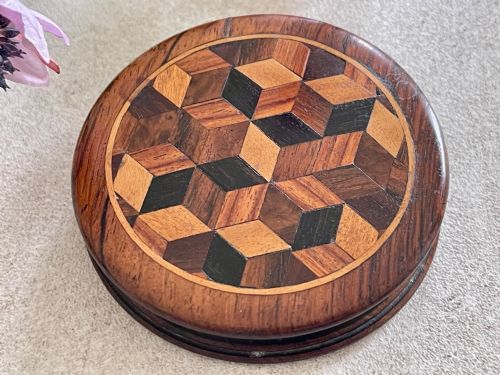


Small Wooden Container
These small antique wooden container examples span Georgian tea caddies to Victorian snuff boxes, offering tactile history for the collector's desk.
Small Wooden Container
A small antique wooden container encompasses everything from Georgian tea caddies to Victorian snuff boxes, small size Tunbridge Ware rosewood boxes, and folk art pieces. These items serve multiple domestic uses, functioning as trinket boxes, desk accessories, and decorative vessels.
The pieces appearing on this page span the 18th century, the Georgian era, the 19th century, the Victorian period, 1850, and 1900. Origins reach across British craftsmanship to Scandinavian country and folk art traditions.
Buyers meet varied forms including rectangular double-sided inlaid boxes, circular snuff boxes, dome tea caddies with keys, carved oak lidded boxes, and dug out tree trunks. Each category reflects the specific domestic habits of its period.
Materials and construction methods
Construction relies upon timber, mahogany, rosewood, walnut, oak, and mixed wood veneers. Artisans selected these dense hardwoods to withstand daily handling and intricate shaping.
Surface decoration incorporates specimen woods and marquetry inlay, alongside specialised techniques such as Tunbridge Ware mosaic work and detailed hand carving.
Small Wooden Container Retail Price Guide 2026
Typical asking prices for small wooden container among the pieces listed under this phrase on Sellingantiques today, from the lower quarter to the upper quarter. They describe what is for sale here now, not the wider market.
One curious offering includes a small dug out tree trunk shaped into a rustic vessel.
Assessing quality in antique wooden containers
Quality rests upon the precision of the woodwork and the integrity of the decorative elements, such as intricate marquetry inlay or specialised specimen wood construction. Finer examples display meticulous attention to detail in their joinery and surface patterns.
The sophistication of the original purpose and the degree of hand crafting elevate certain pieces above standard utilitarian items. Superior execution transforms a simple storage box into an engaging piece of folk art or refined cabinetry.
The Small Wooden Container Glossary
- Tea caddy
- A small container designed to store loose tea leaves securely. These vessels often featured lockable lids to protect expensive tea.
- Snuff box
- A small pocket-sized container used for holding tobacco snuff. They frequently display intricate woodwork, inlays, or carved surfaces.
- Tunbridge Ware
- A type of decorative woodwork characterised by mosaic patterns made from tiny wood blocks of various natural colours. This technique created detailed pictorial or geometric designs.
- Specimen woods
- Timber varieties selected for their contrasting colours and grain patterns. Makers assembled them in combinations to highlight natural wood aesthetics.
- Marquetry inlay
- The art of applying small pieces of veneer to a structure to form decorative patterns. Craftsmen utilised this method to embellish box lids and sides.
Small Wooden Container: Frequently Asked Questions
What were small antique wooden containers used for?
These small containers served specific domestic storage roles, primarily holding precious commodities like tea leaves or tobacco snuff. They also kept personal trinkets and small desk accessories secure.
Over time, their functions shifted as social habits changed, turning everyday utility objects into decorative desk pieces and collector items.
How do I date an antique wooden box?
Dating relies on observing the timber species, construction methods, and decorative styles typical of periods like the Georgian era or Victorian times. Mechanics such as hinges, locks, and dovetailing also provide chronological clues.
Matching the object type, such as a tea caddy or a Tunbridge Ware piece, to documented historical periods helps establish its approximate age.
What is Tunbridge Ware?
Tunbridge Ware is a distinct type of decorative woodwork featuring mosaic designs made from numerous tiny blocks of naturally coloured timber. These tiny pieces formed geometric patterns or pictorial scenes on box lids.
Originating in Kent, this technique required immense skill from the artisan to assemble microscopic wooden segments into a cohesive image.
How do I care for wooden containers?
Maintain wooden boxes by keeping them away from direct sunlight and extreme humidity fluctuations, which cause timber to warp or split. Gentle dusting with a dry cloth preserves the polished surface.
Avoid using modern liquid polishes that can damage antique finishes, wax layers, and delicate marquetry or specimen wood inlays.