

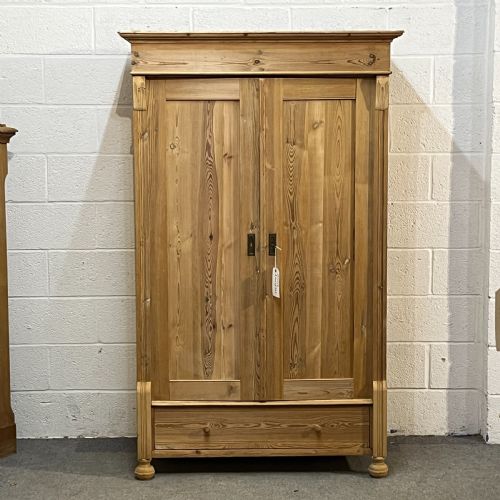


Small Linen Press
A small antique linen press stores folded textiles while offering compact proportions suited to modest rooms.
Small Linen Press
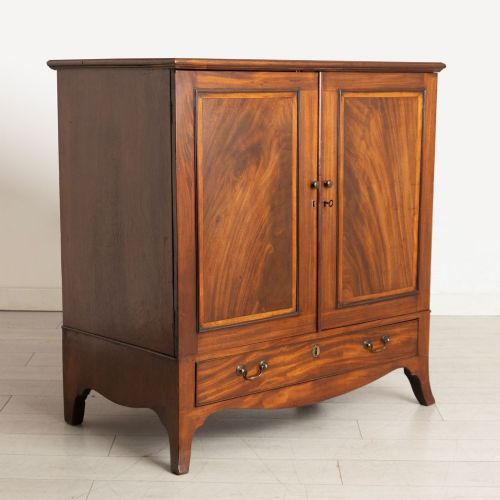
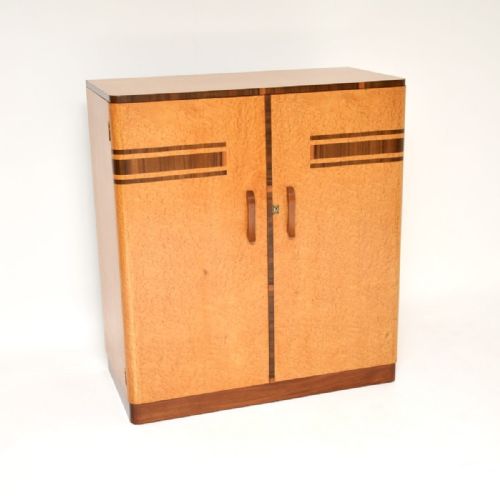
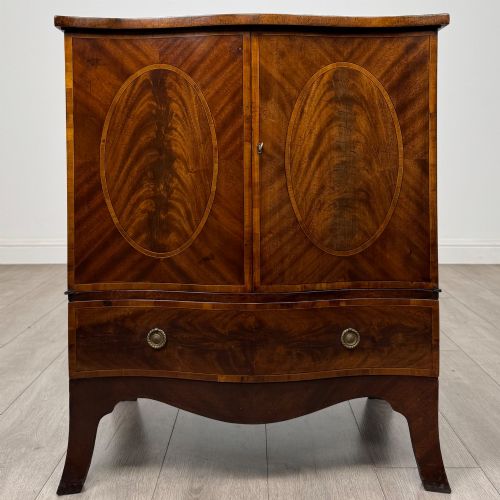
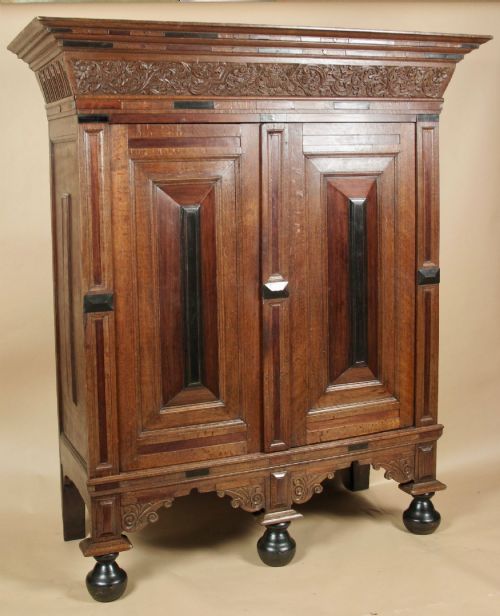
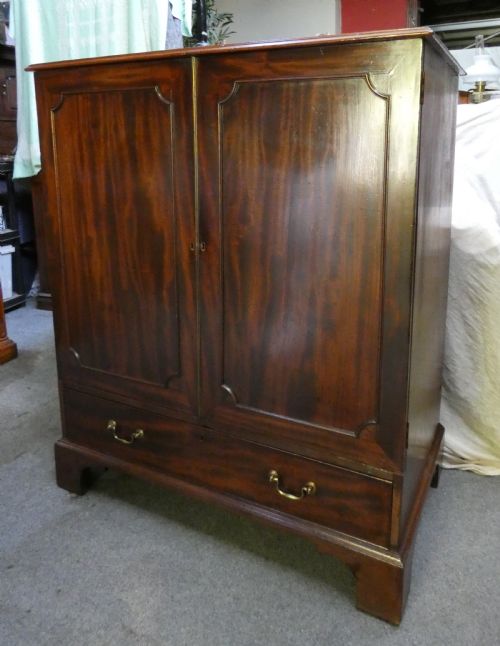
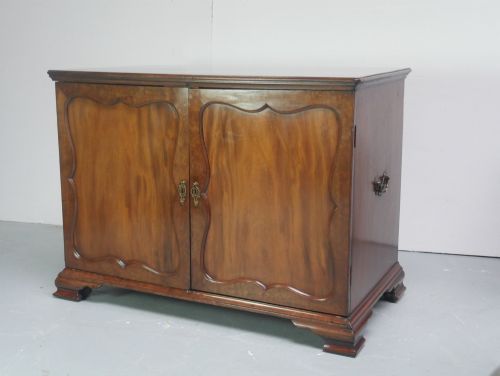
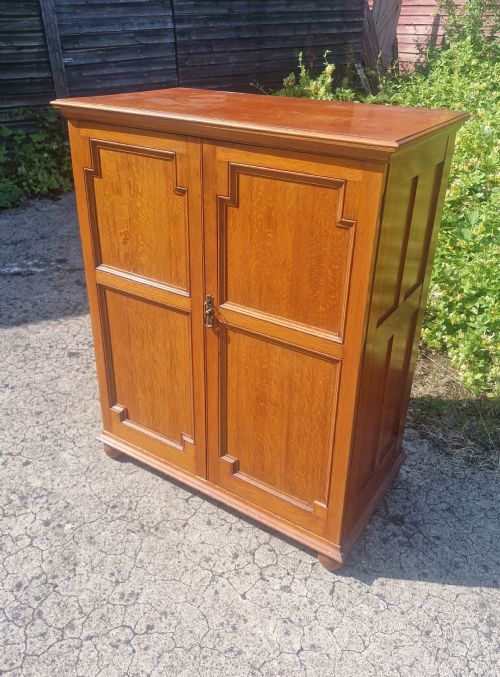
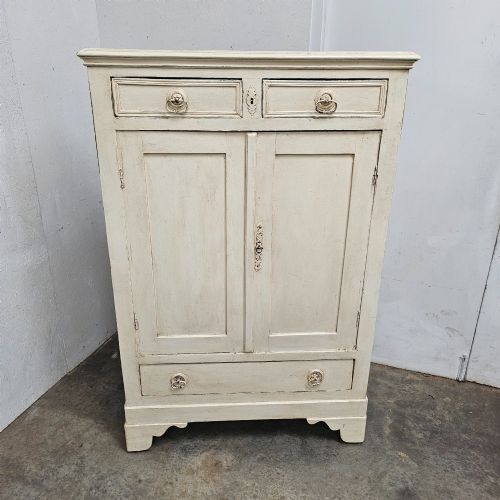
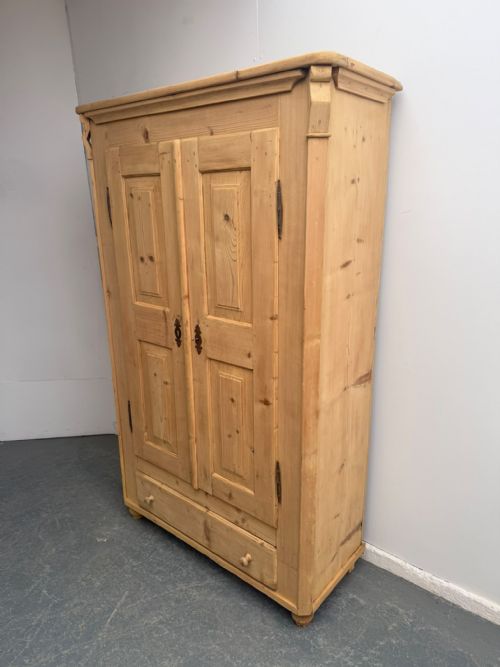
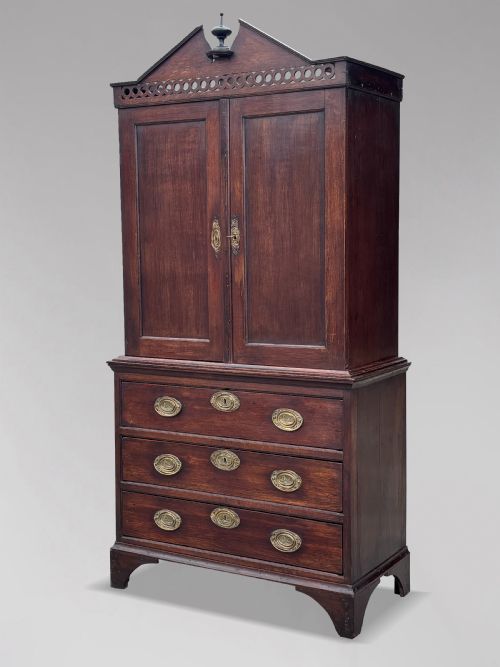
A small antique linen press is a compact storage cabinet designed historically to keep household linens flat and tidy, often combining upper cupboard doors with lower drawers. Buyers searching for a small antique linen press encounter diverse regional forms, ranging from English mahogany dwarf cupboards to Welsh oak cwpwrdd deuddarn pieces.
The pieces spanning these listings and archive records stretch across the seventeenth, eighteenth, nineteenth, and early twentieth centuries. Georgian and Victorian examples predominate, alongside earlier oak constructions and occasional Edwardian or Art Deco iterations in walnut and pine.
Materials and construction
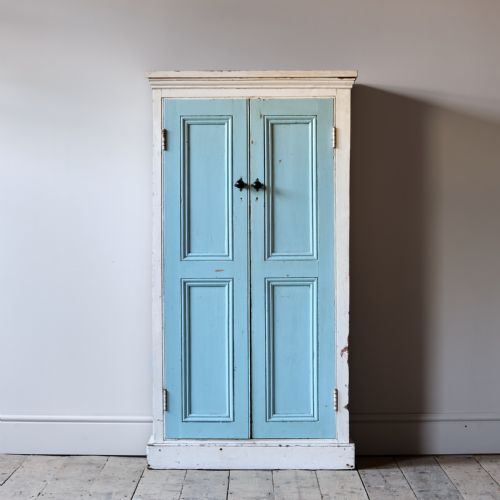
Cabinetmakers relied on native and imported timbers, selecting sturdy oak for seventeenth and eighteenth-century country pieces and dense mahogany, flame mahogany veneer, or walnut for refined urban examples. Pine appears frequently in regional and domestic wardrobes or housekeepers cupboards, sometimes paired with decorative elements like rosewood and ebony.
Joinery methods reflect the period of origin, utilising solid board construction, panelled doors, and dovetailed drawers fitted with brass hardware. Waxed finishes protect the timber surfaces while preserving the natural grain and colour developed over centuries of use.
Listings feature examples spanning from the seventeenth century through the Georgian and Victorian eras up to the nineteen-thirties.
Assessing quality
Quality rests upon the selection of timber and the proportion of the piece, where smaller scale and balanced architectural details elevate a cabinet. Original surfaces, such as untouched polish or historical wax, carry significantly more integrity than stripped or heavily restored exteriors.
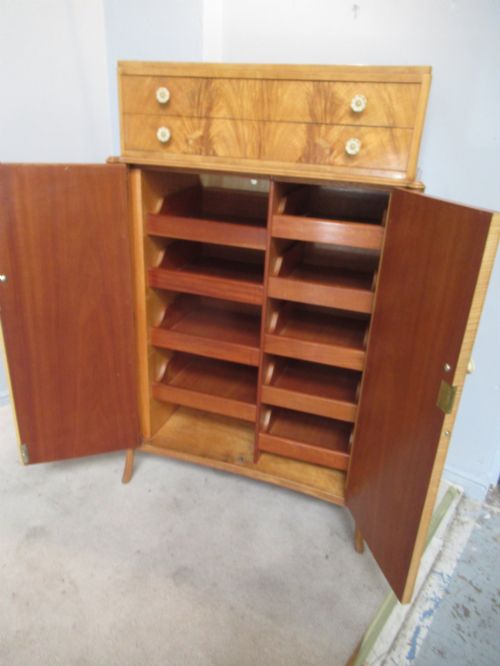
The refinement of internal sliding trays, drawer construction, and functional brass or iron hardware distinguishes simpler domestic furniture from masterwork case pieces. Regional vernacular items derive their appeal from honest, robust construction rather than ornate decorative veneer.
The Small Linen Press Glossary
- Linen press
- A tall cupboard or cabinet originally built to store table linen and bedding, typically containing internal sliding shelves or drawers above a base section.
- Dwarf
- A descriptive term for furniture built with unusually low proportions compared to standard full-height wardrobes or cupboards.
- Cwpwrdd Deuddarn
- A traditional Welsh two-section oak cupboard, often featuring panelled doors and carved detailing specific to regional carpentry traditions.
- Housekeepers cupboard
- A large storage cabinet utilised in country houses for provisions and linens, translated in smaller formats for domestic utility.
- Flame mahogany veneer
- A decorative wood slicing applied to furniture surfaces to create a distinctive, swirling flame-like pattern across cabinet doors and drawers.
Small Linen Press: Frequently Asked Questions
How were linen presses used historically?
Households used linen presses to store household textiles, sheets, and tablecloths flat under gentle pressure from internal sliding trays. This prevented creases and kept fabrics tidy before modern wardrobe hanging space became standard.
They stood in bedchambers, hallways, or domestic offices depending on the household size. Lower drawers accommodated smaller items of clothing and accessories.
How do I date a small linen press?
Dating relies on observing timber choices, construction techniques, and stylistic traits associated with specific periods from the seventeenth to the early twentieth century. Early pieces frequently feature solid oak and hand-carved panels, while Georgian and Regency examples favour mahogany with banded inlays.
Later Victorian and Edwardian items introduce softer pine and varied veneering methods. Hardware styles and drawer dovetailing also provide clear indicators of manufacturing eras.
Where should I place one at home?
These compact cupboards fit well in bedrooms, landings, or dining rooms where floor space is limited. Their shallow depth allows them to sit comfortably in narrow corridors without obstructing movement.
They provide practical storage for folded clothing, glassware, or tableware while introducing period character to a room. Placing them away from direct heat sources protects the antique timber.