


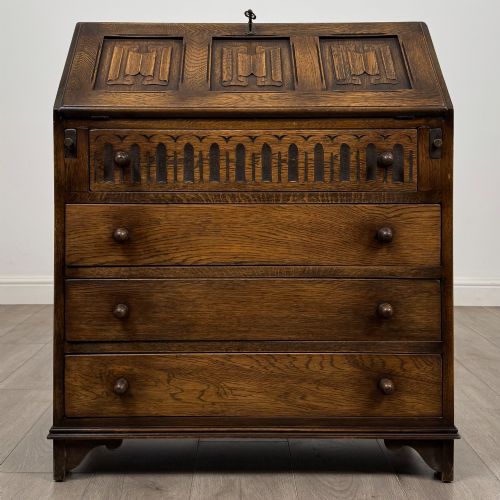
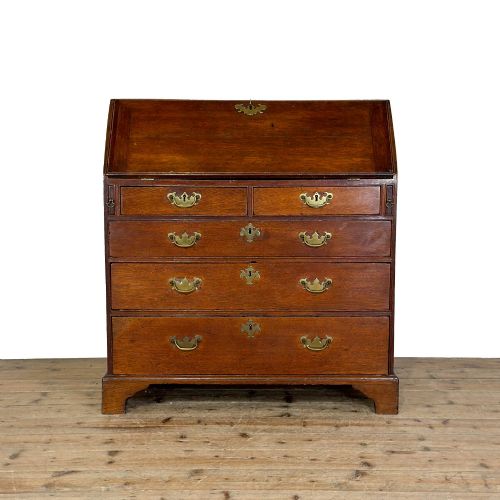
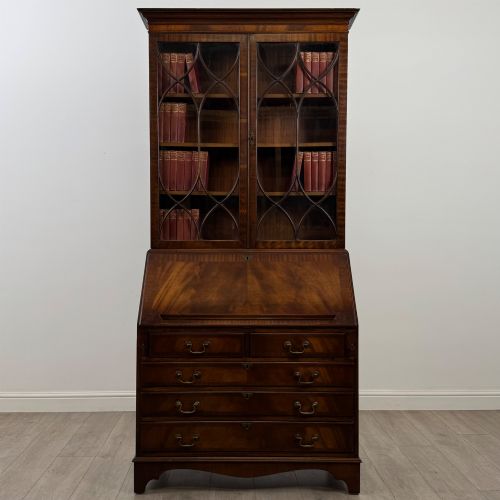
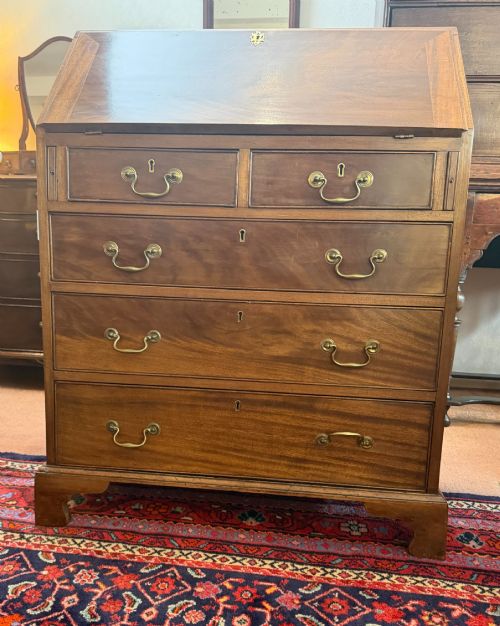
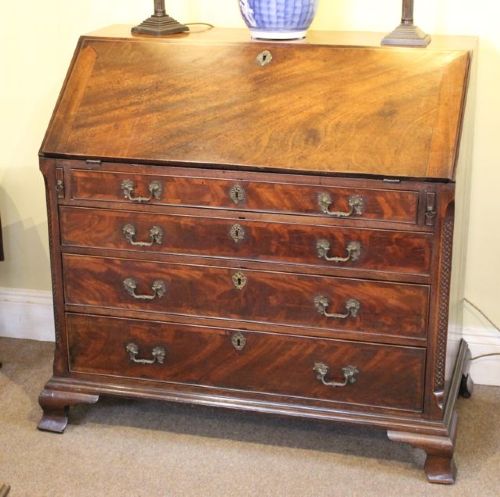
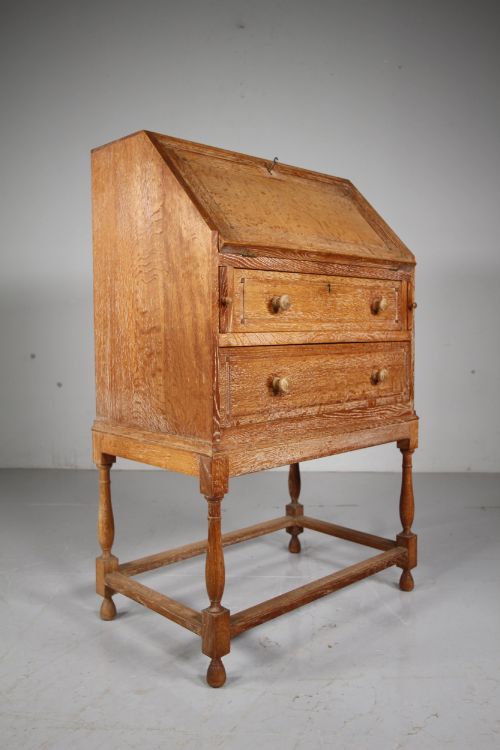
Sloped Front Bureau
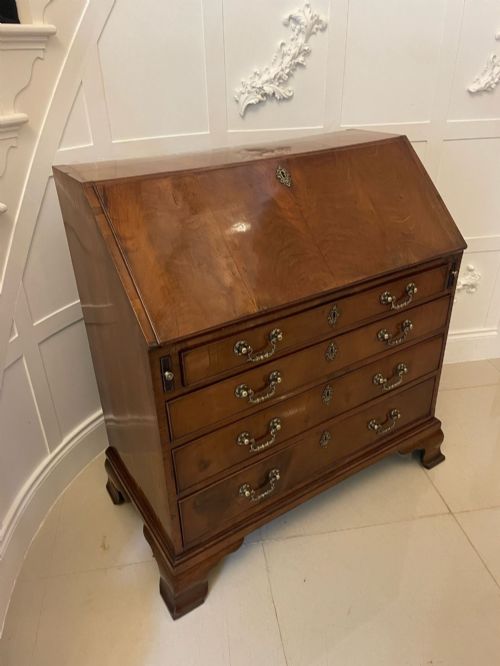
A sloped front bureau is a practical writing desk with a hinged flap that conceals fitted interior compartments.
Sloped Front Bureau
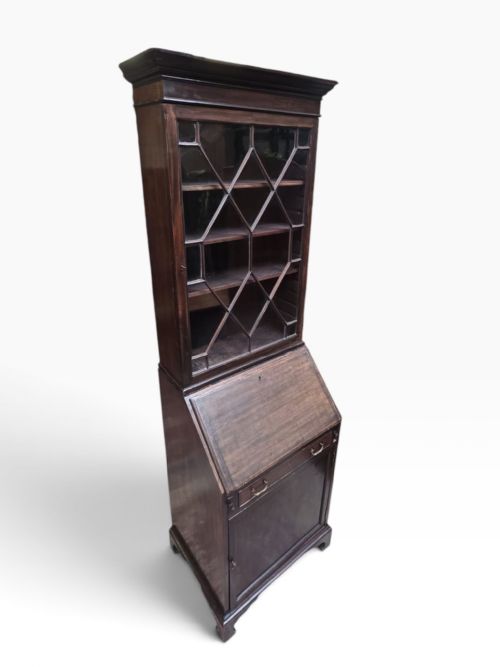
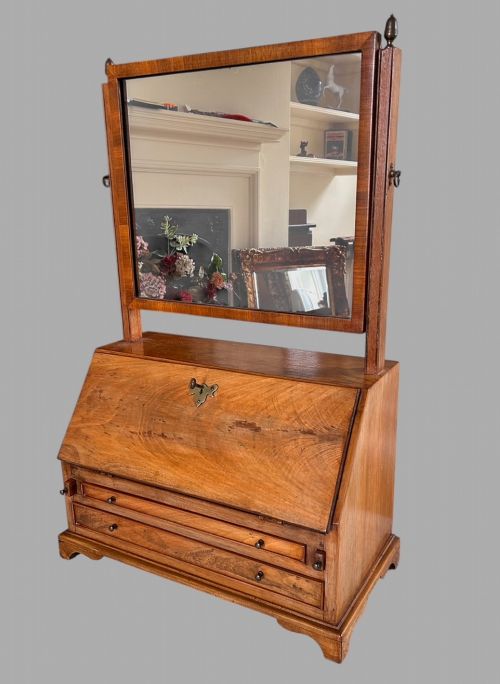
A sloped front bureau provides a dedicated writing surface that drops down to reveal small drawers and pigeonholes for correspondence and documents. These writing pieces range from compact table-top versions to large bureau bookcases fitted with upper shelving units.
Originating as essential domestic furniture for managing letters and accounts, these items combine concealed storage with lower drawer space. The exterior appearance shifts from simple provincial oak constructions to highly decorative marquetry and figured veneers.
Materials and construction methods
Cabinet makers utilised solid timbers alongside carefully matched veneers, applying mahogany, walnut, and oak over secondary woods. Brass hinges and escutcheons secure the fall-front flaps and drawer fronts, while leather inserts frequently line the writing slopes.
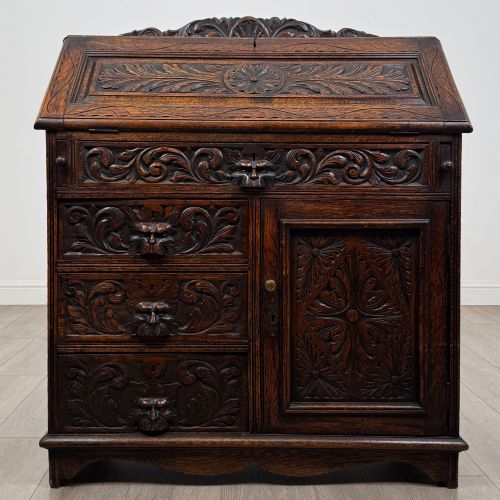
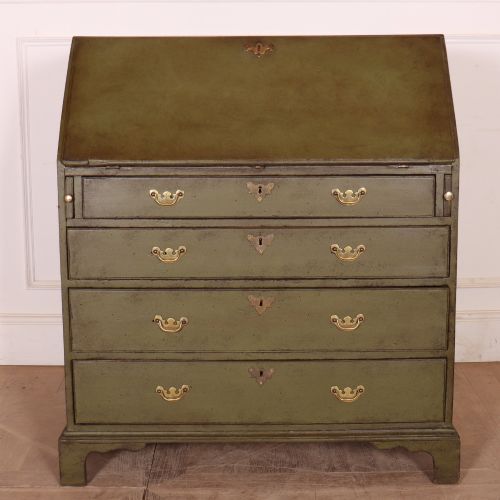
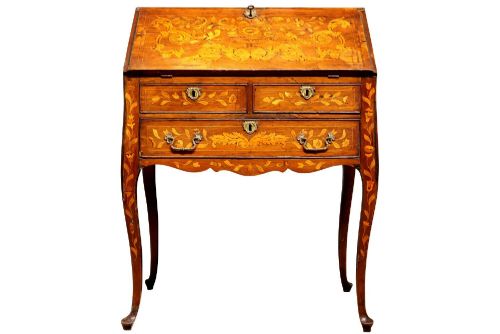
Decorative techniques include intricate floral marquetry, satinwood painted finishes, and carved detailing such as linenfold panels and Green Man motifs. Interior compartments demonstrate precise joinery, often incorporating secret drawers and pigeonholes tailored for stationery.
Listings feature items constructed from oak, walnut, mahogany, and satinwood across the eighteenth, nineteenth, and twentieth centuries.
Assessing craftsmanship and condition
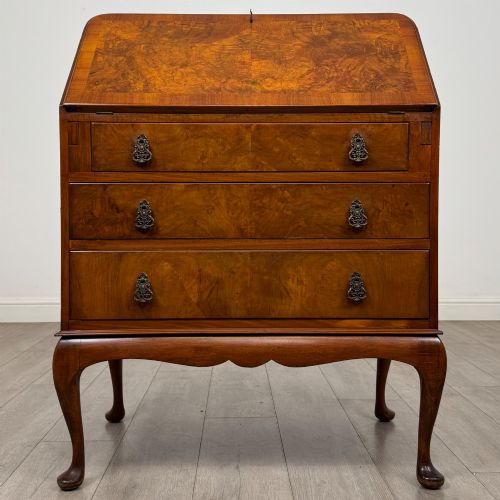
The standard of a sloped front bureau rests upon timber selection and veneer matching, where superior examples display continuous grain patterns across the fall-front flap and drawer banks. Finer pieces maintain original brass hardware, stable internal fittings, and smooth drawer operation without excessive timber shrinkage.
Decorative execution separates standard production items from masterworks, visible in the precision of marquetry inlay, hand-carved ornamentation, and painted details. The integrity of the writing flap hinges and the complexity of the internal pigeonhole arrangement further distinguish higher-grade specimens.
Heals of London·Stanley Webb Davies
The Sloped Front Bureau Glossary
- Fall-front
- The hinged sloping panel that opens downward to form a writing surface. This panel conceals the internal drawers and pigeonholes when closed.
- Bureau bookcase
- A writing bureau combined with an upper shelving or cabinet section enclosed by doors. These taller pieces provide both writing facilities and display space for books.
- Marquetry
- Decorative patterns formed by fitting together thin slices of various wood veneers and other materials. Craftsmen use this technique to create floral and geometric designs across the exterior surfaces.
- Davenport
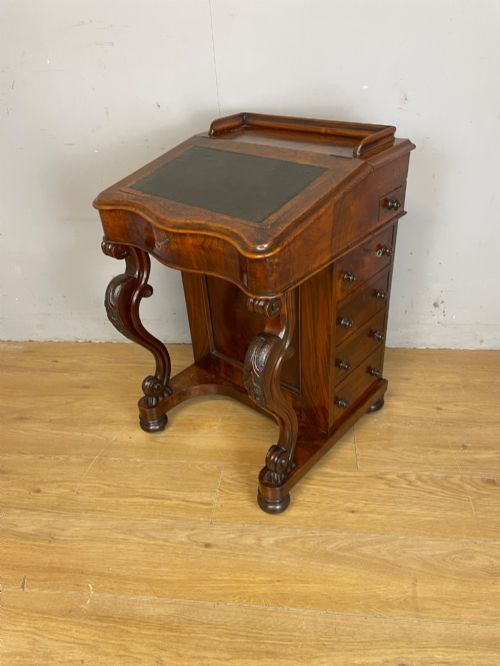
- A compact pedestal desk featuring a sloped writing top and drawers opening to the side. This form emerged during the nineteenth century for use in smaller reception rooms.
- Pigeonhole
- Small vertical compartments fitted inside the bureau interior for sorting letters and papers. They often surround a central locking cupboard or secret drawer.
Sloped Front Bureau: Frequently Asked Questions
How do I date a sloped front bureau?
Dating relies upon timber choices, construction techniques, and stylistic traits associated with specific periods such as the Georgian era or Edwardian times. Examination of secondary woods inside the drawers often reveals the approximate age.
Hardware styles, dovetail construction methods, and veneer thicknesses also provide reliable chronological markers for these writing pieces.
How do I maintain the leather writing surface?
Leather writing inserts require gentle cleaning with a slightly damp cloth followed by a neutral leather conditioner to prevent drying and cracking. Avoid using harsh chemical solvents or excessive water.
Keeping the fall-front closed when not in use protects the leather from excessive direct sunlight and accidental spills.
Were these bureaus used for writing letters?
These pieces served as the primary household workstation for managing correspondence, household accounts, and personal records. The internal pigeonholes and small drawers kept writing paper and ink safely organised.
Dropping the front flap provided an immediate horizontal workspace before being locked away to keep contents private.