

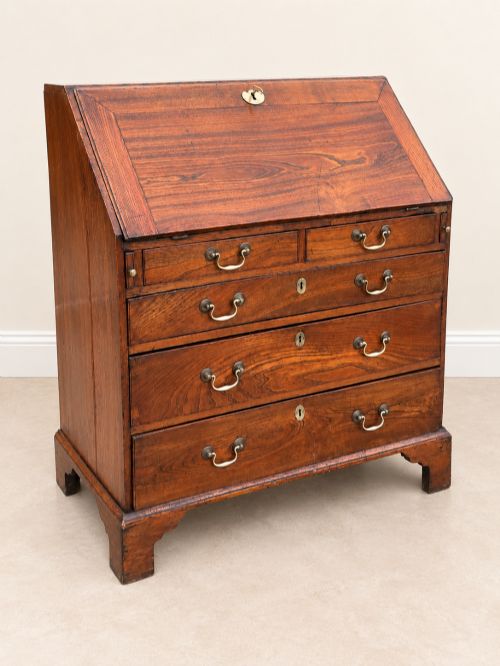
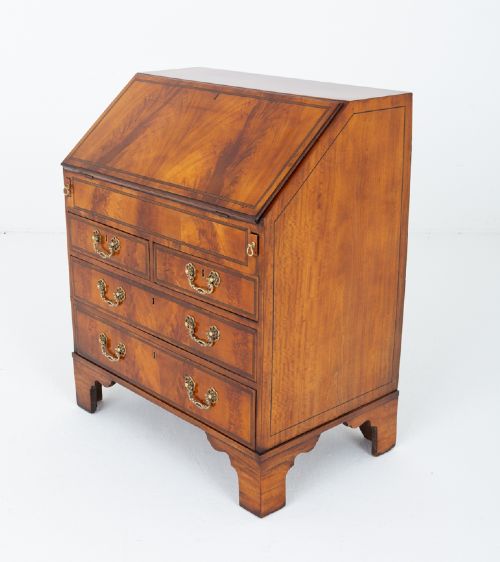
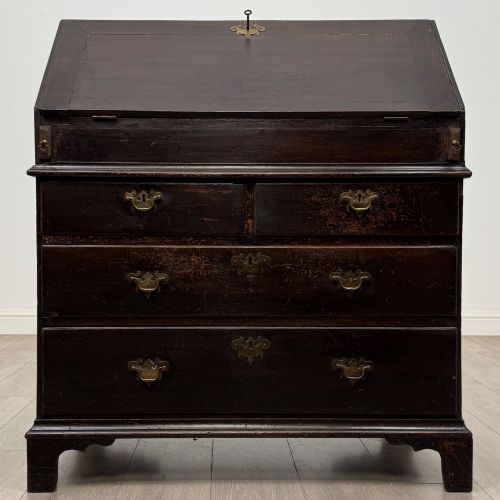
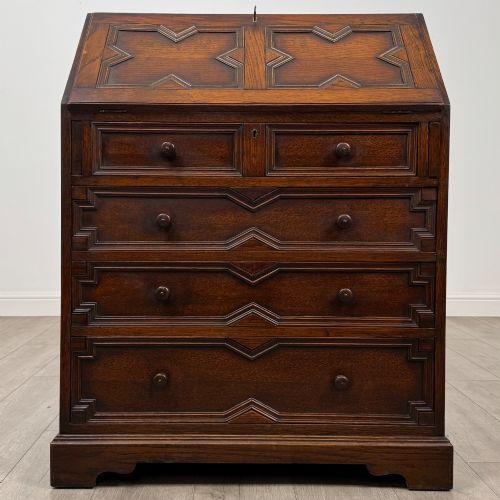


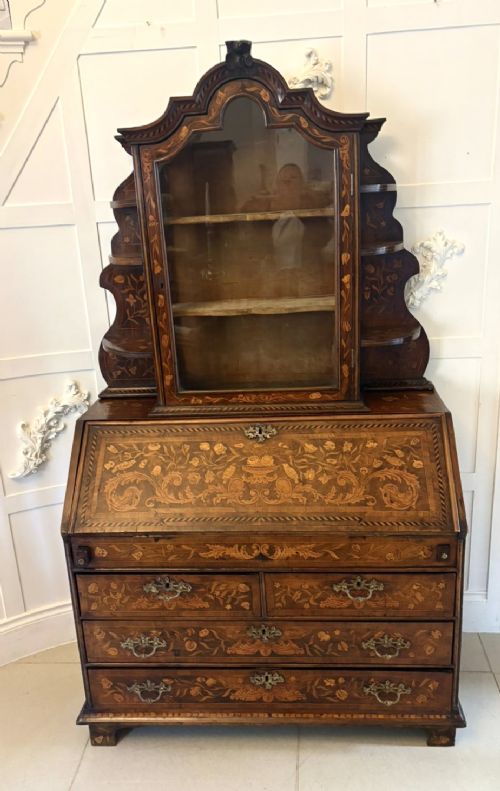
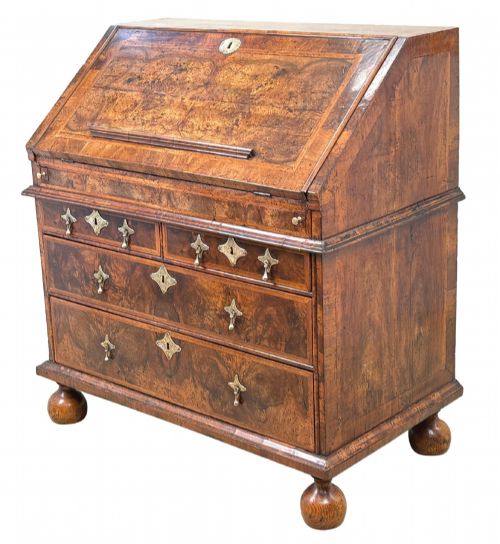
Slope Front Chest Drawers
A slope front chest drawers brings together domestic storage and a fitted writing surface, offering a handsome workspace that closes away cleanly at the end of the day.
Slope Front Chest Drawers
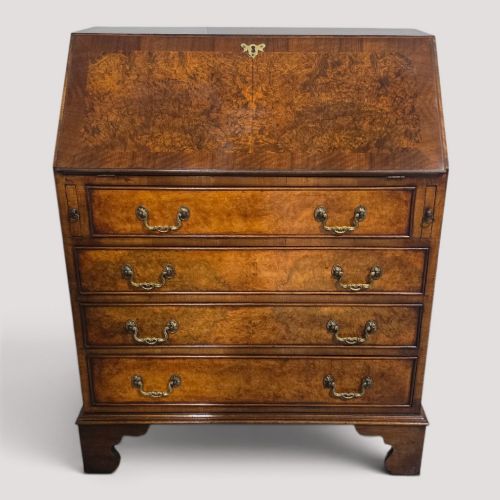
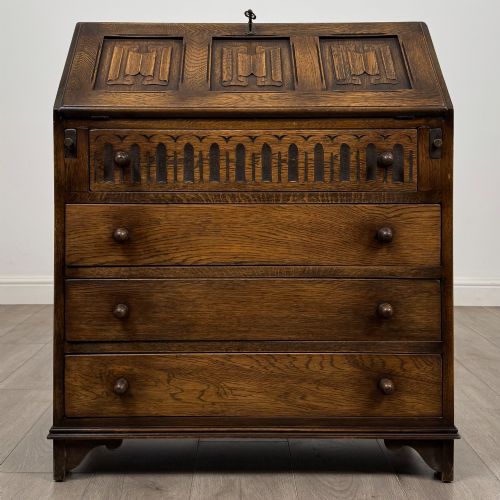
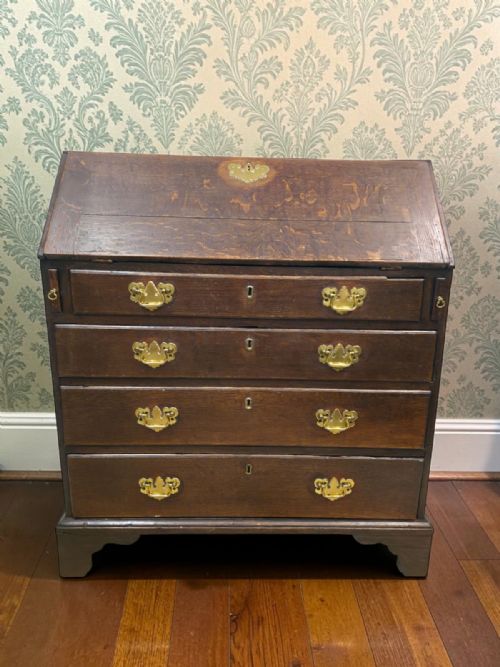
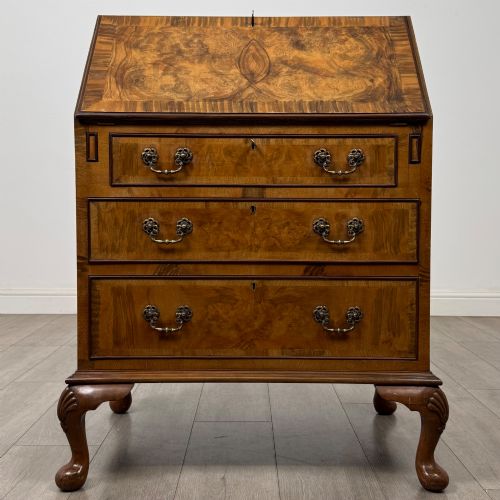
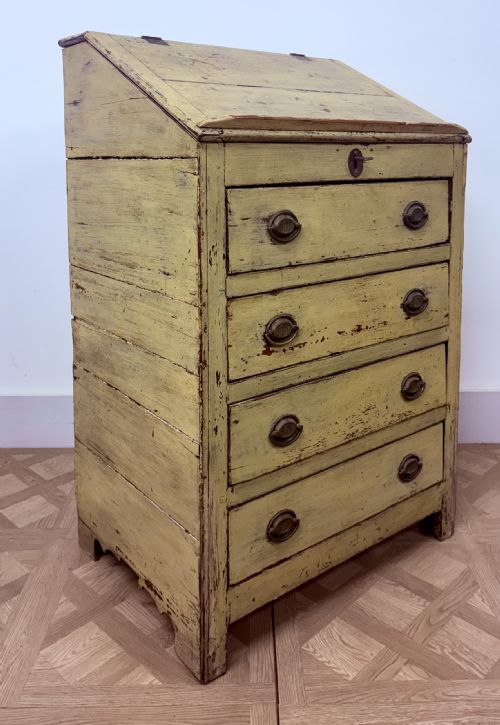
A slope front chest drawers, also known as a bureau or writing desk, combines a set of lower drawers with an angled writing flap that drops down to reveal internal compartments. Pieces on this page span from the early eighteenth century through the Georgian era and into the Edwardian and later periods.
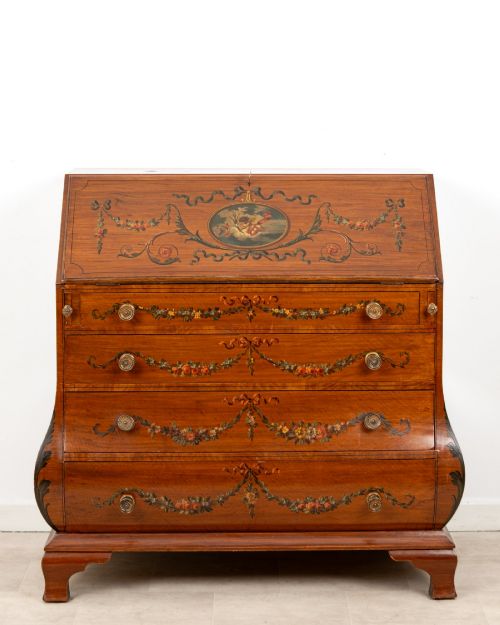
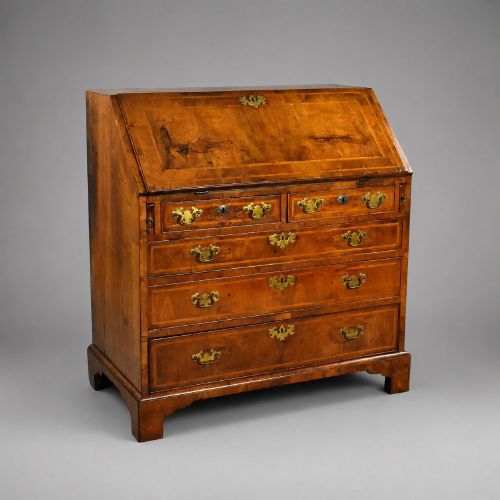
The earlier examples lean towards figured walnut, oak, and burr elm, while later Georgian and nineteenth-century pieces frequently employ mahogany. Formats range from modest provincial oak items to elaborate Dutch marquetry and inlaid satinwood variants.
Materials and Construction
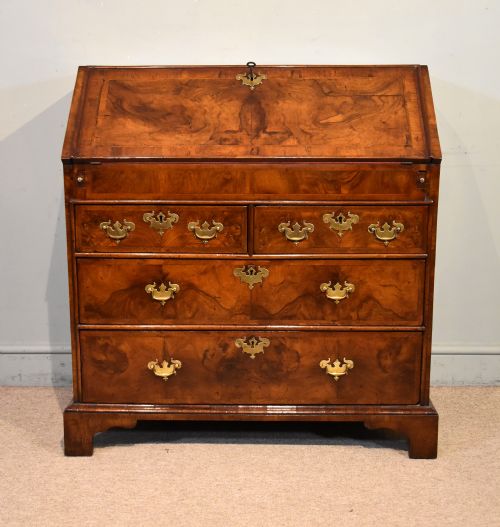
Cabinetmakers constructed these slope front chest drawers using solid timbers and decorative veneers such as walnut, mahogany, and burr walnut applied over secondary woods. Brass handles, escutcheons, and original ironwork finish the exterior, while internal pigeonholes and small drawers utilise fine secondary timbers.
Joinery techniques include dovetail construction for the drawers and fitted interior compartments built to house writing materials securely. Marquetry inlay, floral patterns, and hand-painted decorations appear on specific continental and later pieces.
Slope Front Chest Drawers Retail Price Guide 2026
Typical asking prices for slope front chest drawers among the pieces listed under this phrase on Sellingantiques today, from the lower quarter to the upper quarter. They describe what is for sale here now, not the wider market.
Several examples include hidden secret compartments behind the internal pigeonholes for stashing genuine correspondence or small valuables.
Quality and Distinction
The distinction between standard and superior pieces rests on the choice of timber figure, such as highly figured walnut or richly grained mahogany. The intricacy of internal pigeonholes, secret compartments, and the crispness of marquetry or inlay set the finer examples apart.
Proportion and surface patination dictate the visual weight of a bureau, with untouched finishes and original brass hardware commanding particular regard among collectors.
The Slope Front Chest Drawers Glossary
- Bureau
- A desk with a sloping flap that covers a nest of small drawers and pigeonholes, sitting above a chest of drawers. This term is frequently used interchangeably with the search phrase.
- Fall front
- A writing flap hinged at the bottom that drops forward to create a horizontal desk surface. It conceals the internal stationery drawers when closed.
- Marquetry
- Decorative veneer work formed by fitting together small pieces of wood, shell, or ivory to create pictorial or floral designs. It appears prominently on Dutch examples.
- Pigeonhole
- A small, open compartment within the fitted interior of a desk used for sorting letters and papers. These often surround a central small locking cupboard.
- Secretaire
- A piece of furniture designed for writing, sometimes featuring a fitted drawer that pulls out with a drop-front mechanism. It shares functional similarities with the standard bureau.
Slope Front Chest Drawers: Frequently Asked Questions
What is a slope front chest drawers?
A slope front chest drawers is a traditional form of furniture that combines a set of functional lower drawers with an angled writing flap. When lowered, this flap provides a writing surface while granting access to internal pigeonholes and small compartments.
These pieces served as private writing desks and storage units in homes. They keep correspondence and household accounts neatly organised out of sight.
How do I date an antique bureau?
Dating relies on observing the timber species, construction methods, and hardware styles used in the piece. Walnut and oak dominate the early eighteenth century, whereas mahogany becomes prevalent during the Georgian period.
Secondary woods, drawer dovetailing, and the complexity of the interior fitted compartments offer further chronological clues. Examining the locks and ironwork helps confirm the period of manufacture.
How were these desks used historically?
Owners used these desks for writing letters, managing estate accounts, and storing personal documents. The lockable fall front kept sensitive paperwork secure from household staff and visitors.
Internal drawers and pigeonholes held inkwells, quanderies, and sealing wax. The lower chest section provided everyday storage for linens or clothing.
Where should I place a bureau at home?
A bureau suits living rooms, studies, or bedrooms where its dual function as a desk and a chest of drawers proves practical. Because the writing flap extends forward when opened, adequate floor space in front of the piece is essential.
Keeping the wood away from direct sunlight and heat sources preserves the veneers and polished finish. The compact footprint makes them useful in rooms with limited space.
What are walnut and mahogany variations?
Walnut variations typically date from the late seventeenth through the mid-eighteenth centuries, often displaying rich grain patterns and burr figures. Mahogany pieces emerged strongly in the Georgian era and continued through later revivals.
Each timber brings a distinct colour and weight to the furniture. Walnut pieces frequently feature lighter crossbanding, while mahogany items lean towards deeper, reddish-brown tones.