

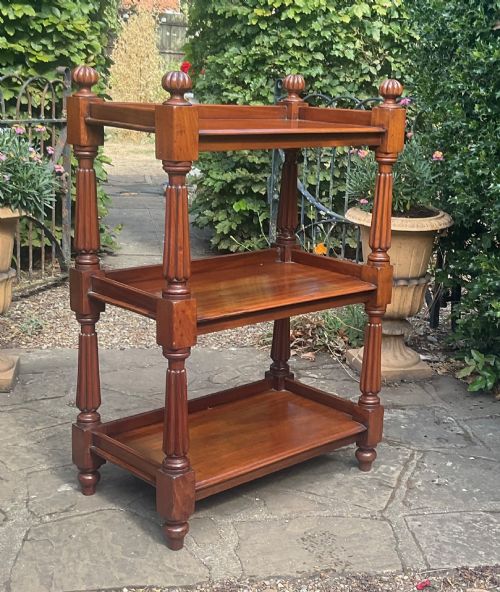

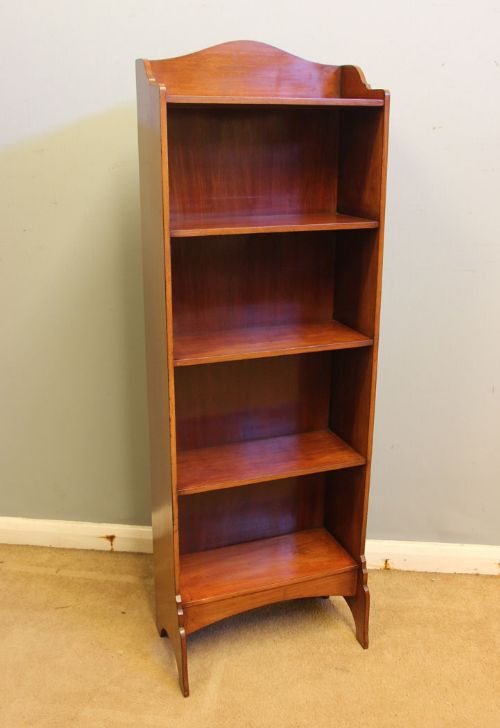


Slim Display Stand
A slim display stand meets the demand for upright storage where floor space is tight, offering compact shelving across periods from the Victorian era onward.
Slim Display Stand
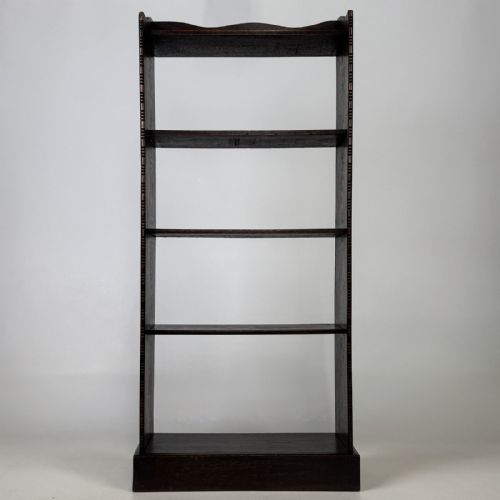
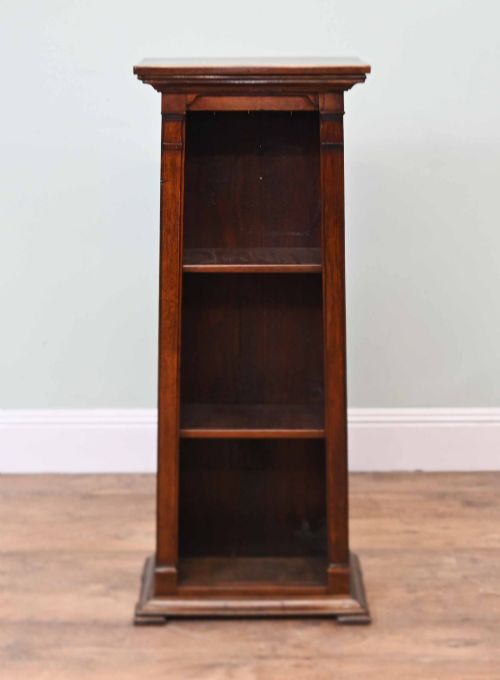
A slim display stand typically takes the form of a narrow open bookcase, an etagere, or a compact corner cabinet designed to fit tight spaces without sacrificing storage. These pieces appear in styles ranging from Victorian and Arts and Crafts to Edwardian and Queen Anne Revival, reflecting decades of domestic furniture design.
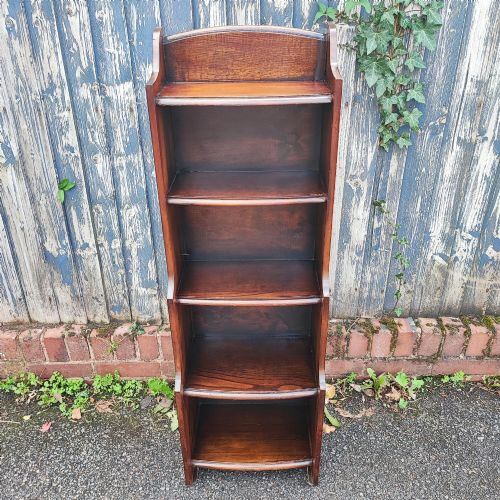
The most common version on this page is the narrow open oak bookcase, often dating to the early twentieth century or the late nineteenth century. Such pieces provide accessible shelving with minimal footprint, suiting smaller rooms and corridors.
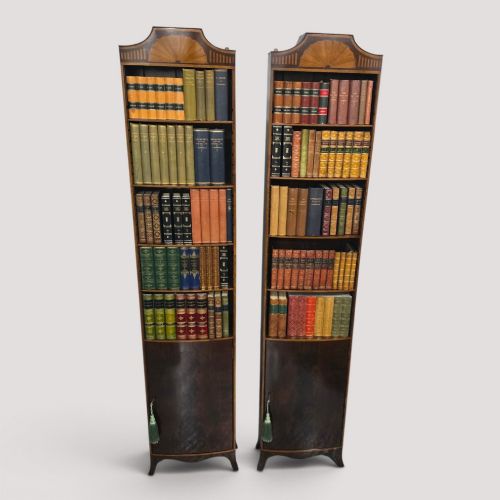
Makers utilised various timber types, producing everything from plain oak utility items to refined mahogany and burr walnut display furniture with inlay details. The variety spans functional office and library pieces to decorative drawing room étagères.
Materials and construction
Cabinet makers relied heavily on oak and mahogany as primary structural timbers, shaping upright supports and shelves to carry books and display items securely. Oak examples often display plain grain or quarter-sawn figuring, while mahogany pieces utilise smooth surfaces and sometimes flame veneers.
Fine decorative elements include satinwood inlay and raised galleries, adding visual interest to otherwise utilitarian upright frames. Brass fittings appear on adjustable shelving systems and cabinet hardware, ensuring durability alongside refined appearance.
Slim Display Stand Retail Price Guide 2026
Typical asking prices for slim display stand among the pieces listed under this phrase on Sellingantiques today, from the lower quarter to the upper quarter. They describe what is for sale here now, not the wider market.
A raised gallery ensures your smallest trinkets stay safely put, even if someone bumps the floorboards.
What determines quality
The distinction between standard utility items and finer pieces lies in the selection of timber and the subtlety of decorative details such as satinwood inlay or flame mahogany figuring. Better examples display careful proportioning and balanced grain patterns across the visible surfaces.
Sophistication of hardware and joinery also separates grades, with adjustable shelving mechanisms and clean corner joints representing higher standards of workshop execution. Simpler pieces rely on fixed shelving and plain timber without ornamental flourish.
The Slim Display Stand Glossary
- Etagere
- A set of open shelves for displaying small ornaments and books. This form provides tiered storage across several levels.
- Raised gallery
- A low decorative railing along the top edge of a cabinet or bookcase. It prevents items from sliding off the surface.
- Satinwood inlay
- Contrasting light wood inserted into recesses on a darker timber surface. This technique creates decorative banding and geometric patterns.
- Flame mahogany
- Mahogany timber showing a distinctive flickering flame-like grain pattern. Cabinet makers reserve this veneer for prominent doors and panels.
Slim Display Stand: Frequently Asked Questions
Where should I place a slim display stand?
These narrow pieces suit hallways, alcoves, and compact corners where standard furniture proves too bulky. Their restricted footprint allows them to hold books or ornaments without dominating the floor plan.
Positioning them away from direct heat sources protects the timber and veneers from drying out over time. Adequate clearance ensures easy access to the shelves.
How do I identify an Edwardian bookcase?
Edwardian bookcases often feature lighter timbers, simpler lines, and occasional Sheraton Revival influences compared to heavier Victorian predecessors. They frequently utilise oak or mahogany with subtle inlay work.
Construction methods from this era balance domestic utility with refined cabinet making. Examining the interior timber and backboards helps confirm the period of manufacture.
What is the difference between an étagère and a bookcase?
An étagère consists entirely of open tiers designed specifically for displaying decorative objects rather than housing large collections of books. Bookcases generally feature deeper shelves intended to support weight.
Both forms serve as space-saving upright furniture. The distinction lies primarily in shelf depth and overall ornamentation.
How do I care for antique mahogany furniture?
Maintaining mahogany requires dusting with a soft, dry cloth and avoiding silicone-based polishes that build up residue. Keeping the room at a stable humidity prevents timber movement and veneer lifting.
Occasional application of appropriate wax preserves the finish and nourishes the wood. Direct sunlight should be avoided to prevent fading of the rich reddish brown tones.