

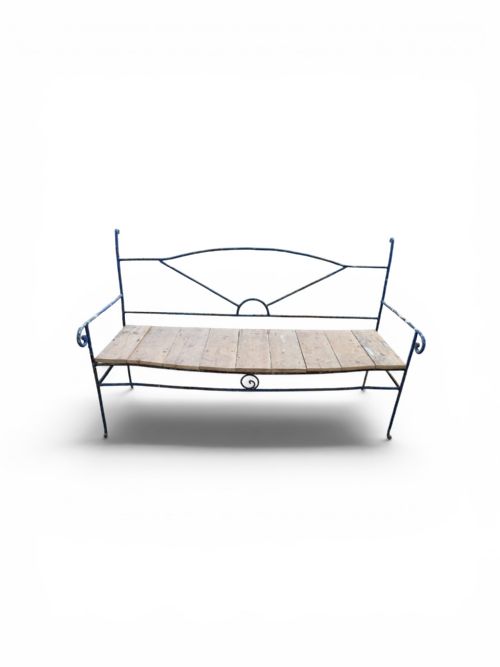
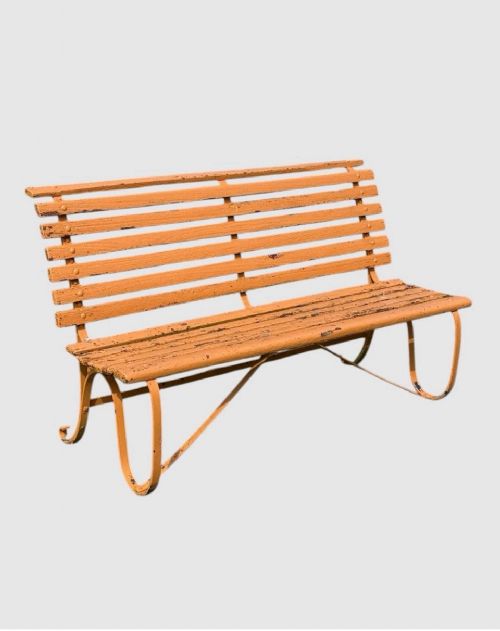
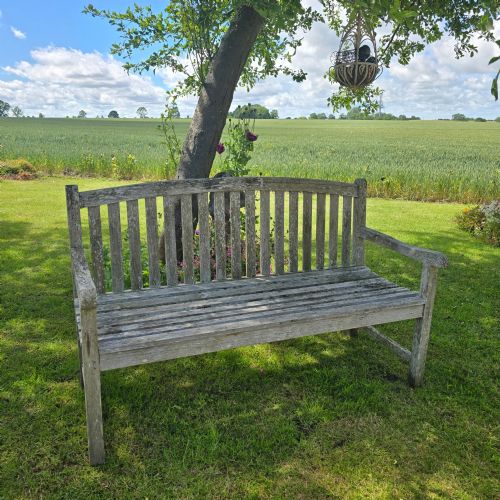
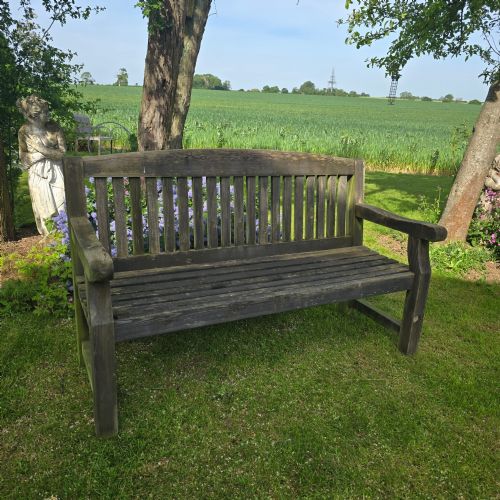


Slatted Wooden Garden Seat
A slatted wooden garden seat brings robust timber construction and enduring outdoor utility to lawns and terraces across the centuries.
Slatted Wooden Garden Seat
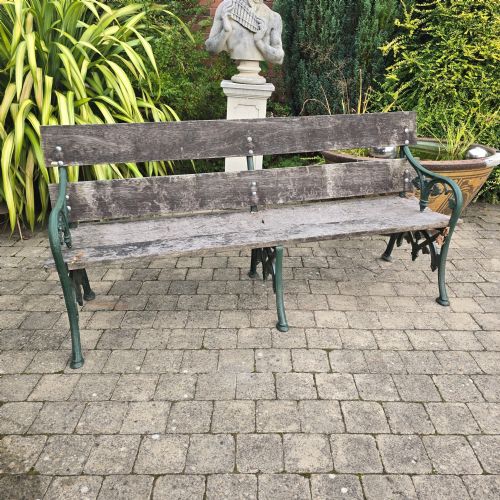
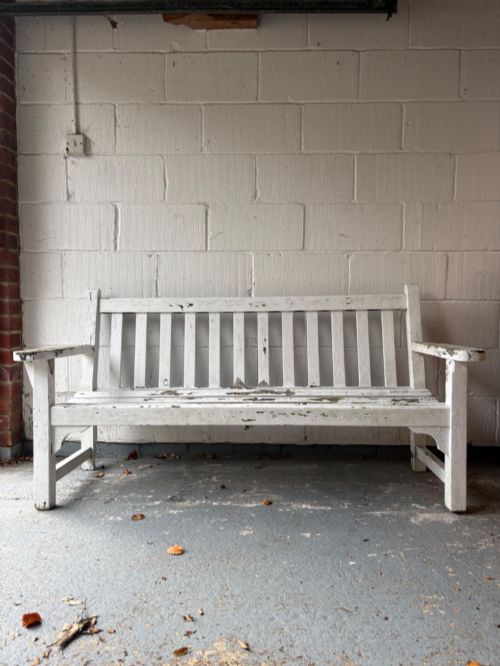
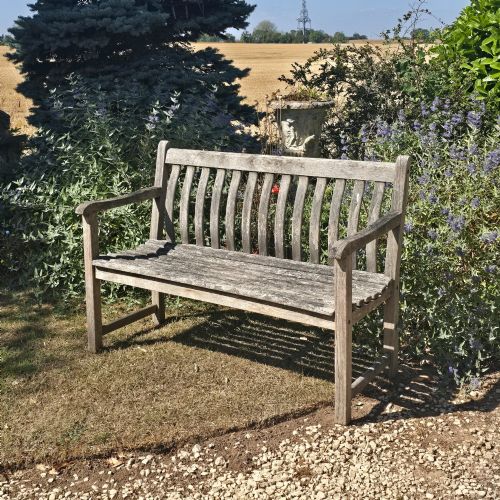
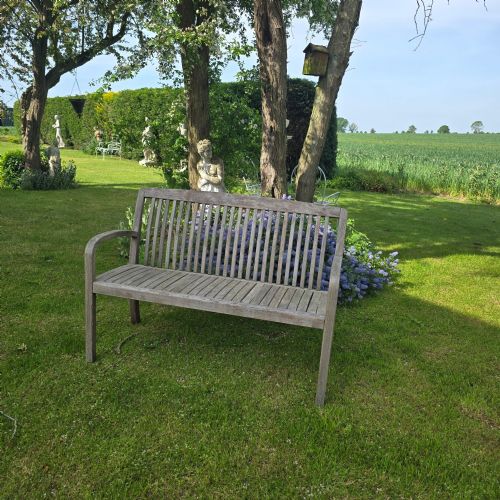
A slatted wooden garden seat comprises benches, chairs, and armchairs designed for outdoor seating. The form spans the nineteenth century through the interwar period and the Edwardian era, incorporating traditional English garden styles.
Origins include domestic English country settings as well as colonial contexts such as Calcutta. The selection on this page demonstrates both simple utilitarian designs and decorative nineteenth-century castings.
How they were made
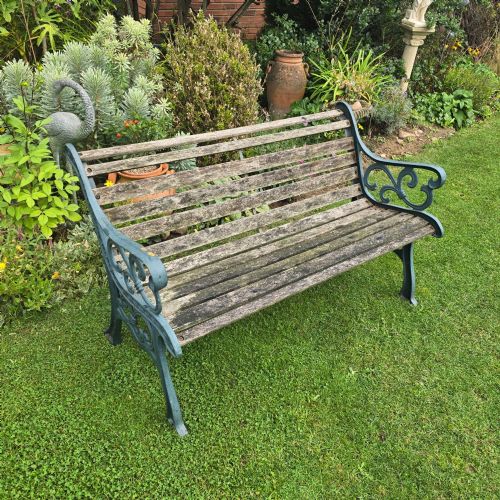
Construction relies on durable timbers such as teak, pine, and oak assembled with wooden slats that allow rainwater to drain freely. These wooden elements combine frequently with heavy cast iron or wrought iron frames and arm supports.
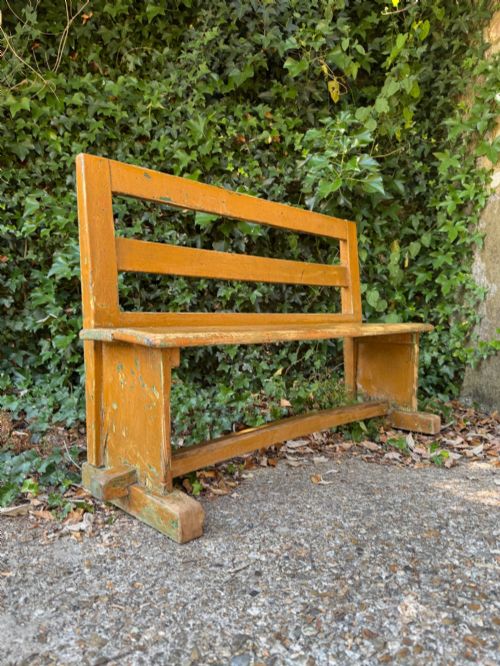
Surfaces appear either weathered to a silvery grey patina or finished with historical paint layers. Metal components often feature decorative casting work, including lion mask details and traditional nineteenth-century patterns.
Slatted Wooden Garden Seat Retail Price Guide 2026
Typical asking prices for slatted wooden garden seat among the pieces listed under this phrase on Sellingantiques today, from the lower quarter to the upper quarter. They describe what is for sale here now, not the wider market.
Several seats retain the distant memory of colonial polo matches and orangery retreats.
What varies in quality
Quality rests in the robustness of the timber selection and the integrity of the combined ironwork. Dense hardwoods like teak maintain structural stability outdoors far longer than softer timbers.
The refinement of the casting work on iron frames and the originality of the wooden slats determine the standing of an individual piece. Retained surface weathering and intact historical paint layers also distinguish better examples.
The Slatted Wooden Garden Seat Glossary
- Slatted
- Constructed from narrow strips of wood spaced apart to allow drainage and airflow. This method prevents water accumulation on the seating surface.
- Teak
- A dense, durable tropical hardwood prized for outdoor use due to its natural oil content. It weathers gracefully to a silvery grey.
- Cast iron
- Molten iron poured into a mould to create rigid structural or decorative supports. It provides heavy weight and stability to garden furniture.
- Tree bench
- A circular or polygonal seat built to encircle the trunk of a mature tree. It offers shaded seating integrated into a garden landscape.
- Patina
- The surface appearance acquired by materials through age, weathering, and use. On outdoor timber, this often presents as a silvered texture.
Slatted Wooden Garden Seat: Frequently Asked Questions
How do I care for a wooden garden seat?
Hardwood seats like teak withstand outdoor conditions naturally without heavy treatment. Allowing the timber to weather produces a protective silvered surface over time.
Cleaning the slats periodically with water removes accumulated debris. Storing pieces under cover during harsh winter months further preserves the wood and ironwork.
Can these benches stay outside all year?
Most pieces utilise durable timbers and cast iron designed for permanent outdoor placement. The slatted construction prevents water pooling, which helps protect the wood from decay.
Protecting antique painted surfaces from prolonged moisture prevents flaking. Regular checks on ground contact points keep the structure stable on lawns and patios.
How do I identify the period of a garden bench?
Dating relies on examining the timber species, construction joints, and the style of any iron castings. Victorian examples often feature ornate cast iron ends, while interwar pieces frequently employ plain teak.
Design cues like Coalbrookdale patterns point to specific nineteenth-century manufacturing traditions. Comparing the hardware and timber weathering helps confirm the era of origin.
What is the difference between teak and pine seats?
Teak is a dense hardwood containing natural oils that resist moisture and decay outdoors. Pine is a softer timber that typically requires protective paint finishes to survive external exposure.
Teak items often display a weathered silver finish without paint, whereas pine examples frequently show layers of historical paint. Both materials offer distinct aesthetic qualities for garden settings.