



Slatted Revolving Stand
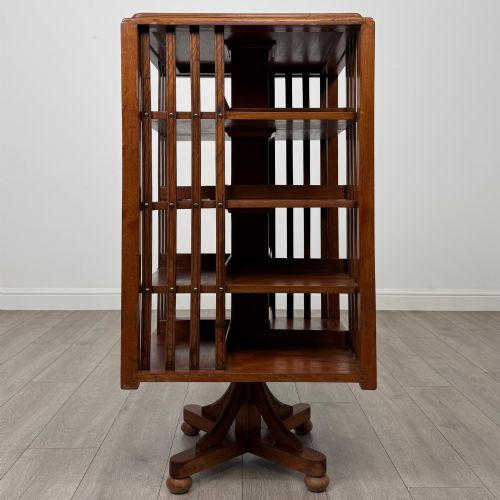
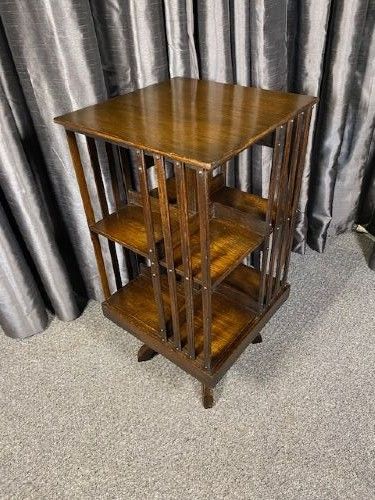
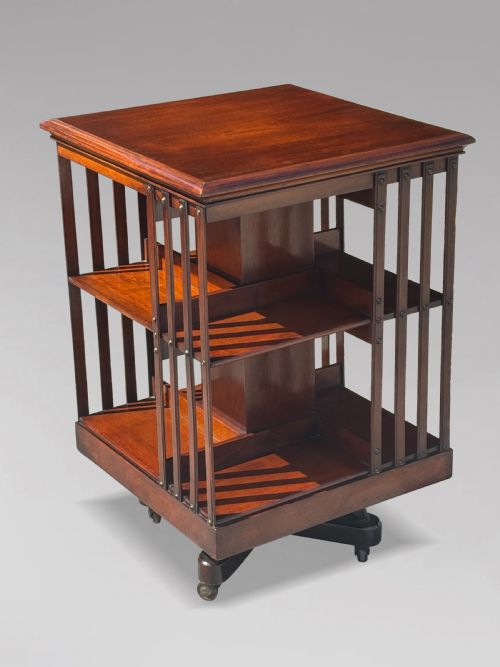
A slatted revolving stand offers a practical turning bookcase to keep volumes within arm's reach.
Slatted Revolving Stand
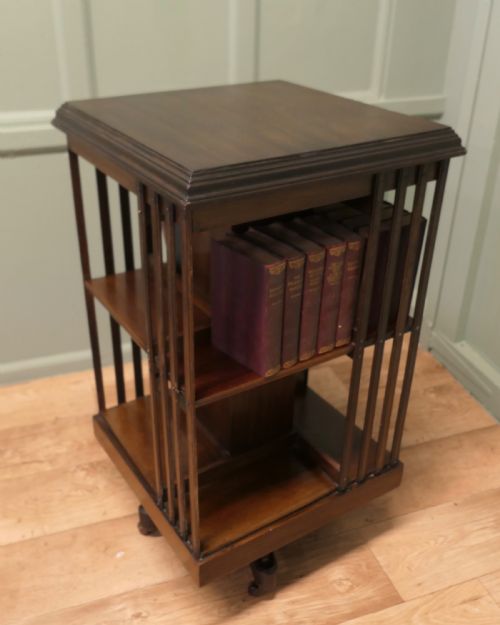
When you search for a slatted revolving stand, you are looking at revolving bookcases designed to sit on a floor or table while holding a collection of books. These functional pieces allow users to access multiple shelves simply by spinning the central column.
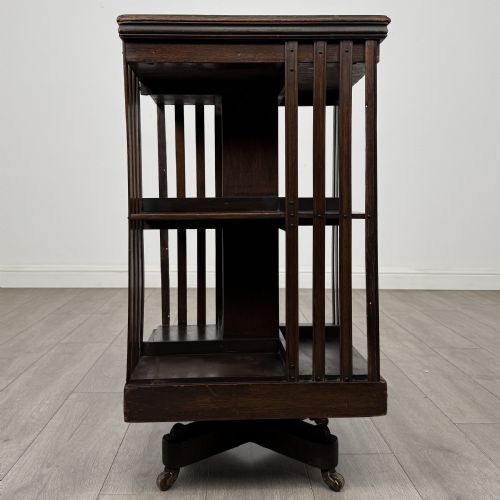
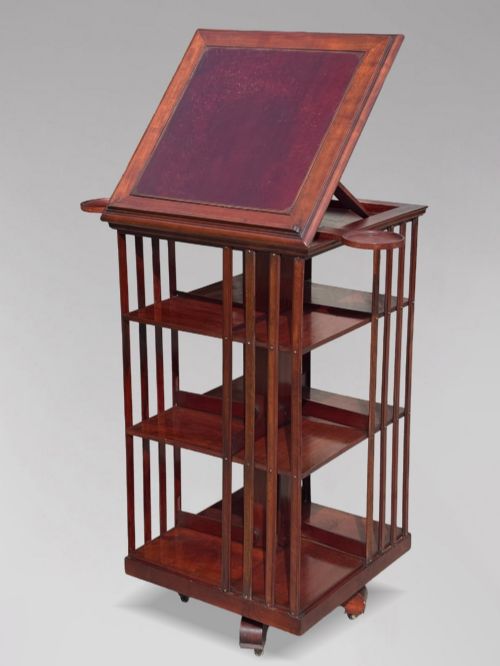
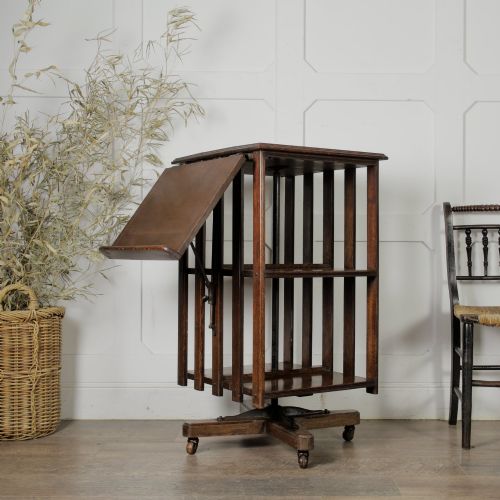
On this page, the version you are most likely to meet is the Edwardian or nineteenth-century oak or mahogany bookcase featuring slatted sides. These items range from compact single-tier editions to tall four-tier structures.
Materials and construction
These bookcases rely primarily on solid oak and mahogany for their main structure, providing the weight and stability required for a rotating unit. Cabinetmakers built the frames with slatted sides to reduce overall weight while maintaining structural integrity.
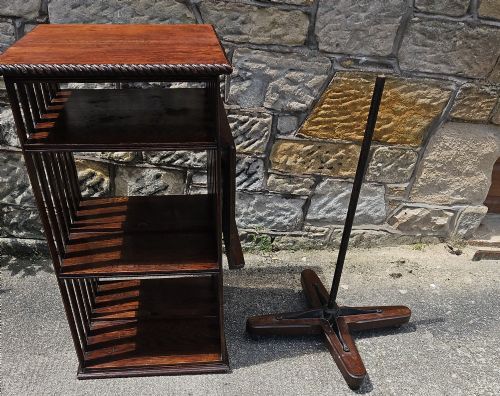
Internal mechanisms often incorporate brass and cast iron components to ensure smooth rotation under heavy loads of books. Some examples also feature leather details or ceramic elements within the design.
Slatted Revolving Stand Retail Price Guide 2026
Typical asking prices for slatted revolving stand among the pieces listed under this phrase on Sellingantiques today, from the lower quarter to the upper quarter. They describe what is for sale here now, not the wider market.
Listings span the Edwardian era and the nineteenth century, utilising oak, mahogany, brass, and cast iron.
Judging quality in a revolving bookcase
Quality rests heavily on the smoothness of the internal revolving mechanism and the soundness of the timber. A superior piece spins freely without wobble, supported by robust hardware hidden beneath the base.
Finer examples show refined timber selection, such as richly figured mahogany or substantial solid oak, alongside clean joinery on the tiers and slats. Lesser pieces might display heavier, coarser framing or sluggish rotation.
Heals
The Slatted Revolving Stand Glossary
- Edwardian
- Pertaining to the reign of King Edward VII, spanning the early years of the twentieth century. Pieces from this era often display lighter proportions than their Victorian predecessors.
- Mahogany
- A durable tropical hardwood valued for its rich reddish-brown tone and smooth grain. It appears frequently in nineteenth-century cabinetmaking.
- Oak
- A strong, heavily grained timber utilised widely for domestic furniture. Solid oak examples are common among Edwardian revolving bookcases.
- Tier
- A single level or shelf within a stacked bookcase structure. Multiple tiers allow for greater book storage within a compact footprint.
Slatted Revolving Stand: Frequently Asked Questions
How do revolving bookcases work?
These pieces use a concealed pivot mechanism, often containing iron or brass components, fixed between the upper shelving and the heavy base. This allows the entire bookcase to spin effortlessly in either direction.
Users can place the stand beside a desk or armchair to keep reference volumes close at hand without needing to walk across the room.
Are these stands sturdy enough for heavy books?
Solid timber construction and heavy cast iron internal weights provide the stability needed to hold numerous volumes safely. The base is typically weighted to prevent tipping when the upper tiers are fully loaded.
Distributed weight across the multiple tiers also helps maintain balance as the bookcase turns.
How do I date a revolving bookcase?
Dating relies on timber choice, style markers, and overall proportions seen in the piece. Edwardian examples often feature lighter oak frames, whereas nineteenth-century pieces tend to use darker mahogany.
Construction methods, such as the style of the slats and the materials used in the internal pivot, offer further clues to the period.
Where should I place a revolving stand?
A revolving stand sits well beside a sofa, desk, or in the corner of a study where access from multiple angles is useful. Because it turns on a central axis, it requires clearance on all sides to spin freely.
Keeping the stand away from direct heat sources helps protect the timber and prevents the moving parts from warping.