


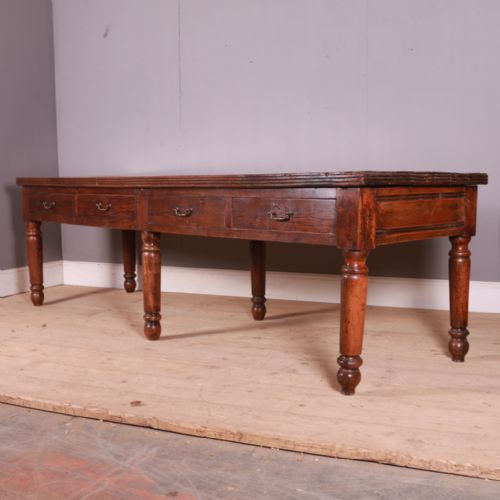

Six Leg Farmhouse Table
A six leg farmhouse table gives a room a grounded anchor, built for utility and everyday gathering across generations.
Six Leg Farmhouse Table
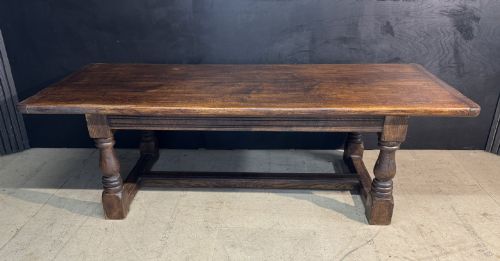
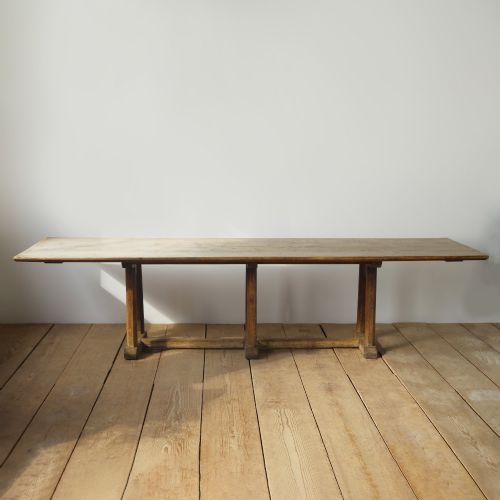
When you search for a six leg farmhouse table, you encounter robust dining and kitchen tables designed for heavy daily use. The pieces appearing here span centuries from the seventeenth century through to the Edwardian period and the nineteen-thirties, showing considerable longevity in their forms.
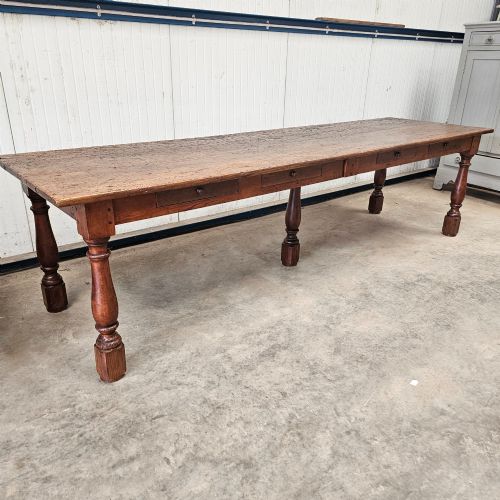
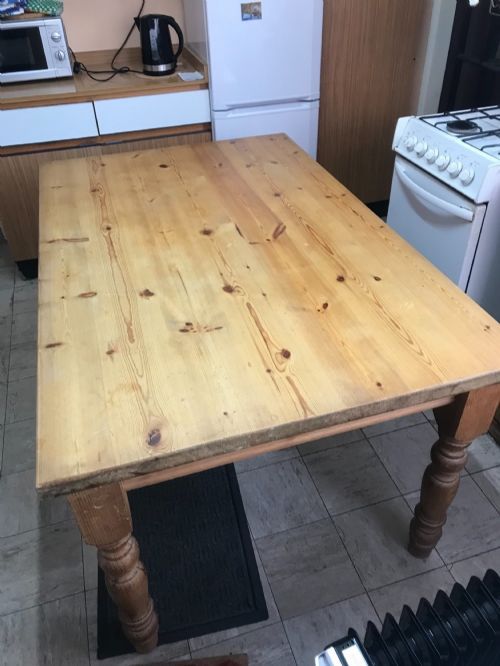
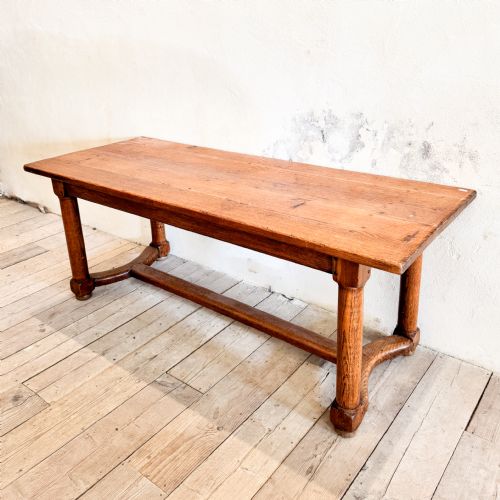
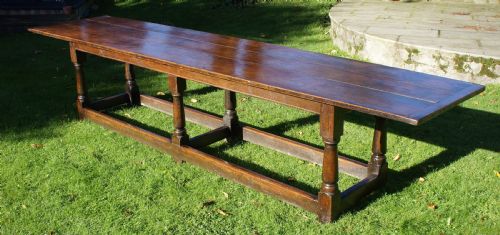
The most common versions met on this page are large oak and pine dining tables, often designated as refectory or kitchen tables. These examples frequently incorporate additional structural support to manage their considerable length.
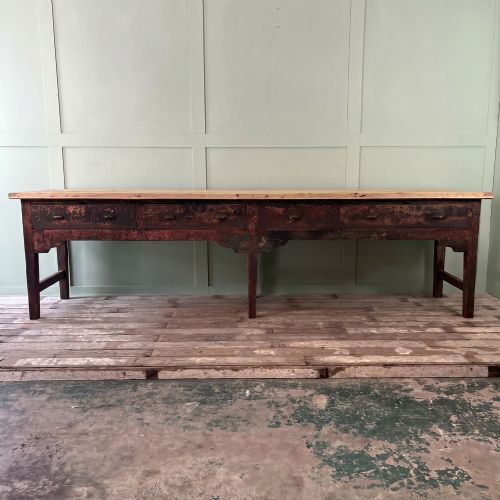
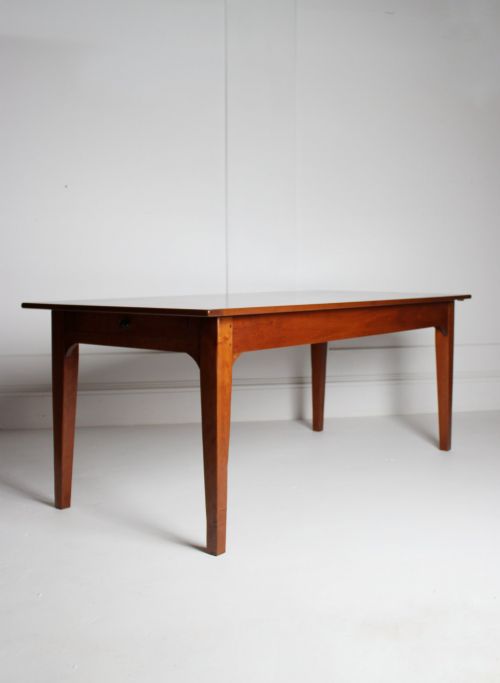
Makers produced these tables in various regional styles, including rustic farmhouse, Georgian country, French provincial and Victorian country. Such pieces serve primarily as dining tables or serving tables, built to accommodate numerous diners.
Materials and construction
Makers constructed these tables predominantly from solid timber timbers such as oak, pine, cherrywood and chestnut, occasionally incorporating iron, brass and paint details. The choice of dense hardwoods for the structure and sturdy softwoods for tops ensured long-term stability under heavy kitchen and dining loads.
Construction techniques prioritized utilitarian strength, utilising thick planks for tabletops and substantial underframes with additional legs to prevent sagging over long spans. Some examples feature integrated drawers for storage, demonstrating practical design tailored to domestic preparation and dining tasks.
Listings span multiple eras from the seventeenth century to nineteen-thirty, predominantly featuring oak and pine construction.
Distinctions in quality
Quality in these tables rests upon the selection of timber and the integrity of the original construction. Superior examples display dense grain patterns in oak or chestnut and well-judged proportions that balance length with structural support.
The character of the timber surface and the honesty of the wear separate standard utility pieces from more distinguished examples. Tables retaining their original structural members without intrusive alterations demonstrate higher integrity.
The Six Leg Farmhouse Table Glossary
- Refectory table
- A long narrow dining table traditionally used in communal dining halls. This form provides substantial seating capacity along its length.
- Serving table
- A subsidiary table designed for the preparation or presentation of food before service. These typically appear in kitchen or dining environments.
- Chestnut
- A durable hardwood utilised for furniture framing and tabletops. It offers strong resistance to wear while maintaining a warm grain.
- Satin birch
- A timber featuring a lustrous, reflective grain pattern. It appears on select refined dining tables from the nineteenth century.
Six Leg Farmhouse Table: Frequently Asked Questions
How many people do they seat?
These tables vary considerably in length, with specific examples designed to seat larger groups comfortably for dining. Their substantial proportions make them central fixtures in kitchens and dining rooms.
Buyers often select them specifically for their capacity to accommodate gatherings, utilising the extended length provided by additional framing and extra legs.
What is a refectory table?
A refectory table is a long, narrow form originally developed for communal dining. On this page, the term frequently describes substantial oak or pine tables built for domestic kitchens and dining rooms.
These pieces emphasise length and stability, often supported by extra legs to maintain structural integrity across large spans.
How do I care for timber tops?
Timber surfaces benefit from regular, gentle cleaning using appropriate wood maintenance products that do not strip the finish. Avoiding excessive moisture protects the natural grain of oak, pine, and chestnut.
Allowing the wood to breathe and age naturally preserves the character developed over centuries of domestic use.
Where were these tables used?
Historically, these tables served in farmhouse kitchens, large dining rooms, and preparation areas where heavy daily tasks took place. Their robust construction suited them to active domestic environments.
Today, they transition easily into modern dining spaces, serving as functional tables for eating, working, and gathering.