

Six Armed Chandelier
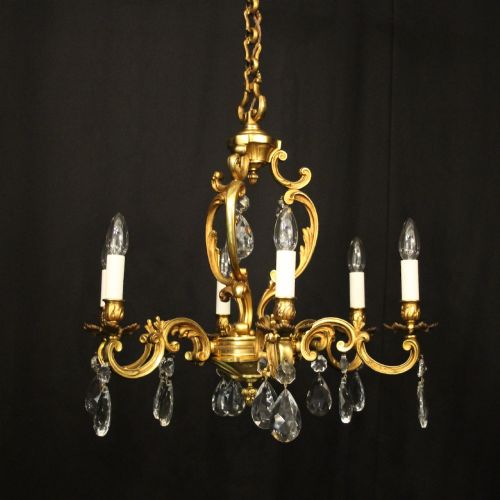
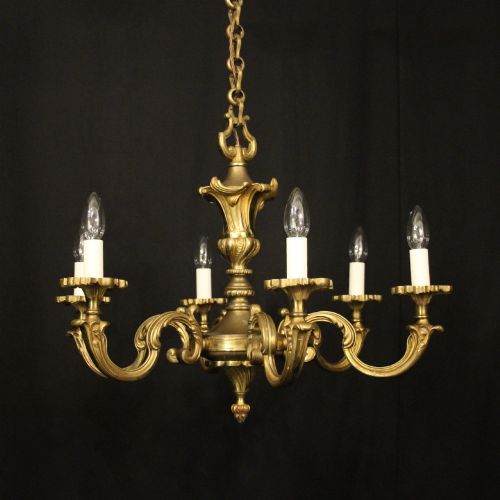
A six armed chandelier brings balanced illumination and period character to a room, drawing the eye upward with its branching form.
Six Armed Chandelier
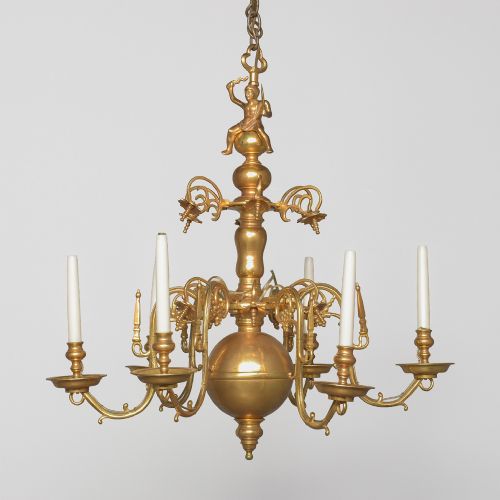
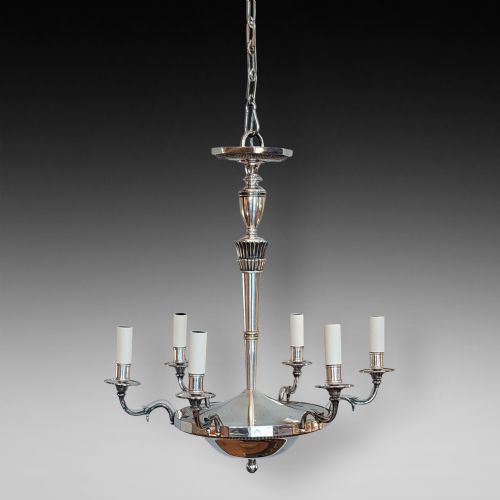
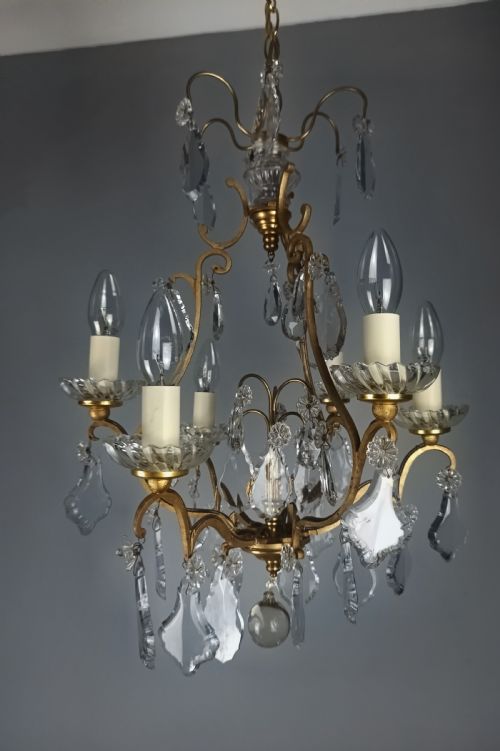
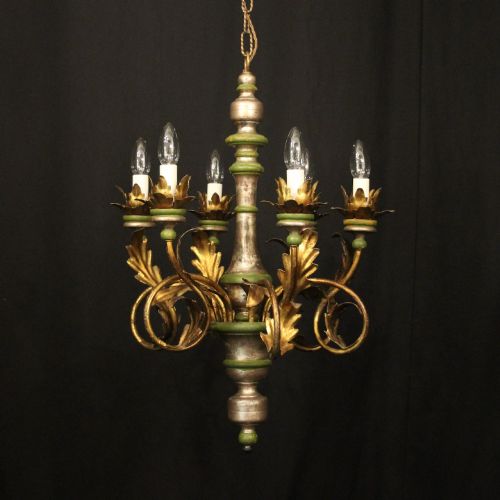
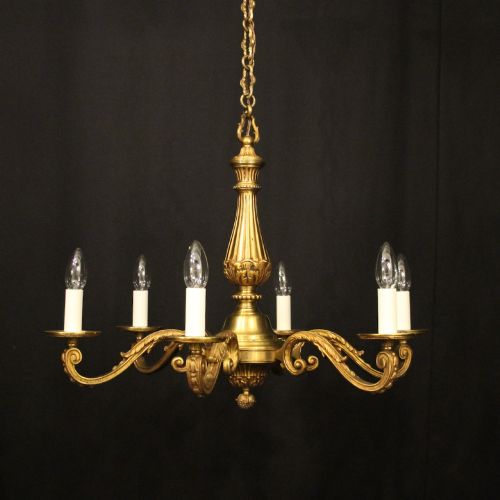
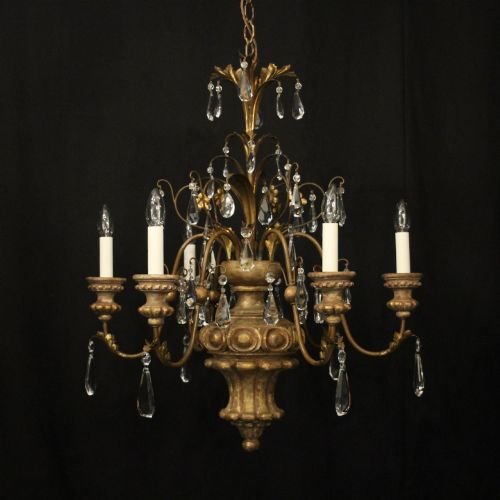
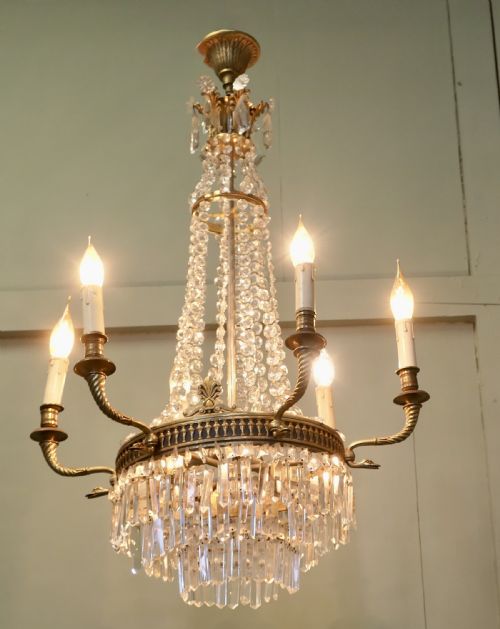
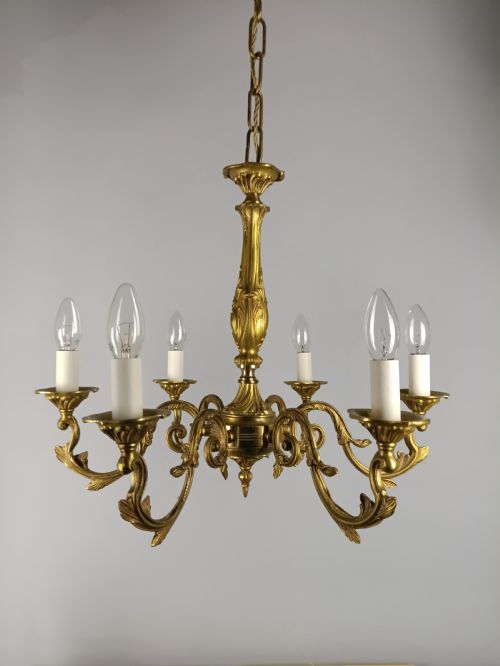
A six armed chandelier provides a substantial focal point overhead, distributing light across six distinct branches or lights. When searching for a six armed chandelier, buyers encounter pieces originating predominantly from the nineteenth and early twentieth centuries, with a strong representation of French and Italian designs.
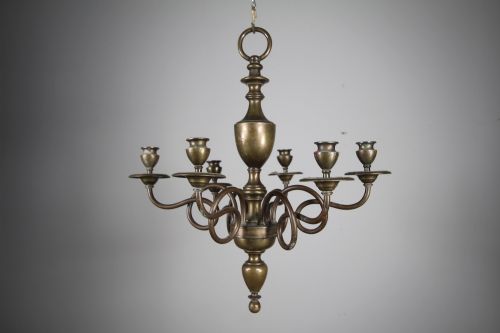
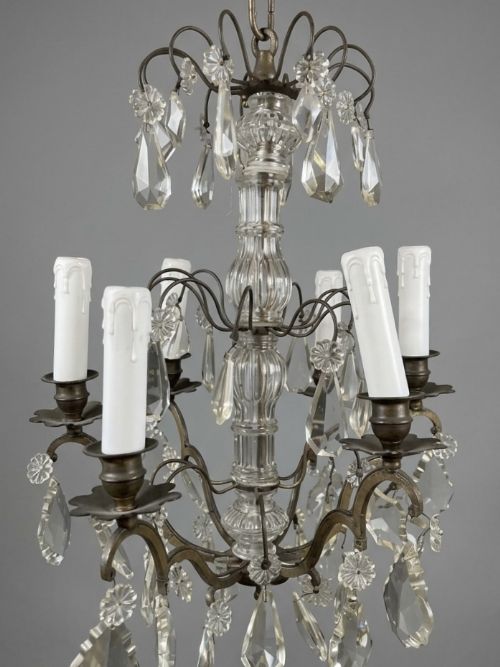
The selections span stylistic traditions from French Rococo and Neoclassical to Art Deco and Flemish Revival, alongside Florentine and Venetian variations. Common forms include birdcage configurations, tent and waterfall structures, and straightforward brass or bronze frames.
Most examples date from the decades around nineteen hundred and the nineteen twenties and thirties, constructed with six lights designed to hold candles or early electrical fittings. Table lamps and girandoles also appear occasionally alongside ceiling fixtures.
Materials and construction methods
Metalwork forms the structural backbone of these pieces, utilising cast bronze, gilded bronze, brass, wrought iron, and silver-gilded or silver-plated metals. Foundries shaped these metals through casting and detailed hand-finishing, applying gilt layers or patinas to achieve specific decorative effects.
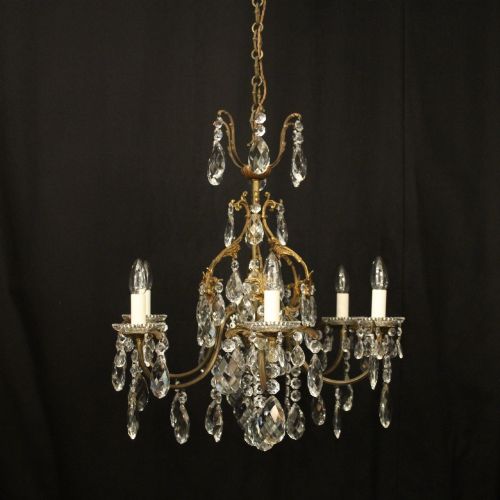
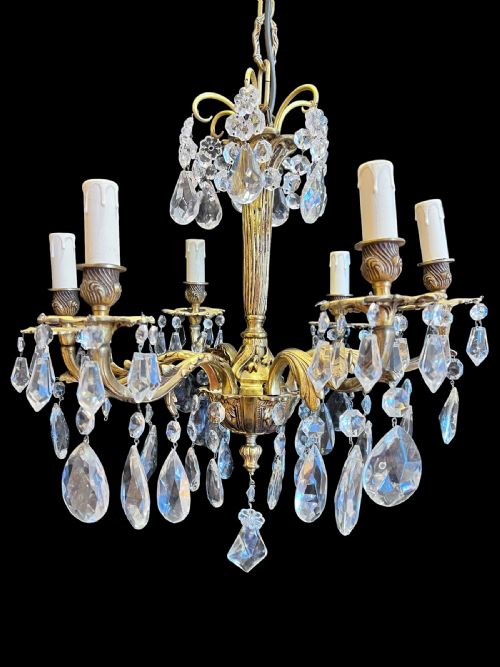
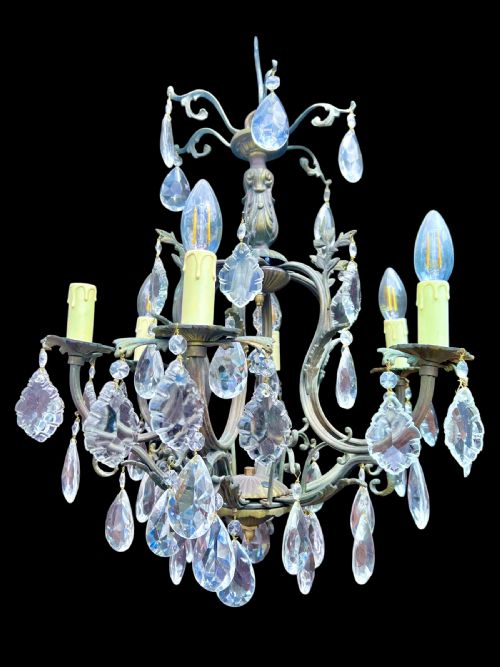
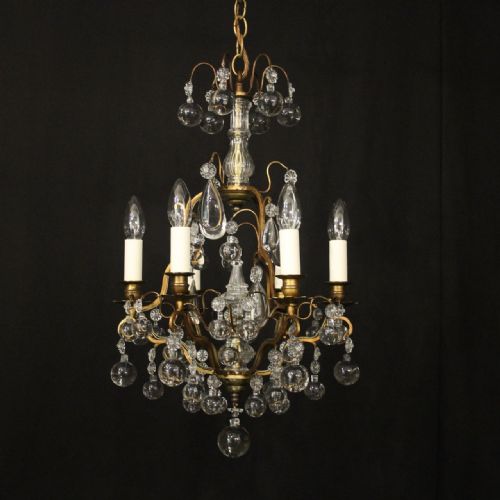
Glass and crystal elements frequently complement the metal frames, taking the form of cut glass drops, cascading beads, and coloured fruit ornaments. Giltwood, gesso, and carved wood also appear in certain regional styles, particularly Italian Florentine and nineteenth-century English or Victorian pieces.
Six Armed Chandelier Retail Price Guide 2026
Typical asking prices for six armed chandelier among the pieces listed under this phrase on Sellingantiques today, from the lower quarter to the upper quarter. They describe what is for sale here now, not the wider market.
Some six armed chandeliers come accessorized with handmade coloured glass fruits hanging amongst the crystal drops, adding a whimsical touch to traditional illumination.
Assessing quality in antique lighting
Quality reveals itself in the crispness of the metal casting and the depth of the gilding or patination. Heavier metal gauge and intricate hand-chasing on bronze or brass components indicate superior craftsmanship compared to simpler, lighter assemblies.
The grade of the glass or crystal integration further separates pieces, with precision-cut pendants and complete, matching drops maintaining the integrity of the design. The harmony between the metal frame, the arrangement of the six arms, and any decorative embellishments determines the overall visual balance.
G.E.C
The Six Armed Chandelier Glossary
- Ormolu
- A type of gilded bronze created by applying a finely ground high-carat gold-mercury amalgam to a bronze object. This historic technique produces a rich, warm metallic lustre.
- Birdcage
- A framework style where metal straps curve upward from the central hub to form a cage-like silhouette. This structure often supports internal and external crystal strands.
- Girandole
- A branched wall sconce or a table lamp featuring multiple light holders. These pieces frequently incorporate crystal drops to reflect and amplify illumination.
- Tent and waterfall
- A chandelier configuration featuring strings of crystal beads drawn upward into a tent shape above a cascading arrangement below. This style maximises light refraction from a central source.
- Gesso
- A plaster-like mixture applied to wood surfaces as a base for gilding or painting. It allows for intricate, moulded relief decoration on frames.
Six Armed Chandelier: Frequently Asked Questions
How do I clean an antique crystal chandelier?
Cleaning requires a gentle approach using a mild solution of warm water and a touch of dish soap applied with a soft cloth. Each crystal drop should be wiped individually while supported by hand to avoid straining the mounting wires.
Harsh chemical cleaners and abrasive cloths must be avoided to protect the metal gilding and glass surfaces. Many collectors prefer cleaning components in place rather than dismantling the entire fixture.
Can these chandeliers be wired for modern electricity?
Most antique fixtures are adapted for modern electrical standards by professional lighting restorers. Rewiring ensures the internal components meet current safety requirements while preserving the exterior historic appearance.
It is advisable to consult a specialist electrician familiar with antique lighting to handle installation and weight-bearing ceiling attachments. Proper hanging requires secure anchoring into ceiling joists due to the weight of cast bronze and crystal.
How do I determine the correct size for a room?
Sizing depends on the dimensions of the space and the height of the ceiling. A fixture with six arms typically suits medium-sized dining rooms, living areas, or hallways where scale remains proportionate to the surrounding furniture.
Ceiling height dictates the hanging length, ensuring adequate clearance below the lowest point of the chandelier. The spread of the six arms should complement the room width without overwhelming the visual balance.
What distinguishes French lighting styles from Italian ones?
French designs from the nineteenth and early twentieth centuries often emphasise refined bronze casting, Neoclassical symmetry, and elaborate crystal birdcage or waterfall formations. These pieces lean toward formal elegance and architectural structure.
Italian pieces, particularly from Florentine and Venetian workshops, frequently incorporate carved giltwood, polychrome details, or coloured glass elements like pink art deco glass. They tend to showcase a more decorative and regionally expressive aesthetic.