
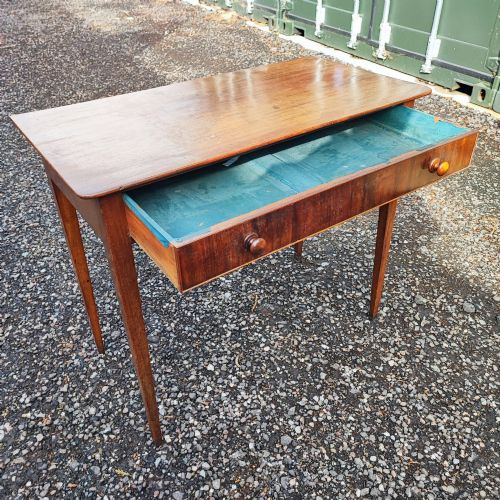


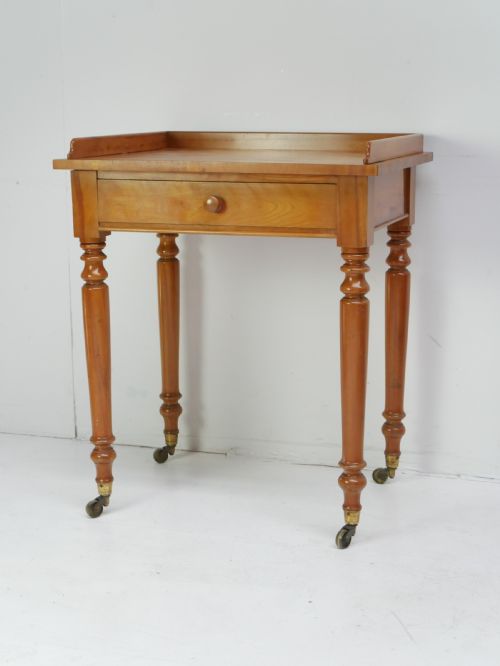

Single Drawer End Table
A single drawer end table brings compact utility and period character to a room, offering a convenient surface paired with discreet storage.
Single Drawer End Table
A single drawer end table generally appears under various historical descriptions such as side tables, lamp tables, or occasional tables. These pieces serve as functional furniture designed to sit beside seating or beds while providing a single compartment for small items.
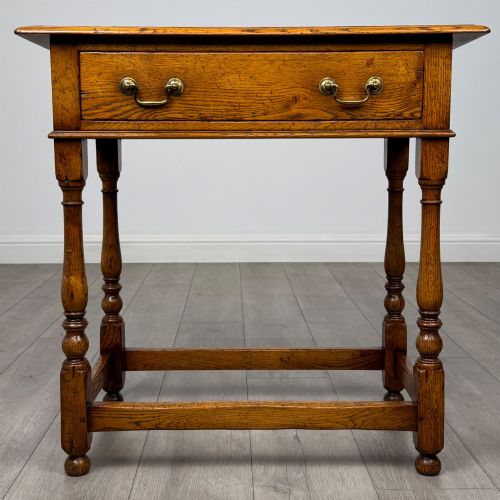
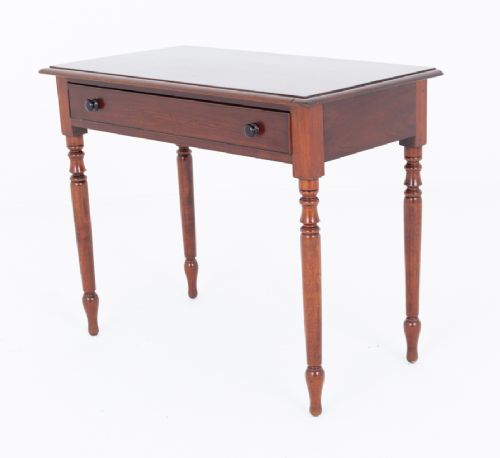
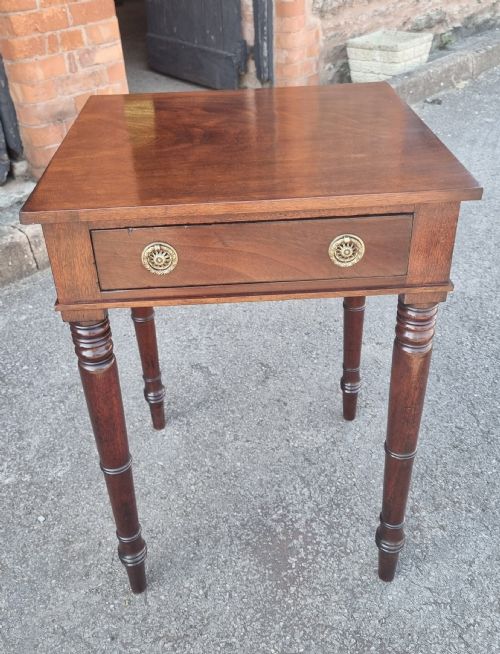
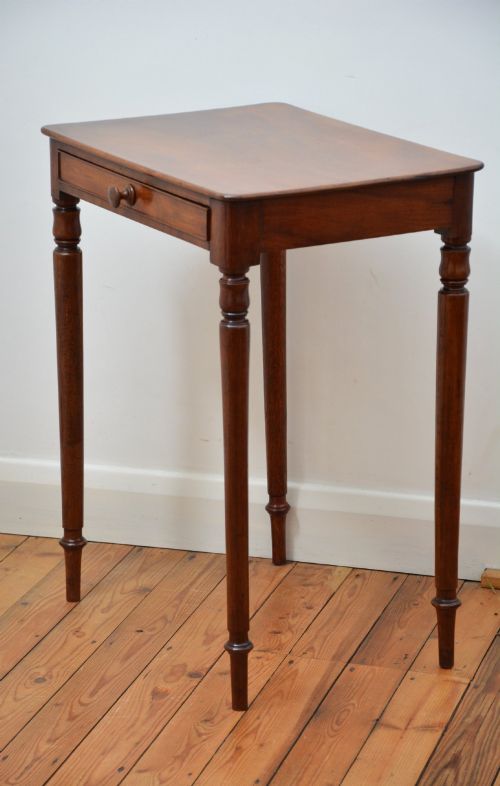
The selections span multiple eras including the Georgian, Regency, and Victorian periods, alongside Edwardian and early twentieth century examples. Mahogany and oak dominate the forms, supplemented by occasional uses of pine, satinbirch, and painted surfaces.
Buyers encounter everything from formal Sheraton designs to robust English country oak and bobbin turned pieces. The dimensions remain modest, suiting spaces where a full sized desk or larger table proves impractical.
Assessing craftsmanship
Quality rests in the precision of the joinery, particularly where the single drawer meets the frame and how smoothly the drawer operates within its runners. Timber selection plays a major role, with finely figured mahogany or well chosen oak indicating superior workshops.
Original hardware, such as brass pulls or handles, elevates a piece, as does the retention of an uncompromised finish. Subtle decorative elements like delicate inlay work or carefully executed turned legs separate standard utility items from finer examples of period cabinetmaking.
Materials documented across the collection include mahogany, oak, satinbirch, brass, and painted wood surfaces.
The Single Drawer End Table Glossary
- Side table
- A small functional table designed to stand against a wall or beside furniture. These pieces provide a convenient surface for lamps, books, or decorative objects.
- Occasional table
- A light, versatile table intended for use as needed within a room. They frequently double as lamp tables or bedside surfaces.
- Mahogany
- A durable tropical hardwood prized for its rich reddish brown colour and stability. It served as the primary material for formal British cabinetmaking through the eighteenth and nineteenth centuries.
- Bobbin turned
- A decorative woodturning technique that produces a series of rounded, spool like shapes along the length of a leg or stretcher. This method appears frequently on seventeenth and eighteenth century pieces.
- Inlay
- A decorative technique involving pieces of contrasting wood, brass, or other materials set flush into the surface of the primary timber. It adds subtle pattern and visual interest to formal furniture.
Single Drawer End Table: Frequently Asked Questions
What is a single drawer end table used for?
These versatile tables function as bedside stands, lamp supports, or small side surfaces in living areas. The single drawer provides convenient storage for small household items.
Their compact footprints allow them to fit into tight spaces where larger furniture pieces cannot go, adding both surface area and storage.
How do I identify a Georgian single drawer table?
Georgian pieces typically feature dense mahogany or oak construction with clean, classical proportions. Look for hand cut dovetails within the drawer construction and period appropriate hardware.
Legs on these tables may be straight, tapering, or feature subtle decorative turning characteristic of the eighteenth century.
Are these tables suitable for modern homes?
The modest proportions of these tables make them exceptionally adaptable for contemporary interiors. They integrate easily beside modern seating or as bedside surfaces.
Their historic character introduces warmth and texture into minimalist spaces without overwhelming the room.
What woods were commonly used?
Mahogany and oak form the vast majority of the pieces seen across these historic periods. Cabinetmakers utilised these dense timbers for their strength and ability to take a fine polished finish.
Pine appears frequently in secondary roles or simpler country pieces, while rarer surfaces like satinbirch or ebonised wood denote specific stylistic choices.