

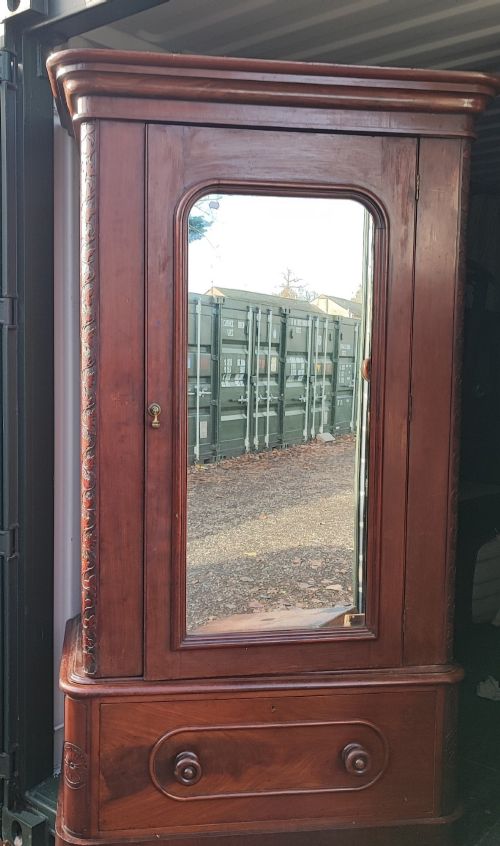
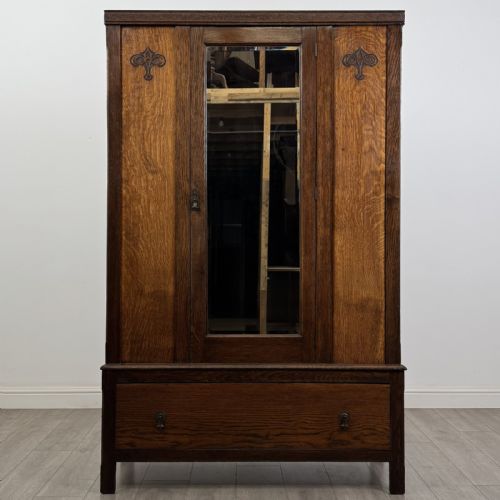
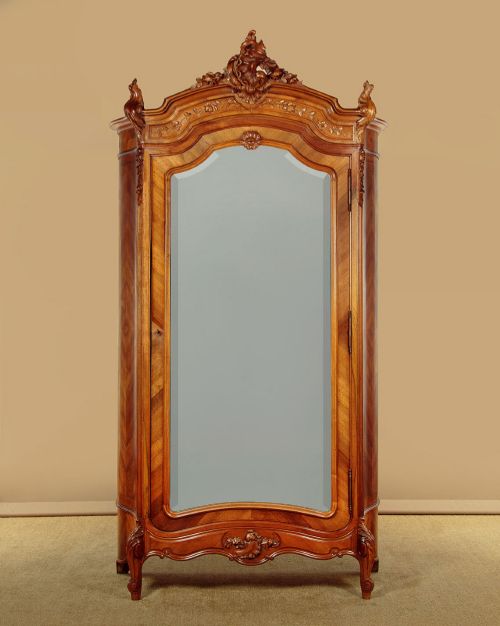
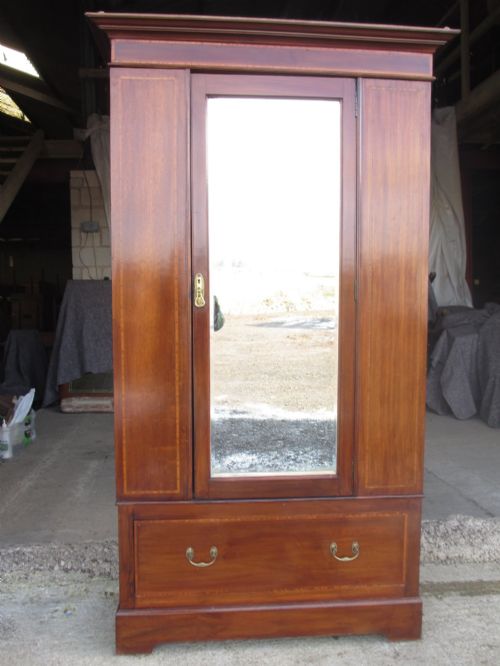

Single Door Mirrored Armoire
A single door mirrored armoire brings height and reflected light to a compact bedroom, offering full-length hanging space within a narrow footprint.
Single Door Mirrored Armoire
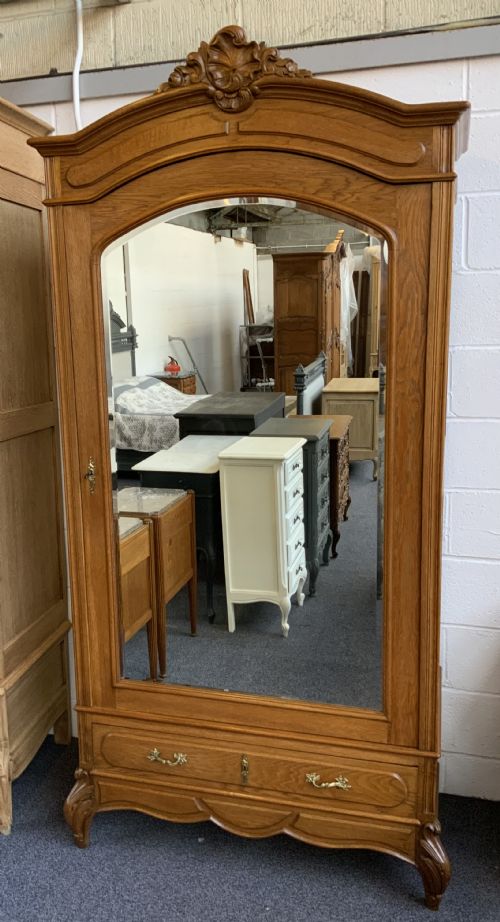
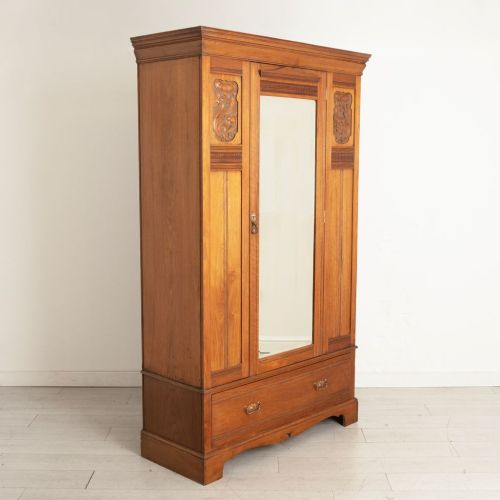
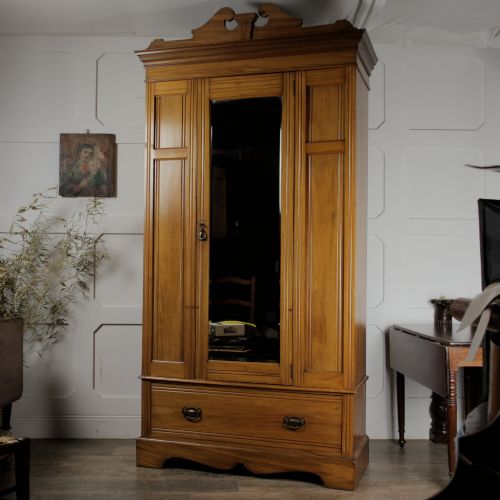
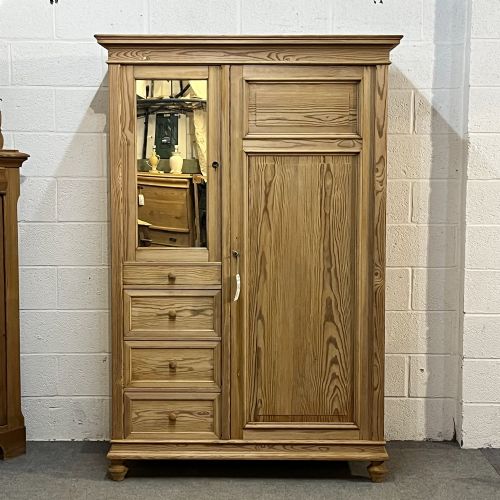
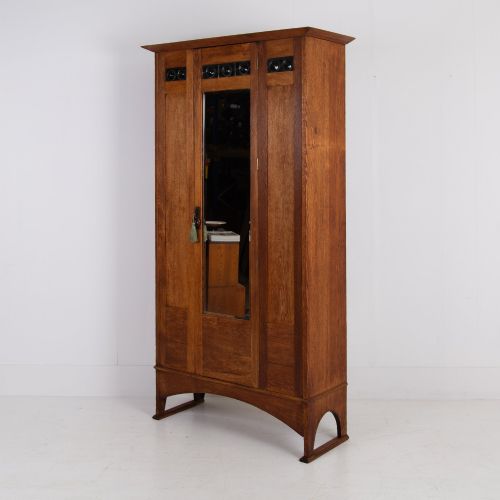
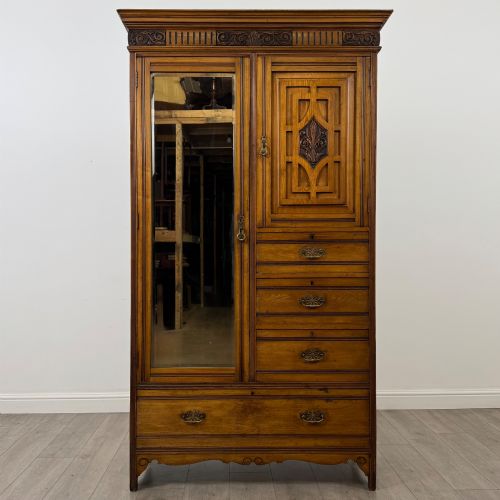
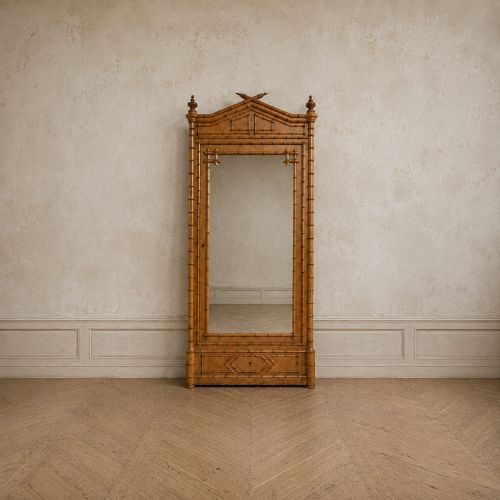
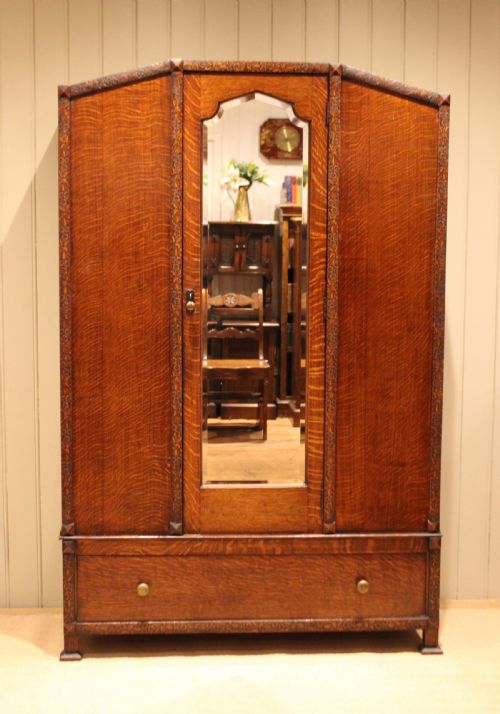
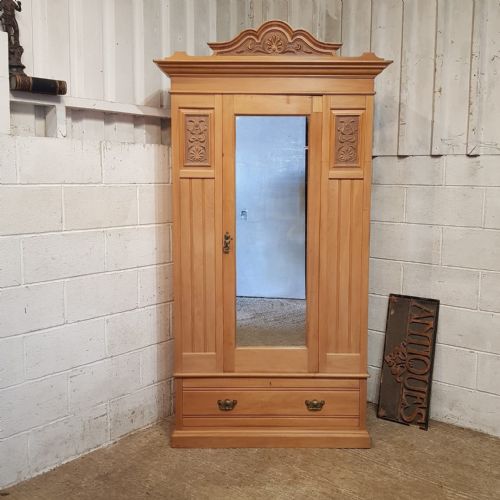
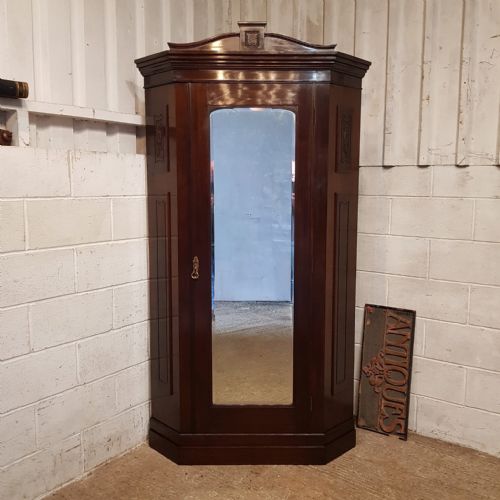
When you search for a single door mirrored armoire, you encounter tall, upright wardrobes designed for rooms where space is at a premium. The single door configuration is typically narrower than traditional double wardrobes, making them practical for tighter walls or corners.
The pieces on this page span several decades, stretching from the late Victorian era through the Edwardian period into the 1920s and 1930s. You find examples executed in oak, mahogany, walnut, and pine, alongside lighter woods like satinwood and bird's-eye maple.
Stylistically, these pieces range from austere Arts and Crafts designs to ornate French provincial models and Edwardian Art Nouveau creations. Many incorporate bevelled mirror glass within the single door, sometimes accompanied by lower drawers or internal hanging hooks.
Materials and Construction
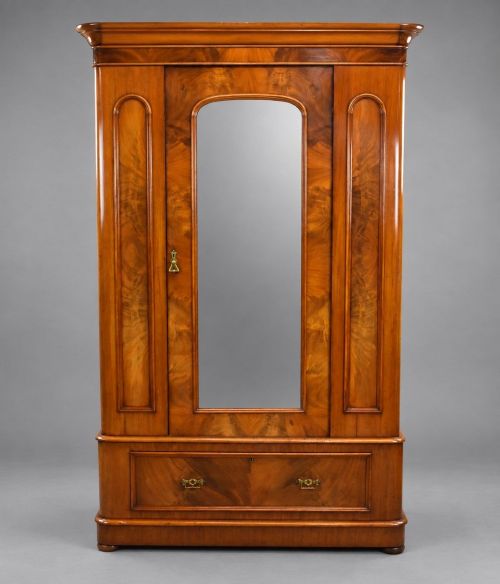
Cabinet makers built these wardrobes using solid timbers such as oak, mahogany, walnut, and pine, often applying veneers like flame mahogany or burr walnut to prominent surfaces. Inlaid marquetry and carved details appear on specific stylistic examples, while others rely on the natural grain of satinwood or pitch pine.
Hardware consists principally of brass handles, hinges, and hanging hooks, paired with heavy glass mirror plates set securely into the door frames. Joinery methods of the Victorian and Edwardian periods involved robust internal framing to support the weight of the mirrored door without warping the timber structure.
Single Door Mirrored Armoire Retail Price Guide 2026
Typical asking prices for single door mirrored armoire among the pieces listed under this phrase on Sellingantiques today, from the lower quarter to the upper quarter. They describe what is for sale here now, not the wider market.
The listings on this page span the late Victorian period through the Edwardian era into the 1930s, featuring oak, mahogany, walnut, and pine.
Assessing Quality
Quality reveals itself in the selection of timber and the precision of the cabinetwork, particularly in how the single door hangs and shuts against the frame. Heavier hardwoods and carefully matched veneers distinguish the finer workshops from utilitarian pieces made for simpler domestic settings.
The integration of the mirror plate also marks the tier of execution, with bevelled edges and secure backboards showing greater attention to detail. Maker attribution, such as labels or stamps from established firms, separates standard production furniture from superior examples.
Shapland & Petter·Heals·Gillows of Lancaster
The Single Door Mirrored Armoire Glossary
- Compactum
- A multi-functional wardrobe that includes interior compartments, drawers, or hanging space combined within a single unit. These offer varied storage solutions in a relatively narrow footprint.
- Bevelled glass
- Mirror glass with an angled, polished edge that tapers towards the frame. This technique adds depth and decorative reflection to the door.
- Marquetry
- Decorative patterns formed by inserting thin pieces of wood veneer into a contrasting wooden surface. It appears on finer Edwardian and nineteenth-century cabinetwork.
- Faux bamboo
- A decorative finish where solid wood is carved and painted to resemble natural bamboo stems. This technique gained popularity during the French Aesthetic Movement.
- Pitch pine
- A resinous, durable pine timber featuring pronounced grain patterns. It frequently appears in nineteenth-century utilitarian and regional furniture.
Single Door Mirrored Armoire: Frequently Asked Questions
What fits inside a single door mirrored armoire?
These wardrobes typically contain a hanging rail running front-to-back or side-to-side, alongside internal hooks for garments. Some variants include fitted drawers or small compartments below or within the main carcass.
Because of their narrow footprint, they accommodate coats, dresses, and daily wear rather than extensive bulk storage. Many buyers utilise them in guest bedrooms or hallways where space for a double wardrobe does not exist.
How do I date a mirrored wardrobe?
Dating relies on stylistic clues, construction methods, and materials used across different eras. Victorian pieces often employ solid mahogany or pine with dark finishes, whereas Edwardian examples favour lighter satinwood, walnut, and inlaid details.
Arts and Crafts models display characteristic pegged joints and understated quarter-sawn oak, while 1920s and 1930s pieces shift towards simpler geometric lines or painted finishes like downpipe grey.
Are the mirror plates original?
Many wardrobes retain their original glass, which often exhibits minor foxing or light blemishes consistent with age. Original mirror plates usually feature hand-bevelled edges set directly into the wooden door rebate.
Replacement glass occasionally occurs when older mirrors suffered breakage over decades of domestic use. Inspecting the silvering on the reverse and the mounting pins helps determine whether the glass dates to the construction period.
How do I care for antique timber and glass?
Maintain the wood by applying traditional wax polish periodically to nourish the surface and prevent the timber from drying out. Avoid placing these pieces in direct sunlight or near heat sources that could warp the door or crack old veneers.
Clean the mirror plate with a soft cloth and non-ammonia glass cleaner sprayed onto the cloth rather than directly onto the glass. This prevents moisture from seeping behind the silvered backing.