

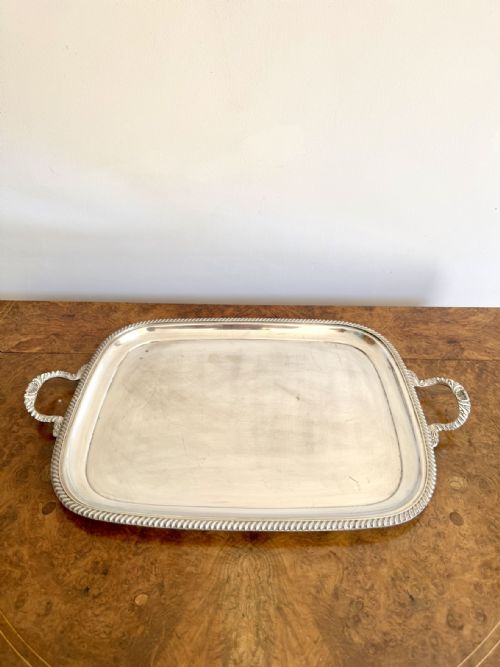
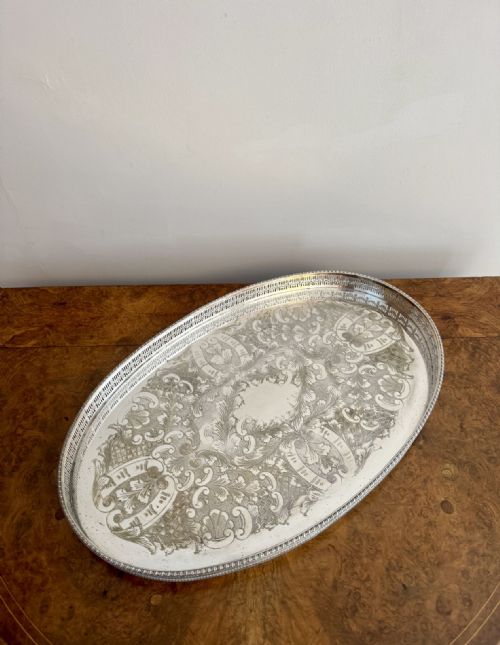


Silverplated Serving Platter
These silverplated serving platter pieces bring period elegance to the table, offering durable silver surfaces over sturdy base metal foundations for everyday hospitality.
Silverplated Serving Platter
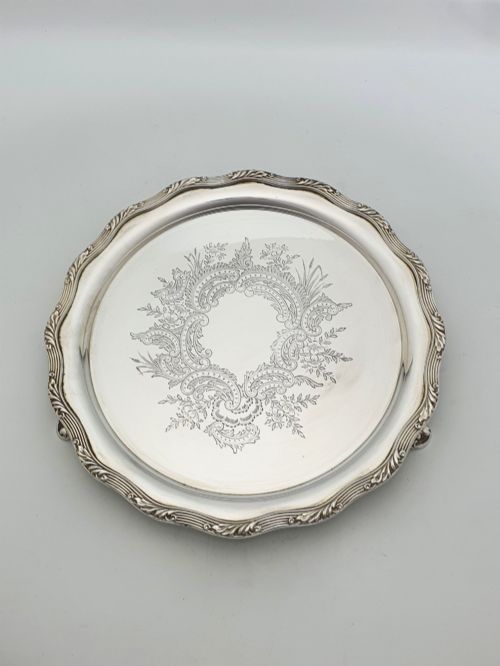
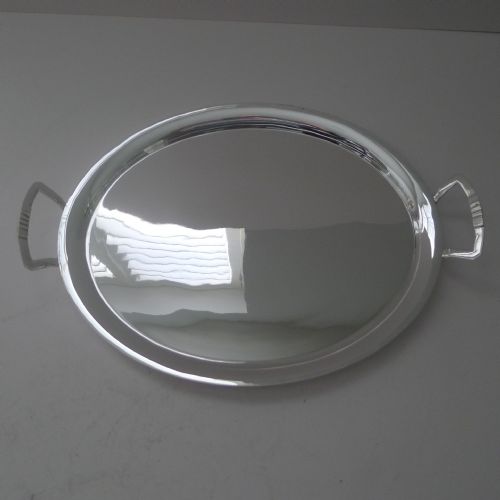
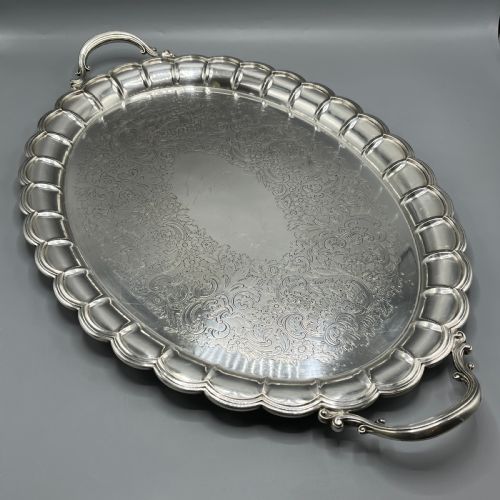
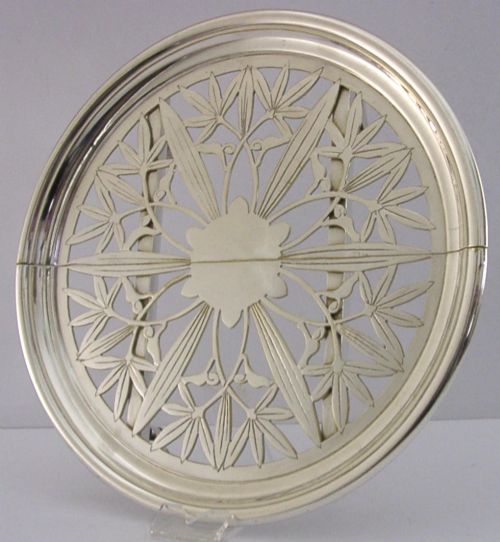
A silverplated serving platter is a functional dining table accessory designed for presenting food or drinks to guests during meals. The selection includes serving trays, salvers, asparagus dishes, meat domes, and extending dish stands.
Most examples found here span from the late nineteenth century through the Art Deco era of the 1930s. Buyers frequently encounter Edwardian and Victorian styles alongside geometric Art Deco designs from makers such as Asprey and Mappin & Webb.
These items were originally produced to mimic solid silver tableware at a fraction of the cost, making them practical for large household gatherings. Today, they serve both decorative display functions and active roles in hosting.
How they were made
Manufacturing relied on electroplating silver onto a base metal foundation, often utilising electroplated nickel silver, known as EPNS. This technique allowed makers to deposit a thin, even layer of silver over cheaper, durable metals.
Craftsmen shaped the base metal through rolling and pressing before applying the silver bath and executing decorative borders. Many items feature applied mounts, chased details, or scalloped edges characteristic of Victorian and Edwardian manufacturing.
Silverplated Serving Platter Retail Price Guide 2026
Typical asking prices for silverplated serving platter among the pieces listed under this phrase on Sellingantiques today, from the lower quarter to the upper quarter. They describe what is for sale here now, not the wider market.
Some asparagus dishes come with built-in drainers, proving that Victorian diners took their green vegetables very seriously indeed.
What varies in quality
The thickness of the original silver plating dictates longevity, as heavier deposits resist wear from decades of polishing and washing. Pieces with substantial base metal cores maintain structural integrity without bending under the weight of heavy joints of meat or numerous glasses.
Artistry in the chased decoration and the crispness of cast handles differentiate standard utilitarian items from luxury workshop productions. Maker marks from established firms like Christofle or Mappin & Webb indicate higher standards of initial craftsmanship.
Asprey London·Christofle·Mappin and Webb
The Silverplated Serving Platter Glossary
- EPNS
- Electroplated Nickel Silver. This abbreviation denotes a base alloy of copper, nickel, and zinc coated with a thin layer of silver.
- Salver
- A tray used for serving drinks or presenting letters and cards. These circular plates typically stand on small feet.
- Meat Dome
- A large, domed cover designed to keep roasted joints warm on the table. They often feature prominent cast handles for lifting.
- Asparagus Dish
- A specialised serving vessel fitted with an internal rack or drainer. These pieces allowed melted butter or water to drain away from the vegetable.
Silverplated Serving Platter: Frequently Asked Questions
What is a silverplated serving platter used for?
These pieces function as tableware for presenting food, roasts, asparagus, or drinks to guests during formal meals. They provide a stable, decorative surface for carrying multiple items from the kitchen to the dining table.
Historically, households utilised them during dinner parties and large gatherings to display courses in style. Modern owners often continue this tradition or use them for decorative displays on sideboards.
How do I clean a silverplated serving platter?
Maintenance requires gentle cleaning with specialised silver polishes designed for plated items rather than harsh abrasive pastes. Regular wiping with a soft cloth removes tarnishing without wearing away the underlying silver layer.
Avoid putting these items in modern dishwashers, as harsh detergents and high heat will damage the finish. Hand washing in warm, soapy water followed by immediate drying preserves the metal surface.
How can I tell an Edwardian tray from an Art Deco one?
Edwardian examples typically display ornate floral motifs, scalloped edges, and flowing Victorian style influences reflecting late nineteenth and early twentieth-century tastes. They emphasise traditional curves and elaborate decorative borders.
Art Deco pieces from the 1920s and 1930s embrace geometric lines, streamlined forms, and minimalist handles. This shift in design mirrors broader changes in architecture and interior decoration during the interwar period.
What does EPNS mean on the back?
The stamp stands for electroplated nickel silver, indicating the primary metal composition beneath the silver coating. This mark became standard across British manufacturing as a guarantee of plated construction rather than solid precious metal.
Finding this stamp helps date an object to the Victorian period or later, when electroplating technology replaced older Sheffield plating methods. It assures the buyer of a durable nickel alloy base.